Centipedes are from the Chilopoda class that have been roaming on Earth since the Late Silurian period. There are more than 8,000 species of centipede found all over the world except in Antarctica.
Centipedes are one of the most common insect predators that usually feed on rats, bugs, spiders, etc. Everyone has already seen centipedes in their house, so have you ever wondered whether they have eyes or how they see? If yes, then below is the answer.
The answer to the question, “Do Centipedes have eyes,” is: Most species of centipedes do not have eyes. They use their antenna to sense the environment. However, some species like Scutigeromorpha and Scolopendromorpha have eyes capable of discerning light and dark. Centipedes do not have true vision, meaning they see the world in a blur and discern based on the brightness of the light.
Later in this post, we have discussed more Centipedes’ eyes and their vision in detail. So, without any further ado, let’s begin.
Do Centipedes have Eyes?
Only some species of Centipedes have eyes; however, their eyes only assist them in sensing the brightness of the light. It does not provide them true vision. Centipedes are primarily divided into five categories; Scutigeromorpha, Lithobiomorpha, Craterostigmomorpha, Scolopendromorpha, and Geophilomorpha.
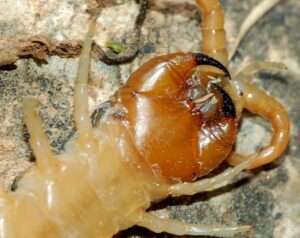
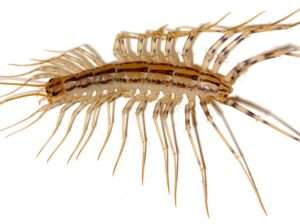
Among them, only Scutigeromorpha have the original compound eyes. They do not follow the underground lifestyle like other centipede species; they have compound eyes containing nearly 200 optical units. It assists them in detecting the brightness of the environment as well as the movement of small insects.
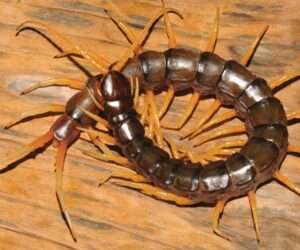
On the other hand, the Lithobiomorpha group does not have compound eyes. They have groups of simple eyes (ocelli) with very poor eyesight. They primarily track their prey through the use of touch and smell. Also, their antennae play a crucial role in recognizing the environment.
Craterostigmomorpha and Geophilomorpha are eyeless and completely blind. Their first pair of legs at the head end acts as the sensing organ similar to antennae.
They primarily dwell underground where there is complete darkness, and eyesight does not play any role. Therefore, to survive in these types of conditions, they evolved their legs and antennae as the sense organs.