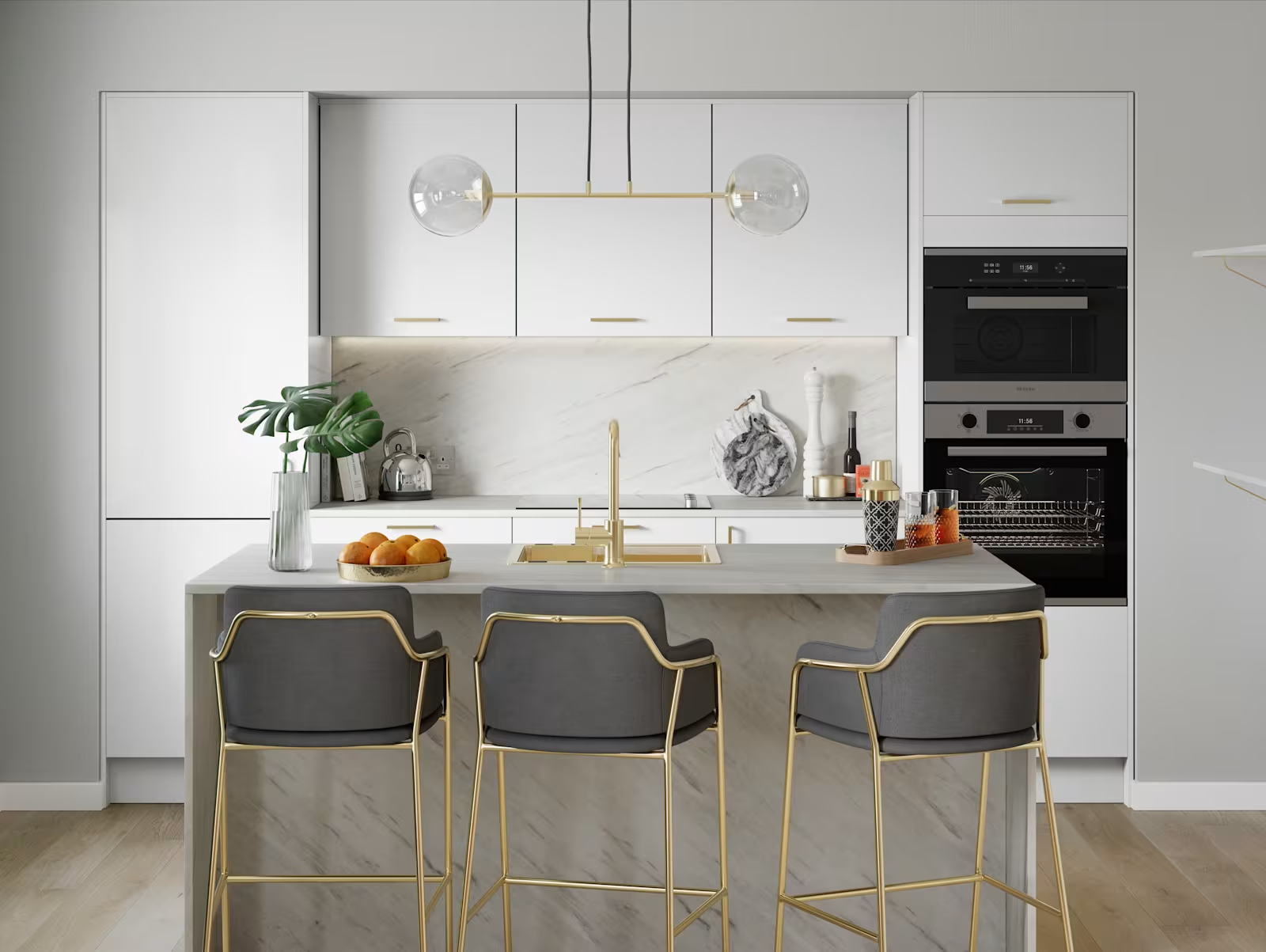
Beautiful kitchen lighting can completely transform how your cooking space looks and feels. The right fixtures make everyday tasks easier, brighten dark corners, and add a welcoming glow when you’re enjoying dinner with family or entertaining guests. Whether you love modern pendant lights, warm farmhouse fixtures, or subtle under-cabinet lighting, a thoughtful lighting plan can make your kitchen feel both practical and stylish.
These 14 kitchen lighting design ideas and styling tips explore everything from layered ceiling lighting and statement island pendants to tinted glass shades, adjustable fixtures, and elegant task lights. You’ll find inspiration for kitchens of different sizes, styles, and budgets, along with easy ways to choose finishes, avoid common lighting mistakes, and create a warm, inviting atmosphere.
Affiliate disclosure: As an Amazon Associate, I earn from qualifying purchases. This article contains affiliate links, which may earn us a commission at no extra cost to you.
More Kitchen Decorating Inspiration
- 21 Above Kitchen Cabinet Decor Ideas to Style Your Kitchen – Discover ways to coordinate your lighting with decorative pottery, baskets, greenery, and accessories above the cabinets.
- 16 Chic Kitchen Countertop Christmas Decor Ideas to Wow Your Guests – Find seasonal countertop styling inspiration that looks lovely under warm kitchen lighting.
- 15 Fall Tiered Tray Decor Ideas for a Cozy Autumn Display – Explore small decorative arrangements for kitchen counters, islands, and breakfast nooks.
Quick List: 14 Kitchen Lighting Design Ideas
- Brighten the Entire Kitchen With Layered Ambient Lighting
- Add Focused Task Lighting to Busy Work Areas
- Create a Soft Glow With Decorative Accent Lighting
- Use Dimmers to Change the Kitchen’s Mood
- Make Kitchen Pendants a Beautiful Statement Feature
- Arrange Island Lighting for Balance and Function
- Choose Flush-Mount and Recessed Lights for Even Coverage
- Give Recessed Lights a Stylish Metallic Finish
- Soften Bright Light With Tinted Glass Pendant Shades
- Highlight Vaulted Ceilings With Angled Hanging Fixtures
- Coordinate Pendant Colors With Kitchen Cabinets
- Try Adjustable Rise-and-Fall Pendant Lighting
- Mix Different Light Fixture Shapes for a Designer Look
- Illuminate the Sink and Prep Areas With Dedicated Task Lights
How to Plan Kitchen Lighting Like a Designer
Good kitchen lighting should do more than make the room look beautiful. You need enough light to prepare food safely, wash dishes, read recipes, and move around comfortably. At the same time, your kitchen should feel warm and inviting when you’re not cooking.
Start by dividing your lighting into three layers. Ambient lighting provides overall brightness, task lighting illuminates important work surfaces, and accent lighting highlights decorative details or creates a gentle evening glow. Combining these layers gives you more flexibility than relying on one bright ceiling fixture.
Next, consider your kitchen layout. A large island may benefit from multiple pendants, while a small kitchen could look better with compact flush-mount ceiling lights and discreet under-cabinet lighting. Choose fixture finishes that complement your cabinetry, cabinet hardware, faucet, and other permanent details.
Simple Kitchen Lighting Design Formula
Ambient Lighting + Focused Task Lighting + Gentle Accent Lighting + Coordinated Fixtures + Appropriate Controls
For example, combine recessed ceiling lights with a pair of pendants above the island, suitable under-cabinet lights along the main countertop, and a dimmable accent fixture over the breakfast nook.
Which Kitchen Lighting Is Best for Your Space?
| Style / Area | Best Pieces | Why It Works |
|---|---|---|
| Small Kitchen | Flush-mount lights, under-cabinet LEDs | Provides light without visual clutter |
| Kitchen Island | Pendants or linear fixture | Adds focused light and style |
| Farmhouse Kitchen | Warm metal or glass pendants | Creates a cozy, timeless appearance |
| Modern Kitchen | Recessed lights, sculptural pendants | Maintains clean architectural lines |
| Sink and Counters | Task lights, suitable LED strips | Reduces shadows while working |
| Breakfast Nook | Dimmable pendant, filtered glass | Creates comfortable evening ambience |
| High-Ceiling Kitchen | Adjustable hanging fixtures | Brings lighting closer to the work zone |
14 Kitchen Lighting Design Ideas & Styling Tips
1. Brighten the Entire Kitchen With Layered Ambient Lighting
Ambient lighting forms the foundation of a comfortable, functional kitchen. It fills the room with general illumination so that you can move safely between countertops, appliances, and seating areas. Without a good ambient lighting plan, even beautiful decorative pendants may leave parts of the kitchen feeling gloomy.
Consider recessed ceiling fixtures, a well-positioned semi-flush light, or a combination of suitable overhead fixtures that distribute light across the space. In a contemporary kitchen, slim recessed lights can look discreet, while an understated glass ceiling fixture may better suit a traditional home. Choose a layout based on the room’s size and work zones rather than installing lights only around the outer edges.
Styling tip: Choose a consistent ceiling-light finish, such as brushed nickel, soft brass, or matte white, to help the overhead lighting blend with the rest of the kitchen.
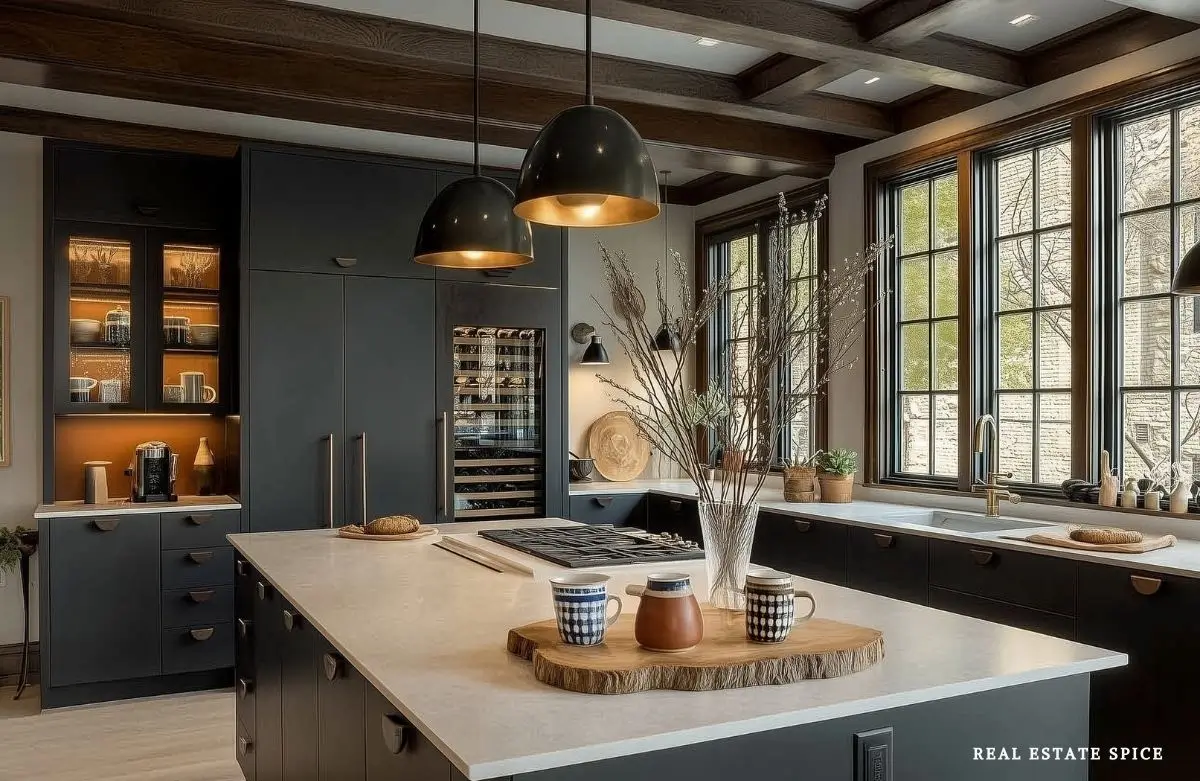
Image credit: @realestatespice.com
2. Add Focused Task Lighting to Busy Work Areas
Task lighting makes kitchen activities easier by providing direct illumination where you actually need it. Countertops often fall into shadow because upper cabinets block some of the ceiling light. Adding dedicated lighting to chopping, cooking, and cleanup areas can make the whole kitchen feel more functional and thoughtfully designed.
Install suitable under-cabinet LED lighting along the main food-preparation counter, or consider a focused pendant above a kitchen island used for chopping and serving. If you have open shelving instead of upper cabinets, directional ceiling fixtures can help illuminate the work surface below. Choose diffused lighting where possible to reduce harsh reflections on polished countertops.
Practical tip: Use lighting products rated for their installation location and follow electrical safety requirements. Hardwired kitchen lighting should be installed by a qualified electrician.
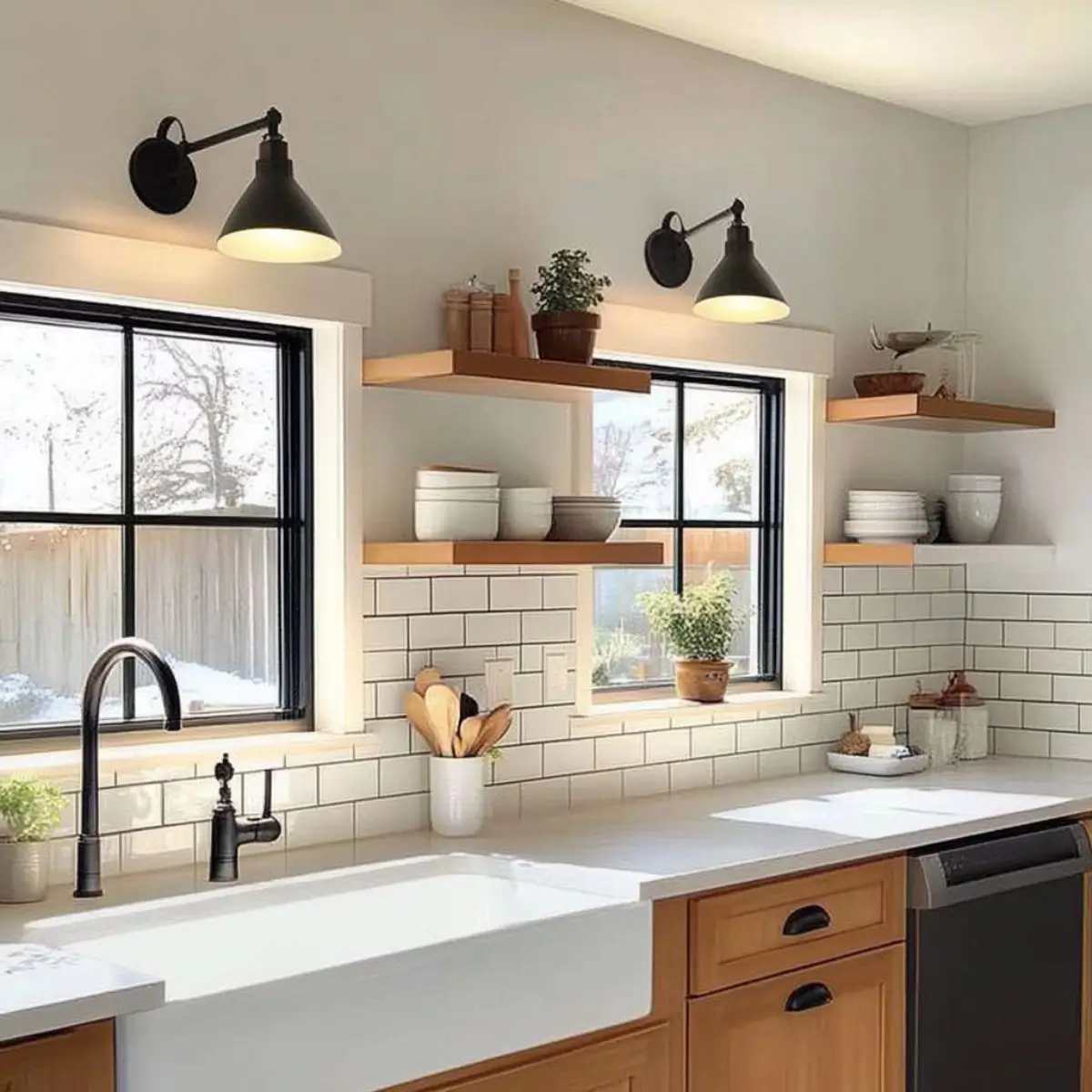
Image credit: @realestatespice.com
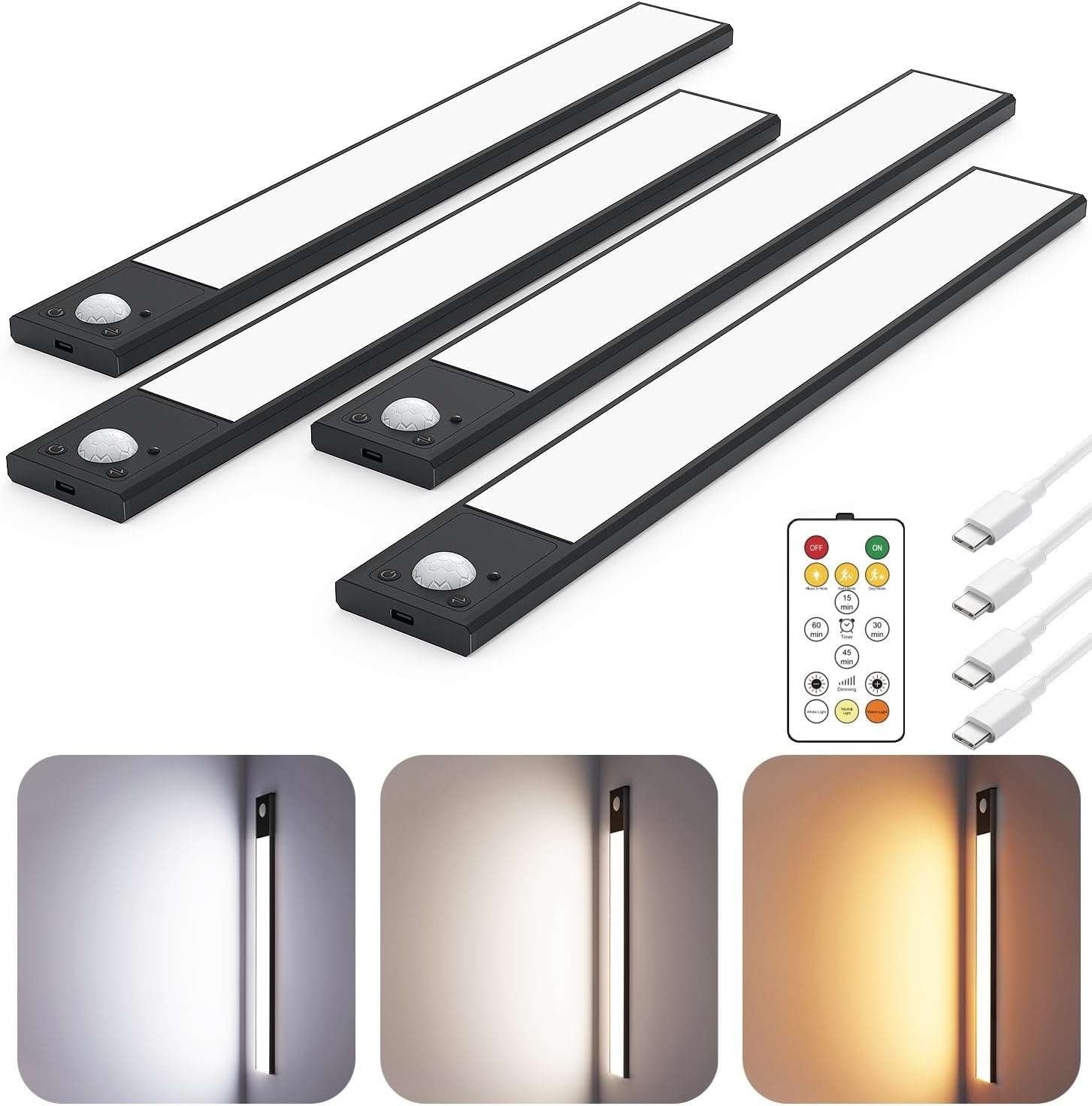
Amazon Find: Under-Cabinet LED Kitchen Lights
Explore LED strips and under-cabinet lighting designed to brighten kitchen preparation areas.
3. Create a Soft Glow With Decorative Accent Lighting
Accent lighting helps a kitchen feel inviting even when you aren’t preparing a meal. Instead of illuminating every surface equally, this layer highlights attractive details such as open shelves, decorative ceramics, glass-front cabinets, or a textured backsplash. The result feels more layered and welcoming than a kitchen that relies entirely on bright overhead fixtures.
Consider discreet LED lights inside suitable glass-front cabinets or small accent fixtures that illuminate an open shelf. Warm, diffused lighting can make glassware and ceramic collections stand out beautifully. Keep the effect subtle and avoid overcrowding the kitchen with decorative lights. For a clean look, conceal wiring using approved installation methods and coordinate the light color with your other fixtures.
Decorating tip: Accent lighting is a lovely finishing touch for carefully styled cabinet displays. You can also explore these above kitchen cabinet decor ideas for more inspiration.
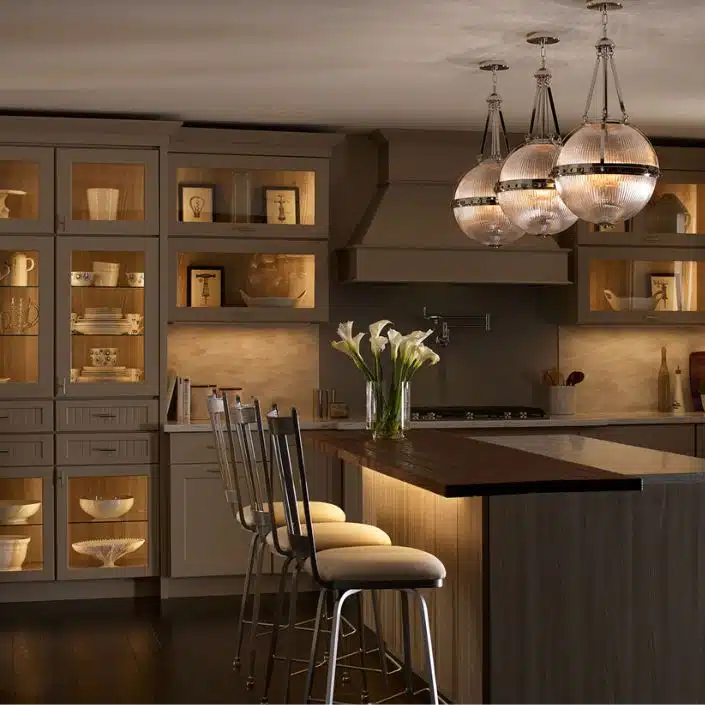
Image credit: @realestatespice.com
4. Use Dimmers to Change the Kitchen’s Mood
A kitchen needs bright, practical lighting during meal preparation but may benefit from a softer glow when you’re eating dinner or enjoying a quiet evening. Dimmers and suitable lighting controls allow you to adjust brightness without switching between entirely different fixtures.
Consider dimmable recessed lights for general illumination and a separate control for your island pendants. This can let you keep the countertops bright while lowering the lighting above a nearby dining area. If you prefer smart lighting, choose compatible bulbs and controls that work together as specified by their manufacturers. Keep essential task lighting bright enough whenever you’re using knives or cooking equipment.
Practical tip: Not every LED bulb is compatible with every dimmer. Confirm compatibility before purchasing, and have electrical controls installed professionally where required.
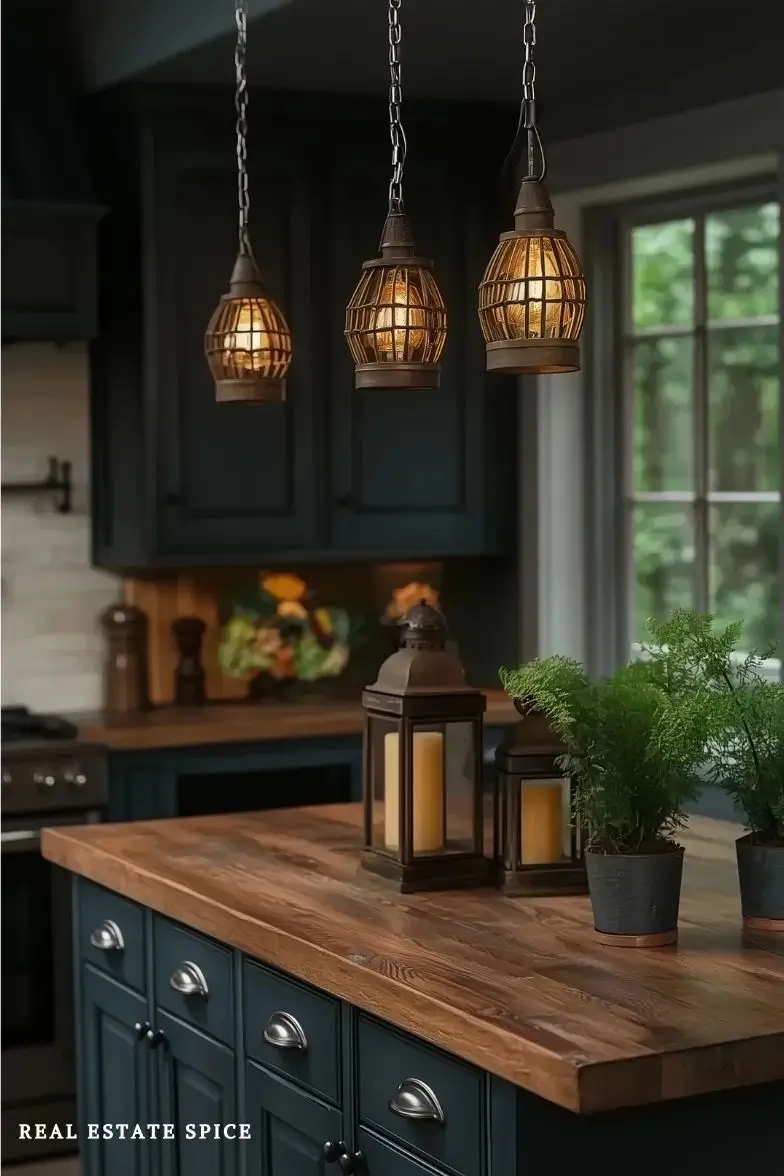
Image credit: @realestatespice.com
5. Make Kitchen Pendants a Beautiful Statement Feature
Pendant lights can become the jewelry of your kitchen. Their shapes, finishes, and materials create visual interest above an island or breakfast counter, helping the room feel more personalized. From softly glowing milk-glass pendants to rustic woven shades and elegant metal fixtures, there are beautiful options for almost every decorating style.
Choose pendants that suit your kitchen’s proportions. A single decorative pendant can look lovely above a compact island, while a larger space may benefit from two or three fixtures or one elongated light. For farmhouse kitchens, consider warm metal and frosted glass. For modern interiors, choose clean geometric shapes or simple sculptural designs. Keep the fixtures positioned so they illuminate the work surface without blocking views across the room.
Scale tip: Before buying, make paper templates of the pendant shades and hold them in the planned positions. This helps you judge their size and spacing in relation to the island.
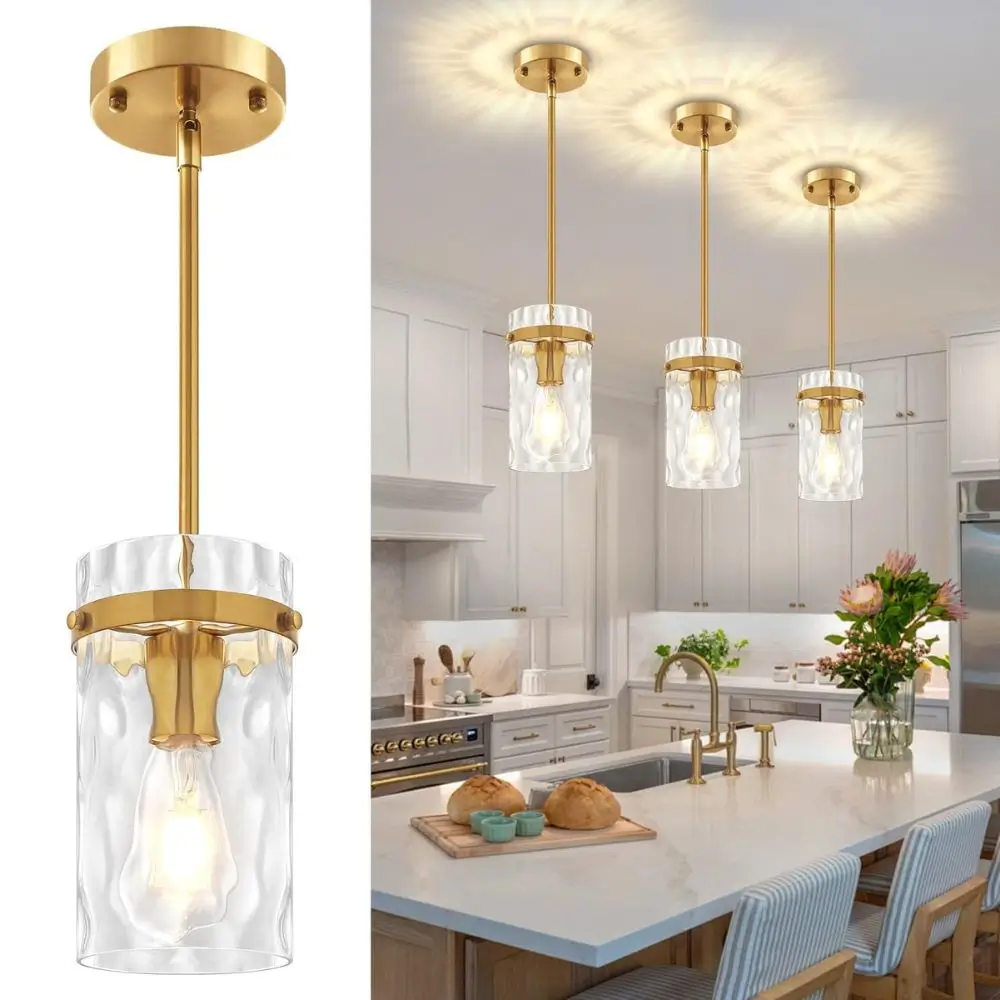
Image credit: @realestatespice.com
Amazon Find: Modern Kitchen Pendant Lights
Browse glass, brass, and modern pendant lights for kitchen islands and breakfast counters.

6. Arrange Island Lighting for Balance and Function
The kitchen island often serves several purposes, from chopping vegetables and preparing meals to family conversations and casual dining. Proper island lighting should provide enough brightness for these activities while creating a visually balanced focal point in the room. Pendants are a popular choice because they combine decorative appeal with useful illumination.
For a long rectangular island, consider a row of appropriately scaled pendants or one linear suspended fixture. For a shorter island, one statement pendant or a carefully spaced pair may look better. Choose shades that direct light toward the counter without creating uncomfortable glare. Repeat a material or finish from the faucet, cabinet hardware, or stools to make the arrangement feel coordinated.
Layout tip: Check the pendants’ actual dimensions and installation guidance before deciding on their spacing and hanging height. Avoid blocking views, cabinet doors, or walking paths.
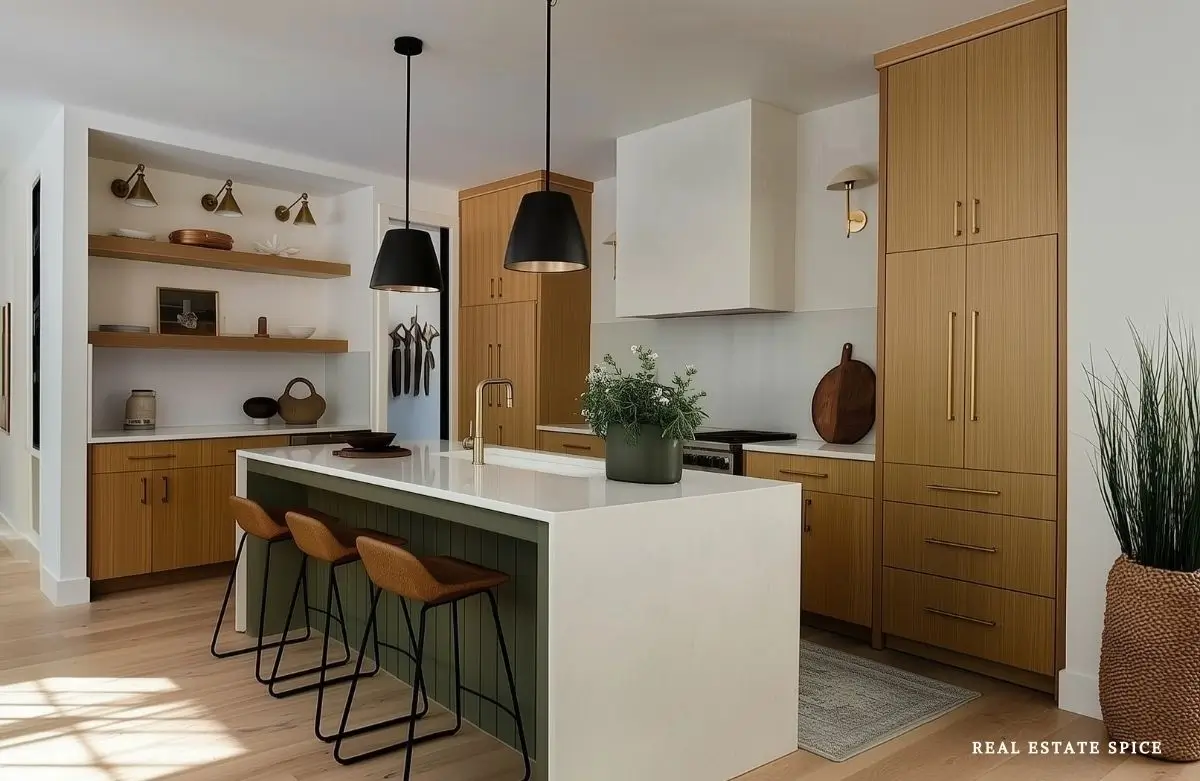
Image credit: @realestatespice.com
7. Choose Flush-Mount and Recessed Lights for Even Coverage
Flush-mount and recessed ceiling lights are useful when you want a bright kitchen without numerous hanging fixtures. Their understated appearance makes them particularly attractive in smaller rooms and kitchens with lower ceilings. They can also provide a practical foundation beneath decorative pendants or wall sconces.
Use a simple flush-mount ceiling fixture in a compact kitchen or consider a properly planned arrangement of recessed lights in a larger space. Semi-flush fixtures can add a little visual detail where ceiling clearance permits. Avoid placing all the lights in one straight row if that leaves important work areas poorly illuminated. Plan their positions around the counters, island, sink, and kitchen circulation.
Small-kitchen tip: A low-profile ceiling fixture paired with under-cabinet task lighting can make a small kitchen feel bright without adding visual clutter.
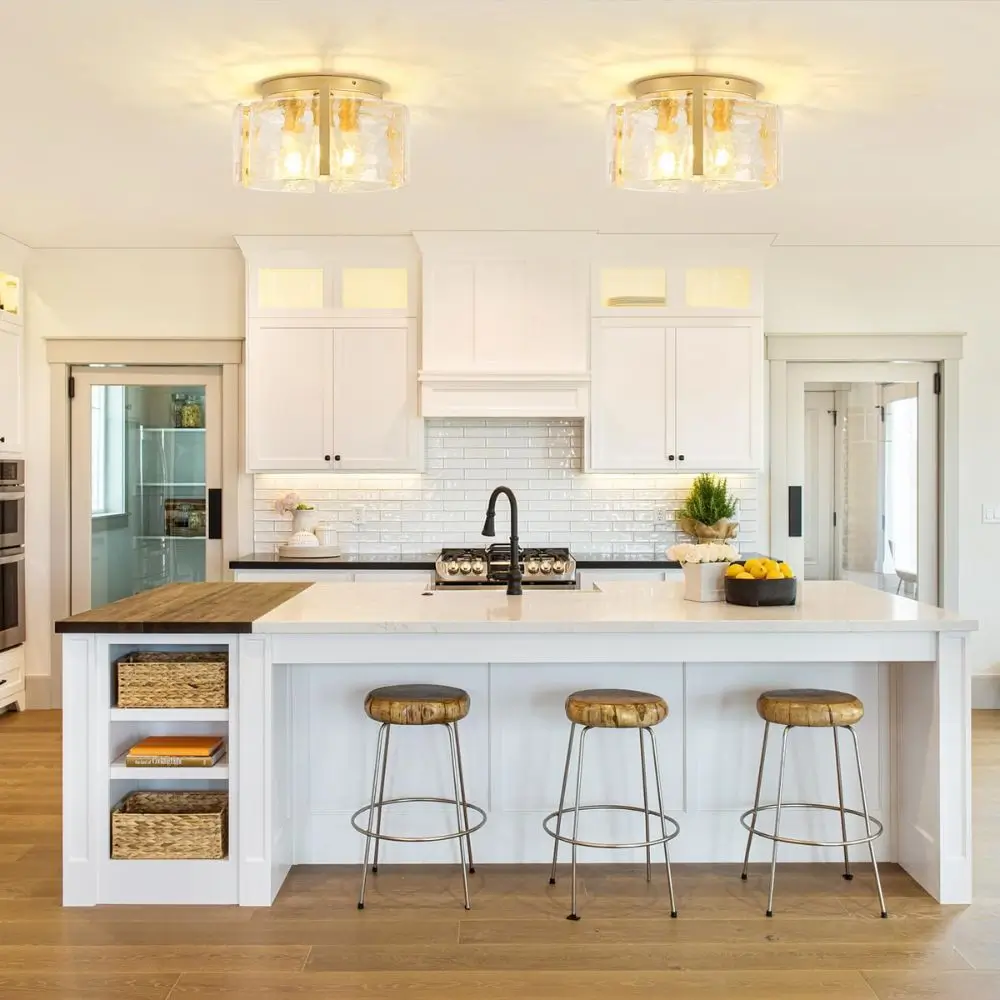
Image credit: @realestatespice.com
8. Give Recessed Lights a Stylish Metallic Finish
Recessed ceiling lights are usually chosen because they blend into the ceiling, but they can also become a subtle decorative feature. Metallic trims in warm brass, bronze, or another coordinated finish add an unexpected touch of elegance. This approach works beautifully in kitchens with stone countertops, distinctive cabinet hardware, and carefully chosen metal accents.
Choose recessed fixtures with a compatible decorative trim that complements the main kitchen palette. Warm brass can look beautiful alongside creamy marble-look surfaces, while dark bronze works well with walnut cabinets and muted neutral colors. Keep the fixtures evenly planned so the ceiling doesn’t appear crowded. Use approved trim components specifically intended for the fixture rather than modifying the lighting yourself.
Styling tip: Repeat the metallic finish in one other kitchen detail, such as cabinet pulls or the faucet, to make the ceiling lights feel intentional.
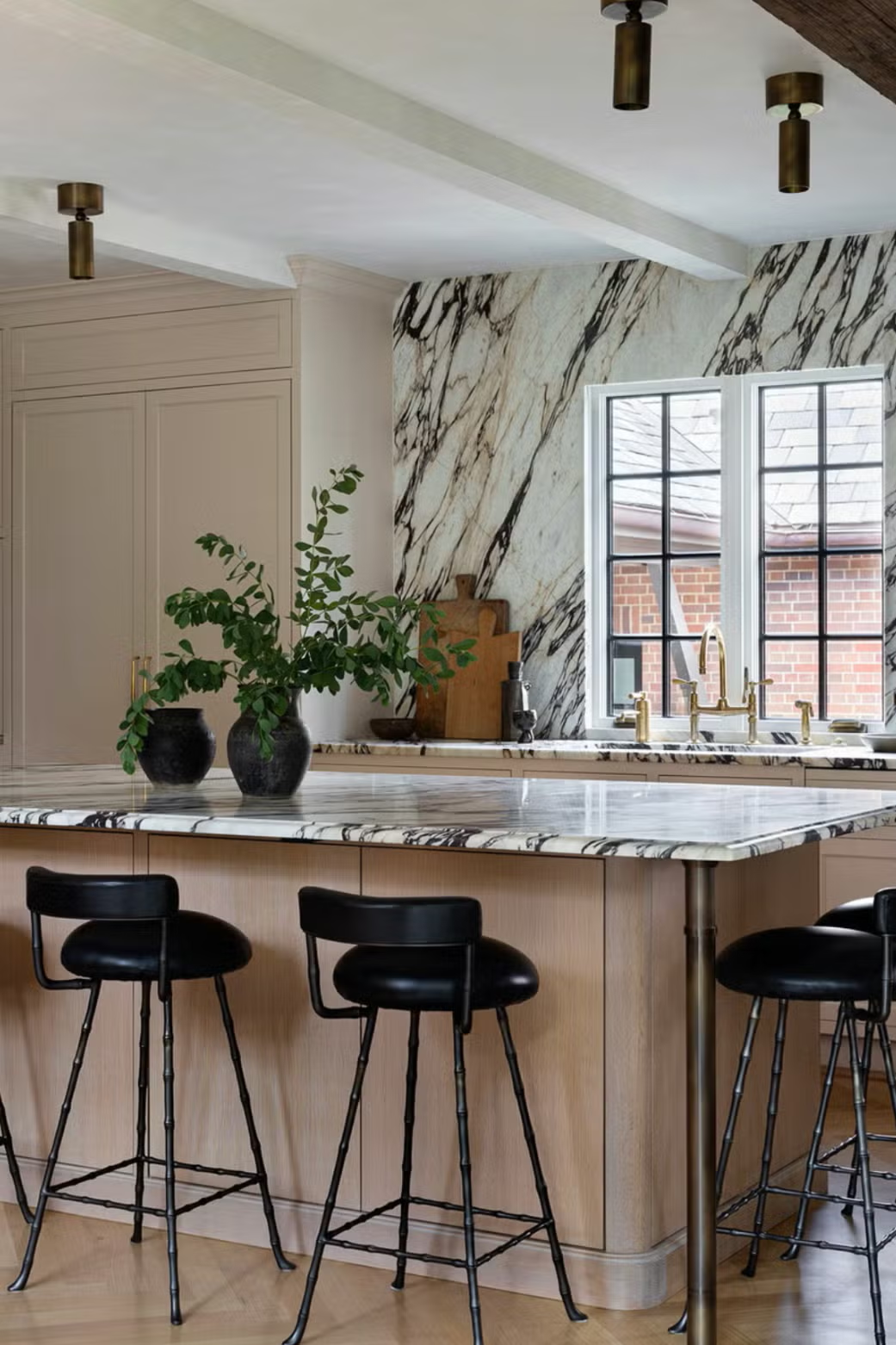
Image credit: @housebeautiful.com
9. Soften Bright Light With Tinted Glass Pendant Shades
Tinted glass pendant shades can make a kitchen feel warmer and more inviting. Unlike completely clear glass, subtly colored shades filter some of the light and create a gentler visual effect. Amber, smoke gray, and softly tinted glass are especially beautiful above breakfast tables and islands used for casual dining.
Choose pendants with lightly tinted glass shades in amber or warm gray and position them above the island or breakfast nook. Pair amber glass with natural oak cabinets and brass details for a cozy appearance, or use smoke gray glass with charcoal cabinetry for a more contemporary feel. Make sure the fixtures still provide adequate light for the activities below, and add separate task lighting if necessary.
Lighting tip: Darker glass shades can reduce the amount of usable light. Choose the tint and bulbs based on both appearance and the brightness your kitchen needs.
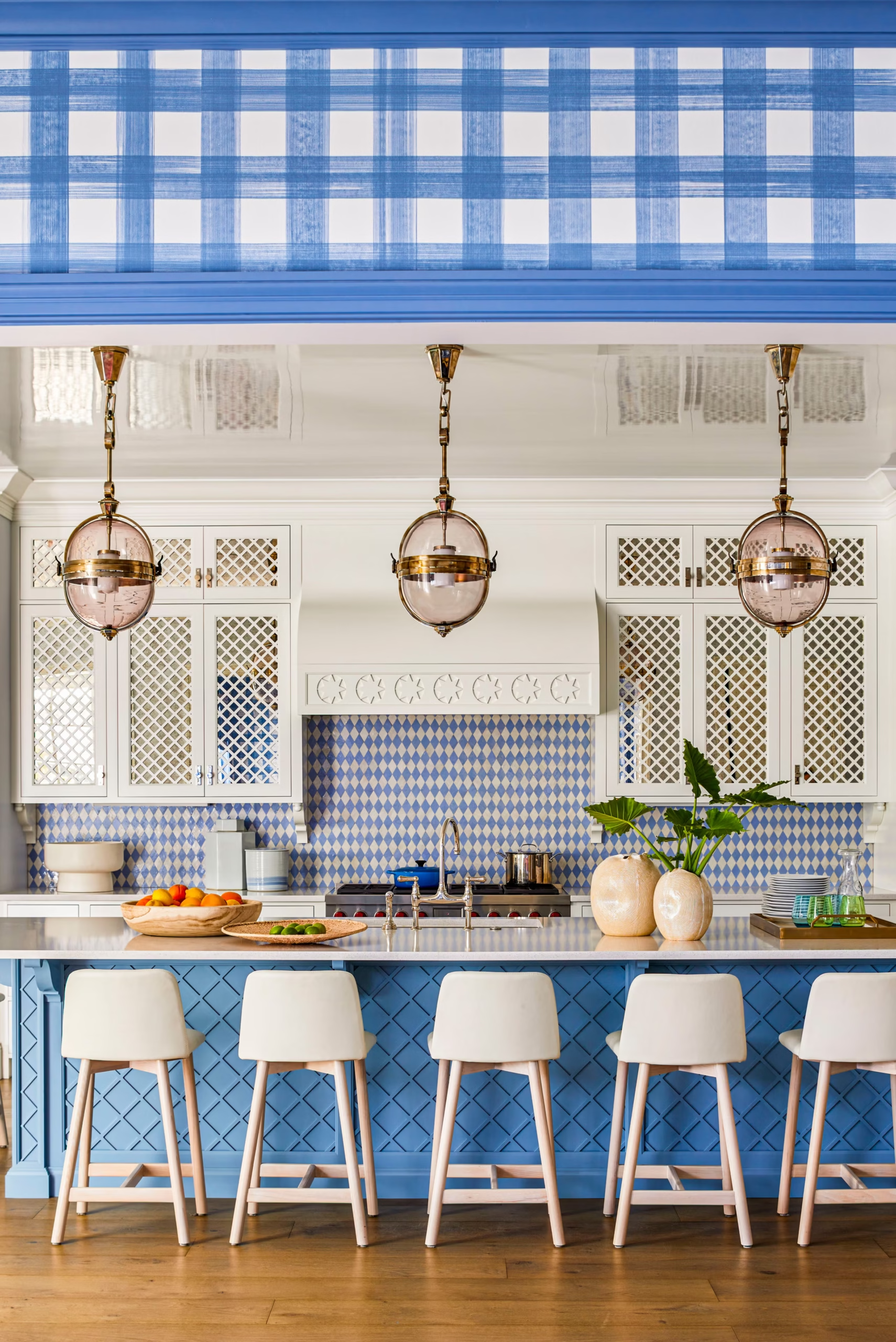
Image credit: @housebeautiful.com
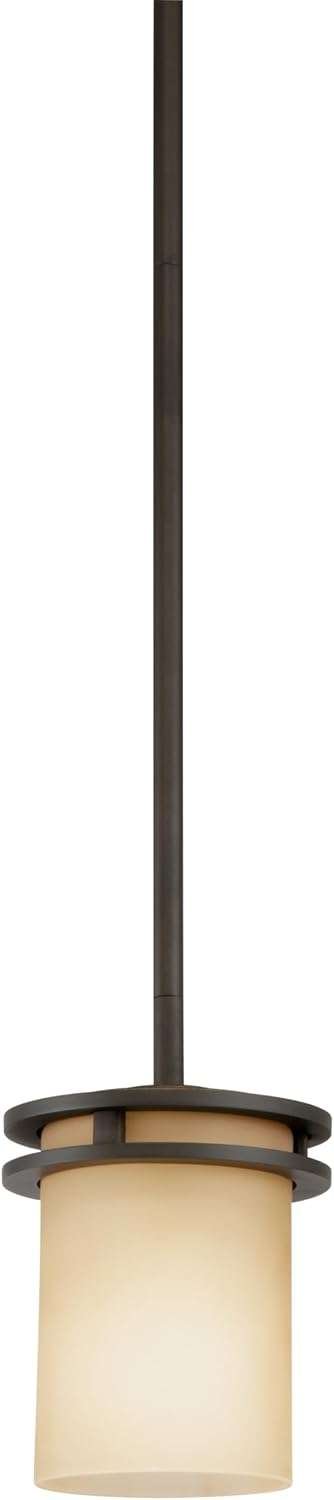
Amazon Find: Amber Glass Pendant Lighting
Tinted glass pendant lights can add warmth above kitchen islands and breakfast nooks.
10. Highlight Vaulted Ceilings With Angled Hanging Fixtures
Vaulted and sloped ceilings can make a kitchen look spacious and architectural, but they also require careful planning when choosing hanging lights. A rigid fixture may not hang correctly from a slanted surface, while an appropriately designed chain or adjustable suspension can create a beautiful vertical feature.
Choose pendant lights designed for installation on sloped ceilings, with compatible adjustable chains or manufacturer-approved mounting systems. Hang them above the island or dining area at heights that suit the room’s proportions. In a rustic kitchen, warm metal or glass pendants can complement exposed wooden beams. For a modern vaulted room, choose a simple fixture that emphasizes the height without visually overwhelming the space.
Installation tip: Check that the fixture and mounting hardware are rated for the ceiling angle and weight. Have a qualified electrician assess the mounting location and electrical requirements.
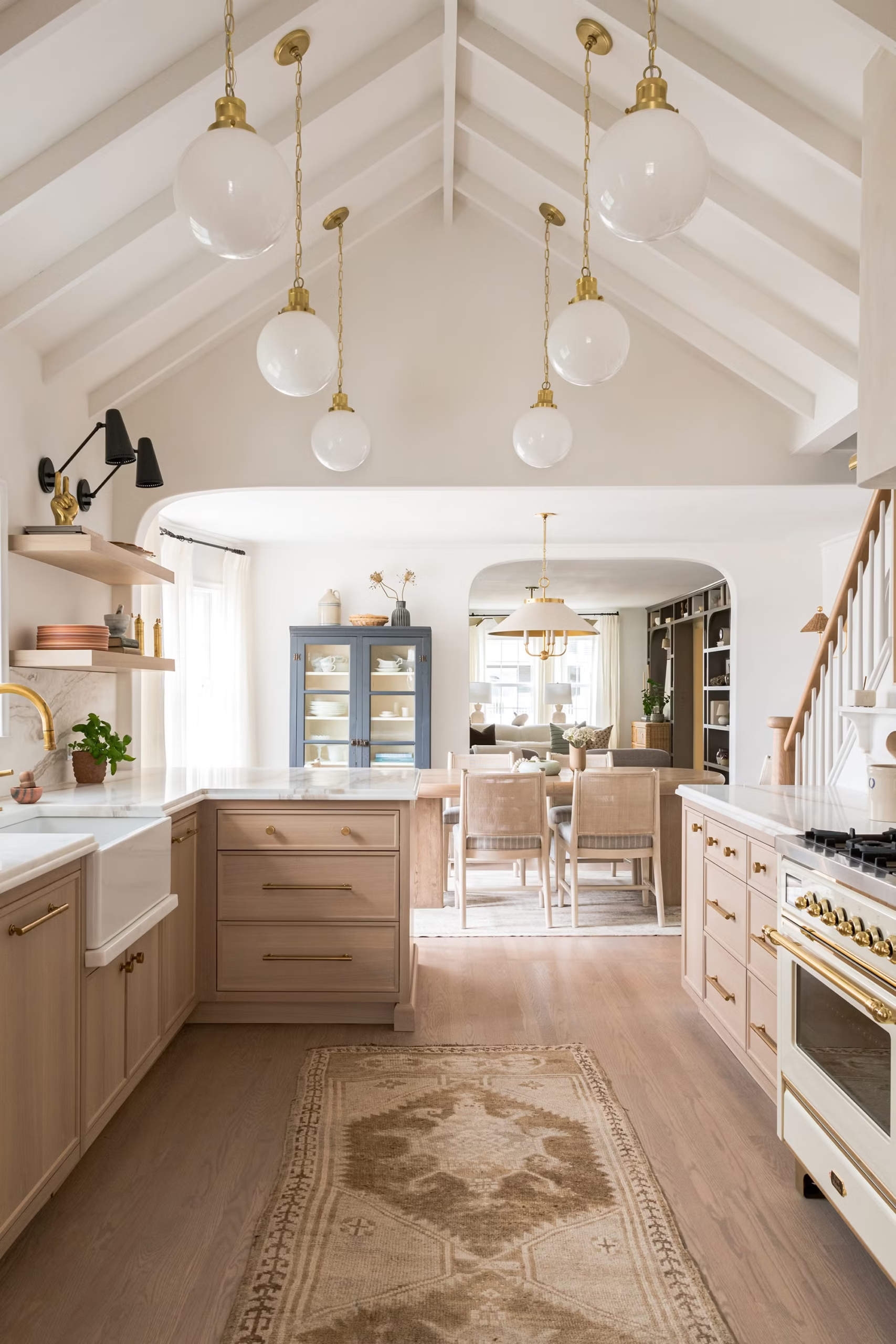
Image credit: @housebeautiful.com
11. Coordinate Pendant Colors With Kitchen Cabinets
Kitchen lighting doesn’t always need a contrasting metallic finish. Choosing pendants that complement or closely match your cabinet color can make the room feel softer and more cohesive. Painted metal and ceramic-style shades are especially useful for introducing subtle color without adding too many competing materials.
For example, pale sage cabinets can look beautiful with creamy green or white pendants, while a navy kitchen may suit soft blue or ivory shades. Coordinate the lighting with the overall palette rather than trying to match every surface exactly. Keep the shades large enough to look intentional, and use warm wood or brass accents elsewhere to prevent the room from feeling flat.
Color tip: Matching colors work best when the materials provide some variation. Smooth painted cabinets paired with softly textured ceramic-look shades can create a sophisticated layered effect.
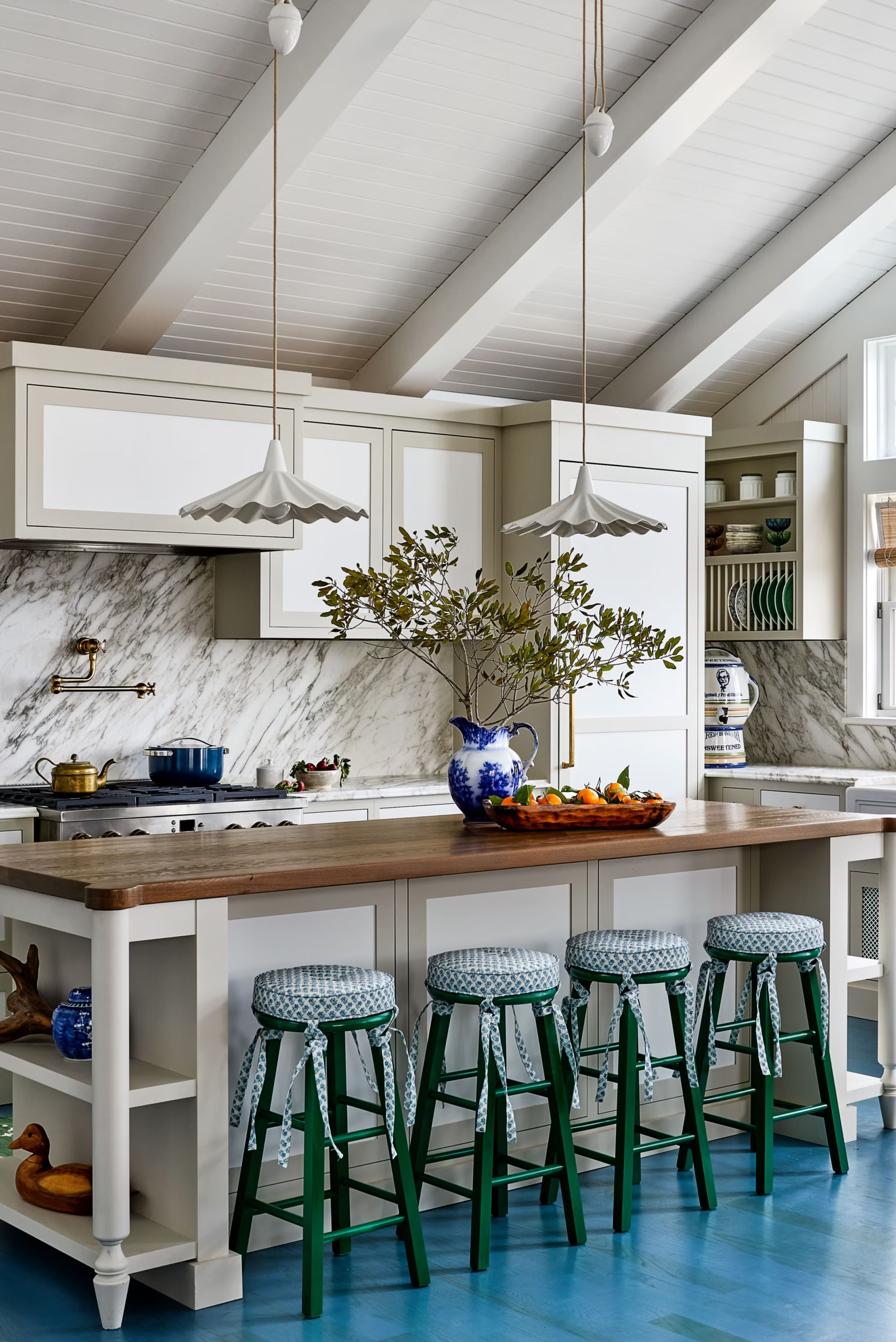
Image credit: @housebeautiful.com
12. Try Adjustable Rise-and-Fall Pendant Lighting
Adjustable rise-and-fall pendants are both practical and visually interesting. Their movable suspension lets you change the position of the shade for different activities, making them particularly appealing above kitchen tables and certain multifunctional areas. They also introduce a charming vintage-inspired detail to traditional and transitional interiors.
Choose a rise-and-fall fixture specifically designed to adjust safely and install it above a breakfast table or another location approved for that model. Lower the pendant only within its intended range when you want more focused light, and raise it when additional clearance is needed. Combine the fixture with separate general lighting so the whole kitchen stays functional. A metal or opal-glass shade can create a timeless appearance.
Practical tip: Follow the manufacturer’s height and adjustment guidance. Do not attempt to convert an ordinary fixed pendant into a movable fixture.
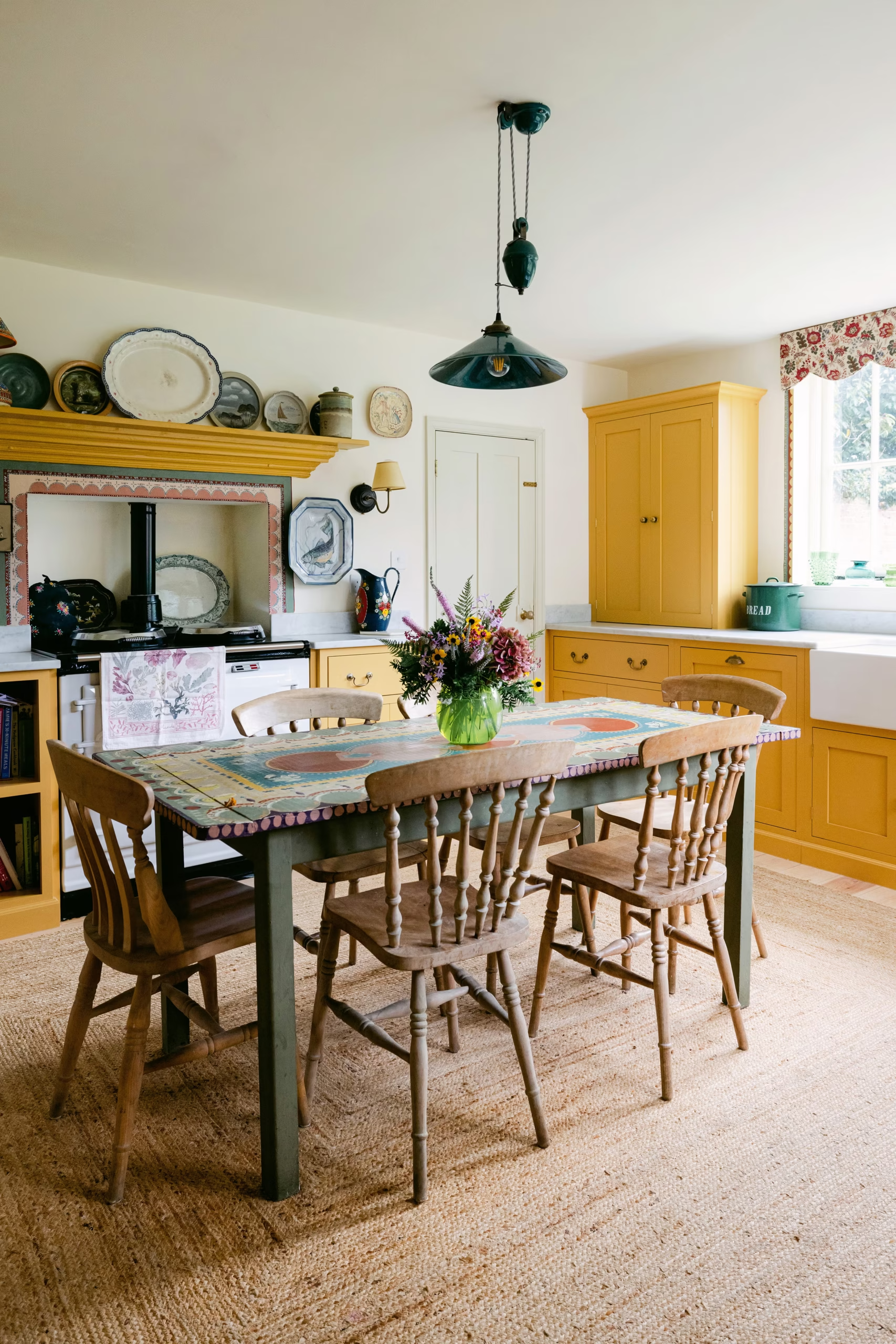
Image credit: @housebeautiful.com
13. Mix Different Light Fixture Shapes for a Designer Look
Matching every light fixture isn’t the only way to create a coordinated kitchen. Combining different shapes can make the room feel more personal and thoughtfully layered, especially when the fixtures share related materials or finishes. A round pendant, slim wall sconce, and simple flush-mount fixture can work beautifully together.
Start with one main finish, such as brushed brass, black metal, or warm white. Choose a rounded pendant above the island, then introduce a different but complementary fixture over the sink or breakfast area. Repeat a visual detail such as frosted glass, a curved silhouette, or the same metallic accent. Avoid combining too many unrelated styles, as the lighting may begin to feel mismatched rather than intentionally varied.
Designer styling tip: Choose two contrasting shapes but keep one shared finish or color. This creates visual variety while maintaining a clear connection between the fixtures.
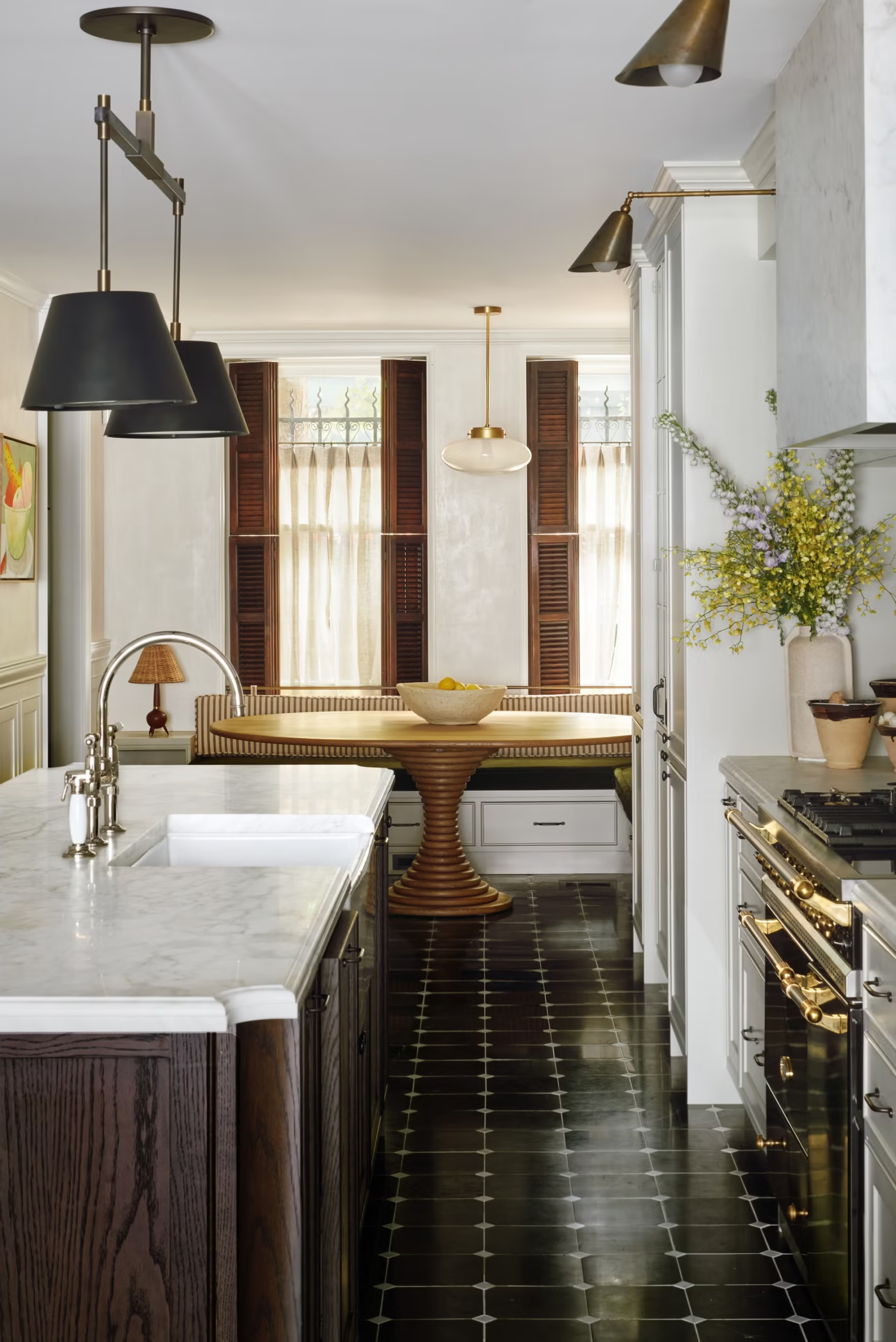
Image credit: @housebeautiful.com
14. Illuminate the Sink and Prep Areas With Dedicated Task Lights
A beautiful kitchen can still be frustrating to use when the sink or main preparation area sits in shadow. Dedicated task lighting helps you see more clearly while washing dishes, preparing ingredients, or cleaning countertops. It’s especially valuable at night when daylight from nearby windows is no longer available.
Consider a properly positioned wall sconce above a suitable sink location, an approved ceiling-mounted directional fixture, or under-cabinet LED lighting where upper cabinets are present. Choose a fixture with appropriate brightness and a light distribution that reaches the actual work surface. Coordinate the finish with your faucet or cabinet hardware, but prioritize safe positioning, moisture suitability, and glare control over appearance alone.
Practical tip: Select fixtures with appropriate ratings for their proximity to water and follow electrical codes and manufacturer instructions. All hardwired work should be completed by a qualified electrician.
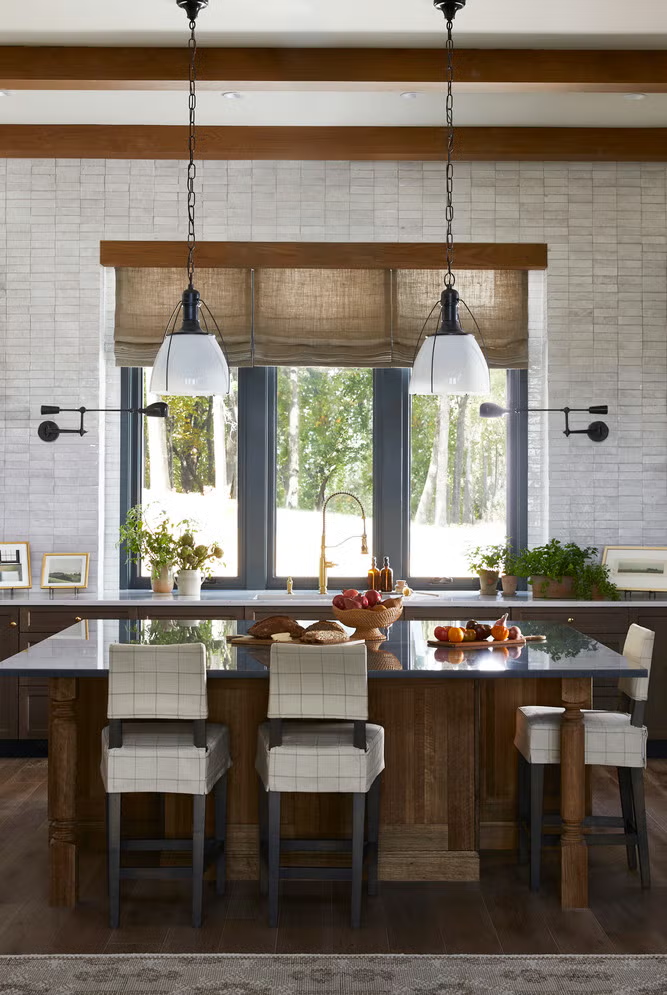
Image credit: @housebeautiful.com
Amazon Find: Kitchen Wall Sconce Lighting
Explore kitchen sconces and directional wall fixtures for suitable sink and preparation areas.

Kitchen Pendant Lighting Placement and Styling Tips
Pendant lights should look proportional to the surface below them and provide the right amount of usable illumination. The best hanging height and spacing depend on the fixture size, ceiling height, island dimensions, and the manufacturer’s installation instructions.
- Measure your island first: Choose a pendant arrangement that relates to its length and width.
- Protect sightlines: Check that the fixtures don’t block views across the island or interfere with conversation.
- Consider the shade material: Clear glass feels airy, while opaque shades can provide more controlled downward illumination.
- Repeat a finish: Brass lighting looks coordinated with brass cabinet handles, while black fixtures can complement dark cabinet hardware.
- Avoid glare: Consider diffused bulbs and suitable shades rather than exposed, overly bright light sources.
- Plan for cleaning: Glass shades and decorative metal finishes should be accessible and easy to maintain.
- Use qualified installation: Confirm ceiling support, electrical requirements, and fixture clearances before mounting.
How to Make Kitchen Lighting Look Expensive on a Budget
A well-lit kitchen doesn’t always require a complete remodel. Small improvements can make an existing space feel more polished, provided that the lighting remains safe and suitable for everyday kitchen activities.
- Refresh an outdated shade: A compatible replacement glass shade can update an existing fixture without changing the whole kitchen.
- Coordinate metal finishes: Repeating one lighting finish in cabinet handles or other details makes the room feel cohesive.
- Choose appropriate LED bulbs: High-quality, compatible bulbs can improve light quality and efficiency.
- Brighten shadowed countertops: Suitable under-cabinet lighting can noticeably improve everyday usability.
- Prioritize one statement fixture: Choose a beautiful island pendant instead of several unrelated decorative lights.
- Introduce dimming where appropriate: Compatible controls add flexibility without changing the kitchen layout.
- Keep fixtures clean: Dust and grease can reduce brightness and make even attractive lights look neglected.
Best Kitchen Lighting Color and Finish Combinations
- Brushed Brass + Cream Cabinets + Warm Oak: Creates an elegant, welcoming farmhouse or transitional kitchen.
- Matte Black + White + Natural Wood: A timeless modern farmhouse combination with crisp contrast.
- Brushed Nickel + Soft Gray + White: Works beautifully in contemporary kitchens with understated finishes.
- Amber Glass + Walnut + Warm Beige: Creates a soft, sophisticated evening atmosphere.
- Antique Bronze + Sage Green + Ivory: Brings a relaxed vintage-inspired feeling to cottage kitchens.
- Opal Glass + Pale Blue + Cream: A fresh combination for classic and coastal kitchen interiors.
- White Fixtures + Light Oak + Warm Gray: Perfect for minimalist kitchens where the lighting should blend into the design.
Styling tip: Choose a primary fixture finish and repeat it in one or two other kitchen details. You can mix metals, but a consistent visual connection helps the room feel more intentional.
Choosing Kitchen Light Color Temperature
Color temperature affects whether a kitchen feels warm and cozy or crisp and energizing. It is measured in kelvin, usually shown with the letter K on lighting packaging. Different lighting temperatures suit different preferences and activities.
| Color Temperature | Appearance | Common Use |
|---|---|---|
| 2700K | Warm, slightly golden white | Cozy dining and accent lighting |
| 3000K | Soft warm white | Many general kitchen lighting schemes |
| 3500K | Balanced neutral white | Multipurpose kitchens and preparation zones |
| 4000K | Crisper neutral white | Bright, detail-oriented task areas |
Lighting tip: Color temperature isn’t the same as brightness. Also consider lumen output, color rendering, glare, and fixture placement. Choose bulbs and controls that are compatible with the lighting system.
Common Kitchen Lighting Design Mistakes to Avoid
Relying on One Ceiling Fixture
A single overhead light often leaves work surfaces in shadow, particularly when upper cabinets block some of the illumination. Combine general lighting with suitable task lighting for better usability.
Hanging Pendants Too Low
Oversized or low-hanging fixtures can interrupt sightlines and make the island feel crowded. Choose a hanging height based on the fixture design, island dimensions, ceiling height, and manufacturer guidance.
Ignoring Shadows on the Countertop
Ceiling lights don’t always reach under upper cabinets. Check the brightness of your main food-preparation surfaces at night and consider appropriate task lighting where needed.
Choosing Appearance Over Usable Light
Dark glass, decorative woven shades, and highly sculptural fixtures can look beautiful but may not provide enough illumination for cooking. Combine decorative fixtures with practical lighting layers instead of expecting one light to do everything.
Using Too Many Different Light Colors
Mixing very warm bulbs with stark cool-white lighting can make the room feel inconsistent. Choose a planned color-temperature approach, while allowing suitable differences between general, task, and accent lighting.
Ignoring Electrical and Moisture Safety
Kitchen fixtures may be installed near sinks, cooking equipment, steam, and heat. Use appropriately rated products, follow electrical codes and appliance clearances, and have a qualified electrician perform hardwired installations and modifications. Never overload outlets or run loose wiring across wet or hot surfaces.
Frequently Asked Questions About Kitchen Lighting Design
What is the best lighting design for a kitchen?
A layered lighting plan is usually the most practical approach. Combine ambient ceiling lighting with focused task lighting over preparation areas and optional accent lighting for decorative features. Adjust the fixture sizes and placement to suit the room.
Are pendant lights good for kitchen islands?
Yes. Appropriately sized pendant lights can provide useful illumination while adding style to a kitchen island. Choose the number, spacing, and hanging height based on the island dimensions, light output, and manufacturer installation instructions.
What lighting works best in a small kitchen?
Flush-mount ceiling lights, carefully positioned recessed fixtures, and compact under-cabinet lighting can work well in smaller kitchens. They provide practical brightness without taking up much visual or physical space.
Should kitchen lights be warm white or cool white?
Warm white lighting is popular for inviting kitchen ambience, while more neutral white can be useful in preparation areas. Many kitchens use lighting around 3000K to 3500K, but the best choice depends on the room, its finishes, and personal preference.
How can I update my kitchen lighting on a budget?
Start by cleaning existing fixtures, using appropriate bulbs, and addressing dark work areas with suitable task lighting. You can also update compatible shades, coordinate fixture finishes, or introduce dimming controls. Leave electrical installation and modifications to qualified professionals.
Final Thoughts: Make Your Kitchen Shine With Better Lighting
Beautiful kitchen lighting is about finding the right balance between style, comfort, and everyday function. Whether you prefer elegant island pendants, subtle recessed fixtures, warm tinted glass, or practical under-cabinet lighting, the right combination can make the entire room feel brighter and more inviting.
Start with one of these 14 kitchen lighting design ideas and styling tips that suits your layout and budget. Build a useful foundation with general lighting, focus extra illumination on the areas where you work, and add decorative fixtures that complement your kitchen’s colors and finishes. With thoughtful planning and safe installation, you can create a kitchen that looks beautiful during the day and feels wonderfully cozy in the evening.
