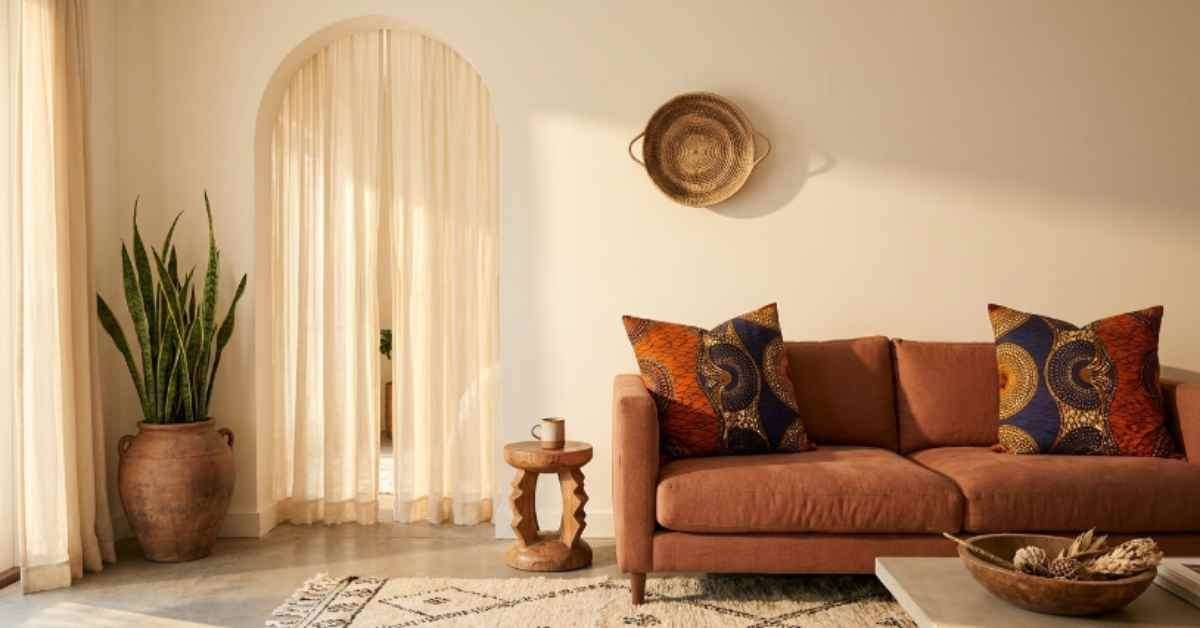
Afrohemian decor is a beautiful way to bring personality, culture, and warmth into your home without making every corner feel crowded. Combining the relaxed layers of bohemian decorating with the distinctive craftsmanship, textiles, and artistic traditions of African cultures, this style favors meaningful pieces over endless accessories. Think rich earthy colors, beautifully woven fabrics, sculptural wooden furniture, and artwork that deserves its own special place.
For 2027, the grown-up approach to Afrohemian decor is about thoughtful combinations rather than decorating with everything at once. A striking textile, a well-chosen statement artwork, and a few natural materials can make a room feel sophisticated yet comfortable. These 10 Afrohemian decorating ideas will help you create that collected, welcoming look in your living room, bedroom, or small apartment.
More ideas to explore:
What Makes Afrohemian Decor Different From Traditional Boho?
Traditional bohemian decorating often combines relaxed furniture, numerous patterns, plants, colorful textiles, and personal collections. Afrohemian interiors share that comfortable spirit but place particular emphasis on African artistic traditions, heritage, handcrafted materials, and cultural storytelling.
The distinction matters because Africa is not one uniform design tradition. Ghanaian weaving, Malian bogolanfini, and Kuba textile craftsmanship from the Democratic Republic of the Congo have different histories and techniques. Choosing pieces with identifiable origins creates a more meaningful home than treating all African-inspired patterns as interchangeable.
A mature Afrohemian room doesn’t have to be minimalist. Instead, it balances expressive objects with functional furniture, open surfaces, comfortable lighting, and carefully considered color combinations.
The Grown-Up Afrohemian Decorating Formula
Warm Neutral Foundation + Rich Earthy Colors + One Statement Textile + Handcrafted Details + Sculptural Furniture + Personal Artwork
Best Color Palettes for a Grown-Up Afrohemian Home
A coordinated palette helps bold fabrics and handcrafted decorations feel intentional. Choose a main neutral, an earthy supporting shade, and one deeper accent.
| Decorating Mood | Suggested Palette | Best Details |
|---|---|---|
| Warm and Earthy | Terracotta, sand, espresso | Clay pottery, walnut furniture, woven fabrics |
| Modern Afrohemian | Cream, charcoal, cognac | Graphic textiles, carved wood, large artwork |
| Rich and Expressive | Ochre, indigo, rust | Statement cushions, handmade artwork |
| Natural and Relaxed | Oatmeal, olive, honey brown | Linen curtains, woven baskets, wood accents |
| Moody and Sophisticated | Chocolate, burnt sienna, muted gold | Dark wood, textured lamps, ceramic objects |
10 Afrohemian Decor Ideas for a Sophisticated Home in 2027
1. Build Thoughtful Layers With Statement Textiles
Layering is essential to Afrohemian decorating, but a sophisticated room doesn’t need every available pattern. Start with comfortable, relatively simple furniture, then bring in carefully selected textiles that add depth. A warm beige sofa can become the foundation for a patterned cotton throw, textured cushions, and a richly woven rug.
Let one substantial textile lead the arrangement. For example, a terracotta-and-black patterned rug can establish the main colors, while smaller cream cushions and a soft brown blanket provide quieter supporting layers. Include different fabric weights, such as smooth cotton, chunky weaving, and soft linen, so the combination remains interesting even when the colors are similar.
Styling tip: Keep at least one large surface visually simple. Plain curtains or a solid-colored sofa give bold fabrics enough breathing room to stand out.
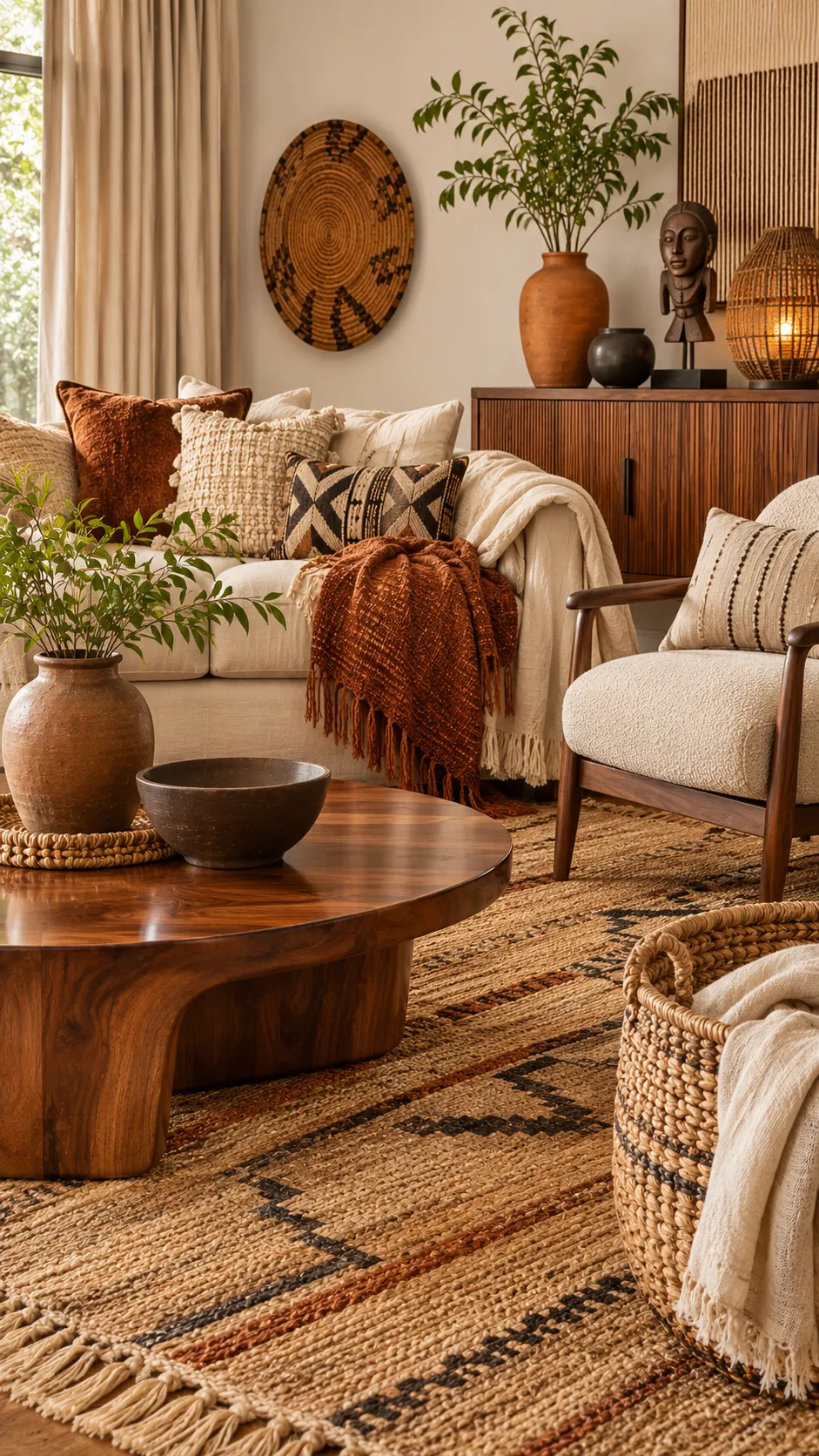
Amazon Find: Earth-Tone Woven Throw Blankets
A textured cotton throw in rust, tan, or chocolate brown adds softness to neutral seating. Look for a pattern and fabric weight that complement your existing upholstery.
2. Choose Rich Earth Tones With Purposeful Pattern
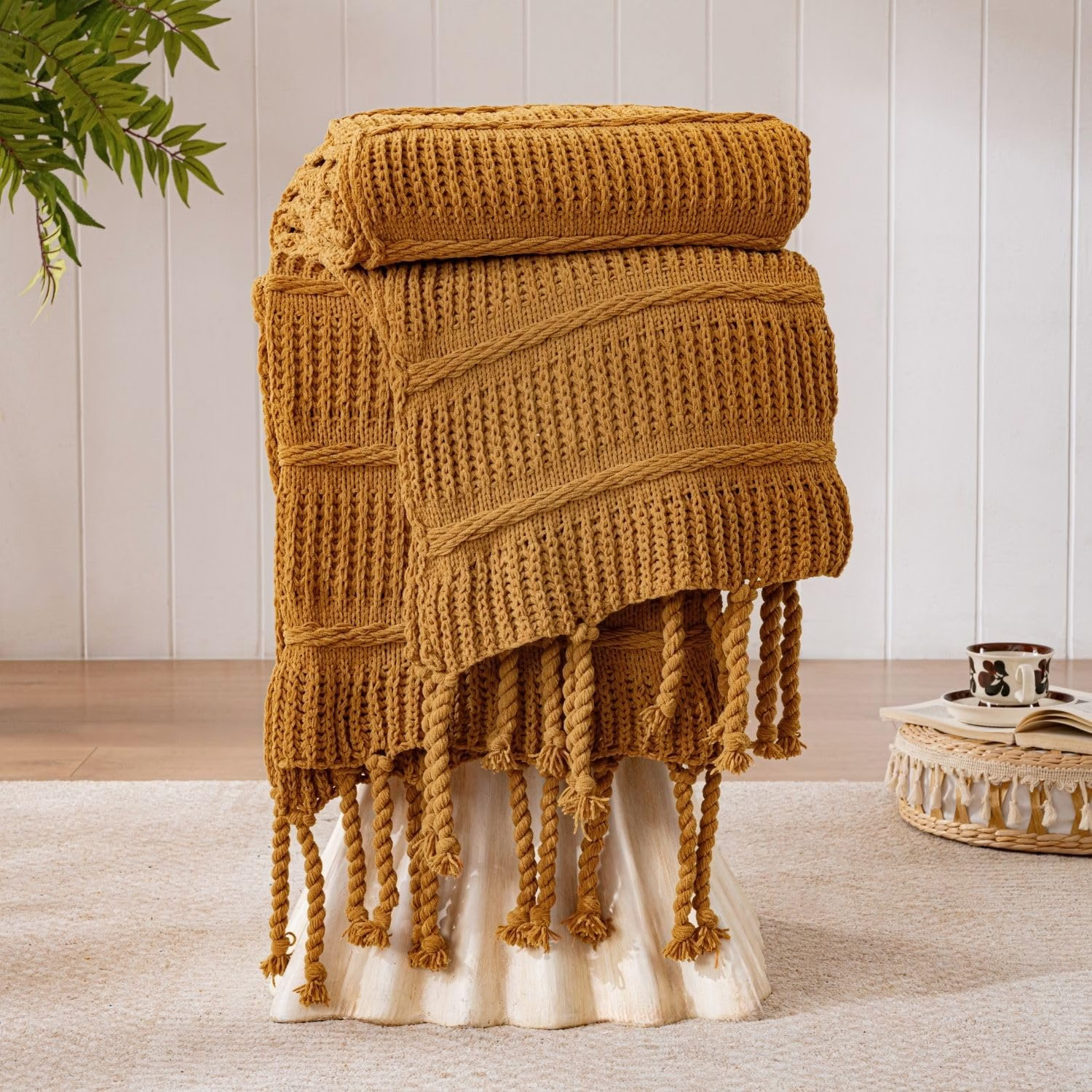
Earthy colors create a natural connection between the expressive fabrics and grounded furniture found in Afrohemian interiors. Ochre, rust, chocolate brown, warm sand, olive green, and indigo can create an inviting combination that feels polished rather than overly bright.
Try warm ivory walls with a rich caramel sofa, deep indigo cushions, and a burnt-orange accent chair. Introduce subtle black details through picture frames or a geometric pillow to sharpen the composition. If you love colorful interiors, choose a vibrant patterned rug and select two of its shades for the rest of the room instead of adding unrelated colors.
Budget tip: Experiment with pillow covers, table linens, or framed art before committing to a dark wall color. Small accessories are easier to replace when your preferences change.
3. Mix Natural Fibers, Warm Woods, and Handmade Textures
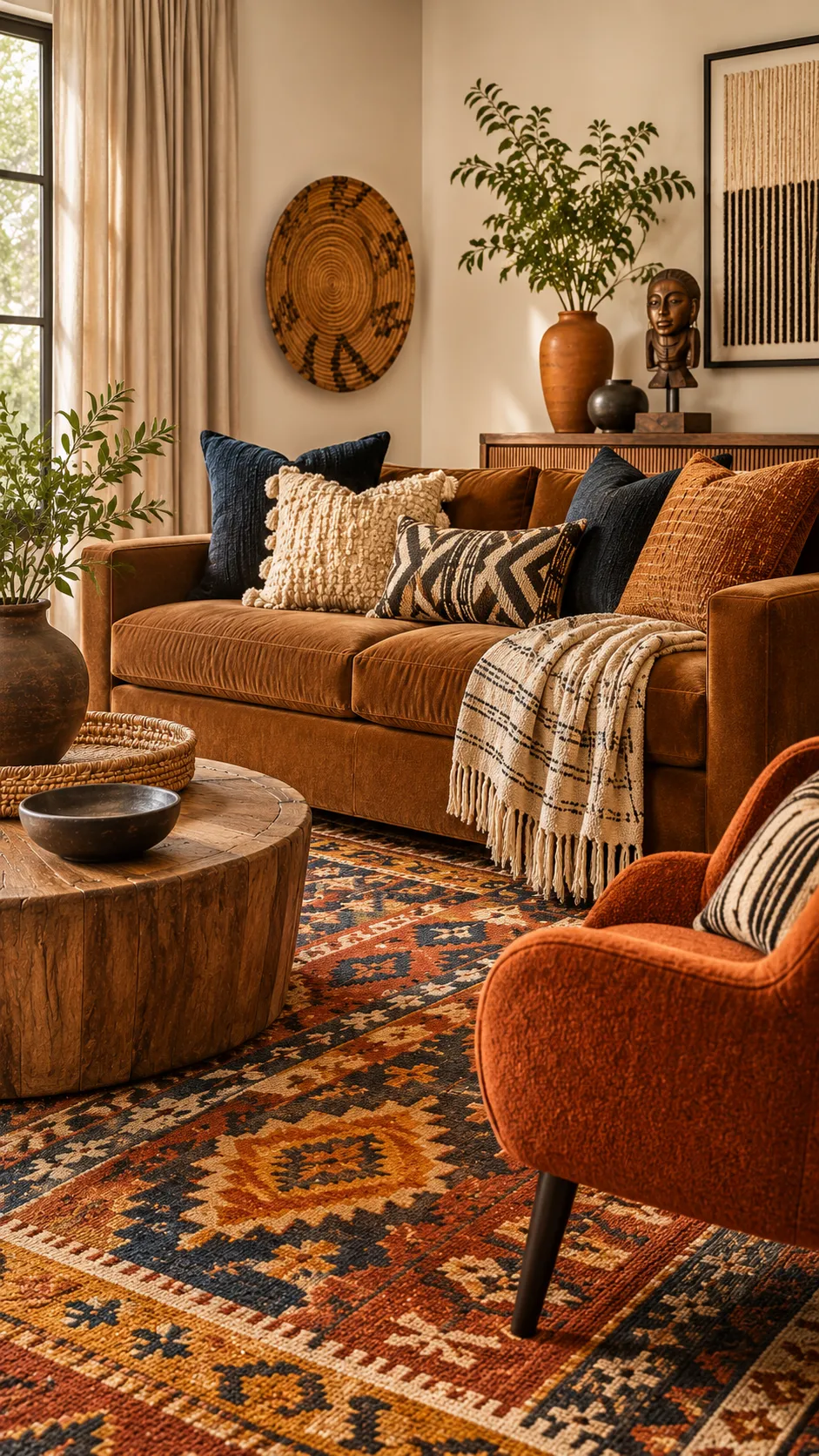
Natural materials give Afrohemian rooms their inviting, tactile character. A combination of handwoven baskets, wooden furniture, cotton fabrics, ceramic pottery, and textured rugs creates interest without depending on bright colors everywhere. The most beautiful arrangements often contrast smooth and rough finishes.
Place a polished walnut coffee table over a flatwoven natural-fiber rug. Add a matte ceramic bowl, a woven storage basket, and a comfortable upholstered chair. The wood provides structure, while the textiles soften the room. For a bedroom, pair a solid wooden bed with linen-look bedding and a woven bench at its foot, provided the room has enough walking space.
Practical tip: Consider durability when choosing natural materials. Coarse rugs may be uncomfortable beneath bare feet, while moisture-sensitive baskets should be kept away from wet floors and plant drainage.
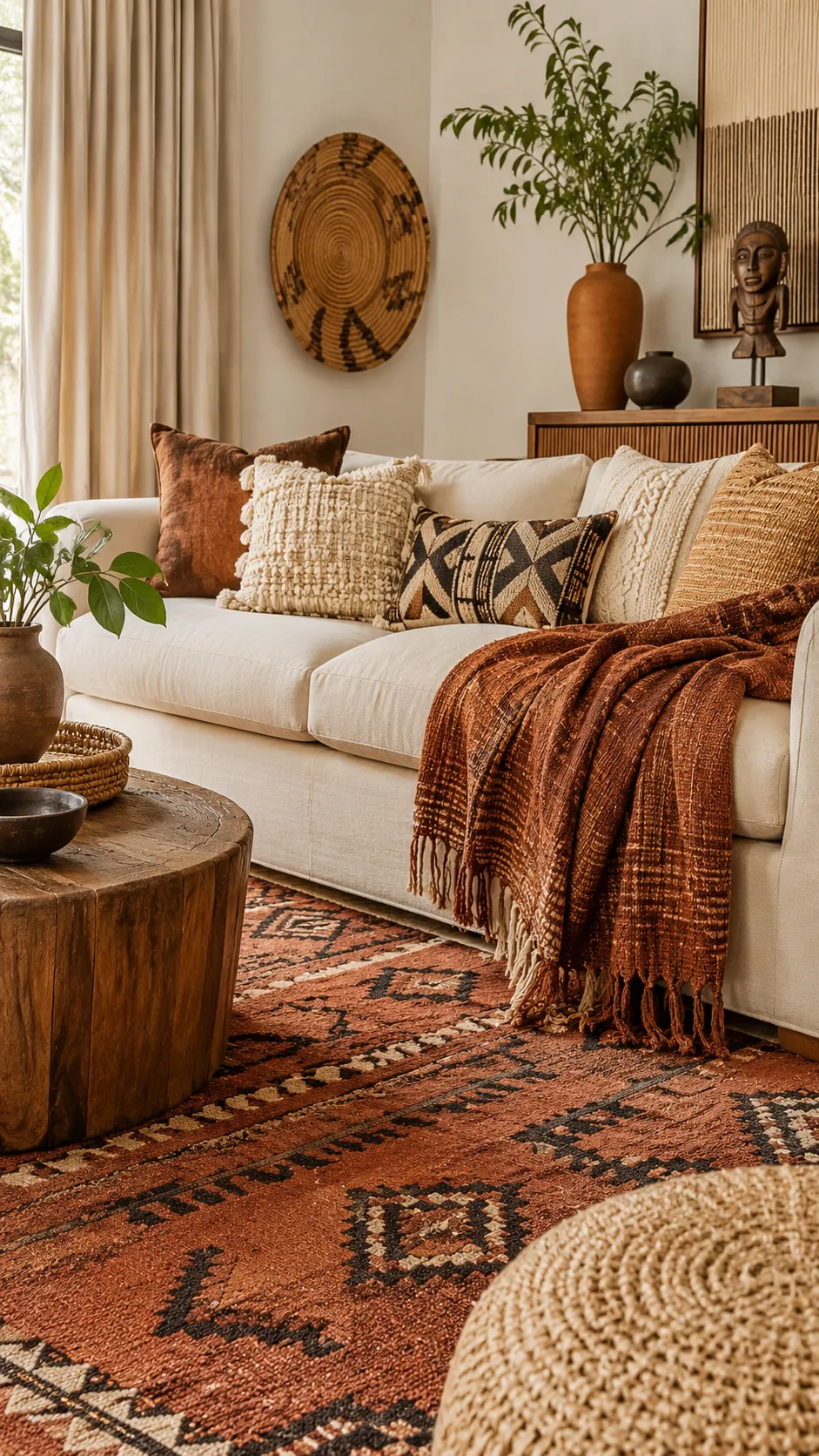
Amazon Find: Natural-Look Jute Area Rugs
A neutral jute or jute-blend rug introduces earthy texture beneath wooden furniture. Check the rug’s dimensions, comfort, cleaning instructions, and recommended pad before choosing.
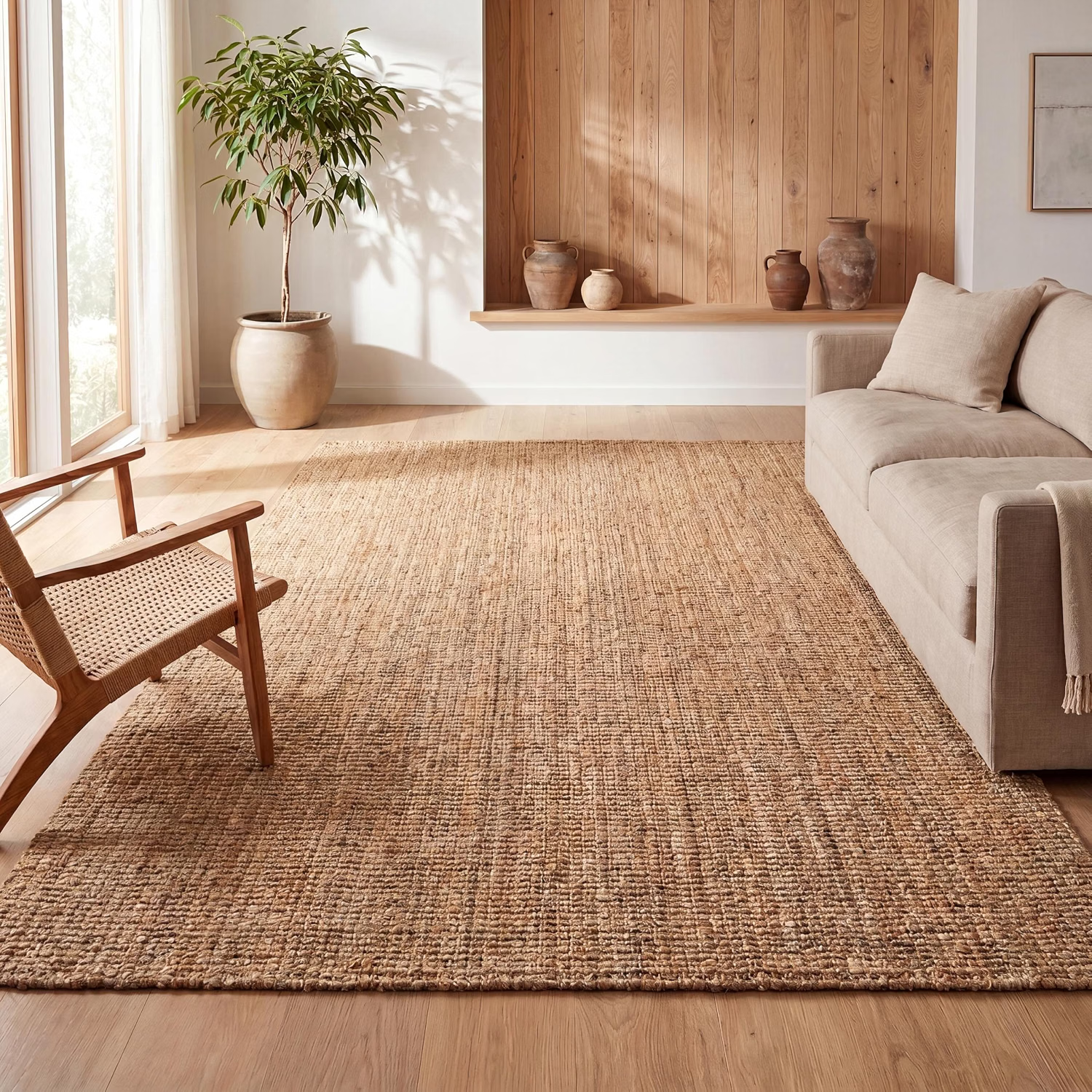
4. Introduce Meaningful Artisan-Made Decorations
Handcrafted accessories are an important part of Afrohemian design because they introduce individual artistry into everyday spaces. Rather than buying a matching set of decorative objects, consider pieces created by identifiable artists, makers, or weaving cooperatives. Handwoven wall art, pottery, contemporary sculptures, and carved wooden objects can each become a meaningful addition.
Choose one handcrafted item for a prominent position, such as a woven bowl on a dining sideboard or a ceramic vessel beside a reading chair. Surround it with simple objects so its shape and texture remain visible. When shopping for African artwork, look for clear information about the maker, country or community of origin, and materials used.
Thoughtful decorating tip: Don’t treat ceremonial or sacred cultural objects as generic accessories. Learn their significance and intended use, and favor artists and sellers who provide reliable provenance.
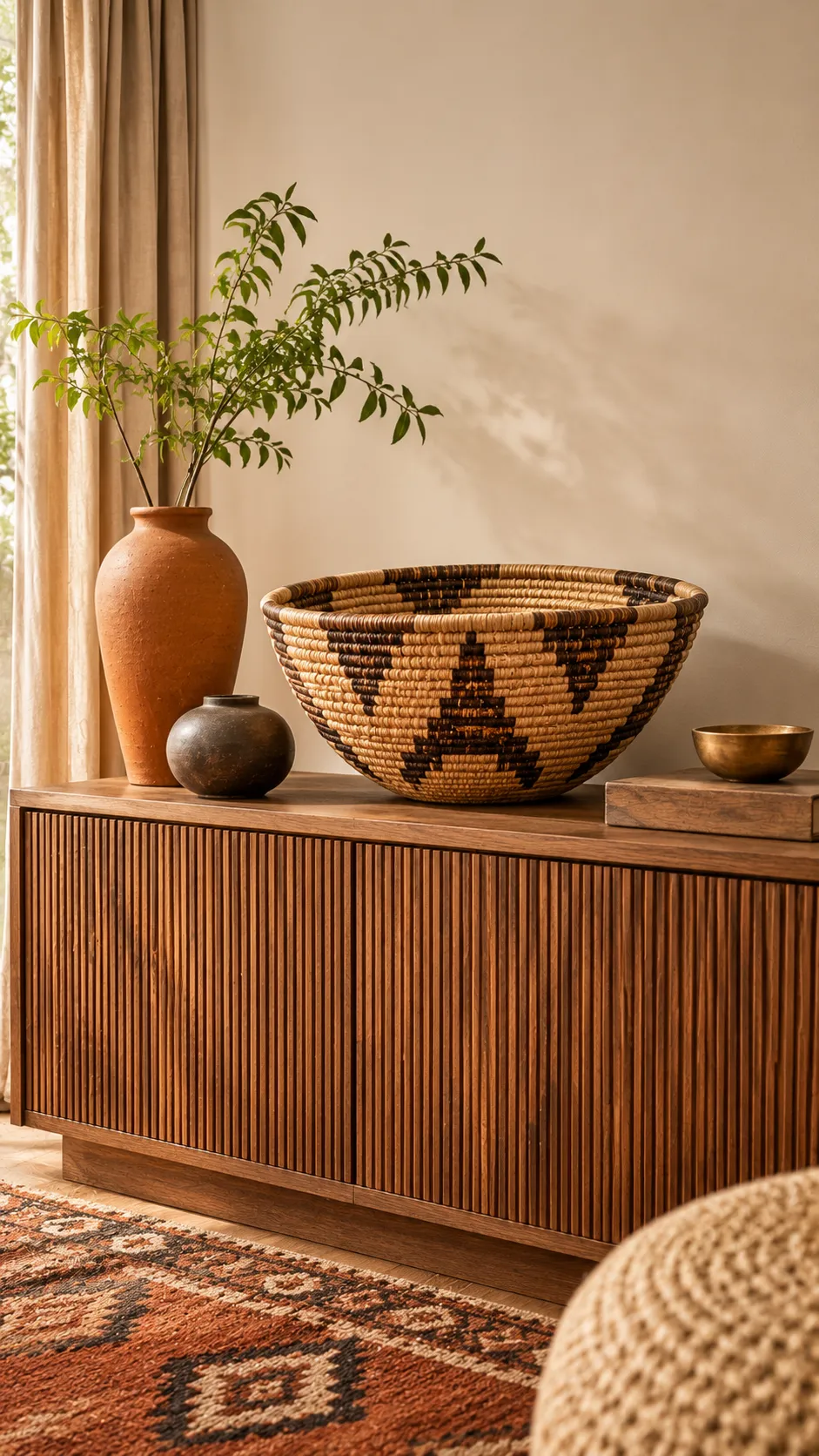
5. Create a Personal Display With Collected Objects and Soft Lighting
A mature Afrohemian interior should feel personal rather than arranged entirely from a store display. A thoughtfully styled console, bookshelf, or entryway table provides space for meaningful photographs, collected pottery, small sculptures, and decorative objects that reflect your experiences and interests.
Begin with one framed artwork or photograph as the backdrop. Place a medium-sized ceramic vessel to one side and a smaller handmade object in front of it. Leave part of the surface open instead of filling the entire arrangement. Complete the display with a softly glowing table lamp in a textured ceramic or wood finish. Warm, diffused light highlights the details without making the display visually overwhelming.
Styling tip: Mix object heights while maintaining space between them. Keep paper decorations and woven materials away from hot bulbs, open flames, and heat-producing appliances.
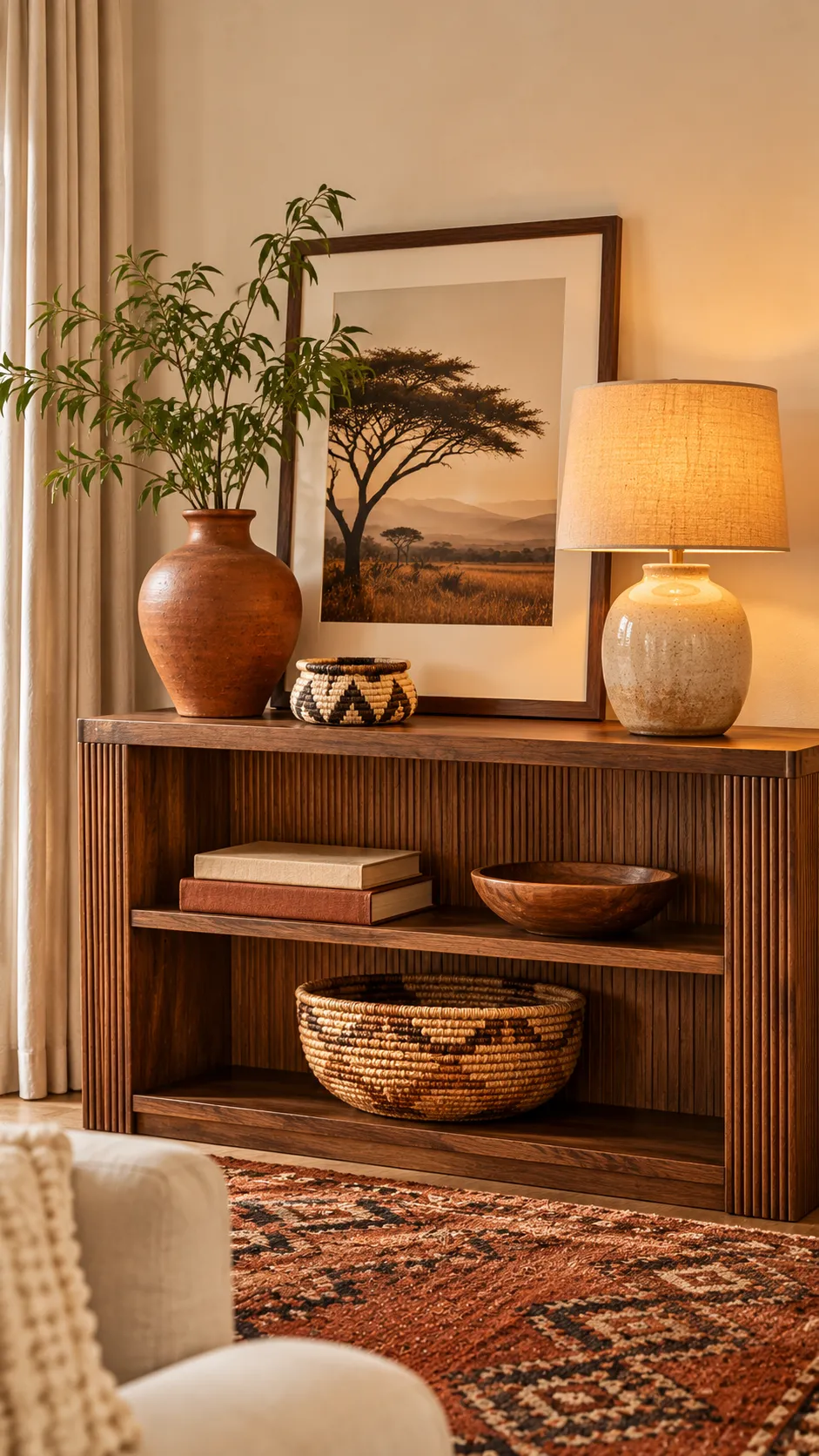
Amazon Find: Textured Ceramic Table Lamps
A ceramic lamp with an organic shape can add warm ambient lighting to a console or side table. Choose a stable base, an appropriately rated shade, and a finish that complements your wooden furniture.

6. Make Oversized Artwork Your Main Focal Point
One substantial piece of artwork can make an Afrohemian living room feel carefully composed. Instead of filling the walls with several unrelated prints, choose a large painting, contemporary artwork by an African or Black artist, or a suitable textile wall hanging that reflects your personal taste. Abstract compositions, expressive portraits, and richly textured mixed-media works can all create an impressive focal point.
Hang a large framed piece above a neutral sofa or wooden console, using its dominant colors to guide nearby accessories. For example, an abstract artwork featuring burnt orange, cream, and black can coordinate with terracotta cushions, a dark wooden side table, and an ivory rug. A generous frame or a simple gallery-style mount creates a cleaner appearance than surrounding the statement piece with numerous small decorations.
Small-space tip: A single large artwork can look more intentional than many tiny frames. Measure your wall and furniture first, and use mounting hardware appropriate for the artwork’s weight and wall material.
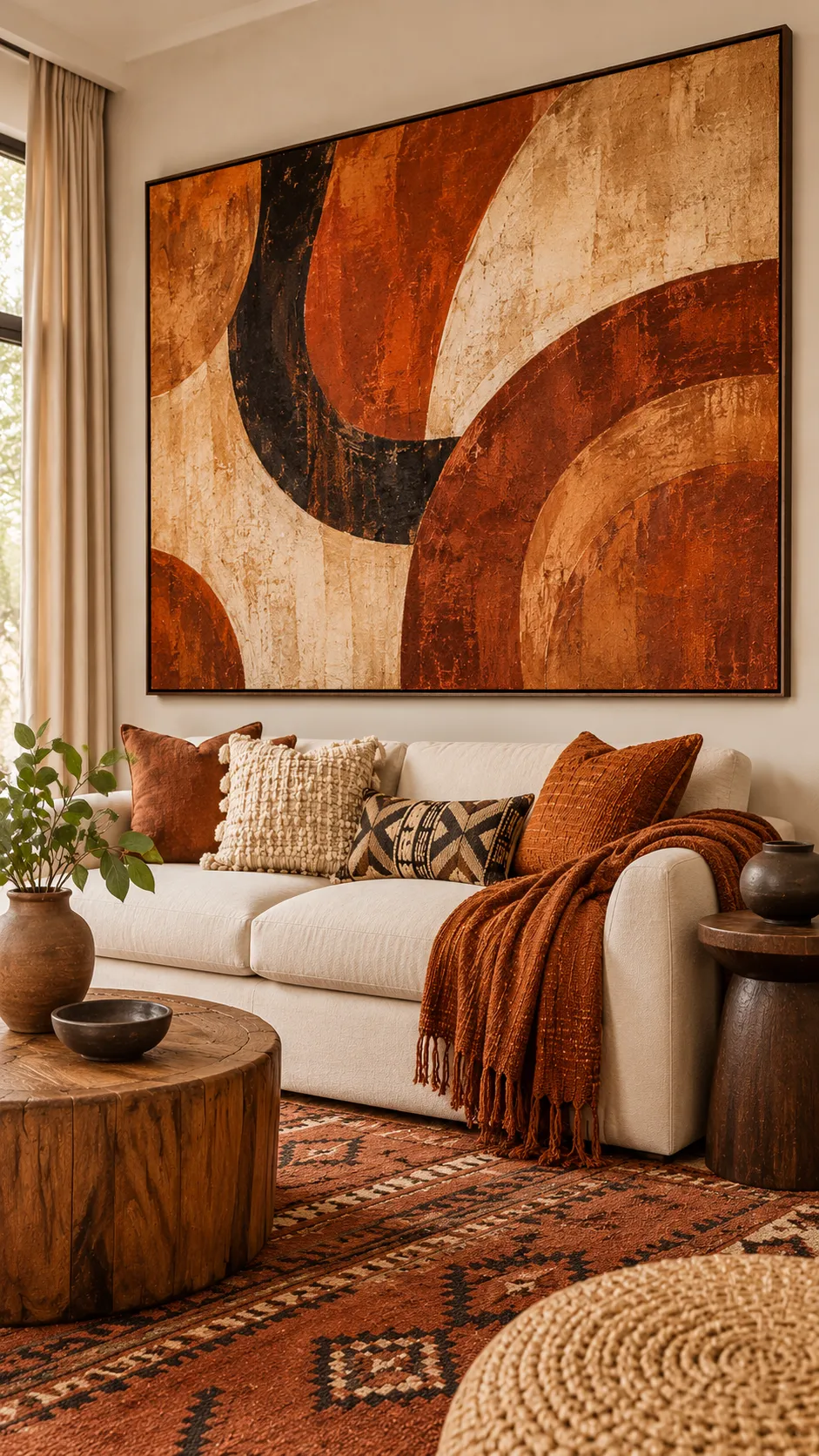
Amazon Find: Large Earth-Tone Abstract Wall Art
An oversized abstract print can establish a warm, expressive palette above a sofa or console. For culturally specific artwork, consider purchasing directly from identifiable artists whenever possible.

7. Style Mud Cloth and Kuba Textiles Thoughtfully
Distinctive textiles are among the most recognizable elements of Afrohemian interiors. Malian bogolanfini, also known as mud cloth, and Kuba textiles associated with communities in the Democratic Republic of the Congo offer different artistic traditions. Their graphic compositions, woven details, and contrasting patterns can create beautiful accents when displayed thoughtfully.
Try displaying a genuine textile as a wall hanging, placing a suitable decorative fabric across a bench, or using a finished cushion cover made from traditional cloth. A black-and-cream geometric cushion looks especially beautiful on a caramel sofa, while a carefully framed textile can serve as the main artwork in a bedroom. Keep the surrounding furnishings relatively plain so the fabric’s character remains visible.
Buying tip: Printed mudcloth-style cushions are not the same as authentic handmade bogolanfini. Read descriptions carefully, respect traditional textile origins, and choose appropriate methods for displaying and preserving valuable fabrics.
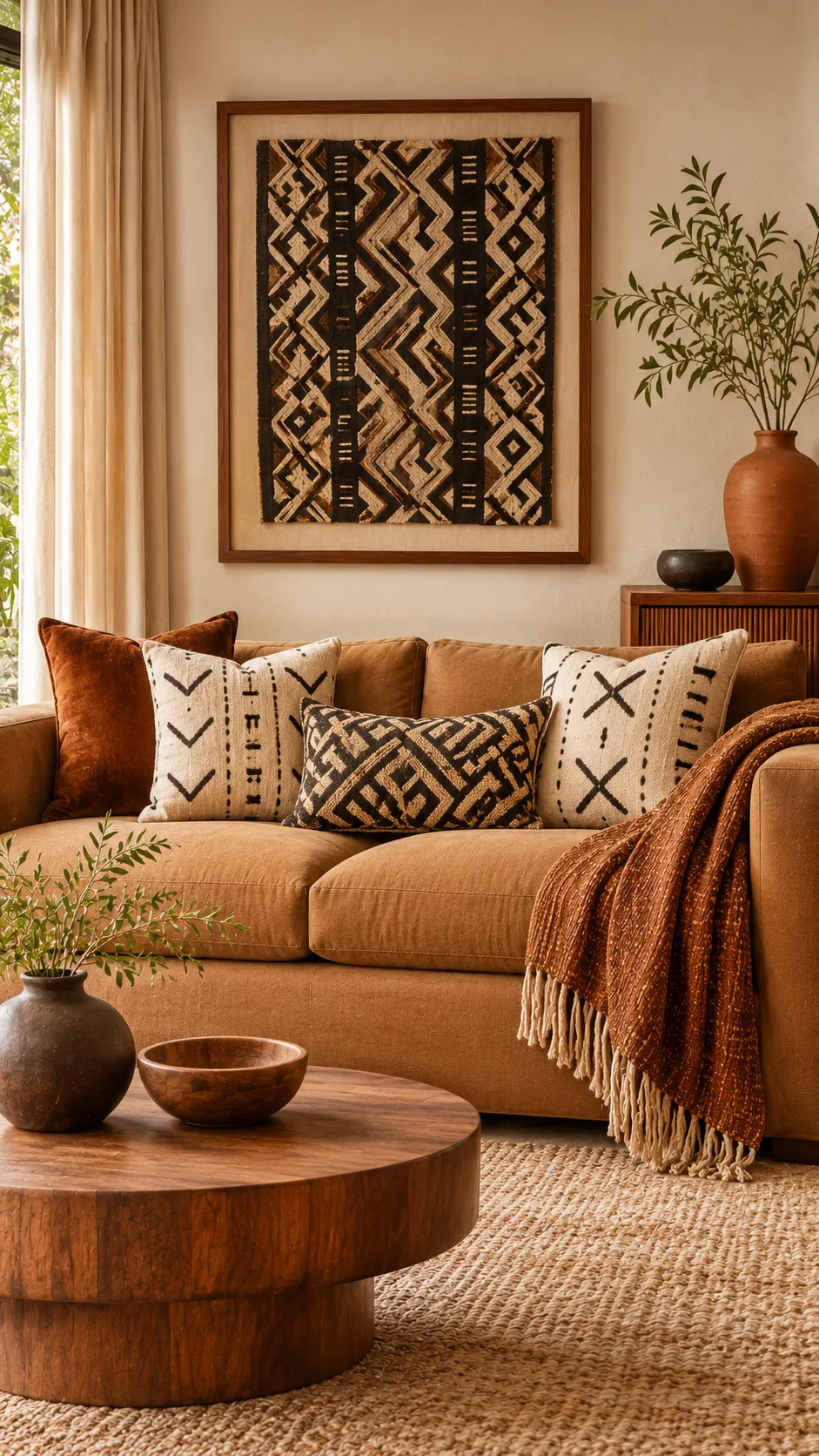
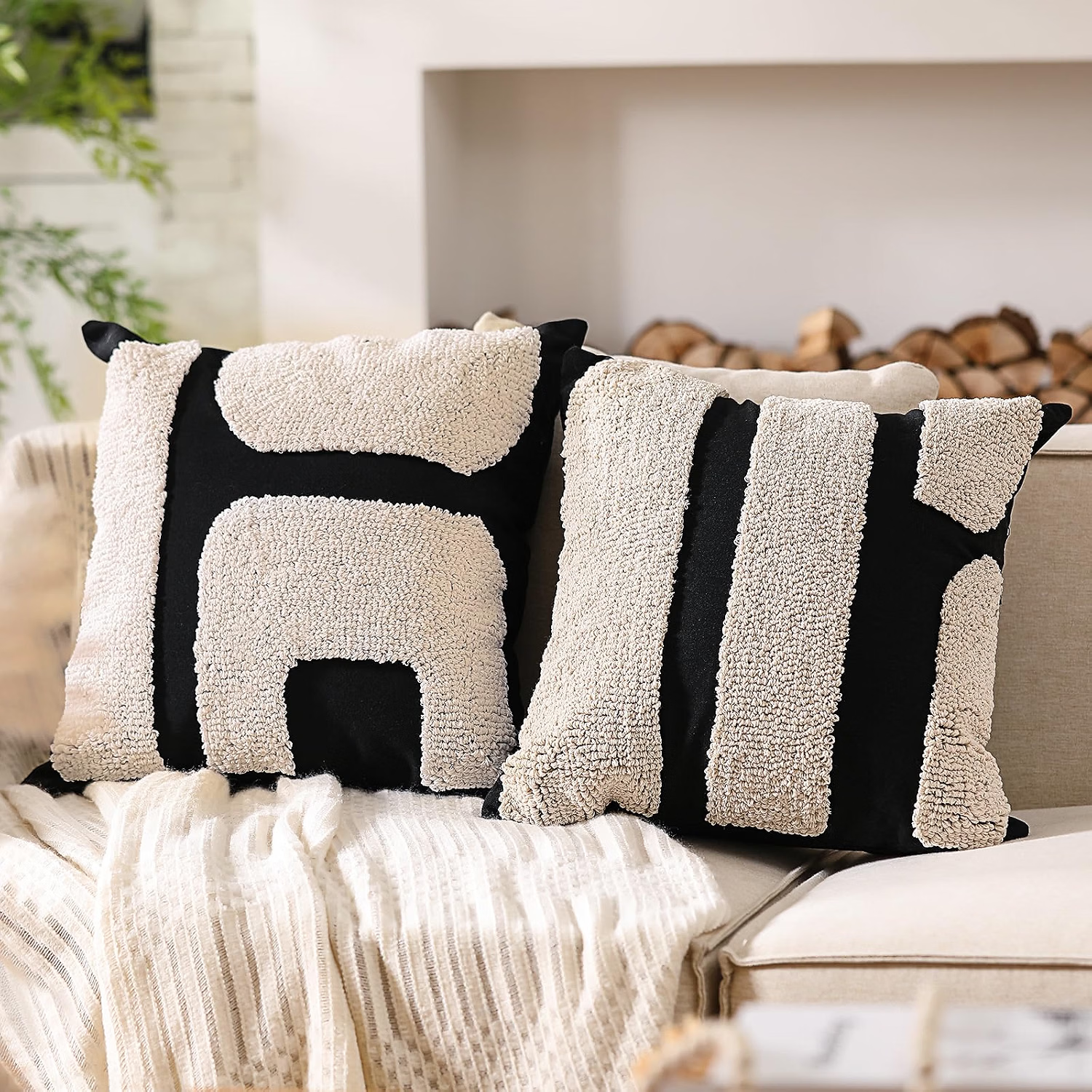
Amazon Find: Black and Cream Geometric Pillow Covers
Geometric cushion covers can introduce graphic contrast to a neutral sofa. This search includes decorative printed styles; check the seller’s information separately if you want authentic handmade cloth.
8. Use Decorative Woven Baskets for Storage and Wall Art
Woven baskets combine practical storage with intricate texture, making them especially useful in an Afrohemian home. Handwoven baskets from identifiable African makers can add unique shapes and patterns, while everyday woven storage baskets help keep blankets, magazines, and other household items organized.
For a living room, place a generously sized basket beside the sofa and fill it with folded throws. For an entryway, use a sturdy basket for lightweight accessories. If you prefer decorative walls, arrange three or five shallow wall baskets above a wooden console, allowing some space between each piece. Choose different diameters but keep the overall color palette coordinated.
Decorating tip: Choose baskets that suit their intended function. Lightweight decorative baskets may not be appropriate for heavy storage, and wall-mounted pieces should be secured with suitable hardware.
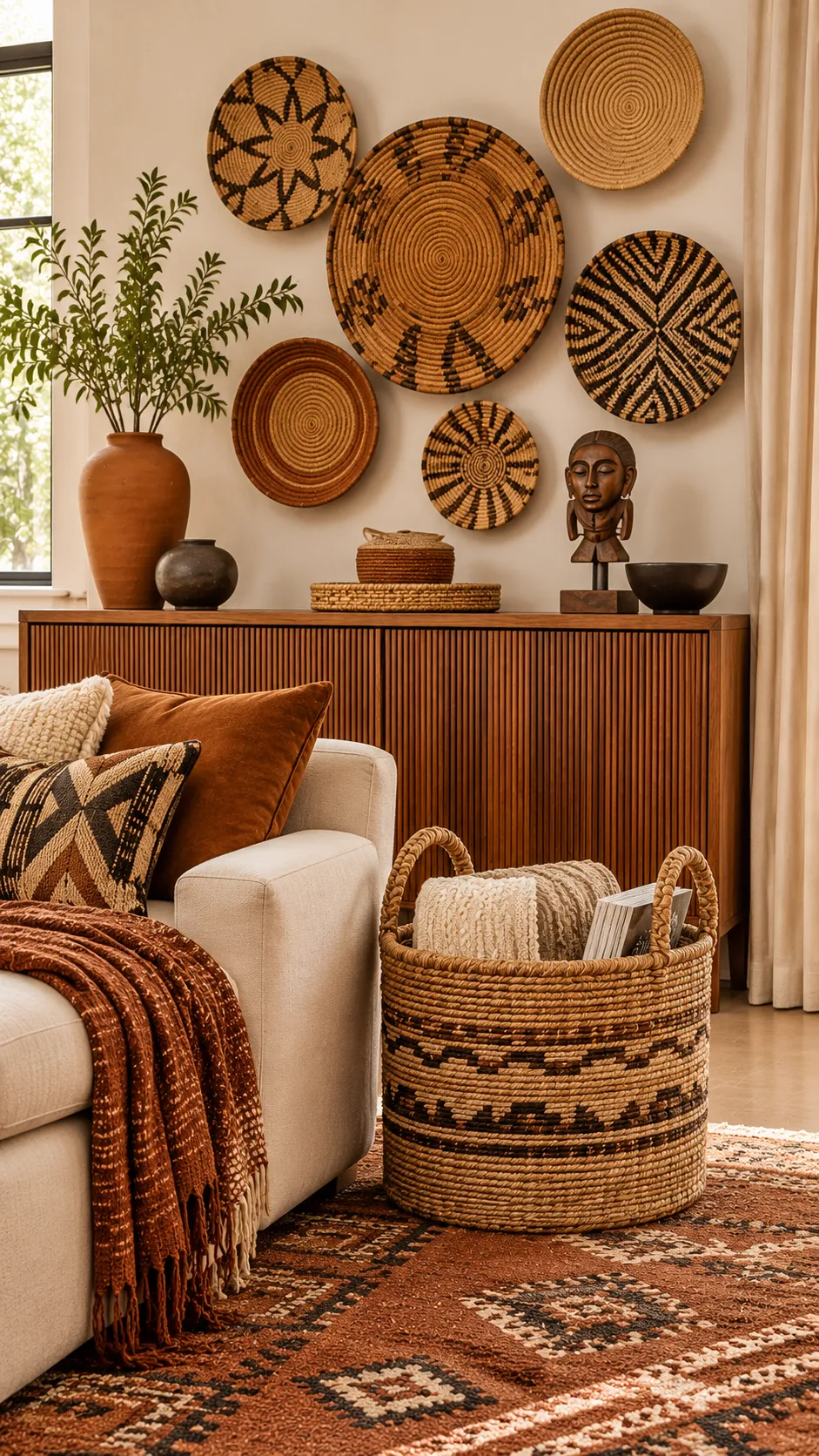
Amazon Find: Natural Woven Storage Baskets
A woven storage basket provides a convenient place for throws or magazines while adding natural texture. Check its capacity, dimensions, and construction before purchasing.

9. Add Dimension With Sculptural Woven Pendant Lighting
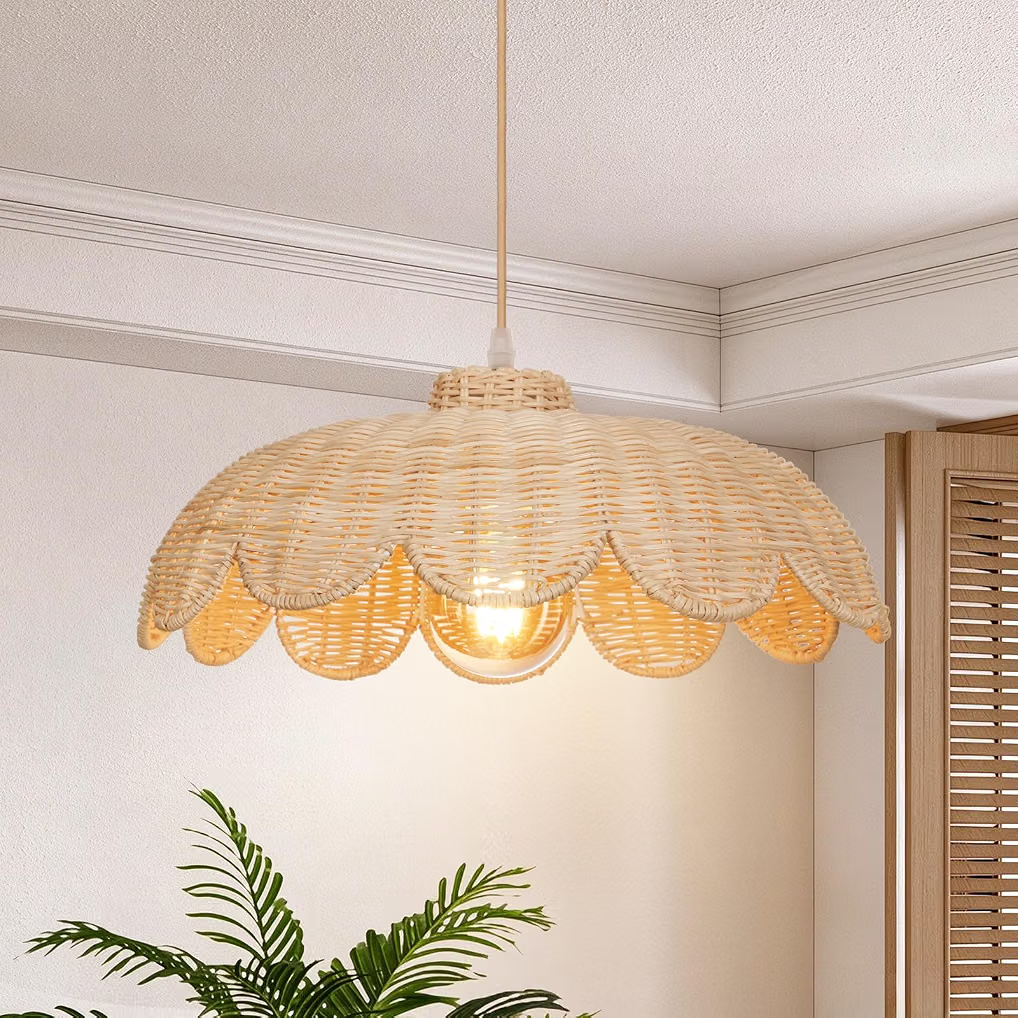
Woven lighting adds character to Afrohemian interiors even when the fixtures aren’t switched on. Rattan, cane, and other woven shade materials introduce natural texture and interesting shadow patterns, creating a pleasant contrast with smooth painted walls and contemporary furniture.
Choose one generously proportioned woven pendant above a dining table rather than hanging several decorative fixtures in a small room. Pair it with a solid wooden table, comfortable upholstered chairs, and a simple ceramic centerpiece. For a living room, consider a woven-shade floor lamp beside a neutral armchair if installing a ceiling pendant isn’t practical. Keep the remaining lighting understated to let the sculptural fixture remain the main feature.
Safety tip: Choose a complete lighting fixture rated for its intended location, follow the manufacturer’s bulb and clearance limits, and use qualified installation where required. Woven material must not touch hot bulbs or exposed electrical components.
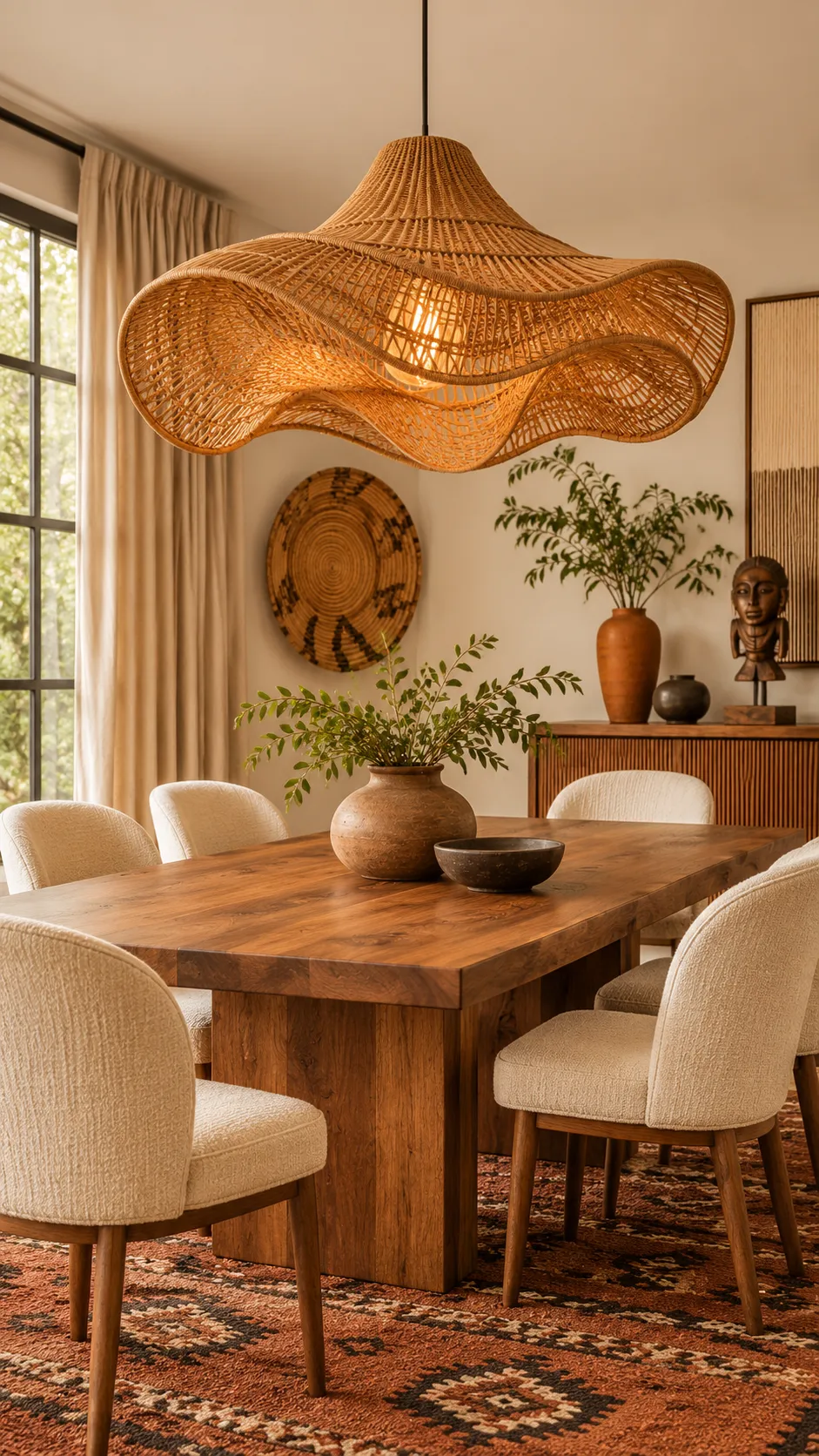
Amazon Find: Woven Rattan Pendant Light Fixtures
A woven pendant can become a beautiful focal point above a dining table. Compare dimensions, electrical specifications, shade clearance, and installation requirements before choosing.
10. Choose Carved Wooden Furniture With Distinctive Shapes
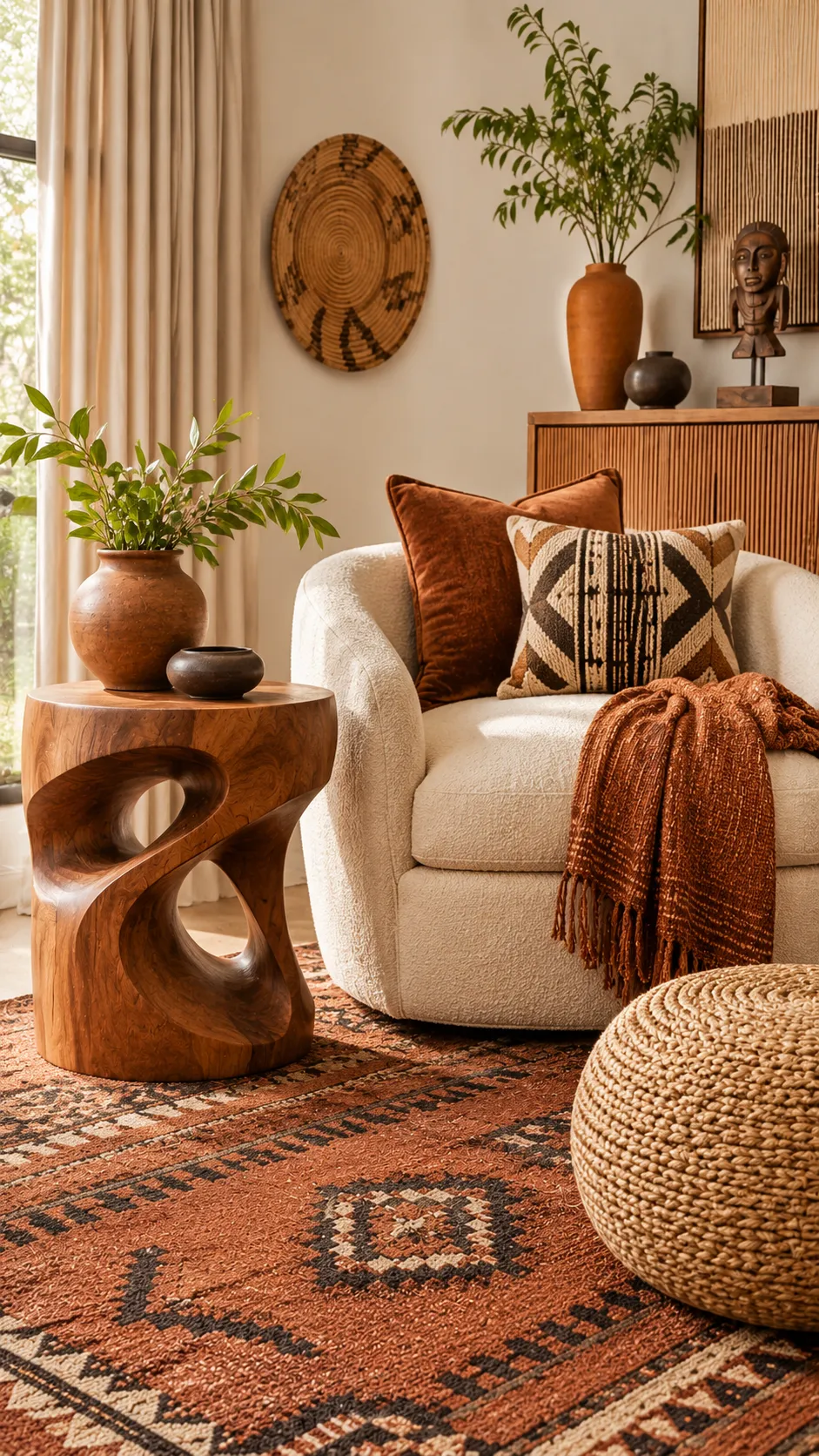
Sculptural wooden furniture gives Afrohemian interiors a strong architectural quality. Carved stools, solid wood side tables, curved benches, and organic coffee tables can become statement pieces without requiring additional decorative objects. Their silhouettes, grain patterns, and handmade details offer a beautiful contrast to soft cushions and woven textiles.
Pair a modern cream sofa with a carved wooden side table or place a rounded solid wood stool beside a reading chair. In a bedroom, try a substantial wooden bench with a simple cotton cushion at the foot of the bed. Avoid matching every wooden surface exactly; a combination of medium walnut, honey brown, and darker carved details can feel comfortably collected when the room has a consistent palette.
Shopping tip: Check structural stability, weight capacity, finish, and dimensions. Decorative stools are not necessarily designed to support a person, so verify their intended use before treating them as seating.
How to Make Afrohemian Decor Feel More Grown-Up
The difference between a crowded boho room and a more sophisticated Afrohemian interior often comes down to balance. You can celebrate colorful textiles and expressive artwork while still maintaining a practical, comfortable home.
- Invest in fewer meaningful pieces: Choose artwork and handmade objects that you genuinely appreciate rather than filling shelves with anonymous accessories.
- Balance patterns with solids: If your rug has a dramatic geometric design, keep larger furniture pieces comparatively simple.
- Use practical furniture: Choose comfortable seating, useful side tables, and storage that fits the way you live.
- Give artwork room: Allow important pieces to stand apart instead of placing decorative items on every wall.
- Coordinate wood finishes: Different woods can work together when their tones complement the broader palette.
- Choose warm, layered lighting: Combine useful task lighting with softer ambient fixtures instead of relying on a single bright overhead light.
- Allow your collection to develop: Add individual objects over time rather than attempting to complete an entire room in one shopping trip.
Afrohemian Decor Shopping Checklist
Before buying new decor, take inventory of what you already own. Neutral furniture, wooden tables, cotton blankets, and simple ceramic accessories can often serve as the foundation for your decorating plan.
Essential Pieces
- A comfortable sofa, chair, or bed in a coordinating color
- One meaningful piece of artwork or a statement textile
- Natural or natural-look fabrics
- A rug that fits the furniture arrangement
- Useful wooden furniture or accents
- Appropriate lighting for the room
Optional Decorative Extras
- Authentic bogolanfini or Kuba textiles from identifiable makers
- Handwoven decorative wall baskets
- Patterned cotton cushion covers
- A sculptural wooden side table
- Terracotta or textured ceramic vases
- Rattan or cane lighting
- Framed photographs and collected artwork
- Indoor plants suited to the available light
- A large woven storage basket
Recommended Finds on Amazon for Afrohemian Decorating
These versatile decorating categories can help you add warmth and functionality while leaving room for original artwork and authentic artisan-made pieces.
- Terracotta Ceramic Decorative Vases – Add an earthy sculptural element to a wooden console or bookshelf.
- Earth-Tone Textured Pillow Covers – Introduce warm colors and fabric texture without replacing your furniture.
- Natural Woven Decorative Baskets – Bring practical storage and organic texture into living rooms and bedrooms.
Final Thoughts: A More Thoughtful Way to Decorate With Afrohemian Style in 2027
The most appealing Afrohemian decor doesn’t come from filling a room with every available bohemian accessory. It comes from combining meaningful artwork, expressive textiles, warm natural materials, and comfortable furniture in a way that suits your home. A room can be colorful and layered while still feeling sophisticated and easy to live in.
Start with one of these Afrohemian decor ideas, such as a beautiful statement textile, sculptural wooden table, or thoughtfully chosen artwork. Build the surrounding colors and textures gradually, learn about the makers whose work you display, and allow your home to become a reflection of your own taste and experiences.
