
Your curtains might be making your room look smaller without you even realizing it. Curtains do much more than provide privacy and block sunlight. Their height, width, length, fabric, and placement can change how tall your ceilings appear, how wide your windows look, and how bright your room feels. Even beautiful, expensive curtains can make a living room or bedroom feel cramped when they’re hung incorrectly.
The good news is that most curtain hanging mistakes are surprisingly easy to fix. You may only need to raise your curtain rod, extend it a few inches, choose longer panels, or adjust the fabric fullness. Below are eight common mistakes that make rooms look smaller, along with practical measurements, simple solutions, and affordable curtain styling tips to help your windows look taller, wider, and more balanced.
More home decorating ideas to explore:
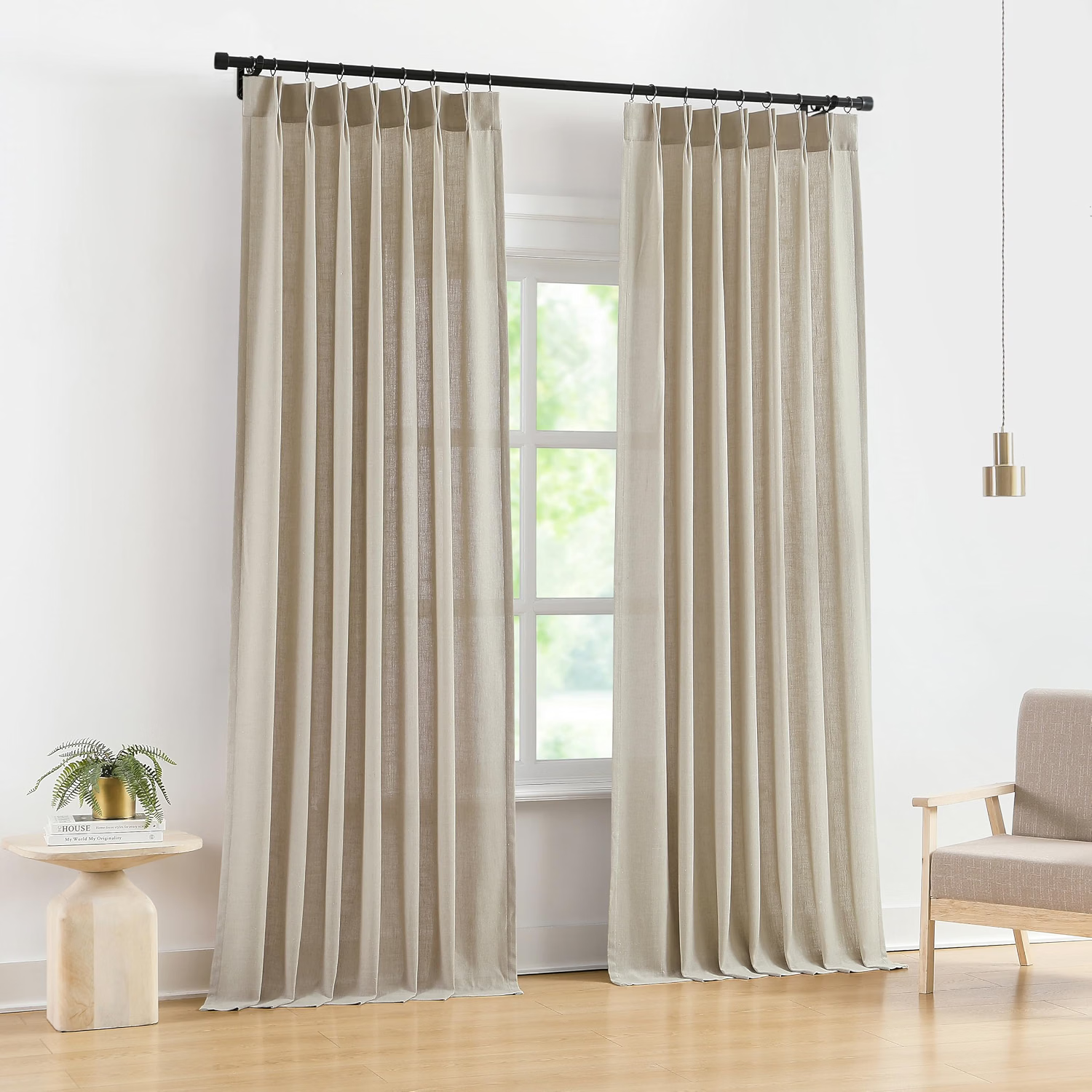
Why Curtain Placement Can Make a Room Look Bigger or Smaller
Curtains influence the way your eyes interpret a room’s proportions. When a curtain rod is positioned close to the ceiling, the fabric creates a long vertical line that can make the walls appear taller. When the rod extends beyond the window frame, open curtains can reveal more glass and create the impression of a wider window.
The opposite can happen with curtains that are too short, too narrow, or improperly positioned. Short panels interrupt the vertical line, narrow rods cover valuable daylight, and insufficient fabric can make windows appear unfinished.
You don’t necessarily need new curtains to correct these problems. Start by checking the rod placement and measuring your existing panels. Small adjustments can often make a noticeable visual difference.
The Simple Curtain Hanging Formula
Higher Rod Placement + Wider Curtain Rod + Floor-Length Panels + Enough Fabric Fullness + Balanced Hanging = Windows That Appear Taller and Wider
Curtain Hanging Measurements: A Quick Guide
Before drilling new holes or ordering curtains, measure the window, surrounding wall space, and distance to the floor. These starting guidelines work for many standard living room and bedroom windows, although the best measurements depend on your ceiling height, furniture placement, and curtain hardware.
| Curtain Detail | Starting Guideline | Visual Benefit |
|---|---|---|
| Rod Height | About 4–6 inches above the window trim, or higher when proportions allow | Helps ceilings appear taller |
| Rod Width | About 6–12 inches beyond each side of the window | Allows curtains to clear more glass |
| Curtain Length | Lightly touching the floor or approximately 1/2 inch above it | Creates a continuous vertical line |
| Fabric Fullness | Approximately 1.5–2.5 times the covered width in total panel fabric | Creates attractive folds |
| Panel Arrangement | Two balanced sides for most standard windows | Frames the window evenly |
| Hardware | Level, appropriately supported, and rated for curtain weight | Keeps the installation neat and stable |
Measurement note: These are general decorating guidelines, not universal installation requirements. Measure from the actual curtain hanging point to your intended hemline, accounting for rings, hooks, or the curtain heading. Follow the hardware manufacturer’s installation instructions.
8 Curtain Hanging Mistakes Making Your Room Look Smaller
1. Hanging Your Curtain Rod Too Close to the Window Frame
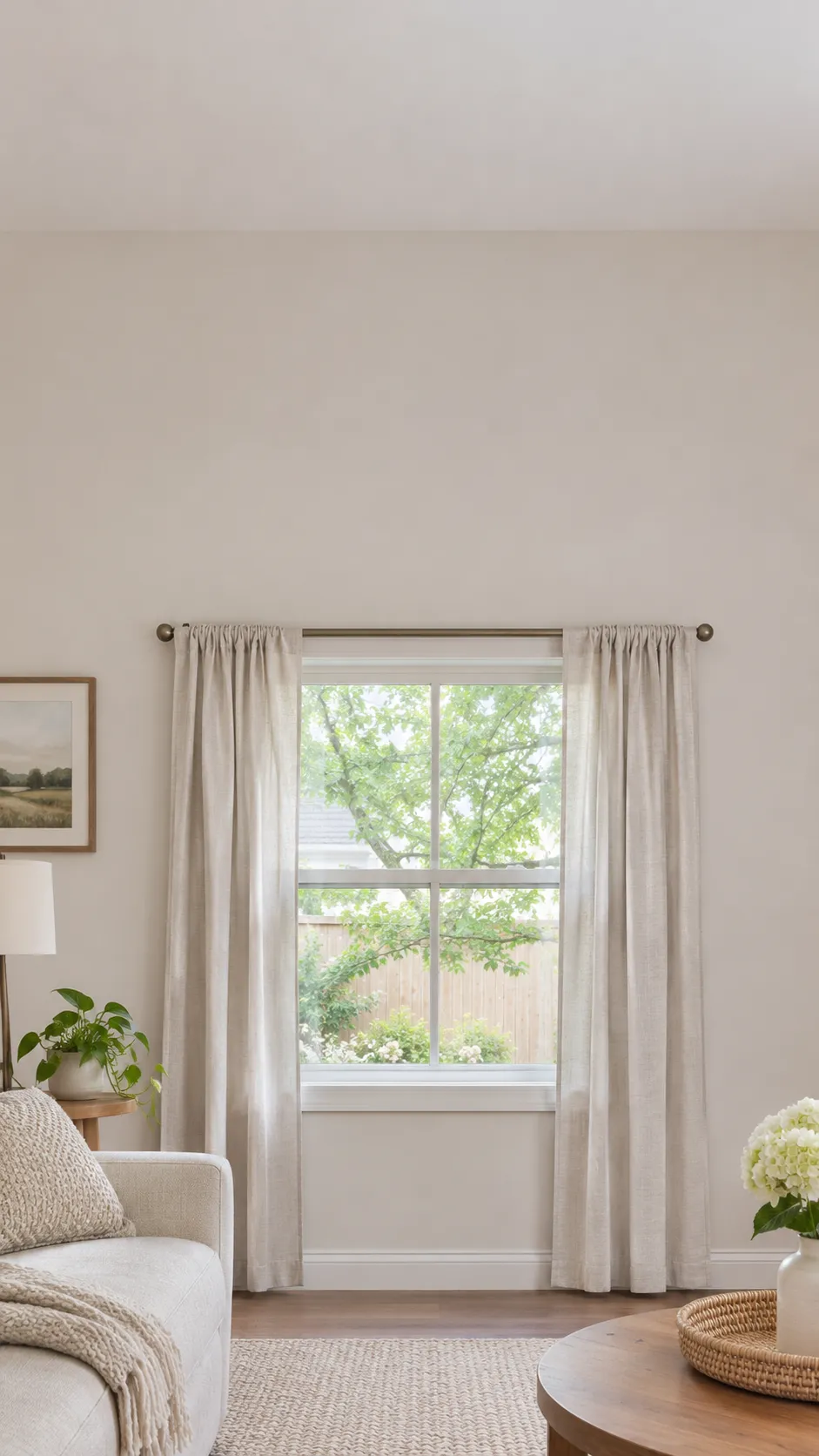
One of the most common curtain hanging mistakes is installing the rod immediately above the top of the window frame. Although it seems like the natural position, this placement emphasizes the actual window height and leaves the wall above it visually disconnected. In rooms with standard or low ceilings, the result can make the window appear shorter and the whole room feel less spacious.
Instead, consider raising the rod several inches above the trim. Approximately four to six inches is a useful starting point, but rooms with eight-foot ceilings may benefit from positioning the rod closer to the ceiling or crown molding. If your room has unusually tall ceilings and low windows, choose a position that balances the wall space above and below the hardware rather than automatically mounting it at the very top.
Quick fix: Mark a higher rod position with painter’s tape and step back to evaluate the proportions before drilling. Check for crown molding, vents, and other obstructions, and make sure your curtain panels will be long enough after moving the rod.
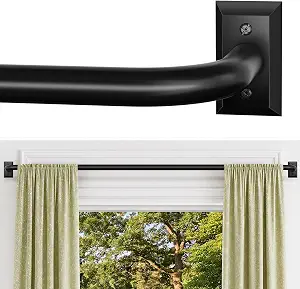
Amazon Find: Adjustable Curtain Rod with Mounting Brackets
An adjustable rod can help you position curtains higher and wider around your window. Compare available lengths, mounting requirements, and weight capacities before choosing one.
2. Using a Curtain Rod That Is Too Narrow for Your Window
A curtain rod that barely extends beyond the window frame can make the entire window appear narrower. When you open the curtains, the fabric gathers over the glass instead of resting against the surrounding wall. This blocks some natural light and makes the room feel darker, especially when you have a small or north-facing window.
A more generous rod creates space for the curtain panels to stack outside the glass area. Extending the hardware approximately six to twelve inches beyond each side of the window is a useful starting point. The exact extension depends on your panel thickness, number of folds, and available wall space. Thick blackout curtains may need more stacking room than lightweight sheers.
Quick fix: Open your curtains fully and check how much glass they still cover. If the fabric blocks a significant portion of the window, consider a longer rod and appropriately supported brackets. Don’t extend the rod into nearby doorways, cabinets, or other obstructions.
3. Choosing Curtains That Stop Awkwardly Above the Floor
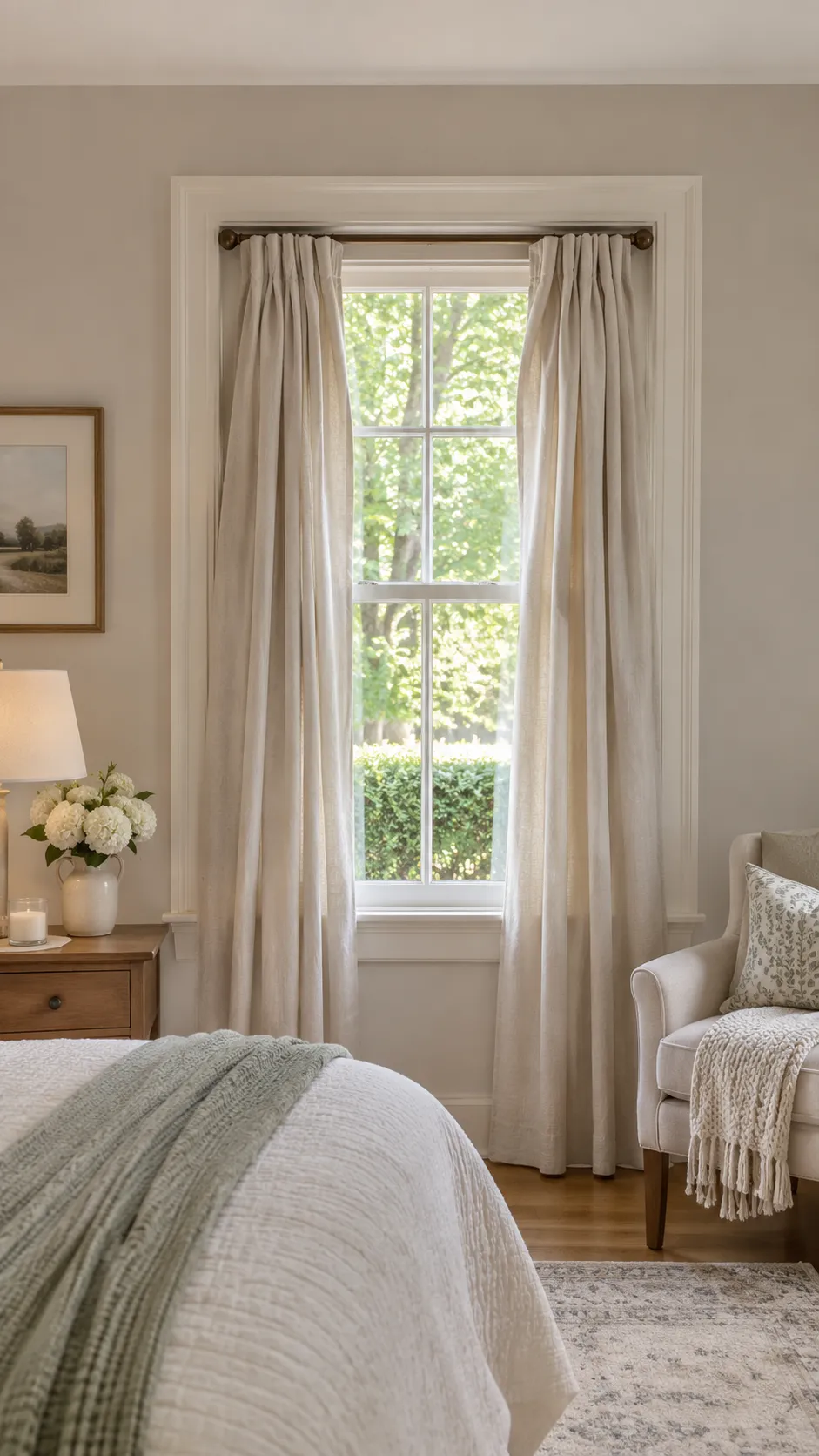
Curtains that end several inches above the floor often create an unintended visual break between the window and the rest of the wall. Instead of guiding your eyes smoothly from the rod to the floor, they emphasize the shorter curtain length. This can make the window seem smaller, especially in bedrooms and living rooms where long decorative panels would normally be expected.
For a clean, classic appearance, select panels that lightly touch the floor or finish approximately half an inch above it. If you prefer a relaxed, traditional look, a small amount of fabric can rest on the floor, although longer puddled curtains require more cleaning. Deliberately short café curtains are a different design choice and can work beautifully in kitchens or around certain furniture arrangements.
Quick fix: Measure from the actual curtain hanging point to the floor after installing your hardware. If existing panels are slightly short, compatible clip rings may help adjust their hanging height. Otherwise, longer ready-made panels may be a better solution.
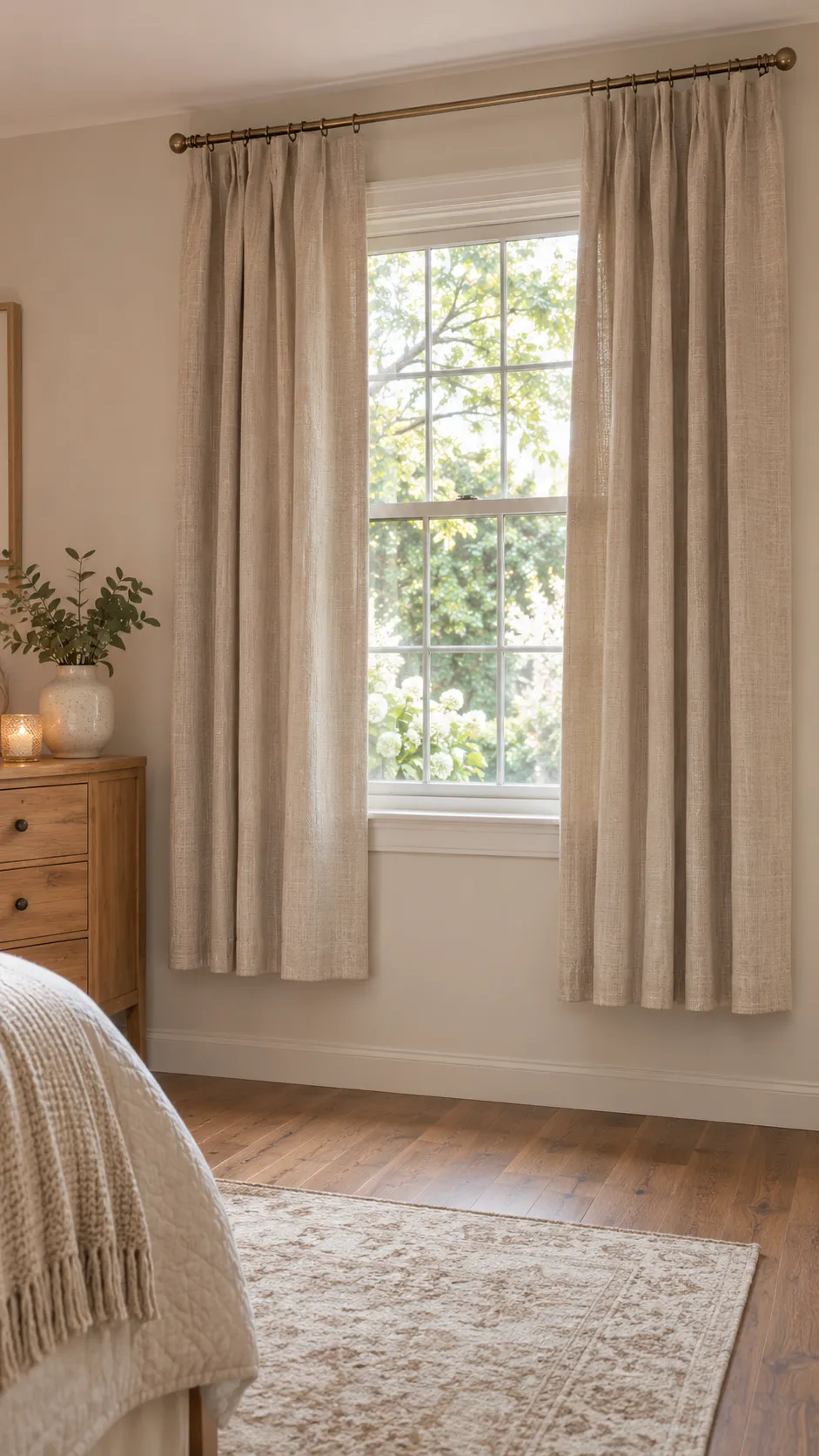
Amazon Find: Long Linen-Look Curtain Panels
Long linen-look curtains can create an elegant floor-length effect in living rooms and bedrooms. Compare panel lengths, widths, heading styles, and fabric opacity.
4. Hanging One Curtain Panel Instead of Creating a Balanced Frame
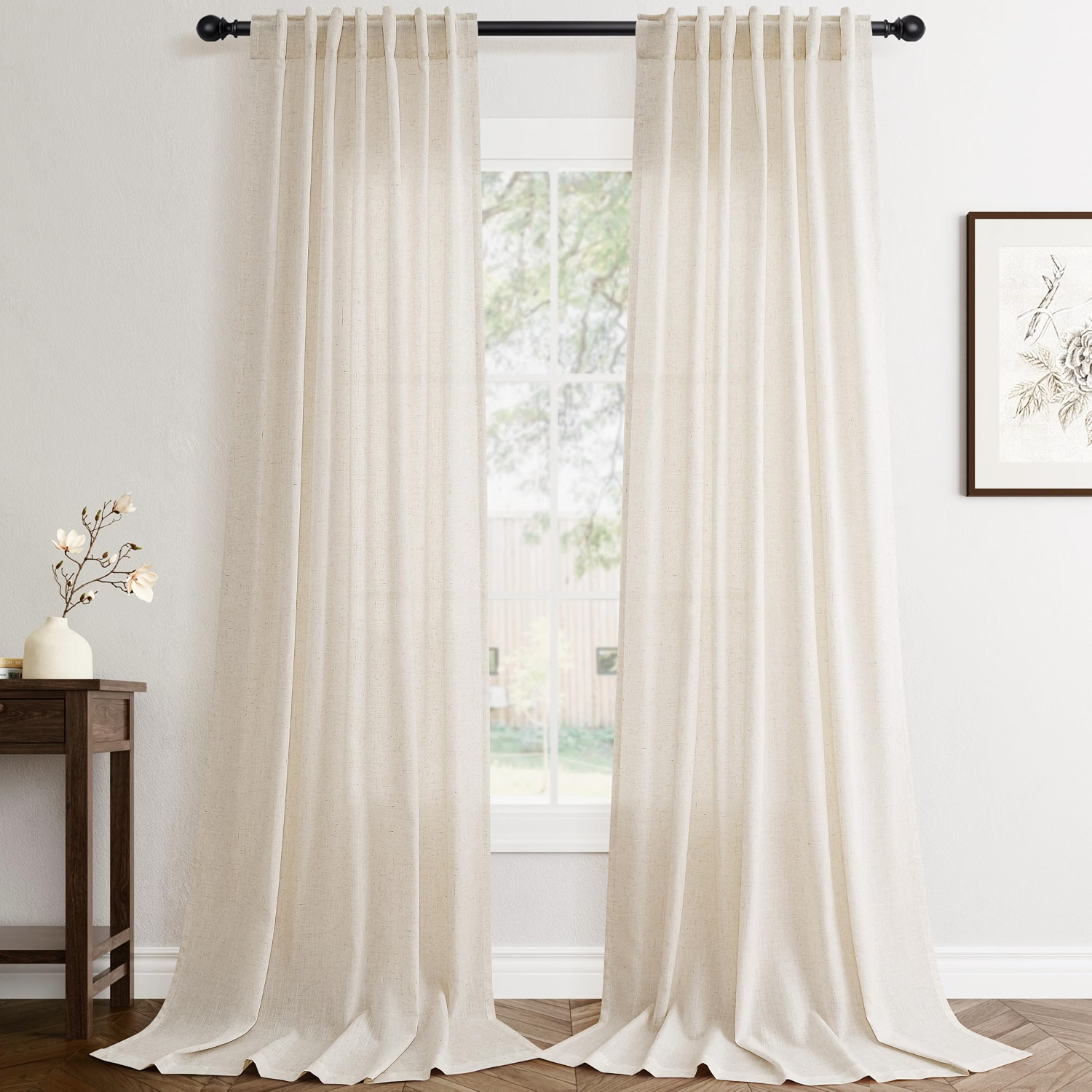
Using only one curtain panel on a standard window can make the arrangement look visually heavier on one side. When the curtain is pulled open, the entire bundle of fabric gathers against one side of the frame, sometimes blocking extra daylight or making the window appear off-center. A single panel may be intentional in certain layouts, but it often looks unfinished in a symmetrical living room or bedroom.
For most standard windows, use two panels that frame the glass evenly. Position one on each side and allow the fabric to form attractive folds when the curtains are open. Even a relatively narrow window can benefit from this arrangement if there is enough wall space for both panels. The repeated vertical lines help the window feel more balanced.
Quick fix: If you currently have one panel, check whether you can add a matching second panel. One-sided curtains can still be appropriate beside a corner, built-in cabinet, or asymmetrical architectural feature, so consider the surrounding layout before making changes.
5. Buying Curtain Panels That Are Too Narrow to Create Full Folds
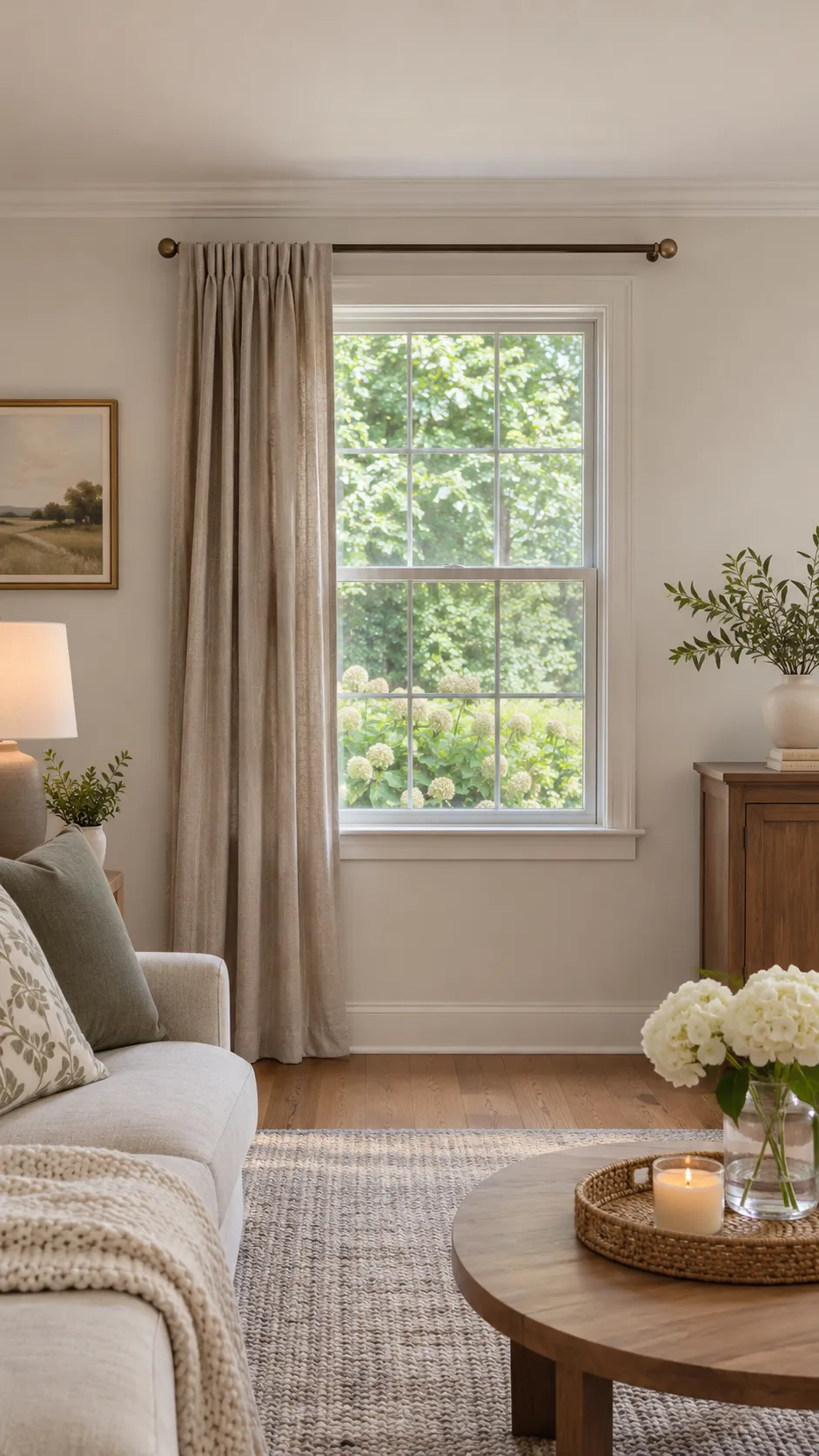
Curtain width matters just as much as length. When your panels contain barely enough fabric to cover the window, they look stretched and flat when closed. Without soft folds, the curtains can appear undersized for the wall and create an unfinished appearance, even when the rod height and hemline are correct.
As a general starting point, choose curtain panels with a combined flat fabric width of about one-and-a-half to two-and-a-half times the width they need to cover. For example, a 60-inch-wide rod may call for approximately 90 to 150 inches of combined fabric width, depending on the heading style and desired fullness. Some pleated systems have different requirements, so check the manufacturer’s measurements.
Quick fix: Measure the total width of your existing panels when laid flat. If they’re too narrow, add compatible panels or replace them with wider ones. The goal is to maintain visible folds when the curtains are closed rather than stretching the fabric tightly across the window.
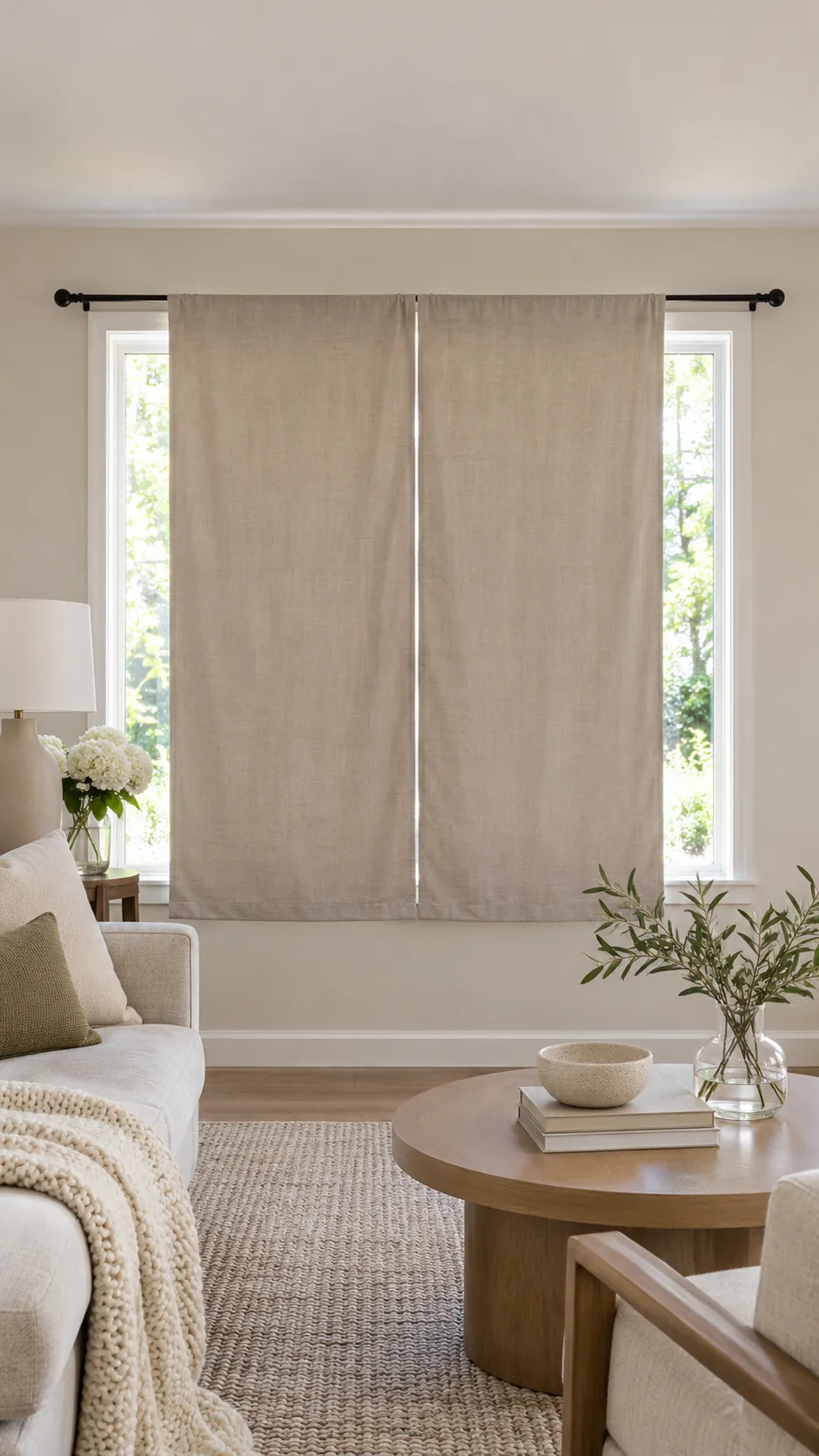
Amazon Find: Extra-Wide Curtain Panels
Extra-wide panels help create fuller drapery folds and are useful for wider windows or installations where standard panels look too flat.
6. Hanging Curtains with Mismatched or Uneven Lengths
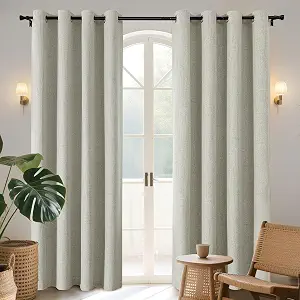
Even small differences in curtain length can make a window look less balanced. One panel may touch the floor while the other floats noticeably above it. If you’re layering sheer curtains behind heavier drapes, mismatched hems can create additional horizontal lines that interrupt the clean, floor-to-ceiling appearance you’re trying to achieve.
Before hanging your curtains, check that both panels have matching finished lengths and that the hardware holds them at the same height. For layered curtains, aim for hems that align or have an intentional difference. If one panel is slightly longer, removable hem tape or a properly sewn hem may provide a neat correction, depending on the fabric and care instructions.
Quick fix: Hang both panels, allow the fabric to settle, and measure their clearance from the floor. Check whether the difference comes from the fabric length, uneven hooks, or curtain rings before making permanent alterations.
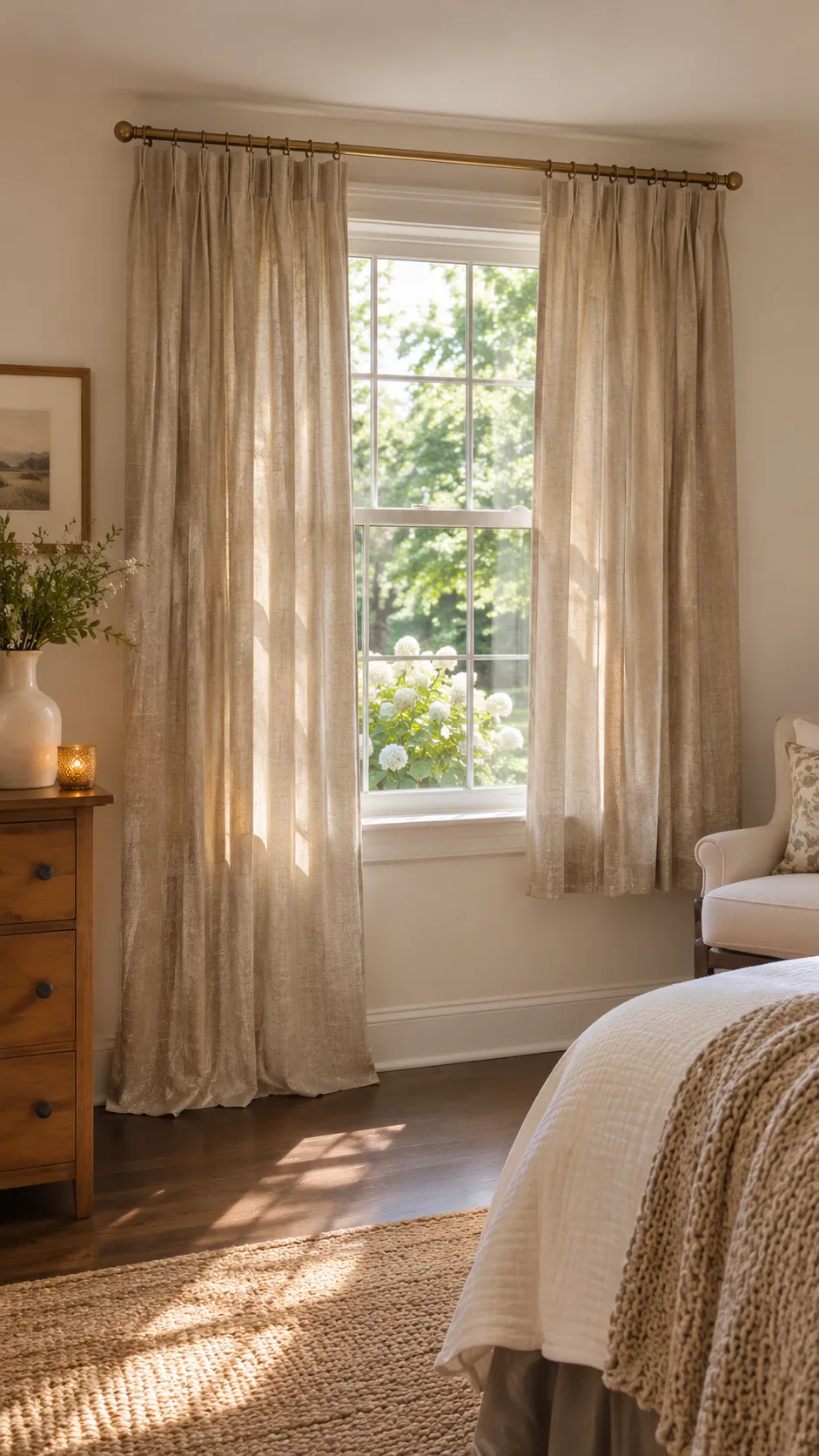
7. Installing a Curtain Rod That Is Not Properly Level
A slightly tilted curtain rod can make an otherwise beautiful window treatment look crooked. The long vertical lines of the hanging fabric make uneven hardware more noticeable, especially when the curtains reach the floor. Even if the problem is only a small installation error, it can affect how balanced the entire wall feels.
Use a spirit level or laser level when marking bracket positions and check both ends before drilling. Measure from a reliable horizontal reference rather than assuming every ceiling or floor is perfectly level. In older homes, you may need to consider how the rod will look relative to slightly uneven architectural features while still maintaining a secure installation.
Quick fix: Remove the curtains temporarily and check the rod using a level. If the brackets are misaligned, reposition them using appropriate mounting holes and anchors rather than forcing the rod into place. Check its support and load rating before rehanging heavy panels.
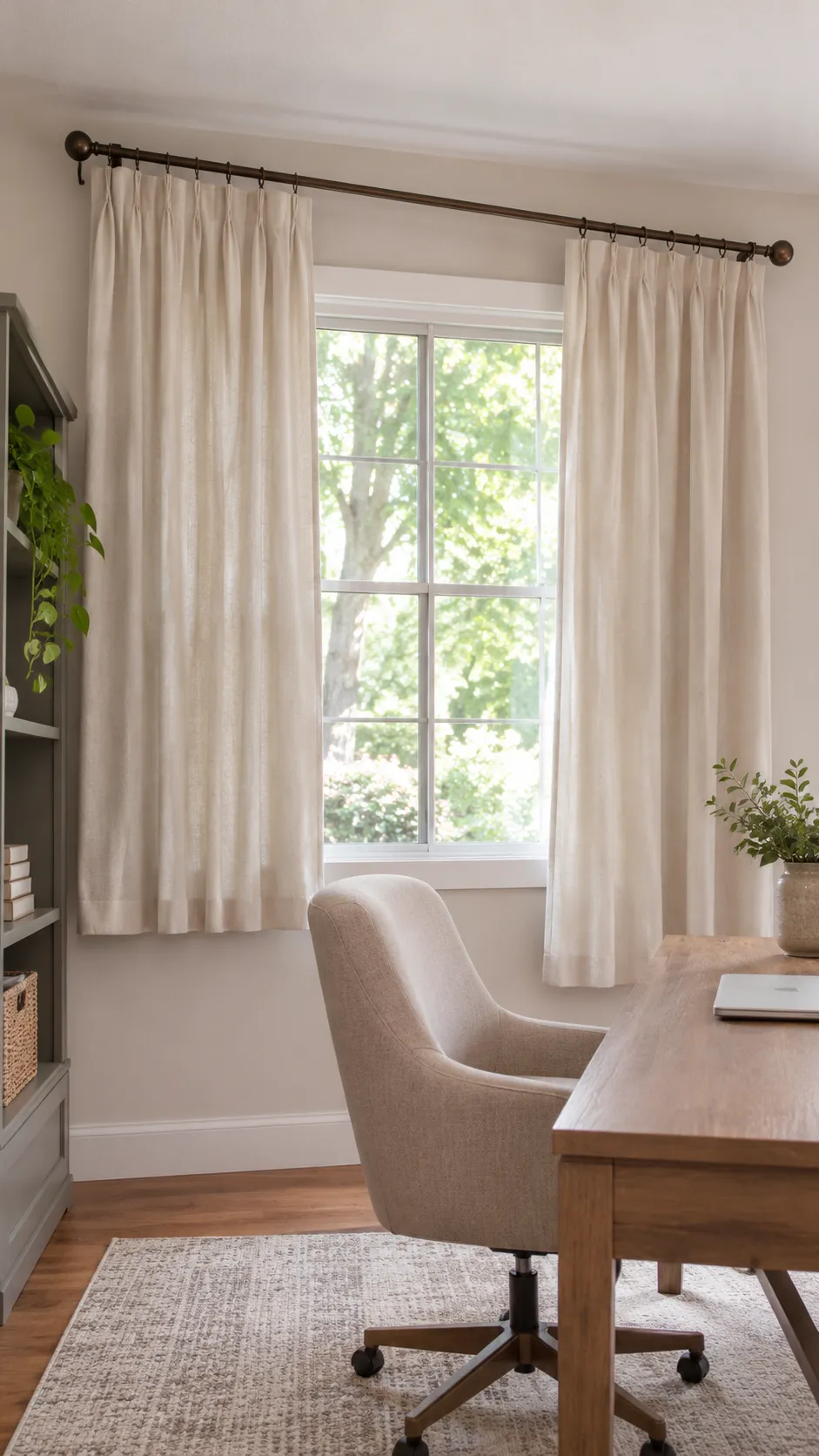
Amazon Find: Laser Level for Curtain Rod Installation
A compact level can help you mark evenly aligned curtain brackets and check hardware placement before installing rods, shelves, or wall decor.
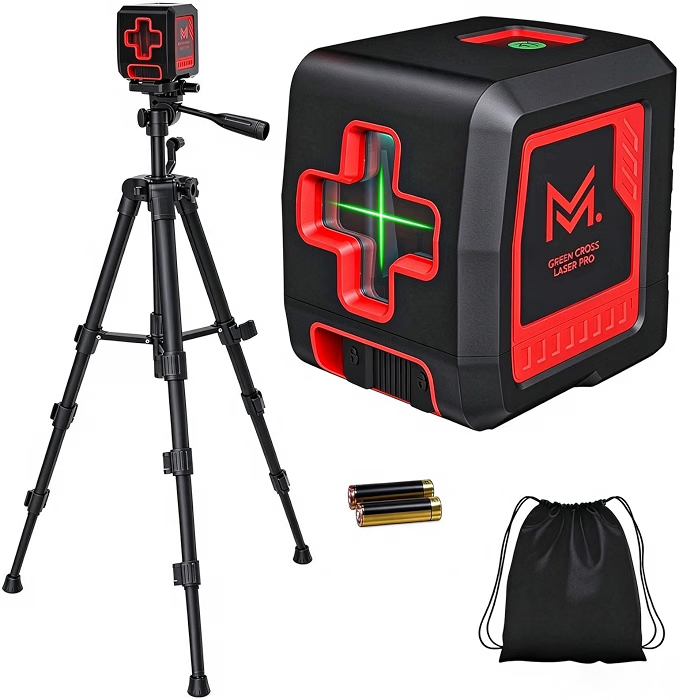
8. Choosing Curtains That Are Too Heavy, Dark, or Bulky for the Room
Curtain fabric can change the atmosphere of a room just as much as the hanging position. Very heavy, dark curtains may absorb daylight and make a small space feel more enclosed, particularly when the panels cover part of the glass during the day. Bulky fabric can also create a large stack beside narrow windows, making them look smaller.
For a bright living room, consider linen-look curtains, light-filtering woven fabrics, or soft sheers layered with more opaque panels where privacy is needed. Warm ivory, oatmeal, light taupe, and muted natural shades create a gentle transition between the window and surrounding wall. Bedrooms that require stronger light control can still use lined or blackout curtains, but a wider rod helps keep heavier panels clear of the glass during the day.
Quick fix: Before replacing the curtains, open them completely and check whether they’re blocking daylight. If the fabric itself feels too heavy for the room, experiment with a lighter texture or a coordinated sheer-and-lined combination. Dark curtains can still look beautiful when they’re properly sized and the room has enough light.
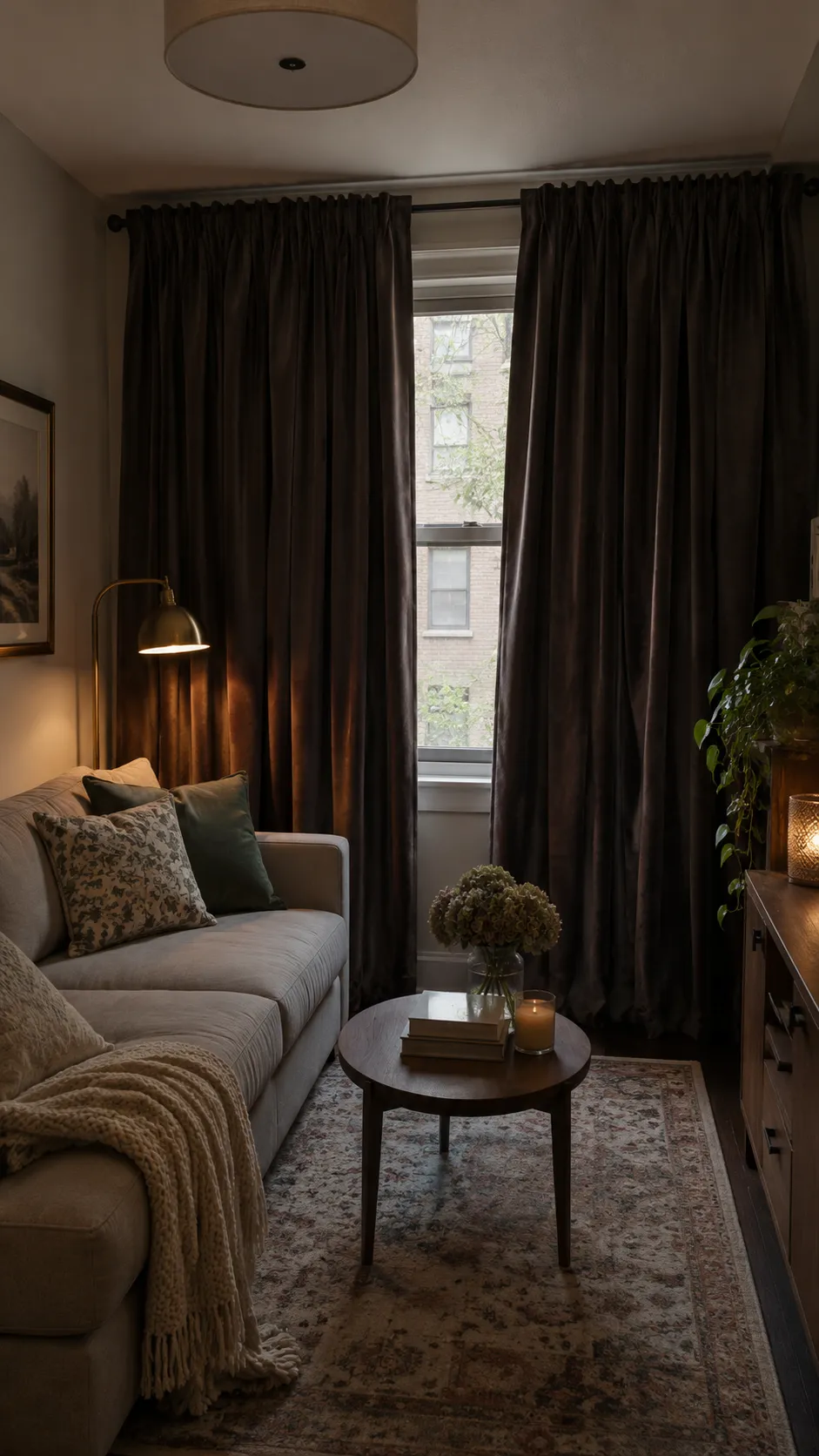
Amazon Find: Light-Filtering Linen-Look Curtains
Light-filtering linen-look curtains can soften bright windows while keeping a room visually airy. Review fabric opacity and privacy needs before purchasing.
How to Measure Curtains Correctly Before Hanging Them
Correct measurements are the foundation of attractive curtain placement. Rather than buying panels based only on the window’s glass dimensions, consider the finished rod position, the space available for stacking the curtains, and the length required to reach the floor.
- Step 1 — Measure the window width: Record the outside width of the frame or trim rather than only the glass.
- Step 2 — Decide on the rod extension: Add appropriate space beyond both sides of the window so opened curtains can stack away from the glass.
- Step 3 — Choose the rod height: Consider the ceiling height, window proportions, trim, and surrounding wall features.
- Step 4 — Measure to the floor: Determine the distance from the final hanging point to the desired curtain hem.
- Step 5 — Calculate the fabric width: Allow enough combined panel fabric for attractive folds when the curtains are closed.
- Step 6 — Check the mounting requirements: Confirm bracket spacing, wall construction, hardware capacity, and any nearby obstructions before drilling.
Helpful example: If your window frame is 48 inches wide and you choose a 10-inch rod extension on both sides, the planned rod span is approximately 68 inches, before accounting for any product-specific hardware details. For a simple gathered look with double fullness, you would aim for roughly 136 inches of combined flat curtain fabric, subject to the heading style and manufacturer guidance.
Curtain Shopping Checklist: What You Actually Need
Before buying new curtains, check whether your existing panels can be reused. Sometimes a longer rod, better brackets, or corrected installation is enough to improve the appearance of the window.
| Item | Best For | Priority |
|---|---|---|
| Measuring tape | Window, rod, and panel measurements | Essential |
| Spirit or laser level | Aligning mounting brackets | Essential for installation |
| Adjustable curtain rod | Proper width and stacking space | Replace only if needed |
| Rated mounting brackets and fasteners | Secure curtain rod support | Essential for mounted rods |
| Floor-length curtain panels | Balanced full-height window styling | As needed |
| Compatible curtain rings or hooks | Adjusting hanging style and fabric movement | Optional |
| Hem tape or sewing supplies | Correcting panels that are too long | Optional |
| Sheer curtain panels | Softening light in layered setups | Optional |
| Fabric steamer or iron | Removing folds and packaging wrinkles | Optional |
Extra Curtain Hanging Tips for Small Living Rooms and Bedrooms
Use Similar Colors for Curtains and Walls
Curtains that are close in color to the surrounding walls can create a more continuous appearance. For example, warm ivory panels against cream walls can make the window area feel calm and cohesive. This isn’t a requirement, but it is a useful approach if you prefer soft, understated styling.
Keep Open Curtains Away from Window Glass
Allow enough rod extension for panels to gather beside the window. More visible glass means more potential daylight, helping a small room feel brighter. Check that furniture and nearby walls don’t interfere with the curtain stack or prevent the panels from opening properly.
Consider Sheer Curtains for Soft Daylight
Lightweight sheer curtains can soften bright sunlight without visually dominating a room. They’re lovely for living rooms that receive plenty of natural light. However, sheers usually offer limited nighttime privacy, so layer them with lined drapes or an appropriate shade when needed.
Coordinate Curtain Hardware with Your Decor
A slim black rod works nicely in modern rooms, while warm brass or natural wood finishes can complement traditional and farmhouse interiors. Choose hardware that suits the curtain weight and echoes other details in the room. Correct proportions and secure installation matter more than selecting an elaborate decorative finial.
Safety and Practical Cautions When Hanging Curtains
- Secure heavy rods: Use brackets and fasteners appropriate for the wall construction and combined weight of the hardware and curtains.
- Check for hidden utilities: Avoid drilling into electrical wiring, plumbing, or other concealed services. Use appropriate detection methods when necessary.
- Maintain heating clearances: Keep curtains away from radiators, heaters, vents, and other heat sources according to their safety requirements.
- Choose child-safe treatments: Avoid accessible window covering cords and loops. Use cordless systems when appropriate and follow current product safety instructions.
- Keep windows accessible: Do not interfere with emergency exits, window operation, or required ventilation.
- Respect rental restrictions: If drilling isn’t permitted, consider correctly rated renter-friendly curtain hardware. Check its weight capacity and surface requirements before use.
Frequently Asked Questions About Curtain Hanging Mistakes
1. How high should curtains be hung to make a room look bigger?
For many standard windows, placing the rod approximately four to six inches above the top trim is a good starting point. Hanging curtains higher may create an even taller visual effect when the wall proportions allow. The ideal position depends on ceiling height, trim, available space, and curtain length.
2. How far should a curtain rod extend beyond the window?
A common guideline is to extend the curtain rod about six to twelve inches beyond each side of the window frame. This gives the panels room to gather when opened, exposing more glass. Heavier curtains may require additional space, while nearby furniture or walls may limit the available extension.
3. Should curtains touch the floor or hang slightly above it?
Both options can look beautiful. Curtains that lightly touch the floor create an elegant, continuous appearance, while panels ending approximately half an inch above the floor are easier to keep clean. Deliberately puddled curtains can suit formal interiors but require additional maintenance.
4. Do light or dark curtains make a small room look bigger?
Light-colored curtains often help a small room feel airy, especially when they coordinate with the wall color and allow daylight through. Dark curtains can also work beautifully when properly sized and balanced with adequate light. Fabric weight, rod placement, and how much glass remains visible are just as important as color.
5. Can I fix curtain hanging mistakes without buying new curtains?
Often, yes. You may be able to reposition the rod, adjust the brackets, use compatible curtain rings, correct an uneven hem, or remove obstacles that prevent panels from opening fully. If your existing curtains are significantly too short or narrow, replacing or adding panels may be the most practical solution.
Final Thoughts: Small Curtain Fixes Can Make a Big Visual Difference
The most common curtain hanging mistakes that make a room look smaller usually come down to incorrect placement, insufficient fabric, or mismatched proportions. Curtains hung too low, rods that are too narrow, and panels that end awkwardly above the floor can all affect how spacious and balanced your room feels.
Before replacing your curtains, check the height of your rod, the amount of fabric covering the window, and the finished length of each panel. Correcting just one or two of these eight mistakes may help your windows appear taller and wider while making the entire room feel brighter, softer, and more thoughtfully styled.
