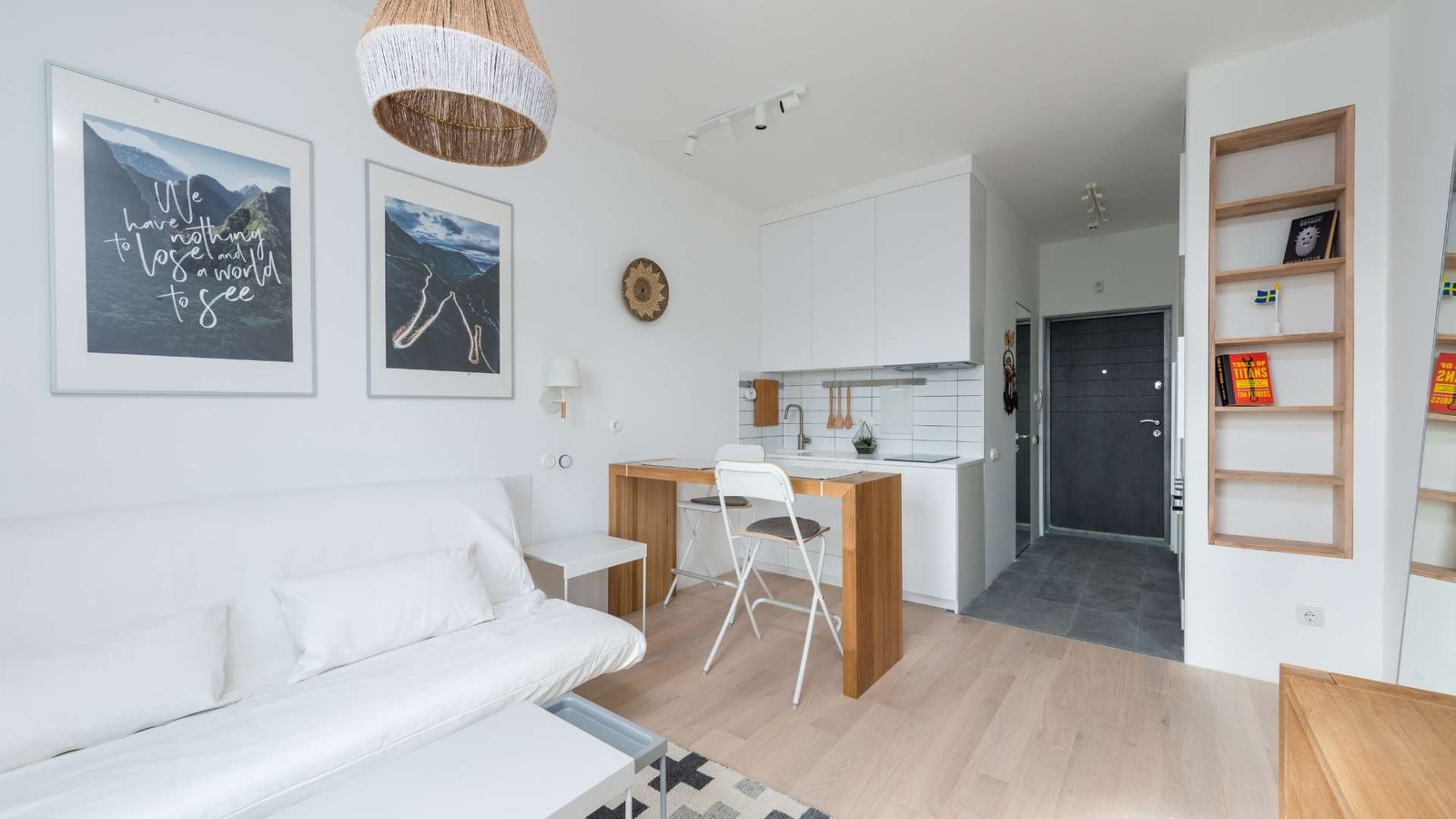
A small apartment can be just as beautiful, comfortable, and stylish as a spacious home. The secret is choosing decorating ideas that make every corner feel intentional. With soft colors, clever furniture, cozy lighting, and thoughtful storage, even a tiny studio apartment can feel like a charming personal retreat.
You don’t need expensive furniture or major renovations to create an aesthetic apartment. A well-placed mirror, an elegant storage ottoman, a compact sofa, or a beautifully styled bookshelf can transform the way a small room looks and functions. The right combination of practical furniture and decorative details can help your home feel more open without losing its cozy personality.
These 10 aesthetic apartment ideas for small spaces include multifunctional furniture, warm neutral palettes, creative vertical storage, layered lighting, space-saving dining tables, and beautiful living room layouts. Whether you love minimalist, cozy neutral, Scandinavian, modern, or soft bohemian decor, you’ll find affordable ideas that work for a studio, one-bedroom apartment, or compact rental.
Each idea includes practical styling suggestions, small-space tips, and affordable shopping inspiration to help you create a home that feels thoughtfully designed without buying unnecessary furniture.
Affiliate disclosure: This article contains Amazon shopping links. We may earn a commission from qualifying purchases made through eligible affiliate links at no additional cost to you.
More Small Apartment Decorating Ideas
If you’re decorating a compact home, these related guides from Android Nature offer more inspiration for furniture placement, cozy apartment styling, and smart storage.
- 11 Tiny Studio Apartment Layout Ideas for Everyday Living
- 16 Practical DIY Corner Shelf Plans for Efficient Use of Space
- 13 Bedroom Rug Ideas for a Cozy, Dynamic Space
How to Make a Small Apartment Look Aesthetic
An aesthetic apartment is more than a collection of pretty decorations. It’s a home where the furniture, colors, textures, and personal accessories work together to create a comfortable atmosphere. In a small space, this matters even more because every large item affects how the entire room looks.
Start by deciding which decorating style suits your personality. A cozy neutral apartment might combine cream furniture, warm wood, linen curtains, and textured cushions. A modern aesthetic could feature black accents, simple furniture silhouettes, sculptural lighting, and abstract artwork. A soft bohemian apartment might include natural greenery, woven baskets, patterned cushions, and warm earthy colors.
Next, measure the space and focus on the furniture you use every day. Your sofa, bed, dining table, and storage units should fit comfortably without blocking windows or walkways. Once the layout works, introduce smaller decorative pieces that reflect your taste.
Simple aesthetic apartment formula: One cohesive color palette + correctly scaled furniture + hidden storage + warm layered lighting + meaningful decorative accessories.
For renters, prioritize portable furniture, freestanding storage, and removable accessories. Always review your lease and test adhesive products before making changes to painted walls, doors, or other surfaces.
Small Apartment Style Comparison Guide
| Apartment Style | Main Design Elements | Budget-Friendly Starting Point |
|---|---|---|
| Cozy Neutral | Cream, Beige, Warm Wood, Soft Textiles | Textured Throw and Neutral Cushion Covers |
| Scandinavian | Light Wood, Simple Shapes, Natural Light | Open-Leg Furniture and Simple Lighting |
| Modern Minimalist | Clean Lines, Hidden Storage, Restrained Decor | Storage Ottoman and Organized Surfaces |
| Soft Bohemian | Greenery, Woven Textures, Earthy Accents | Woven Basket and Small Plant |
| Contemporary Chic | Sculptural Mirrors, Neutral Upholstery, Brass Details | Statement Mirror and Elegant Table Lamp |
| Eclectic Aesthetic | Colorful Artwork, Vintage Objects, Mixed Patterns | Secondhand Frames and Gallery Wall |
10 Aesthetic Apartment Ideas for Small Spaces
1. Choose Beautiful Multifunctional Furniture
Multifunctional furniture is one of the smartest investments for a small apartment. Instead of filling a room with separate pieces for every activity, choose furniture that performs more than one job. A storage ottoman can hold blankets while serving as a footrest, a sleeper sofa can accommodate occasional guests, and a storage bench can provide seating while keeping everyday belongings organized.
Start by identifying the furniture that’s taking up the most floor space. If your living room has a large coffee table and several storage baskets, a carefully chosen storage ottoman might replace both. In a studio apartment, a sofa bed can allow the main seating area to double as guest accommodation. Choose streamlined designs in cream, beige, olive, or warm brown to keep the furniture visually connected to the surrounding decor. Before purchasing anything, measure the piece in every position it will be used, including extended beds, open lids, and pull-out components.
Small-space tip: Select furniture based on your actual routine. A storage ottoman is useful if you need hidden storage, while a sleeper sofa makes sense only if you regularly need the extra sleeping function.
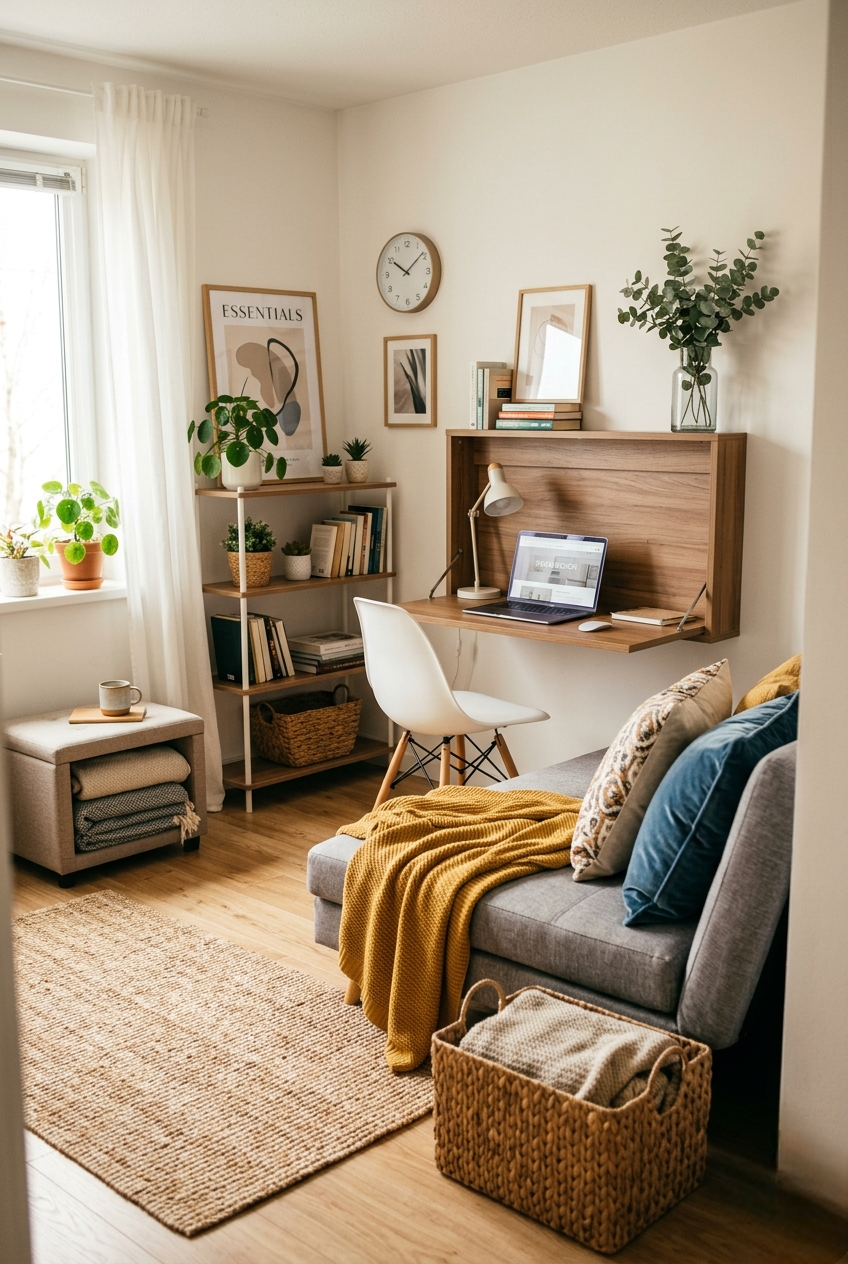
Image credit: @mansionlike.com
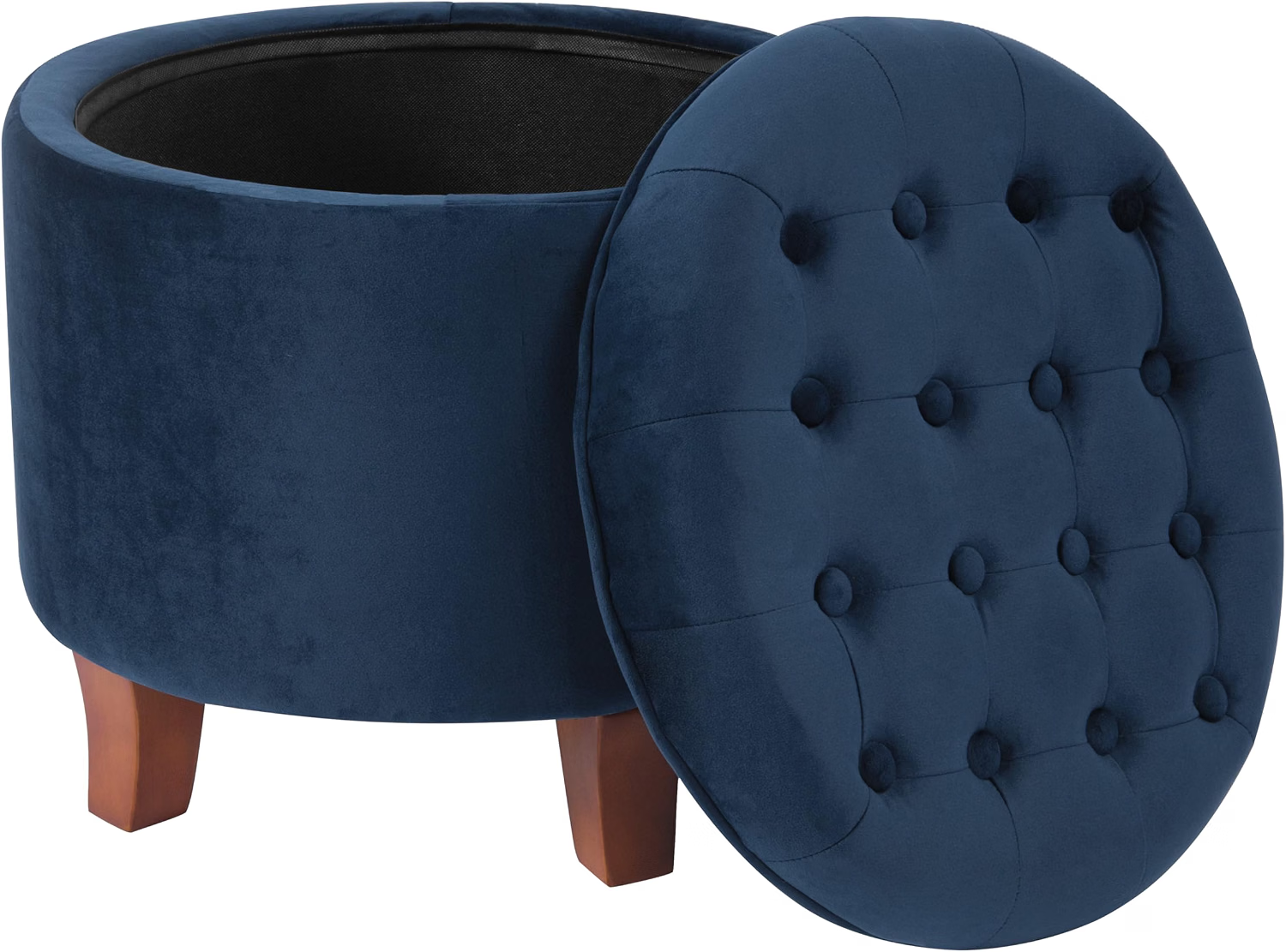
Amazon Find: Stylish Storage Ottomans
A compact upholstered ottoman can provide hidden storage and a comfortable footrest while complementing your apartment’s aesthetic.
2. Use a Large Statement Mirror to Open Up the Room
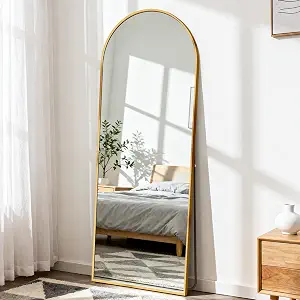
A beautiful mirror can make a compact apartment feel brighter and visually deeper without changing the furniture layout. Mirrors reflect natural light and can make an ordinary wall feel more interesting. An arched full-length mirror, round brass-framed mirror, or large rectangular design can also serve as a statement decoration, reducing the need for several smaller accessories.
Choose a mirror that suits your available wall space and position it where it reflects a window, pleasant view, or attractive part of the room. A tall mirror can work beautifully beside a dresser or in an entryway, while a large round mirror may be better above a console table. Keep the surrounding decorations simple so the mirror remains the main feature. Secure large and heavy mirrors using hardware appropriate for the wall type and the manufacturer’s instructions. Even a mirror designed to look like it’s leaning against the wall should be protected against tipping.
Styling tip: An arched mirror in a thin wood or brass-look frame can make a small apartment feel soft and sophisticated without requiring elaborate wall art.
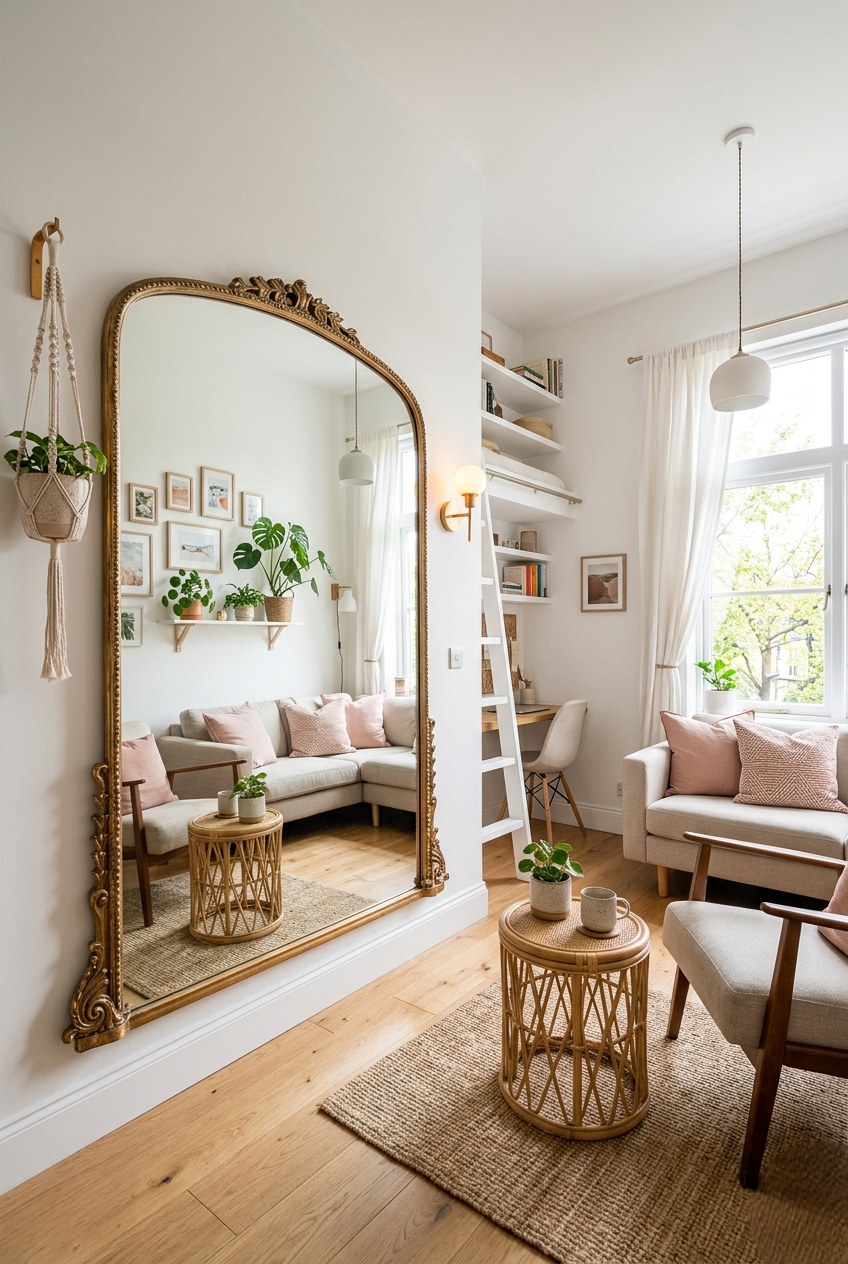
Image credit: @mansionlike.com
Amazon Find: Arched Full-Length Mirrors
Compare arched mirrors in slim black, natural wood, and gold-look finishes. Check dimensions, weight, and mounting requirements before buying.
3. Create a Soft and Cohesive Neutral Color Palette
A coordinated color palette can make an apartment feel calmer, brighter, and more thoughtfully decorated. Cream, ivory, beige, warm white, light gray, and muted sage green are beautiful choices for small spaces because they’re easy to combine with natural wood, existing flooring, and simple furniture. You don’t have to use only pale colors, but keeping the largest surfaces visually connected can help the room feel less fragmented.
Start with the wall and flooring colors already in the apartment. If your walls are warm white, choose a cream sofa or neutral bedding and introduce one supporting accent shade through cushions and artwork. For example, a warm beige, ivory, and olive palette creates a relaxed organic look, while light gray, white, and black can feel more contemporary. Add texture through linen curtains, knitted throws, wooden furniture, and ceramic accessories so the room doesn’t look flat. If you’re renting, concentrate on changeable fabrics and accessories rather than repainting.
Designer tip: Use one main neutral, one supporting shade, and one accent color. Repeating those tones in different areas can make a small apartment feel more connected.
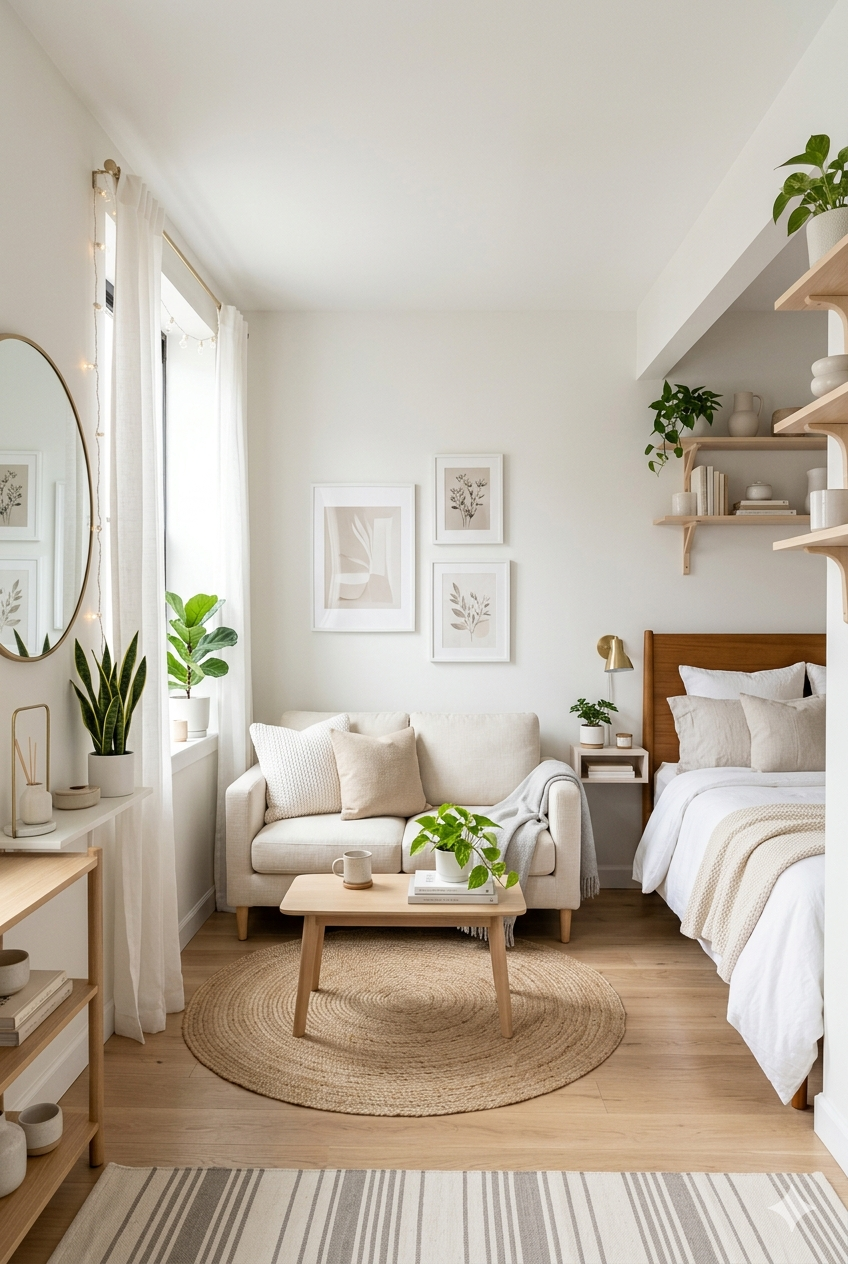
Image credit: @mansionlike.com
4. Decorate Vertically With Floating Shelves
When floor space is limited, the walls offer valuable opportunities for storage and decoration. Floating shelves can display books, small plants, framed prints, and carefully chosen accessories without adding another cabinet to the room. They’re particularly useful above desks, beside sofas, and in narrow living areas where freestanding furniture would block the walkway.
Choose two or three shelves that coordinate with your main furniture, such as pale oak, walnut, or simple white. Arrange useful objects alongside decorative pieces, varying their heights while leaving some open space. A small framed photograph, a stack of books, and one ceramic vase can create a balanced display. Install shelving only with mounting hardware rated for the actual wall and expected load. If your rental doesn’t permit drilling, choose a tall narrow freestanding bookcase instead and secure it against tipping as instructed.
Organization tip: Keep heavier items on lower, stable storage surfaces. Use wall shelves primarily for appropriately weighted objects and avoid mounting breakable decorations above beds or frequently used seating.
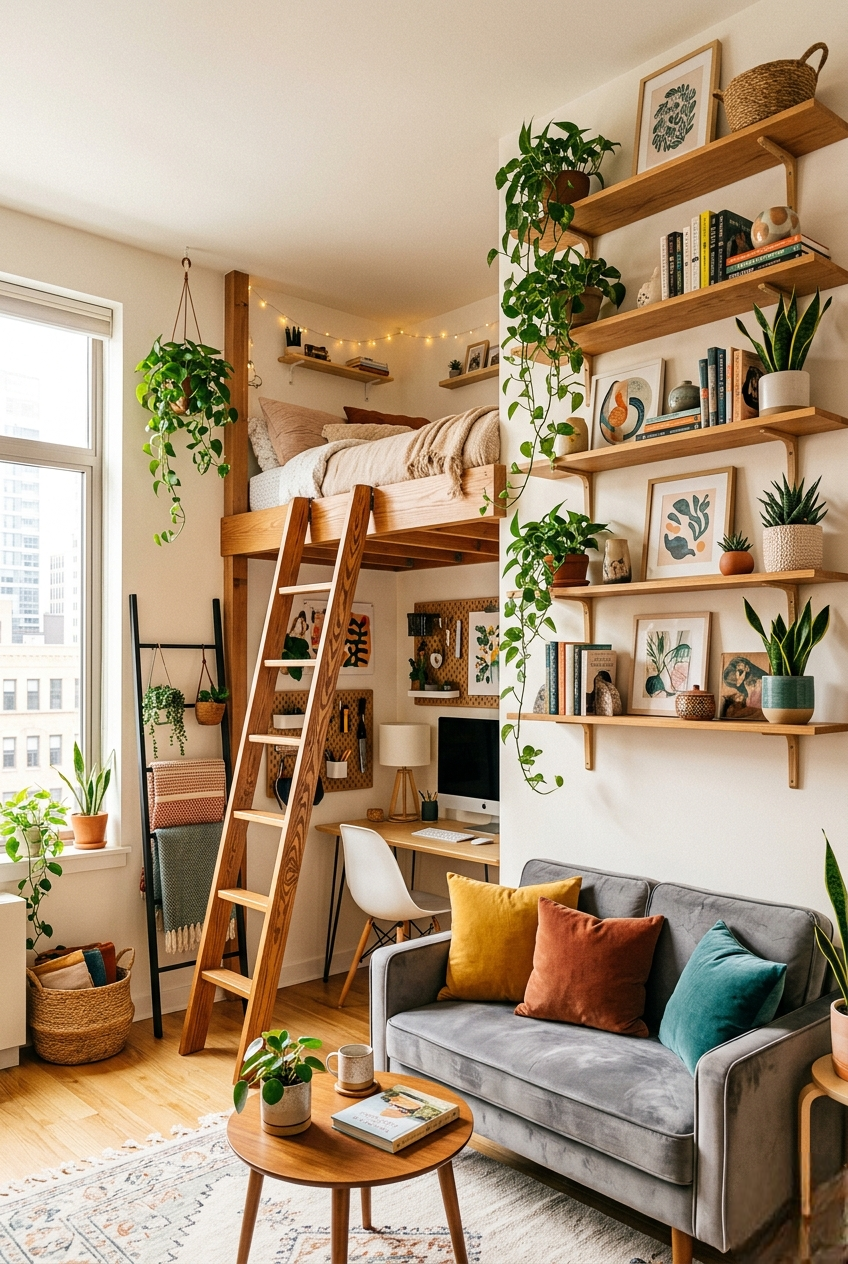
Image credit: @mansionlike.com
Amazon Find: Minimalist Floating Wall Shelves
Floating shelves can organize books and lightweight decorations while keeping floor space clear. Check installation requirements and load ratings.

5. Layer Cozy Lighting Throughout the Apartment
Lighting has a major influence on the atmosphere of a small apartment. Relying entirely on one bright ceiling light can make a room feel flat, while a few thoughtfully placed lamps create warmth and depth. A soft bedside lamp, practical desk light, and elegant living room floor lamp can help separate different areas without requiring walls or large furniture.
Begin with the room’s existing lighting and identify areas that feel too dark or uncomfortable for everyday activities. Place a suitable floor lamp beside the sofa, an adjustable task lamp on the desk, and a compact bedside light near the sleeping area. Choose compatible warm-white bulbs for a cozy atmosphere, while ensuring enough brightness for reading, cooking, and working. Coordinating lamp finishes with furniture hardware creates a more polished appearance. Use safe cord management and avoid running cables under rugs or placing electrical fixtures against curtains and other combustible materials.
Budget tip: Try moving existing lamps before buying new ones. A different lamp position or suitable bulb can make a noticeable difference to the evening atmosphere.

Image credit: @mansionlike.com
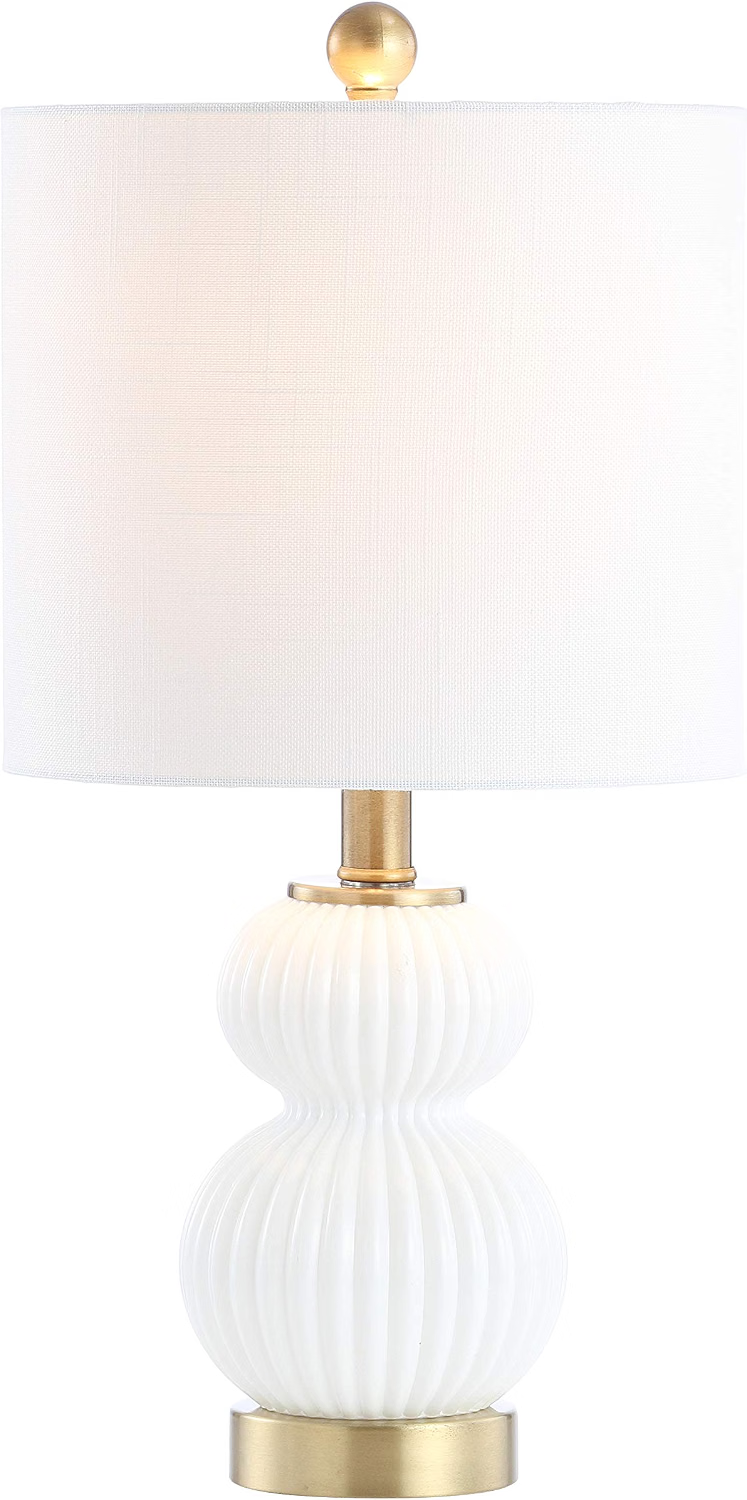
Amazon Find: Small Warm-Light Table Lamps
Compact table lamps provide warm ambient lighting for bedside tables, consoles, and small living rooms.
6. Choose an Apartment-Size Sofa With Exposed Legs
A sofa is often the largest piece of furniture in a small apartment, so choosing the right size and silhouette can change the entire room. Apartment-size sofas with slim arms and visible legs can feel visually lighter than bulky low-profile seating. The exposed floor underneath creates a more open appearance and allows the room’s rug or flooring to remain visible.
Choose a comfortable two-seat or compact three-seat sofa based on your actual room measurements. Position it along the longest suitable wall or use it to define a living zone in an open studio. Pair it with a small round coffee table and one accent chair only if there is enough space for circulation. Upholstery in cream, warm gray, muted olive, or dusty blue can look beautiful with natural wood furniture. Before purchasing, check the sofa’s overall width, depth, arm dimensions, seat comfort, and delivery access. A sofa that looks compact in photographs may still be too deep for a narrow room.
Small-space tip: A comfortable sofa with clean lines often looks better than several tiny chairs. Choose fewer pieces that suit the way you actually use the apartment.
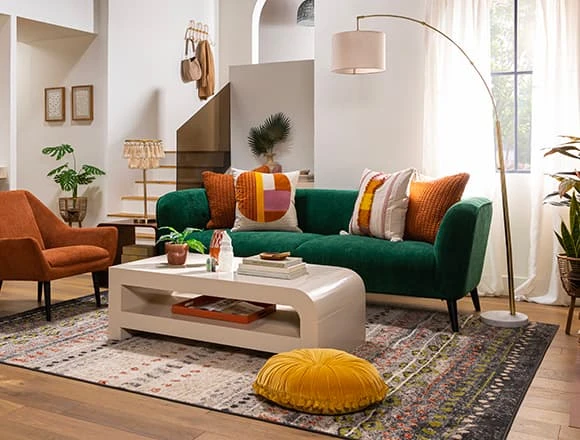
Image credit: @livingspaces.com
7. Add a Stylish Lift-Top Coffee Table
A lift-top coffee table is a clever addition when your living room needs to function as a place to relax, work, and occasionally eat. Unlike an ordinary coffee table, a compatible lifting mechanism raises the tabletop to a more convenient height for a laptop or casual meal. Many designs also include hidden storage, helping the living area look more organized.
Choose a table with dimensions that suit the space between your sofa and other furniture. Look for a stable lifting mechanism, a suitable weight rating, and enough room to open the top safely. Use the hidden compartment for remotes, notebooks, chargers, or small accessories that would otherwise clutter the surface. A light oak or warm walnut finish can create a beautiful contemporary appearance, while a cream or white design may suit minimalist decor. Keep fingers clear of the hinges and follow the manufacturer’s instructions, particularly if children use the room.
Styling tip: Keep the tabletop decoration simple. One small tray or vase is enough, and it can be moved easily whenever the surface needs to lift.
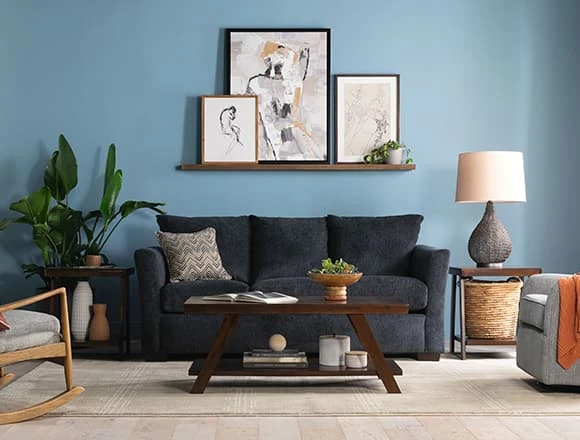
Image credit: @livingspaces.com
Amazon Find: Lift-Top Coffee Tables With Storage
A lift-top coffee table can combine a living room surface, temporary work area, and concealed storage in one piece.
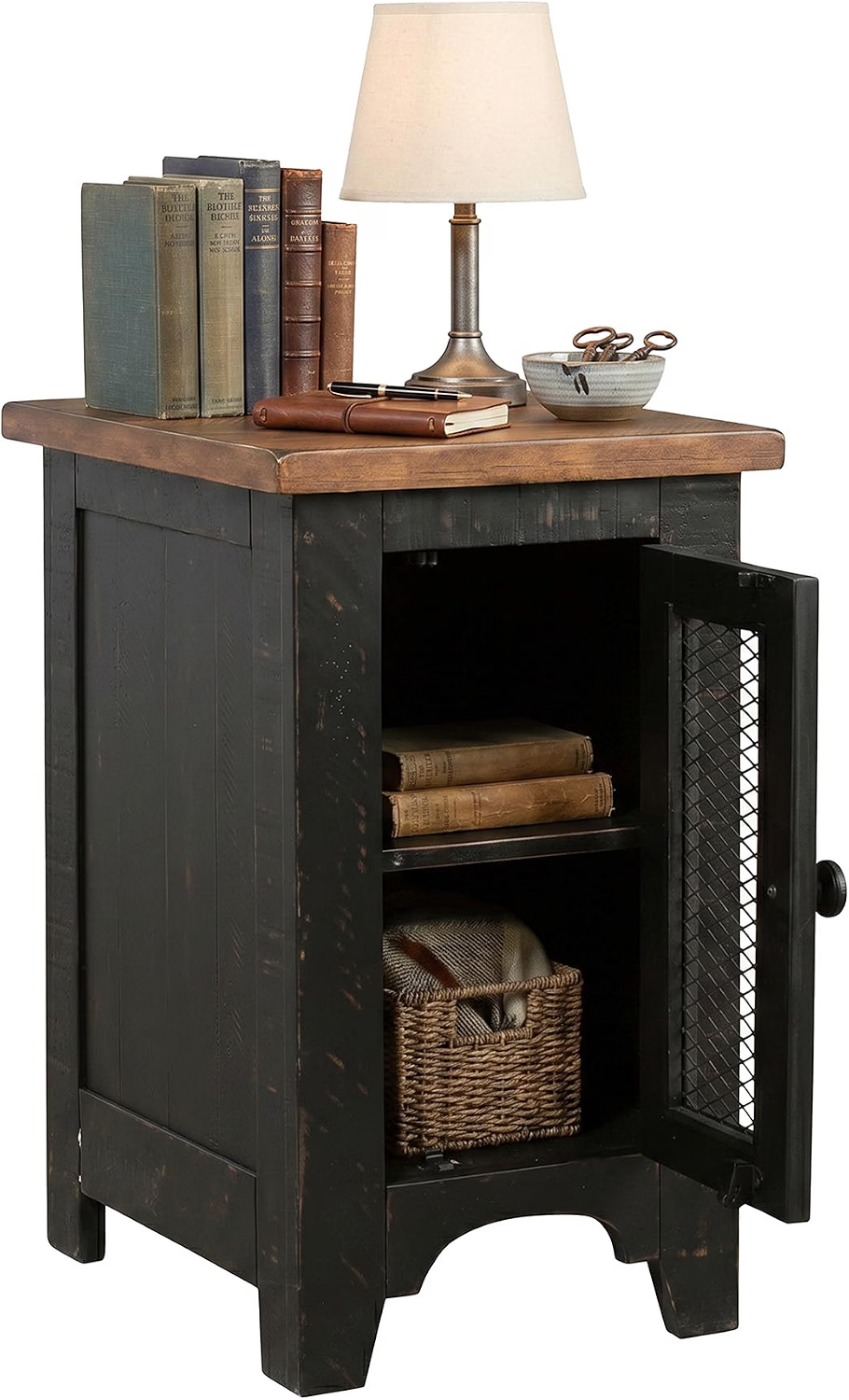
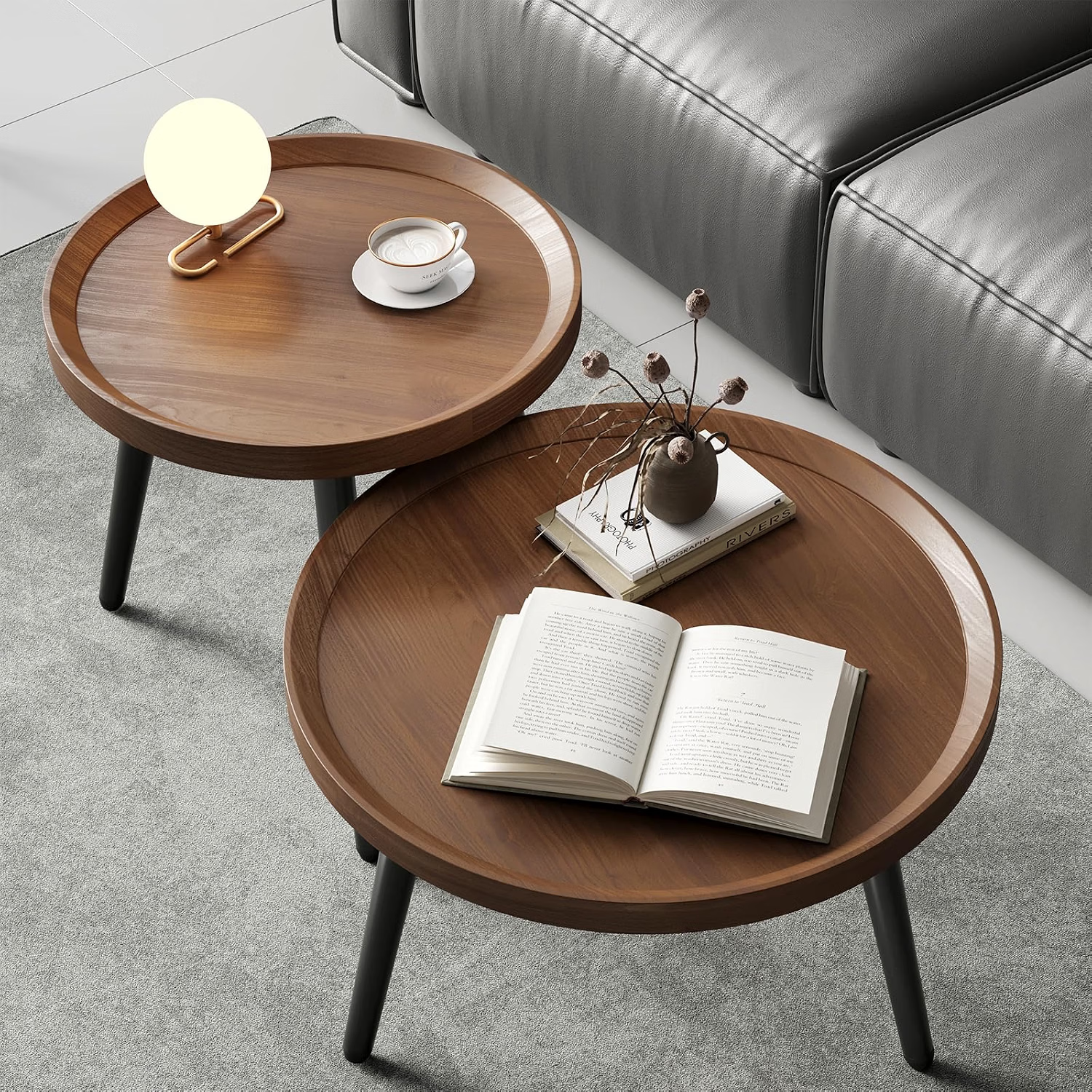
8. Use Nesting Side Tables for Flexible Living
Nesting side tables are a practical way to add flexible surfaces to a small apartment without permanently occupying extra floor space. The smaller tables fit beneath the larger one when they aren’t needed, creating a tidy arrangement beside the sofa. When guests visit or you need another place for a drink or book, the tables can be separated and moved into useful positions.
Choose a nesting set with simple shapes and a stable construction. Round tables work well beside curved sofas and compact seating arrangements, while slim rectangular designs may fit narrow living rooms more easily. Select a finish that coordinates with your other furniture, such as warm wood, black metal, or brass-look frames. Keep the smallest table tucked away when not in use to preserve the walkway. Don’t use nesting tables as seating or steps unless they’re specifically designed and rated for those purposes.
Budget tip: Nesting tables can replace two separate side tables in a compact living room. Choose a design you’ll use regularly rather than purchasing extra decorative surfaces.
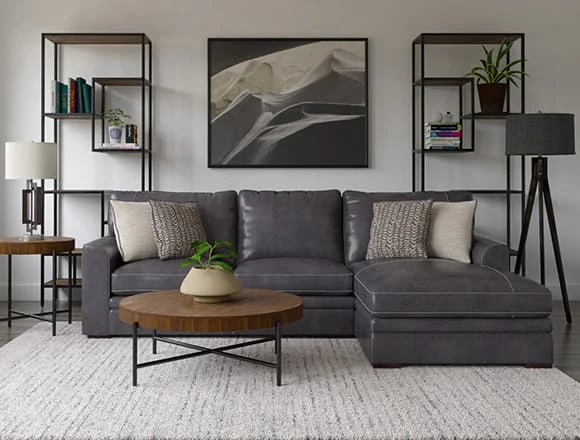
Image credit: @livingspaces.com
Amazon Find: Modern Nesting Side Tables
Nesting tables provide occasional surfaces and tuck together neatly when floor space is needed.
9. Choose an Extendable Dining Table
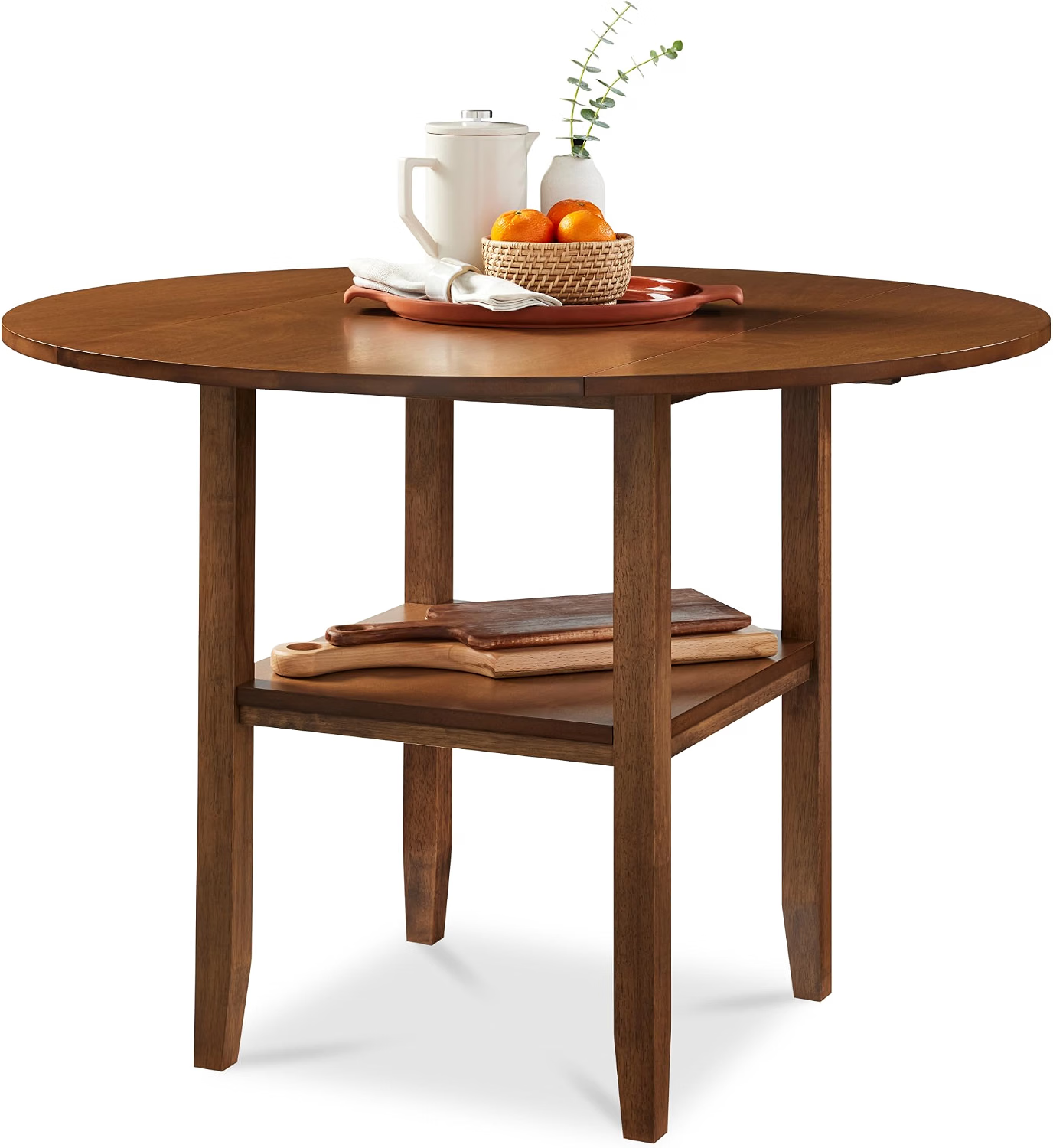
An extendable dining table can make a small apartment more flexible, especially when the dining area also functions as a study or work surface. Instead of keeping a large table in the room all the time, choose one that stays compact for everyday meals and expands when you need additional seating. This can be particularly helpful in studio apartments and open-concept living-dining spaces.
Look for a drop-leaf, gateleg, or extendable table that suits your preferred decorating style. A small round table in light wood creates a cozy breakfast nook, while a slim rectangular design may work better along a wall. Before buying, measure the table in both its closed and extended positions, including room for pulling out the chairs. Pair the dining area with compact chairs that tuck beneath the tabletop, and keep the table setting simple with one small vase or attractive bowl. Check the extension mechanism for stability and follow the manufacturer’s instructions when opening or closing it.
Apartment tip: If the table is used for dining and working, keep a nearby basket or drawer for laptop accessories so the space can be reset easily at mealtimes.
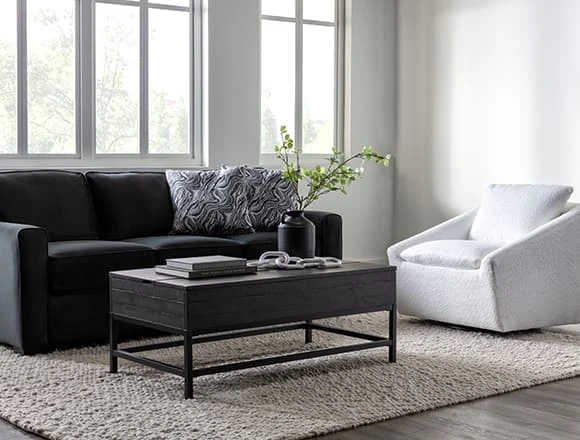
Image credit: @livingspaces.com
Amazon Find: Small Drop-Leaf Dining Tables
Explore compact dining tables that can expand when needed and fold down for everyday use.
10. Define Your Living Area With a Beautiful Rug
An area rug is one of the easiest ways to make a small apartment feel thoughtfully arranged. It visually connects the sofa, coffee table, and accent chair into one defined living zone. This is especially useful in studio apartments, where the sleeping, dining, and relaxing areas may share one large room without interior walls.
Choose a rug based on the actual furniture arrangement instead of selecting the smallest option automatically. Ideally, it should help anchor the main seating, often with the front legs of the sofa and chairs resting on the rug where space permits. A cream textured rug can create a calm neutral appearance, while a muted vintage pattern brings color and character. In a studio, position the rug so it clearly identifies the living zone without extending awkwardly through the kitchen or entrance. Use a suitable nonslip rug pad and ensure the edges lie flat to reduce tripping hazards.
Styling tip: Repeat one rug color in your throw pillows or wall art. This helps the living area look coordinated even when the apartment contains several different functions.
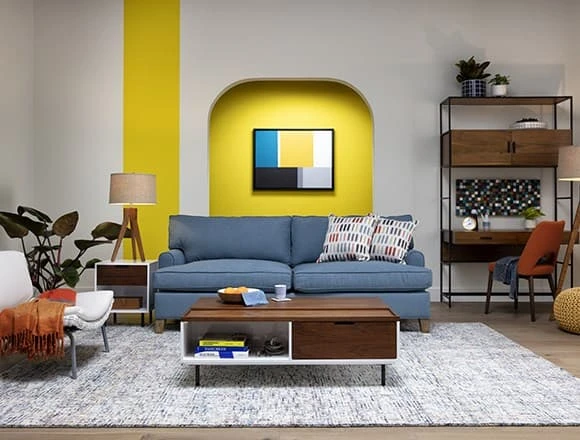
Image credit: @livingspaces.com
Amazon Find: Neutral Washable Area Rugs
A properly sized rug can anchor compact living room furniture while introducing warmth, texture, and a more finished appearance.
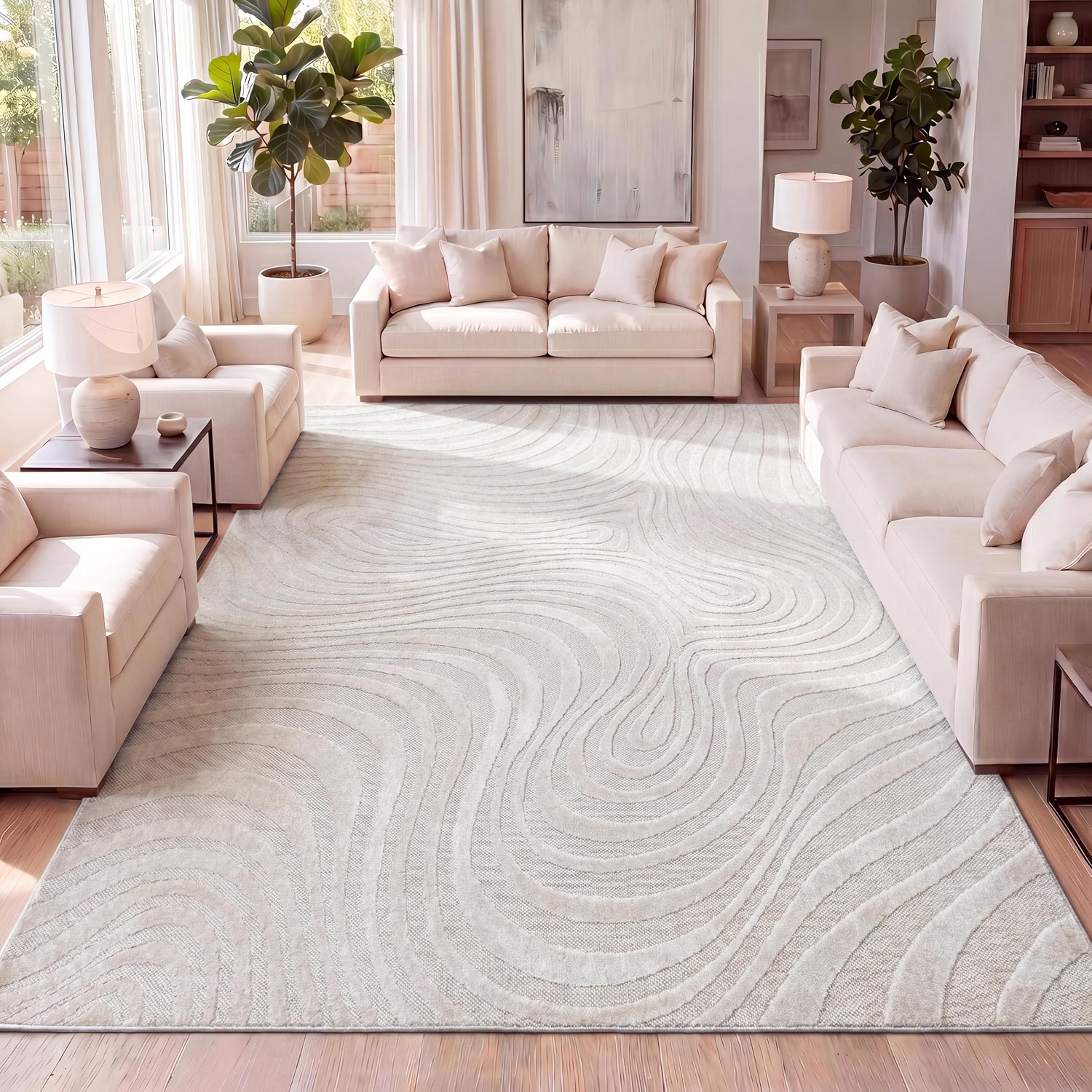
Best Color Palettes for Aesthetic Small Apartments
A coordinated color palette helps connect different areas of a small apartment. Choose shades that work with your existing walls and flooring, then repeat them in smaller details throughout the space.
- Warm White, Beige, and Natural Oak: A cozy neutral combination for light, calming interiors.
- Cream, Sage Green, and Soft Brown: Perfect for organic modern and nature-inspired apartments.
- Ivory, Taupe, and Brushed Brass: An elegant palette for contemporary chic spaces.
- Dusty Pink, Warm White, and Light Wood: A soft, romantic combination for cozy apartments.
- Light Gray, Black, and White: A clean modern option with simple geometric accents.
- Terracotta, Oatmeal, and Olive: A warm earthy look with bohemian influences.
- Muted Blue, Cream, and Natural Wood: A peaceful palette for coastal or Scandinavian interiors.
- Chocolate Brown, Ivory, and Camel: A rich neutral combination that can feel sophisticated and cozy.
How to Decorate a Studio Apartment With Separate Living Zones
In a studio apartment, the main challenge is making one room support several activities without feeling cluttered. Rather than filling the apartment with partitions, use furniture placement, rugs, and lighting to establish a clear purpose for each area.
Begin by deciding where the sleeping area will be most comfortable and practical. Place the bed where it doesn’t block essential circulation, doors, or windows. Use a rug to define the living area, then position a compact sofa and coffee table around it. A small drop-leaf table can create a dining and working zone without occupying the space required for a full-size table.
If you want more separation, a properly secured open bookshelf or suitable freestanding screen can provide a visual boundary. Make sure any divider remains stable and doesn’t block light, ventilation, access, or required exits. Choose different lighting for the sleeping, working, and living areas so each part of the apartment feels comfortable for its intended purpose.
Simple studio apartment layout formula: Sleeping zone + rug-defined living area + compact dining or working surface + vertical storage + clear circulation between spaces.
Easy Ways to Make a Rental Apartment Look More Expensive
A rental apartment can look stylish without changing permanent fixtures or spending heavily on furniture that might not fit your next home. Focus on portable pieces and accessories that can move with you.
- Coordinate your largest pieces: Choose a sofa, rug, and curtains that share related colors or textures.
- Use beautiful lighting: Add suitable table and floor lamps rather than relying entirely on overhead fixtures.
- Choose one statement mirror: A securely mounted or anchored mirror can reflect daylight and provide a decorative focal point.
- Hide everyday clutter: Use storage ottomans, baskets, and closed compartments to keep surfaces organized.
- Hang curtains thoughtfully: Choose appropriate curtain panels and hardware, following lease rules for installation.
- Add a coordinated rug: A properly sized area rug can help even inexpensive furniture look more connected.
- Style shelves in small groups: Arrange books, ceramics, and personal photographs with enough space between them.
- Use removable accessories: Pillow covers, throws, art prints, and decorative trays can be changed without altering the apartment.
- Keep furniture proportions balanced: A few comfortable, correctly sized pieces often look more polished than many tiny items.
- Choose meaningful decorations: Personal artwork and favorite objects make the apartment feel collected rather than overly staged.
Common Small Apartment Decorating Mistakes to Avoid
Buying Furniture Before Measuring the Apartment
A sofa or dining table may look compact in a product photograph but still be too large for your apartment. Measure the room, doorways, furniture dimensions, and the space needed to open drawers or extend tables. Test the arrangement on paper before making expensive purchases.
Using Too Many Unrelated Colors
A small apartment can feel visually fragmented when every room and large furniture piece uses unrelated colors. Choose a consistent base palette and repeat a few accent shades throughout the home. This creates continuity without requiring every decoration to match exactly.
Blocking Windows With Bulky Furniture
Natural light can make a compact apartment feel brighter and more comfortable. Avoid positioning tall storage units or oversized furniture where they unnecessarily block daylight, ventilation, or window access. Use appropriately sized curtains and keep useful window areas accessible.
Filling Every Empty Corner With Decor
Not every corner needs a plant, chair, shelf, or lamp. Too many small objects can make an apartment feel crowded. Give each area a purpose and leave some visual breathing room between furniture and decorative arrangements.
Ignoring Hidden Storage
Attractive open shelves are useful for displaying favorite objects, but they aren’t always the best solution for everyday clutter. Use closed cabinets, storage ottomans, baskets, and drawer organizers for items you don’t need to display. A combination of open and closed storage usually works better than relying on one type alone.
Assuming All Removable Decor Is Rental-Safe
Peel-and-stick wallpaper, adhesive hooks, and removable wall products can still damage paint or other finishes. Review your lease, check the manufacturer’s surface requirements, and test products in an inconspicuous location before using them more widely.
Overlooking Furniture and Wall-Mounting Safety
Tall bookcases, large mirrors, heavy shelves, and storage units need suitable support. Follow manufacturer instructions and secure furniture against tipping where required. Maintain clear exits, door swings, and walkways, and avoid overloading multipurpose furniture.
Frequently Asked Questions
1. How Can I Make My Small Apartment Look Aesthetic?
Choose a coordinated color palette, properly sized furniture, warm lighting, and a few meaningful decorative accessories. Use storage furniture to control clutter and repeat materials such as wood, linen, or ceramic throughout the room. A beautiful mirror, carefully styled shelf, and well-chosen rug can make a noticeable difference.
2. What Is the Best Decorating Style for a Small Apartment?
Cozy neutral, Scandinavian, minimalist, contemporary, and soft bohemian styles can all work beautifully in compact homes. The best style depends on your personal preferences and existing furniture. Prioritize good proportions, comfortable lighting, and practical storage rather than following one aesthetic too strictly.
3. How Do I Make a Small Apartment Feel Bigger?
Keep walking paths clear, use multifunctional furniture, maximize natural light, and avoid overcrowding the room with unnecessary pieces. Mirrors, furniture with visible legs, and coordinated colors can also make a compact interior feel more open. These tricks improve visual spaciousness rather than increasing the apartment’s actual square footage.
4. What Furniture Is Best for a Tiny Apartment?
Compact sofas, storage ottomans, lift-top coffee tables, nesting side tables, and extendable dining tables are useful options. The best furniture serves a clear purpose, fits the room’s measurements, and doesn’t block everyday circulation.
5. How Can I Decorate a Rental Apartment on a Budget?
Work with the existing walls and flooring, then add affordable accessories such as pillow covers, table lamps, rugs, plants, artwork, and storage baskets. Choose portable pieces that can move with you and check your lease before drilling, painting, or using adhesive decorations.
Final Thoughts
These 10 aesthetic apartment ideas for small spaces show that a beautiful home doesn’t need to be large or expensive. Multifunctional furniture, statement mirrors, coordinated colors, floating shelves, warm lighting, compact sofas, and flexible dining tables can help you create an apartment that feels stylish and comfortable.
Start with your furniture layout, make sure every major piece serves a useful purpose, and choose a simple color palette that connects the different areas. Then add personality through artwork, textiles, greenery, and lighting. With a few thoughtful changes, even the smallest apartment can become a cozy, aesthetic home you’ll enjoy spending time in.
