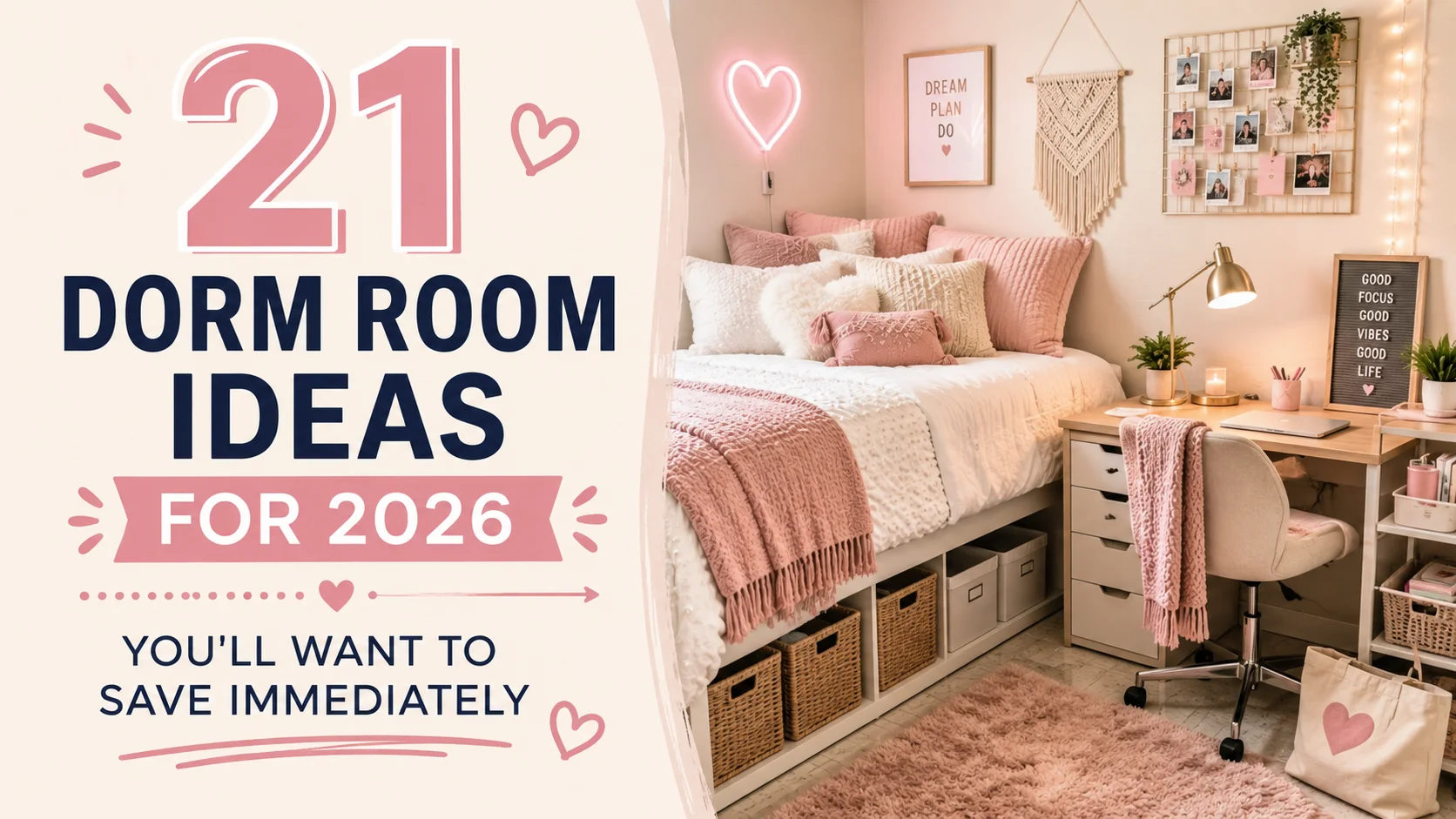
A college dorm may begin as a small room with plain walls, standard furniture, and very little storage. With a clear plan, however, it can become a comfortable space for sleeping, studying, getting ready, and relaxing.
These dorm room ideas for 2026 focus on simple color choices, warm lighting, practical storage, and personal details that work without overcrowding the room.
Affiliate disclosure: This article contains affiliate links. HowItSee may earn a small commission from qualifying purchases at no additional cost to you.
An attractive dorm does not require expensive furniture or a large collection of decorations. The rooms that feel most finished usually have a consistent color palette, a tidy bed, comfortable lighting, sensible storage, and a few meaningful personal items.
Decorating also needs to remain practical. Residence halls may restrict nails, drilling, candles, appliances, decorative lights, and certain adhesives. Read the housing rules before purchasing or installing anything.
Best place to begin: Select a simple color palette and plan your bedding first. The bed occupies a large part of the room, so it naturally sets the visual direction for everything around it.
Quick Navigation
Before Decorating Your Dorm Room
| Planning Step | Why It Matters |
|---|---|
| Read the housing rules | You need to know what is permitted before buying hooks, lighting, curtains, risers, or appliances. |
| Confirm room measurements | Accurate dimensions prevent you from ordering rugs, bins, or organizers that do not fit. |
| Coordinate with your roommate | Discuss shared purchases and any color or layout decisions that affect both sides of the room. |
| Buy the practical basics first | Bedding, bathroom supplies, laundry, storage, and study essentials should come before decorative extras. |
For a complete packing foundation, review our list of dorm room essentials every college freshman needs before purchasing decor.
21 Dorm Room Ideas For 2026 You’ll Want To Copy
1. Start With A Soft Neutral Base
A calm neutral background makes a small dorm feel brighter and easier to style. Cream, warm white, oatmeal, beige, taupe, and soft grey all work well because they do not compete with the rest of the room.
For example, begin with cream bedding, a light rug, and neutral storage. Then bring in color through one throw, a few prints, or small desk accessories.
2. Choose One Main Accent Color
A dorm can look visually crowded when every item introduces a different color. Selecting one main accent shade gives the room a clearer direction and makes affordable pieces feel more coordinated.
Sage green, butter yellow, dusty pink, lavender, terracotta, chocolate brown, and muted blue can all work with a neutral base. Repeat your chosen shade in only a few places.
3. Make The Bed Your Main Focal Point
The bed is usually the largest object in the room, so a neat and intentional setup can improve the appearance of the entire space. You do not need a complicated arrangement to make it look finished.
Try a simple comforter, two sleeping pillows, one or two decorative cushions, and a throw folded across the lower part of the bed.
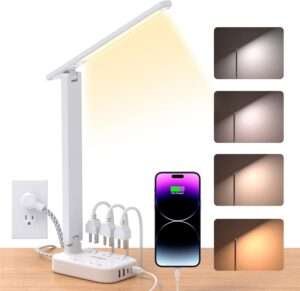
4. Replace Harsh Overhead Light With Warm Layers
Standard dorm lighting can make the room feel cold and flat. A warm desk lamp and a small bedside light create softer pools of light for studying and relaxing.
Choose lighting that is compact, stable, and permitted by your housing rules. Adjustable brightness is useful when you share the room with someone on a different schedule.
5. Create One Intentional Wall Display
Blank walls can make a dorm feel unfinished, but covering every wall often makes a small room feel busier. A single organized display creates impact without visual clutter.
Try one poster above the bed, a neat line of prints, or a compact gallery above the desk. Keep spacing consistent so the arrangement looks deliberate

6. Display Photos In A Clean Layout
Photos help a new room feel familiar, especially during the first weeks away from home. The display will look more polished when the prints share a consistent size or border.
Arrange them in a simple grid, one straight row, or a small framed collection rather than scattering individual pictures across several walls.

7. Bring In A Little Greenery
Greenery softens hard dorm furniture and adds life to a plain desk, shelf, or corner. One or two small plants are often enough to create the effect.
Use real plants only when the room receives suitable light and you can maintain them. Faux greenery is easier in dark rooms or during busy weeks

8. Keep The Desk Attractive And Functional
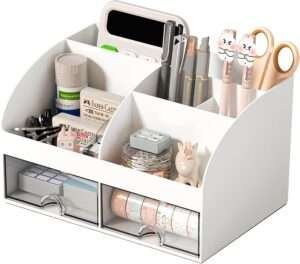
A dorm desk needs enough clear space for a laptop, notebook, and textbook. Decorations should support the workspace instead of making it harder to study.
Place a lamp and a compact organizer along one side, keep frequently used stationery within reach, and move backup supplies into a drawer or bin.
9. Let Storage Become Part Of The Decor
Storage is unavoidable in a dorm, so choose organizers that fit the room’s palette instead of treating them as an afterthought. Coordinated storage can make open areas look much calmer.
Use matching under-bed containers, neutral baskets, or organizers with similar finishes. They do not need to be expensive; they simply need to look related.
10. Divide The Room Into Simple Zones
Even one small room works better when each area has a clear purpose. Think in terms of sleeping, studying, getting ready, storing clothes, and keeping food.
Keep school materials near the desk, bedtime items near the bed, grooming products near the mirror, and snacks together in one designated area.
11. Use A Mirror To Open Up The Space
Mirrors reflect light and can make a narrow dorm feel less closed in. A full-length mirror is also useful for getting ready without taking up a large wall.
Hang a lightweight mirror over a compatible door or place one where it can reflect daylight without creating glare at your desk.

12. Add A Low-Pile Rug For Warmth
A rug adds warmth, texture, and a more residential feeling to hard dorm flooring. It can also help define the space beside the bed or between two sides of a shared room.
Measure carefully before buying and discuss a larger shared rug with your roommate. A low-pile design is easier to vacuum and less likely to trap debris.
13. Build A Compact Bedside Station
A regular nightstand may not fit beside a raised dorm bed, but you still need a place for a phone, charger, water, glasses, and other nighttime items.
Use a clip-on shelf, hanging bed pocket, or small basket that keeps these essentials together without filling the floor.
14. Coordinate With Your Roommate Without Matching
Two sides of a dorm can feel connected without looking identical. Agreeing on one shared neutral or one common item is often enough to make the room feel balanced.
For example, both sides could use cream bedding while one person adds sage accents and the other uses dusty blue. A shared rug or similar lamps can also create continuity.
15. Leave Some Surfaces Empty
Small rooms need visual breathing space. When the desk, dresser, shelves, and walls are all covered, even attractive decor can begin to feel like clutter.
Choose a few areas to style and leave the rest practical. A clear desk, simple bed, and one finished wall display can be more effective than decorating every corner.
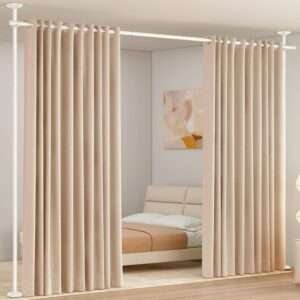
16. Use Curtains To Soften The Window
Curtains can make a dorm window feel less institutional while adding privacy and controlling harsh daylight. Light-filtering panels feel airy, while blackout panels provide stronger light control.
The hanging method must suit the window and curtain weight. Tension rods and approved removable supports are common options when permanent hardware is prohibited.
17. Make The Closet Look More Orderly
An open or overcrowded closet affects the appearance of the entire room. A few consistent storage habits can reduce that visual noise.
Use matching slim hangers, group shoes together, fold sweaters on one shelf, and place seasonal items in labeled bins.
18. Create A Cozy Mood Without Candles
Open flames are commonly prohibited in residence halls, but candles are not required to create a warm room. Lighting, texture, and cleanliness have a much greater effect on comfort.
Use a soft blanket, warm lamps, clean bedding, and any fragrance product specifically allowed by your college. Take out trash and wash damp laundry before odors build up.
19. Use Vertical Space Before Adding Furniture
Floor area disappears quickly in a dorm. Doors, closet rods, the space above the desk, and the area under a raised bed offer storage without adding a wide cabinet.
Consider over-the-door pockets, hanging closet shelves, wall grids that can be installed safely, or stackable containers that fit an existing corner.
20. Include One Detail That Feels Personal
A dorm should reflect the student living there rather than looking like a generic display. One meaningful item can give the room more character than a large amount of trend-based decor.
Choose a framed photograph, a favorite quote, sports memorabilia, a travel print, a small collection, or an object connected to a hobby.
21. Follow A Five-Minute Reset Routine
A thoughtfully decorated room can quickly lose its effect when laundry, papers, cups, and chargers collect on every surface. A short nightly reset keeps the design visible.
Return items to their zones, place dirty clothes in the hamper, clear the desk, throw away rubbish, and straighten the bedding.
A Useful Rule For Small Dorm Rooms
Before adding anything, ask whether it improves the room’s appearance, comfort, or function. If it does none of those things, it may not be worth using limited dorm space for it.
Easy Dorm Room Color Palette Examples
A simple palette gives you a guide when choosing bedding, storage, rugs, prints, and desk accessories. You do not need to use every color equally—one neutral can dominate while the other shades appear in smaller details.
| Dorm Style | Suggested Palette | Works Well For |
|---|---|---|
| Bright Neutral Dorm | Warm white, cream, beige, light wood | Calm, minimal, light-filled rooms |
| Warm Earthy Dorm | Oatmeal, terracotta, sage, brown | Natural and relaxed spaces |
| Soft Color Dorm | Blush, lavender, cream, light grey | Gentle color without visual clutter |
| Coastal Dorm | White, soft blue, sand, pale wood | Fresh and airy rooms |
| Modern Contrast Dorm | Black, white, walnut, charcoal | Simple, clean, more graphic styling |
Dorm Decorating Mistakes To Avoid
- Buying everything before seeing the room: Wait on bulky organizers, large rugs, and extra furniture until you know the dimensions.
- Using too many unrelated colors: A smaller palette keeps the room from feeling visually chaotic.
- Ignoring storage: Beautiful decor will not help when clothes, food, and school supplies have nowhere to go.
- Covering every wall and surface: A few intentional areas usually look better than constant visual activity.
- Choosing decor that is difficult to clean: Dorm rooms benefit from washable fabrics and low-maintenance finishes.
- Forgetting housing restrictions: “Removable” and “no-drill” products are not automatically approved by every college.
More Dorm Room Guides
Use these related HowItSee guides to finish planning your room:
FAQs About Dorm Room Ideas For 2026
How can I make a dorm room look put together?
Choose a limited color palette, make the bed the visual focus, use warm lighting, organize visible storage, and keep some surfaces clear. A consistent plan usually matters more than the price of the decor.
What dorm room styles work well in 2026?
Soft neutral rooms, warm earthy palettes, gentle accent colors, practical minimalism, and decor that also provides storage are all useful directions for a current dorm setup.
How can I decorate without damaging dorm walls?
Use housing-approved removable strips, hooks, tension systems, over-the-door products, leaning mirrors, and freestanding displays. Follow all installation and removal instructions and avoid exceeding weight limits.
Which part of a dorm should be decorated first?
Begin with the bed because it occupies the most visual space. After that, organize the desk, storage areas, and one wall display before purchasing smaller accessories.
How do I make a small dorm feel larger?
Keep floor space visible, use a light palette, choose vertical storage, limit visual clutter, add a mirror, and avoid oversized furniture or decor that blocks movement.
Final Thoughts
A well-designed dorm room does not need to contain a large amount of decor. It needs a clear direction, useful storage, comfortable lighting, and enough personal detail to feel familiar.
Start with bedding and a color palette, then organize the desk, closet, and areas around the bed. Add decorative pieces gradually after you understand how you use the room.
These 21 dorm room ideas for 2026 can help you create a space that looks intentional while remaining comfortable, practical, and easy to maintain throughout the school year.

Meet Monty, the visionary founder of How It See, being an engineering student, he’s fueled by an insatiable curiosity about the world around him. He is captivated by an eclectic correlation between animal groups, science, and nature, and this fascination drives his quest for understanding.
After completing his degree, he’s set on a mission to delve deep into the realm of nature, accumulating knowledge to share with you through his writing. In the meantime, he loves to watch anime and read anime.