Squirrels are the most common rodents. You can even see them in your garden, backyard, or on your terrace. They are so cute and fascinating that sometimes it generates questions in our minds, like how many types of these beautiful squirrels exist in nature.
So here in this article, we will answer all your curious thoughts about these beautiful squirrels. So here is the list of the 15 most beautiful squirrels in nature.
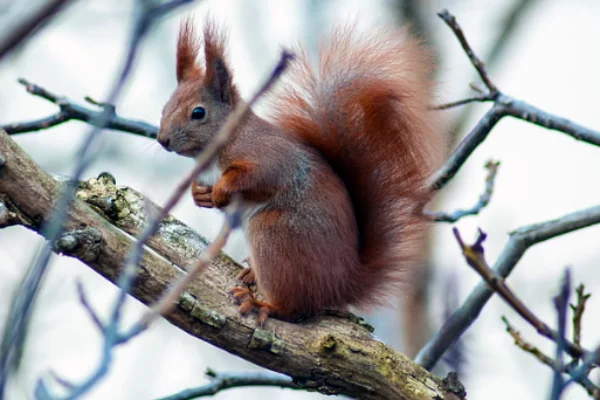
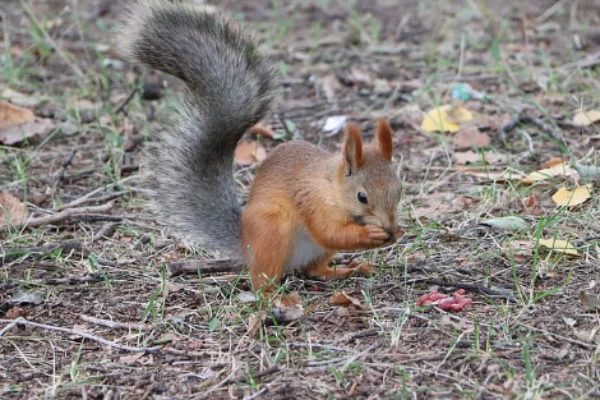
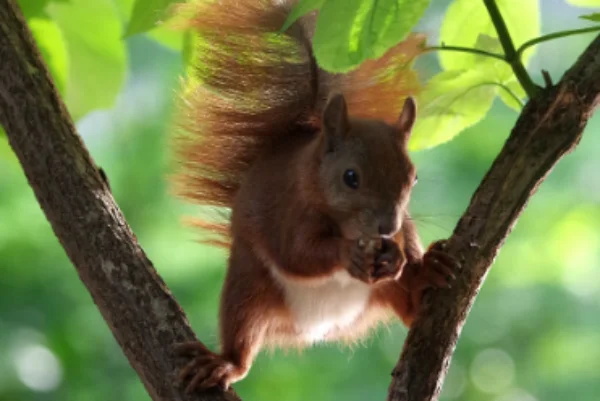
The red squirrel, or Eurasian red squirrel, is the common name of Sciurus vulgaris. They are commonly found in Europe and Asia, inhabiting coniferous, mixed, and broadleaved woodland. These distinct squirrels are red with a remarkable hairy tail.
Let’s talk about their diet; they mostly prefer nuts, seeds, etc. The best time to track these squirrels is autumn; they are very active during that time. They are small, with an average body length of 19 to 23 cm. They jump up to large distances, like 2 meters.
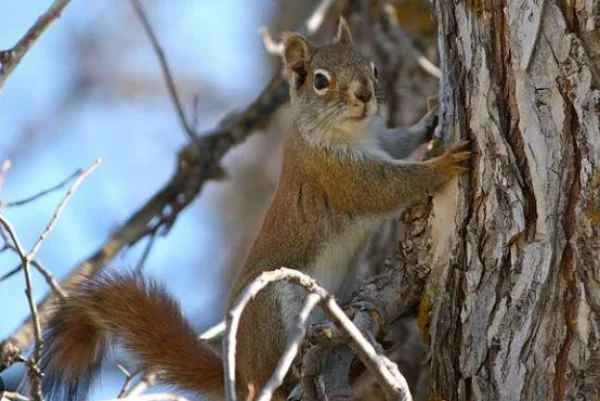
This diurnal squirrel, Tamiasciurus hudsonicus, is commonly known as the American red squirrel. They are small, with an average body length of 28–35 cm. People often mistake them for Eurasian red squirrels due to their similar size and color.
They are reddish-brown with white undersides. They mostly prefer seeds to feed on. These spontaneous ovulators generally made their nests on witches’ brooms. These squirrels are found in the United States and Canada and inhabit hardwood forests.
This North American native creature is considered the largest squirrel in the world. Their average body length is 50.8 to 76.2 cm, which is quite large. Due to their gray-brown fur, they are often mistaken for Western gray squirrels or Eastern gray squirrels.
They usually prefer tree nests and tree dens as their shelters. These omnivore species generally feed on small insects, tree roots, seeds, fruits, etc. They are famous as pets. Their life span is almost 18 years in captivity and 12 years in the wild.
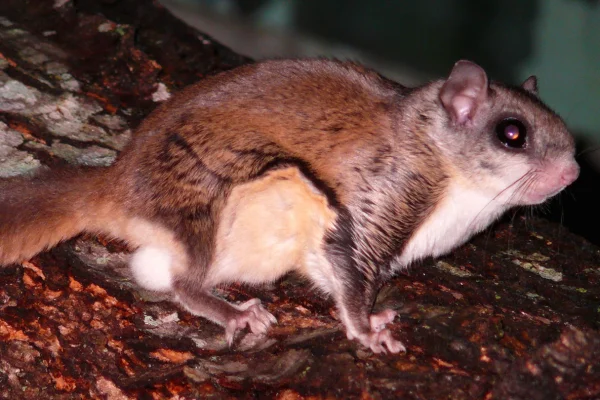
You must have seen flying squirrels in your textbooks, right? Do they fly? Glaucomys volans is commonly known as the Southern Flying Squirrel. They are small, with an average body size of 21 to 26 cm.
There is loose skin present from their neck to their legs. When they jump from one branch to another, it works as a parachute. They appear to be flying, but in reality, they are gliding using their loose skin.
They commonly occur in North America, inhabiting deciduous and mixed forests. This nocturnal squirrel mostly prefers nuts, fruits, and lichens as its food.
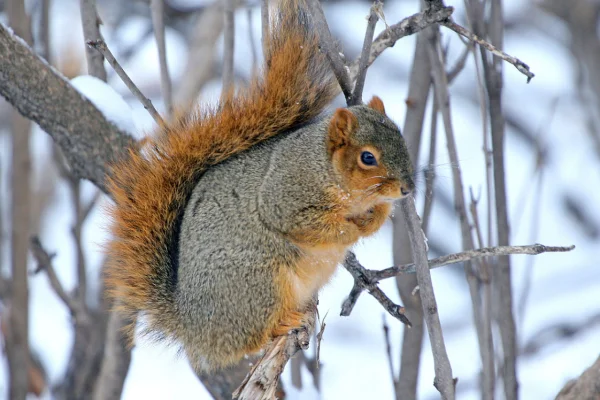
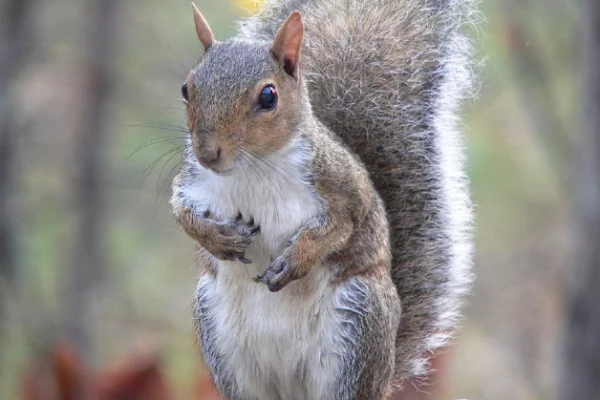
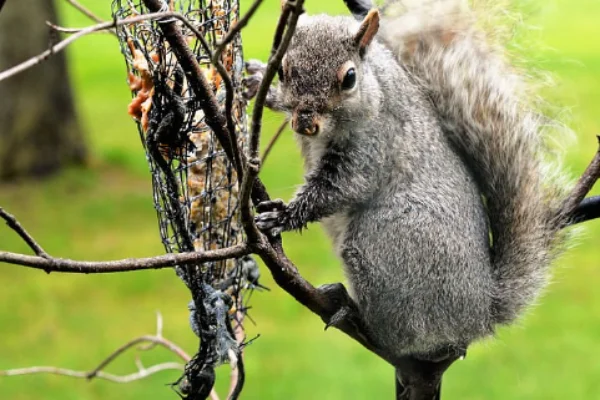
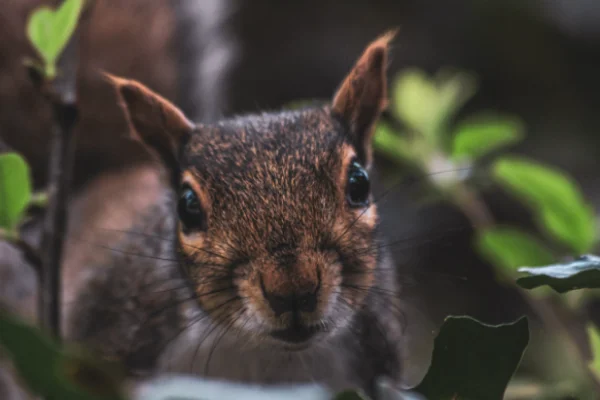
As the name indicates, they are gray with white undersides and beautiful furry tails. they are medium-sized with an average size of 23 to 30 cm. They are commonly found in eastern North America and Europe inhabiting dense woodland ecosystems.
In Europe, they are considered an invasive species. the black morph of this species is also predominantly present in certain areas of the world. they use certain sounds and actions to communicate with each other.
Sciurus griseus, or Western gray squirrel, is commonly found in the United States and Mexico. They are steel gray with a white belly. You can identify them by their characteristic gray, large, and furry tail.
They are large, with an average body size of 43 to 61 cm. They mostly prefer pine trees and oak trees for shelter and food. Females of this species are comparatively shorter than males. They don’t undergo hibernation.
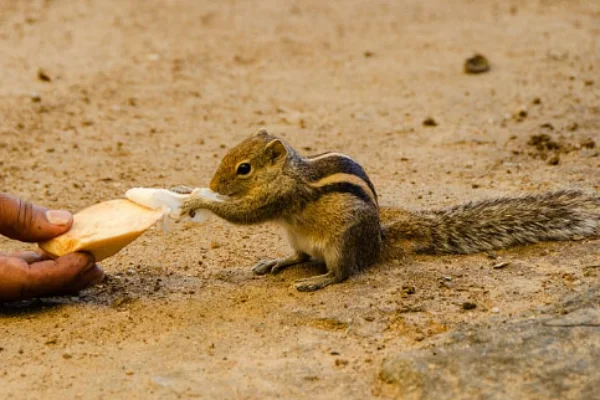
If you are living in India, you must have seen this squirrel once in your lifetime. They are the most common animals in India and Sri Lanka, and their common names are Indian palm squirrel or three-striped palm squirrel, Funambulus palmarum.
They are gray-brown with three white stripes on their back, as their name indicates. This species also exhibits albinism. They have a special place in Hindu mythology. According to the Ramayana, they played a role in Ram setu formation.
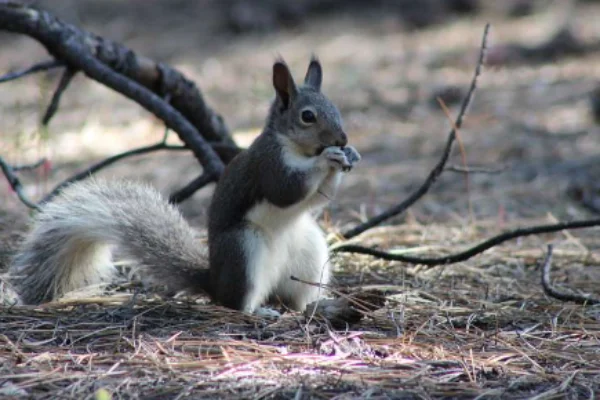
Abert’s squirrel or tassel-eared squirrel are the common names of Sciurus aberti. As the name indicates, they have fur near their ears. They are large, with an average body length of 46 to 58 cm.
They are gray with a white underside and a remarkable furry white tail, which make them distinct. One can find this squirrel in Arizona, Mexico, and Colorado, and it prefers to live in coniferous forests. They don’t usually hibernate and live in their nests during the winter.
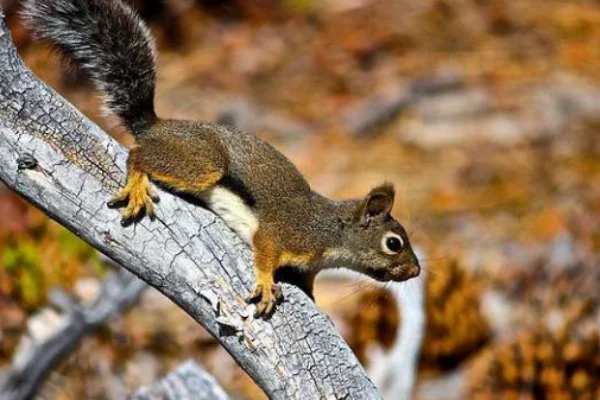
The botanist David Douglas, who first encountered this species, named it the Douglas squirrel. They can change their color. In summer, they are reddish brown, and in winter, they exhibit a gray color with a yellowish-brown underside.
It is medium-sized, with a length of 33 cm. One can find them in the United States and Canada. They use loud calls to communicate with each other. These diurnal squirrels are very agile climbers.
10. Cream-colored giant squirrel
Scientific name
Ratufa affinis
Fur color
Cream to light brown
Size
31-38 cm
Geographical location
Thailand, Malaysia, Indonesia
This South Asian native squirrel species is known for its size. They are larger than other squirrels and have a body length of 31–38 cm and a tail length of 37–44 cm.
As the name indicates, they are cream to light brown with a long, furry tail. This diurnal species primarily prefers rainforests to live in. This nearly threatened species can store about 100 nuts in its cheek pouches.
The Brazilian squirrel or Guianan squirrel is the common name of Sciurus aestuans. They are dark brown with an average size of 16 to 18.5 cm.
These omnivore squirrels mainly feed on nuts, seeds, eggs, and some small birds. They are commonly found in South America inhabiting rainforests, savannahs, etc.
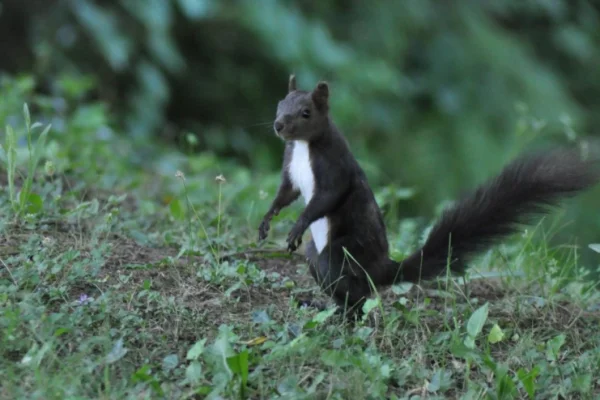
These beautiful black squirrels, Calabrian black squirrels, are endemic to Calabria and Basilicata. There is no variation in color in this species. They are dark brown to black with a white underside and a remarkable black furry tail.
The Italian government considers them a near-threatened species due to a reduction in their population size. They usually used their sense of smell to find mates and food.
Bang’s mountain squirrel, Syntheosciurus brochus, is endemic to Costa Rica and Panama. These medium-sized squirrels have a body size of 15 cm. They are very distinctive in appearance, with olive-brown furs.
You can find these diurnal or arboreal squirrels hopping here and there on the branches of mountain forest trees. They give birth to 2-3 young after the gestation period of 45 days. Preorbital glands are only present in these squirrels all around the world.
This Colombian endemic species, the Andean squirrel, mostly prefers mountain rainforests and cloud forests in the Colombian Andes. It is small, with an average body size of 14 cm, and has a remarkable reddish-brown appearance with a long, dark red tail.
They are not solitary and live in groups of ten individuals. They mostly use hollow tree cavities and abandoned bird nests to give birth to their young.
15. Variegated squirrel
Save
Variegated squirrel | Credit: Cephas (commons.wikimedia) (CC BY-SA 4.0)
Scientific name
Sciurus variegatoides
Fur color
Dark brown to yellowish gray
Size
260 mm
Geographical location
Central America
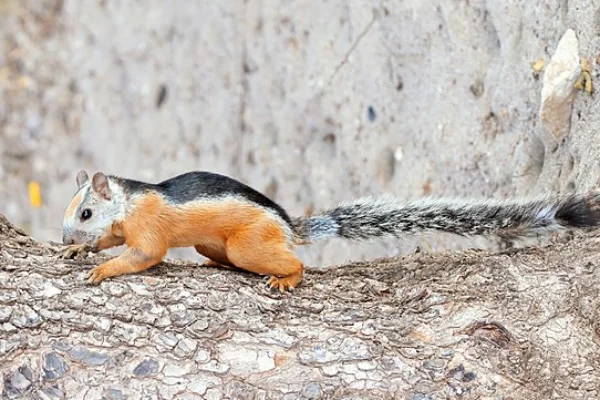
These squirrels are popular pets for animal lovers. One can find these squirrels in Central America, from Costa Rica to Panama. Their appearance is very variable and is available in many morph forms.
They are large, with an average body size of 260 mm. They are usually dark brown to yellowish-grey in color with gray tails of the same body length. Let’s talk about their diet. They feed on seeds but can also be seen eating insects and nestlings.
Conclusion:
We included a list of the 15 most beautiful squirrels in nature in this article. We saw that these common rodents are distinct and amaze us in many ways.
Their feeding habits and mating behavior are so different that it is easy to distinguish between these species. We will be back with another article soon; until then, read about these remarkable creatures.
Being a zoology student I’m always been fascinated toward animals especially insects. I love to do research and learn about different animals. As a writer I want to share my thoughts about nature through my articles. Apart from this you can find me exploring the new places and voice notes.