
Choosing the right bedroom rug can feel surprisingly confusing. Should your rug go completely under the bed? Is an 8×10 rug big enough for a king bed? And what if your bedroom is too small for a large area rug? The right size and placement can make your bedroom feel balanced, cozy, and beautifully finished, while the wrong arrangement may leave the furniture looking disconnected.
This easy guide explains how to choose bedroom rug size and placement with 14 practical tips, common rug dimensions, and simple layout advice. Whether you have a twin, full, queen, or king bed, you’ll discover where to position your rug, how much floor coverage you need, and how to create a comfortable bedroom without spending more than necessary.
Affiliate disclosure: As an Amazon Associate, I earn from qualifying purchases. This article contains affiliate links, which may earn us a commission at no extra cost to you.
More Bedroom Layout and Decorating Inspiration
- Bedroom Layout Ideas: 10 Tips for Creating the Perfect Restful Space – Plan your bed, nightstands, and walking paths before choosing a rug.
- 12×10 Bedroom Layout Ideas That Actually Feel Spacious – Explore furniture arrangements for compact bedrooms where rug placement requires extra care.
- Gallery Wall Cheat Sheet: Designer Layout Ideas & Sizing Rules – Coordinate the proportions of your rug, furniture, and bedroom wall decor.
Quick List: 14 Bedroom Rug Size and Placement Tips
- Choose Rug Size Based on Your Bed, Not Just the Room
- Test Rug Dimensions With Painter’s Tape
- Understand the Most Common Bedroom Rug Sizes
- Choose Between Full Under-Bed and Partial Placement
- Leave Enough Rug Visible Around the Bed
- Keep Nightstands Level and Properly Positioned
- Adjust Rug Placement to Your Bedroom Layout
- Place a Large Rug Under the Entire Bed
- Try the Classic Lower Two-Thirds Rug Placement
- Use a Small Accent Rug at the Foot of the Bed
- Add Matching Runners Along Both Sides of the Bed
- Choose the Right Rug Size for a Queen Bed
- Choose a Larger Rug for a King Bed
- Make Rug Placement Work in a Small Bedroom
How to Measure Your Bedroom for the Right Rug
Before buying a bedroom rug, measure the entire bed frame rather than relying only on the mattress dimensions. Some bed frames have wide upholstered edges, extended platforms, or oversized headboards that take up more floor space than the mattress itself. These details affect how much rug remains visible around the bed.
Measure the bedroom’s length and width, then note the position of the bed, nightstands, dresser, doors, and closet. Decide whether you want the rug beneath the whole bed or only the lower section. Check where you normally place your feet when getting out of bed and whether the rug will extend into that area.
As a useful decorating guideline, aim for about 18 to 24 inches of visible rug beside the bed and at the foot, where space allows. Smaller bedrooms may need less coverage or a different layout. The important goal is to create comfortable, proportional floor space without blocking doors or walkways.
Simple Bedroom Rug Sizing Formula
Ideal Rug Width = Bed Frame Width + Desired Visible Rug on Both Sides
For example, a standard queen mattress is 60 inches wide. Adding 24 inches on each side gives a desired rug width of 108 inches, or 9 feet. An 8×10 rug can still work beautifully when you choose a smaller exposed margin, turn the rug to suit the bed, or position it under the lower portion.
Bedroom Rug Size Chart: Twin, Full, Queen and King Beds
| Bed Size | Common Rug Sizes | Best Placement |
|---|---|---|
| Twin | 3×5, 4×6, 5×7 ft | Beside the bed or partly underneath |
| Full | 5×7, 6×9, 8×10 ft | Lower portion or generous full coverage |
| Queen | 6×9, 8×10, 9×12 ft | Lower two-thirds or entire bed |
| King | 8×10, 9×12, 10×14 ft | Lower two-thirds or generous full coverage |
| Two Twin Beds | Shared area rug or runners | Between or partly underneath both beds |
Important: These are starting points, not fixed rules. Rug orientation, actual product dimensions, mattress and frame sizes, and room clearance can all change the best choice. An 8×10 rug, for example, is often turned so its 10-foot dimension runs across the width of a queen or king bed.
Bedroom Rug Placement Comparison Guide
| Style / Area | Best Pieces | Why It Works |
|---|---|---|
| Spacious Primary Bedroom | 9×12 or larger rug | Anchors the bed and bedside furniture |
| Standard Queen Bedroom | 8×10 rug | Balances coverage and room proportions |
| Compact King Bedroom | 8×10 rug beneath lower bed | Creates an anchor with less coverage |
| Small Bedroom | Small accent rug or runner | Keeps useful floor space exposed |
| Narrow Bedroom | One or two bedside runners | Adds softness without a wide rug |
| Minimalist Bedroom | Neutral low-pile rectangular rug | Creates warmth with simple lines |
14 Bedroom Rug Size and Placement Tips
1. Choose Rug Size Based on Your Bed, Not Just the Room
One of the most useful bedroom rug sizing principles is to begin with the bed itself. The bed is usually the largest piece of furniture in the room, so it should guide the proportions of the rug. A rug can technically fit inside your bedroom and still look too small underneath a large queen or king bed.
Measure the full width and length of your bed frame, including any platform edges. Then decide how much rug you want visible along the sides and foot. For a large bed, a rug that extends beyond the mattress usually creates a more balanced look than a small rectangle almost completely hidden beneath it. Check the room dimensions after choosing the desired bed-to-rug proportions.
Styling tip: Start with the bed dimensions, but don’t ignore the room. The ideal rug should suit both the furniture scale and the available walking space.
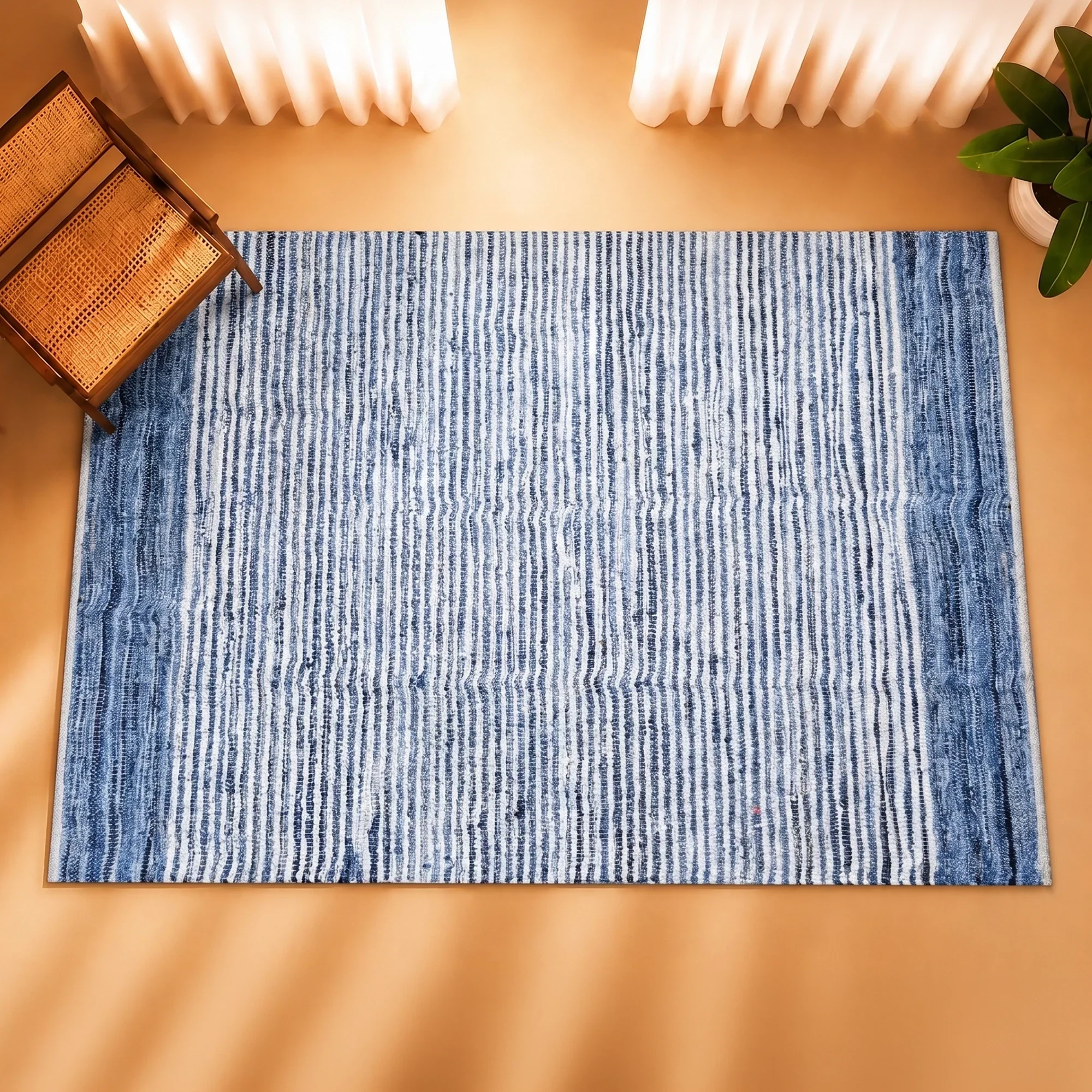
2. Test Rug Dimensions With Painter’s Tape
Buying a bedroom rug without testing its dimensions can lead to an expensive mistake. A rug that looks generously sized online may feel much smaller after it’s placed beneath the bed. Painter’s tape is a simple way to see how different rug sizes will look before ordering.
Use a tape measure and low-tack painter’s tape suitable for your flooring to outline an 8×10, 9×12, or another rug size. Mark the proposed rug edges around the bed and check how much space will remain beside the nightstands, dresser, and doorway. Repeat the test with a different orientation if necessary. Remove the tape promptly according to its instructions so it doesn’t damage the floor finish.
Budget tip: Testing two or three rug sizes before shopping can help you avoid buying a rug that looks beautiful in photos but doesn’t suit your actual bedroom layout.
3. Understand the Most Common Bedroom Rug Sizes
Bedroom rugs are available in many sizes, but 6×9, 8×10, and 9×12 feet are common options for larger beds. An 8×10 rug often creates a balanced look beneath the lower part of a queen bed, while a 9×12 rug can provide more generous coverage in a spacious bedroom. Small rugs and runners can be useful alternatives when a large area rug doesn’t fit.
Compare the actual product dimensions before buying, since rugs described by a standard size may measure slightly differently. Consider how much of the rug will disappear beneath the bed and whether the remaining visible sections are large enough to feel intentional. In a small bedroom, a 6×9 rug may work better than a larger one that presses against the walls or furniture.
Size tip: If you’re deciding between two sizes and the room comfortably accommodates both, the larger rug may create a more cohesive look. However, don’t sacrifice necessary walking space or door clearance simply to increase coverage.
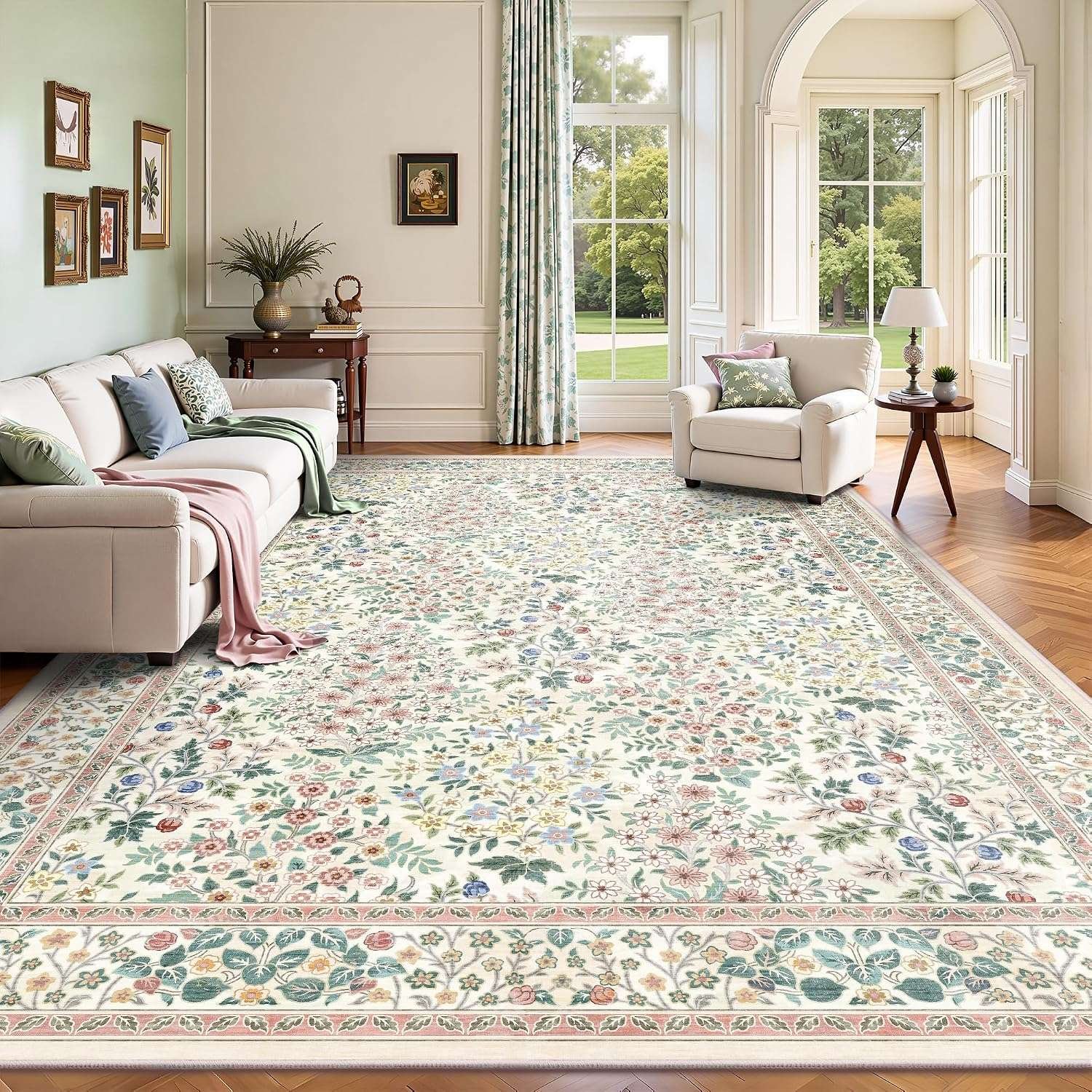
Amazon Find: 8×10 Bedroom Area Rugs
Browse neutral, vintage-inspired, and soft woven 8×10 rugs for queen and king bedroom layouts.
4. Choose Between Full Under-Bed and Partial Placement
Two of the most popular bedroom rug arrangements are full under-bed placement and lower two-thirds placement. With full placement, the rug sits beneath the bed and may extend far enough toward the headboard to include the nightstands. With partial placement, the rug begins farther down the bed, leaving the headboard area and nightstands on the uncovered floor.
Full placement creates a unified, luxurious look in a spacious bedroom. Partial placement is often more budget-friendly and allows more of the rug to remain visible toward the foot of the bed. Before deciding, consider your furniture positions and whether the rug can provide a comfortable landing area on both sides. Keep the layout symmetrical when that suits the room.
Design tip: If your rug will sit under the lower two-thirds of the bed, leave the nightstands completely off it. This helps keep the furniture level and creates a clean visual line.
5. Leave Enough Rug Visible Around the Bed
A bedroom rug should be visible enough to create a soft border around the bed. If nearly all of it disappears beneath the bed frame, the rug may not provide much visual impact or useful foot coverage. A common decorating guideline is to leave approximately 18 to 24 inches of exposed rug along the sides and foot when possible.
Measure from the outer edge of the bed frame rather than the mattress alone. Stand beside the bed and check where your feet naturally land. If the rug doesn’t reach that area, consider shifting it toward the foot or choosing a wider size. In a narrow bedroom, a smaller exposed margin may be more practical, and separate bedside runners can be another option.
Placement tip: Visible rug coverage is a decorating goal, not a requirement. Choose a proportion that feels comfortable in your actual space and keeps essential pathways clear.
6. Keep Nightstands Level and Properly Positioned
Nightstand placement can affect whether a bedroom rug arrangement looks polished or awkward. If a nightstand has two legs on a thick rug and two on the bare floor, it may sit unevenly. This can be particularly noticeable with taller lamps, fragile accessories, or lightweight bedside furniture.
For an 8×10 rug beneath the lower portion of the bed, keep both nightstands on the bare flooring when possible. If you’re using a large rug beneath the entire bed, make sure each nightstand is fully supported on the rug or positioned entirely off it. Check furniture stability before putting lamps, glasses, or other items on top. Choose a low-profile rug pad that is suitable for the floor and furniture layout.
Styling tip: Both nightstands don’t have to match, but keeping their relationship to the rug consistent can make the bedroom look more intentional.
7. Adjust Rug Placement to Your Bedroom Layout
Rug guidelines are helpful, but the shape of your bedroom should influence the final arrangement. A wide primary bedroom can accommodate a generous rug beneath the whole bed, while a narrow room may need a runner or a smaller area rug. Doorways, closets, and dressers can also affect where the rug should begin and end.
Before choosing a size, sketch your floor plan and mark the doors, windows, bed, and other major furniture. Test the rug dimensions around these fixed features. If your bed is off-center because of a doorway or closet, center the rug with the bed rather than the entire room when that creates the most balanced result. Check that dresser drawers and closet doors can still open comfortably.
Layout tip: For more help planning the furniture around your rug, explore these bedroom layout ideas before moving heavy furniture.
8. Place a Large Rug Under the Entire Bed
Placing a generous rug beneath the entire bed creates a luxurious and balanced bedroom layout. The bed and surrounding furniture appear connected, and the rug provides softness over a large portion of the floor. This arrangement works especially well in spacious bedrooms with queen or king beds and plenty of room around the furniture.
Choose a rug large enough to extend beyond the bed on both sides and at the foot. Depending on your bed and nightstand arrangement, a 9×12 or larger rug may be suitable. Position the rug so the bed is centered, then decide whether the nightstands will sit fully on the rug or remain off it. Keep enough exposed flooring near walls and doorways so the rug doesn’t overwhelm the room.
Best for: Spacious primary bedrooms, larger guest rooms, and layouts where you want a soft floor surface around almost the entire bed.
9. Try the Classic Lower Two-Thirds Rug Placement
The lower two-thirds arrangement is one of the most versatile ways to place a bedroom rug. Rather than sliding the rug all the way to the headboard, position it beneath the middle and lower section of the bed. This leaves the nightstands on the floor while creating a generous rug border beside and beyond the foot of the mattress.
An 8×10 rug is a popular starting point for queen beds and can also work beneath the lower section of some king beds. Lay the longer dimension across the bed so the rug extends on both sides. Slide it beneath the bed until the exposed section feels proportional, then adjust it to create a balanced border. Check that the rug isn’t hidden too far beneath the frame.
Budget tip: Partial placement often provides a visually substantial look without requiring the much larger rug needed to cover the entire bed and nightstands.
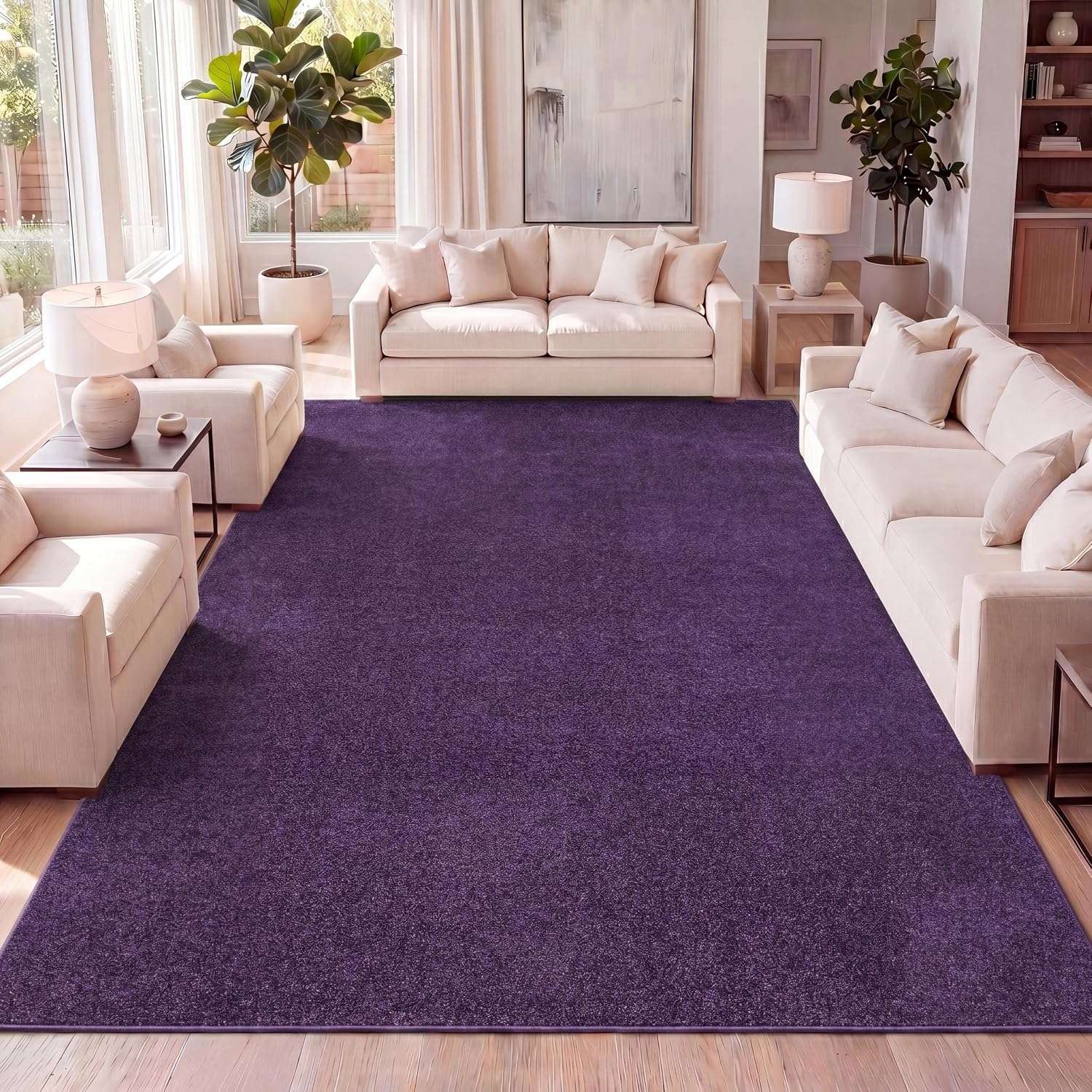
Amazon Find: Washable Bedroom Area Rugs
Explore low-pile and washable bedroom rugs in practical sizes for partial under-bed placement.
10. Use a Small Accent Rug at the Foot of the Bed
A smaller accent rug at the foot of the bed can be a beautiful option when you don’t want to cover most of your bedroom floor. It adds color, pattern, and texture while leaving the main walking areas open. This arrangement is particularly useful for compact guest rooms, bedrooms with attractive wood floors, and budget makeovers.
Choose a rug that is proportional to your bed and position it near the foot, either partly tucked under the frame or just beyond it where enough floor space is available. A 4×6 or 5×7 rug may be suitable in certain layouts. A patterned vintage-look rug can add personality, while a soft neutral woven design creates a calmer appearance. Keep the edges flat and away from doorways.
Styling tip: A foot-of-bed rug is primarily decorative and may not reach the bedside landing area. If underfoot comfort is your priority, consider bedside runners instead.
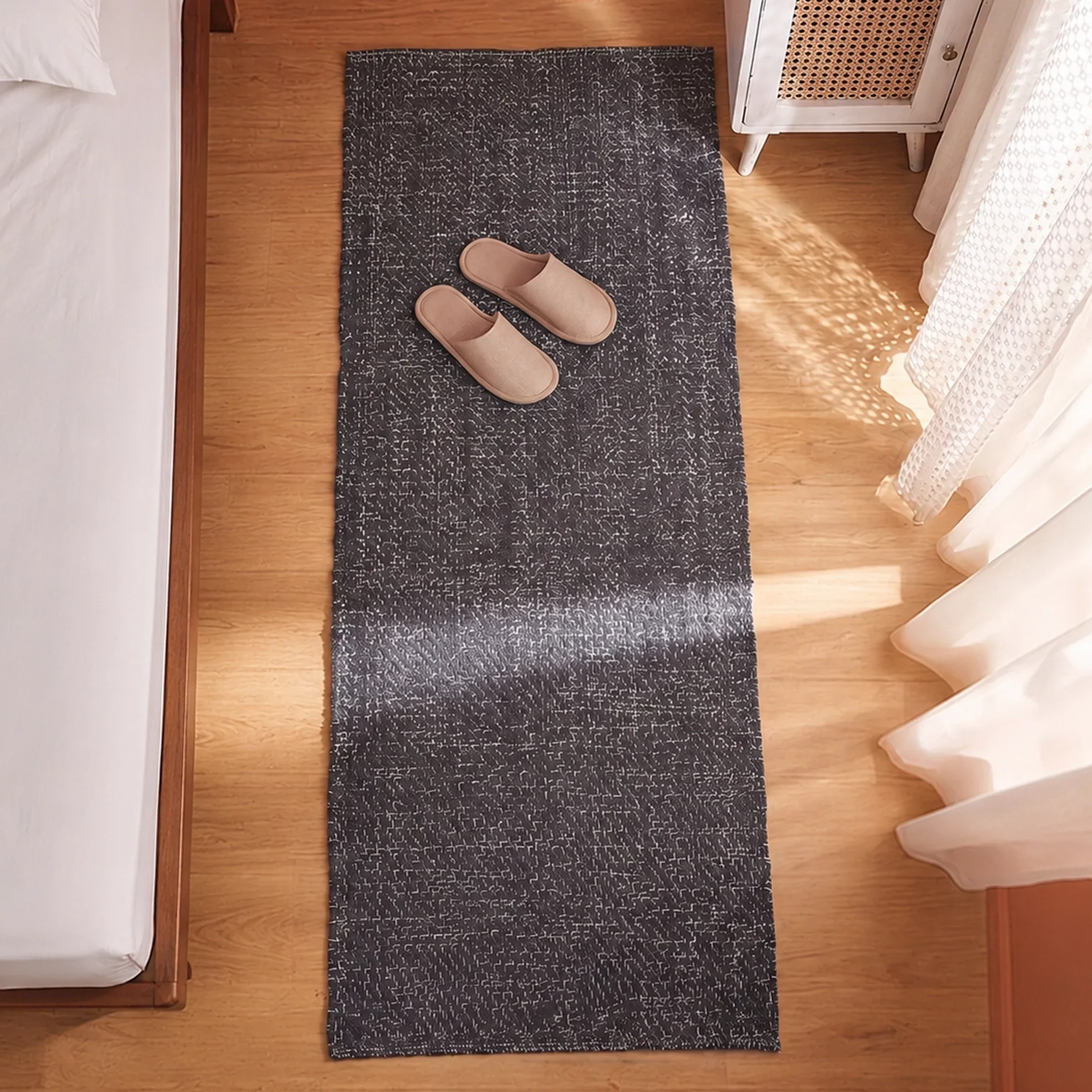
11. Add Matching Runners Along Both Sides of the Bed
If you have a narrow bedroom, two runners can provide a soft place to step without requiring one large area rug beneath the bed. This arrangement leaves the center of the floor relatively open and works well when the room is too small to accommodate an oversized rug. It’s also a flexible choice for renters and bedrooms with unusual furniture layouts.
Measure the floor space along each side of the bed and choose runners that fit comfortably between the bed frame and nearby furniture. Place them parallel to the mattress and keep their ends aligned for a balanced appearance. Choose matching designs for a symmetrical look or coordinate subtle patterns in similar colors. Use compatible non-slip pads to help prevent movement.
Small-space tip: You can also use a single runner along the side you normally enter and exit the bed. This can be more practical in a bedroom where one side of the bed is close to a wall.
12. Choose the Right Rug Size for a Queen Bed
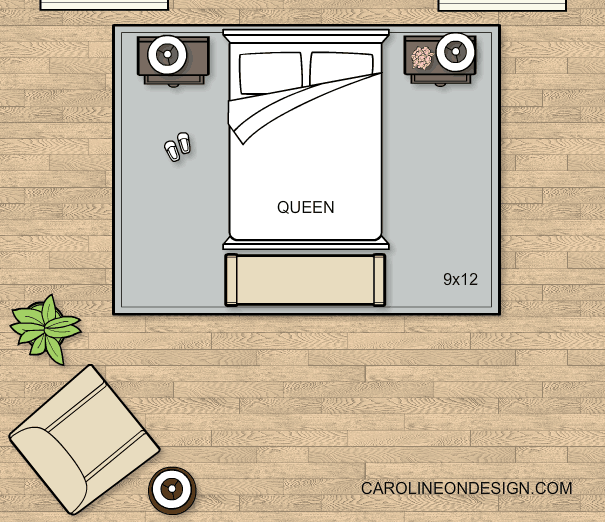
A queen bed is typically 60 inches wide and 80 inches long at the mattress, making it compatible with several common rug sizes. A 6×9 rug can work in a compact room when positioned under the lower section, while an 8×10 rug often creates a more generous and balanced appearance. A 9×12 rug may be suitable when you want the bed and nightstands to sit on a larger shared surface.
For an 8×10 rug, try positioning the 10-foot side across the width of the queen bed. This gives more coverage at the sides and allows the rug to extend beyond the foot when correctly placed. If your room is narrow, test a 6×9 layout with painter’s tape first. Remember that a wide platform frame or oversized bedside furniture may affect the available space.
Recommended starting point: For many standard queen bedrooms, an 8×10 rug beneath the lower two-thirds offers a useful balance of coverage, comfort, and cost.
13. Choose a Larger Rug for a King Bed
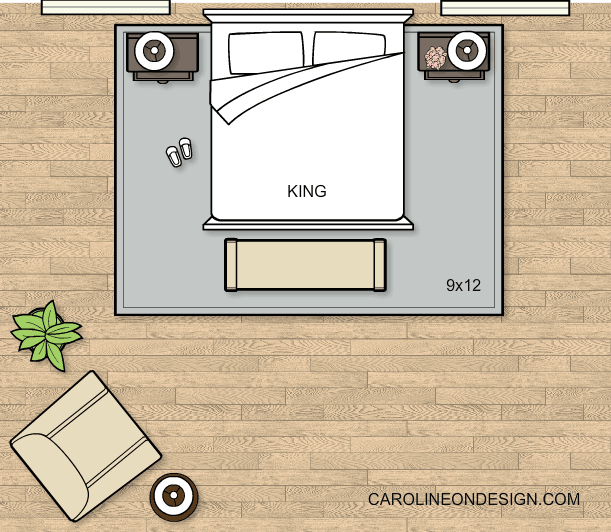
A king mattress is typically 76 inches wide and 80 inches long, so the rug needs enough width to remain visible beside the bed. A rug that’s proportionate to a queen bed may appear too narrow beneath a larger king frame. For this reason, king bedrooms often benefit from an 8×10, 9×12, or even 10×14 rug, depending on the layout.
Use an 8×10 rug beneath the lower two-thirds in a more compact king bedroom, or consider a 9×12 rug when there’s room for larger coverage. A 10×14 rug can work in a spacious primary suite where the bed and bedside furniture need to feel part of one large grouping. Center the rug with the bed and check the visible margins around the sides and foot. Make sure the layout doesn’t interfere with closets, doors, or a nearby bench.
Design tip: When choosing a large rug for a king bed, measure the space beyond the bed frame rather than assuming the rug will fit because the room is labeled a primary bedroom.
14. Make Rug Placement Work in a Small Bedroom
Small bedrooms can still feel warm and beautifully styled with the right rug placement. The goal is to add softness without making the floor look crowded or restricting access to furniture. Instead of automatically choosing the largest rug possible, consider how much of the floor needs to remain uncovered for comfortable walking and everyday use.
Try positioning a medium rug under the lower portion of the bed or using a pair of narrow runners. If the bed sits against a wall, one runner on the exposed side may be enough. Choose a low-pile design that doesn’t interfere with doors or furniture, and keep the rug centered relative to the bed where practical. Soft neutrals can create a calm look, while a single patterned rug adds personality to a simple room.
Layout tip: If your bedroom is around 12×10 feet, review these 12×10 bedroom layout ideas to plan the furniture before choosing a rug.
How to Place a Rug Under a Queen or King Bed: Step by Step
- Measure the bed frame: Record the full width and length, including upholstered or platform edges.
- Measure the room: Note nearby doors, nightstands, drawers, and clear walking paths.
- Choose a layout: Decide between full under-bed placement, lower two-thirds placement, or a smaller accent rug.
- Test the dimensions: Use painter’s tape to outline the proposed rug size and placement.
- Check visible coverage: Aim for a useful landing area along the sides and foot of the bed where possible.
- Prepare the floor: Clean and dry the surface, and use an appropriate rug pad compatible with your flooring.
- Position the rug: Move furniture safely with assistance when needed, then center the rug beneath the bed.
- Check stability: Make sure the edges lie flat, nightstands are level, and doors and drawers operate freely.
Choosing Rug Material, Pile Height, and Texture
Size and placement are important, but rug texture also affects how comfortable your bedroom feels. Choose a material that suits the room’s decorating style, how often it is used, and the amount of cleaning you’re comfortable with.
| Rug Material | Best For | Considerations |
|---|---|---|
| Wool | Soft and cozy bedrooms | Care requirements vary by rug |
| Low-Pile Synthetic | Everyday practical use | Often easier to vacuum |
| Cotton | Casual and washable designs | Some lightweight rugs need secure pads |
| Jute or Sisal | Organic, earthy decor | May feel rough and require special cleaning |
| Plush High-Pile | Soft underfoot comfort | Can complicate cleaning and door clearance |
| Flatwoven | Layering and low-profile layouts | Use suitable non-slip backing |
How to Choose a Bedroom Rug on a Budget
You don’t need an expensive oversized rug to create a comfortable bedroom. A carefully positioned smaller rug may provide the softness and style you need without covering the entire floor.
- Choose partial placement: Putting the rug beneath the lower section of the bed can reduce the size needed for your layout.
- Consider bedside runners: One or two small runners may cost less than a large area rug.
- Try washable styles: Many modern washable designs provide attractive patterns with practical care options.
- Choose low-pile rugs: They are often easier to maintain and work well beneath furniture.
- Shop by actual measurements: Avoid paying for extra coverage that won’t be visible or useful.
- Use one statement pattern: A rug with beautiful colors can reduce the need for additional bedroom decorations.
- Check the total price: Include the rug pad, delivery, and cleaning requirements when comparing options.
Best Rug Colors and Patterns for Different Bedrooms
- Ivory + Warm Beige + Light Oak: Creates a bright, calming look for modern and Scandinavian bedrooms.
- Dusty Blue + Cream + Walnut: Beautiful for traditional bedrooms with vintage-patterned rugs.
- Sage Green + Oatmeal + Brown: A soft, nature-inspired palette that works with woven and natural-look rugs.
- Terracotta + Sand + Charcoal: Adds warmth and contrast to contemporary and bohemian spaces.
- Burgundy + Navy + Antique Gold: Perfect for moody bedrooms with Persian-style rugs.
- Mocha + Cream + Taupe: Keeps neutral bedrooms cozy without strong patterns.
- Muted Rose + Ivory + Gray: Creates a soft romantic bedroom with traditional floral rugs.
Styling tip: Choose a rug that repeats one or two colors from your bedding or curtains. A strong patterned rug can become the room’s main decorative feature, while a simple neutral rug allows furniture and artwork to stand out.
Common Bedroom Rug Size and Placement Mistakes
Choosing a Rug That’s Too Small
A rug that barely extends beyond the bed may look disconnected from the room and won’t provide much softness where you walk. Measure the bed frame and visible rug margins before buying. If a large rug isn’t practical, use intentional runners or a foot-of-bed accent instead.
Choosing a Rug That’s Too Large for the Room
An oversized rug can overwhelm a compact bedroom and interfere with furniture or doors. Leave enough useful floor space around the rug and check nearby openings. Choose proportions that suit the actual room rather than assuming bigger is always better.
Positioning the Rug Off-Center
When a centered arrangement is intended, uneven rug coverage on either side can make the bed look unbalanced. Measure both exposed side margins and adjust the rug until they are approximately equal. Intentional asymmetry can still work in unusual rooms, but it should be planned rather than accidental.
Leaving Nightstands Partly on the Rug
Nightstands may wobble if some legs sit on a thick rug while others rest on hard flooring. Keep each piece fully on or off the rug when possible. Confirm that furniture remains stable before adding lamps or fragile objects.
Ignoring Door and Drawer Clearances
Thick rugs and pads can stop a door from opening smoothly or interfere with dresser drawers. Test the full placement before purchasing and choose a lower-profile rug where clearance is limited. Keep normal walking routes unobstructed.
Forgetting About Rug Pads and Loose Corners
Rugs that slip or curl can create a tripping hazard. Use a suitable pad or backing compatible with your flooring material and keep the edges flat. Avoid layering rugs in ways that make the top rug shift or bunch when walking over it.
Ignoring Cleaning and Maintenance
A very high-pile rug may be difficult to clean beneath a heavy bed, while certain natural fibers require careful care. Consider pets, allergies, foot traffic, and cleaning access before choosing the material. Follow the manufacturer’s cleaning instructions and check whether the rug can be safely moved when needed.
Frequently Asked Questions About Bedroom Rug Size and Placement
What size rug should I put under a queen bed?
An 8×10-foot rug is a popular starting point for many queen bedrooms, especially when placed beneath the lower two-thirds of the bed. A 6×9 can suit smaller rooms, while a 9×12 provides more generous coverage. Measure the full bed frame and bedroom layout before deciding.
Is an 8×10 rug big enough for a king bed?
Yes, an 8×10 rug can work beneath the lower portion of a king bed, particularly in a compact room. For more visible rug around the sides and foot, a 9×12 is often a better option. Very large bedrooms may accommodate a 10×14 rug.
How far should a rug extend beyond the bed?
A common decorating guideline is around 18 to 24 inches beyond the sides and foot of the bed where space allows. This provides visible rug coverage and a comfortable place to step. Smaller rooms may need a reduced margin or bedside runners instead.
Should a bedroom rug go all the way under the bed?
Not necessarily. Full under-bed placement is attractive in spacious rooms, but a rug beneath the lower two-thirds can create an equally polished look with less coverage. The right choice depends on bed size, furniture arrangement, and your preferred style.
Where should I put a rug in a small bedroom?
Try a rug under the lower portion of the bed, a small accent rug near the foot, or one or two runners alongside the bed. Choose a placement that adds softness while keeping doors, drawers, and walking paths clear.
Final Thoughts: Choose a Bedroom Rug That Fits Your Space
The right bedroom rug size and placement can make your room feel warmer, more comfortable, and beautifully coordinated. Whether you choose a generous rug beneath the entire bed, an 8×10 under the lower two-thirds, or a couple of soft runners in a narrow bedroom, the most important thing is finding proportions that work with your furniture and available floor space.
Start by measuring your bed frame and room, test the rug dimensions with painter’s tape, and aim for comfortable visible coverage around the bed. Use these 14 bedroom rug size and placement tips as a practical guide rather than rigid decorating rules. With the right measurements, texture, and layout, you can create a bedroom that feels cozy, balanced, and thoughtfully designed.
