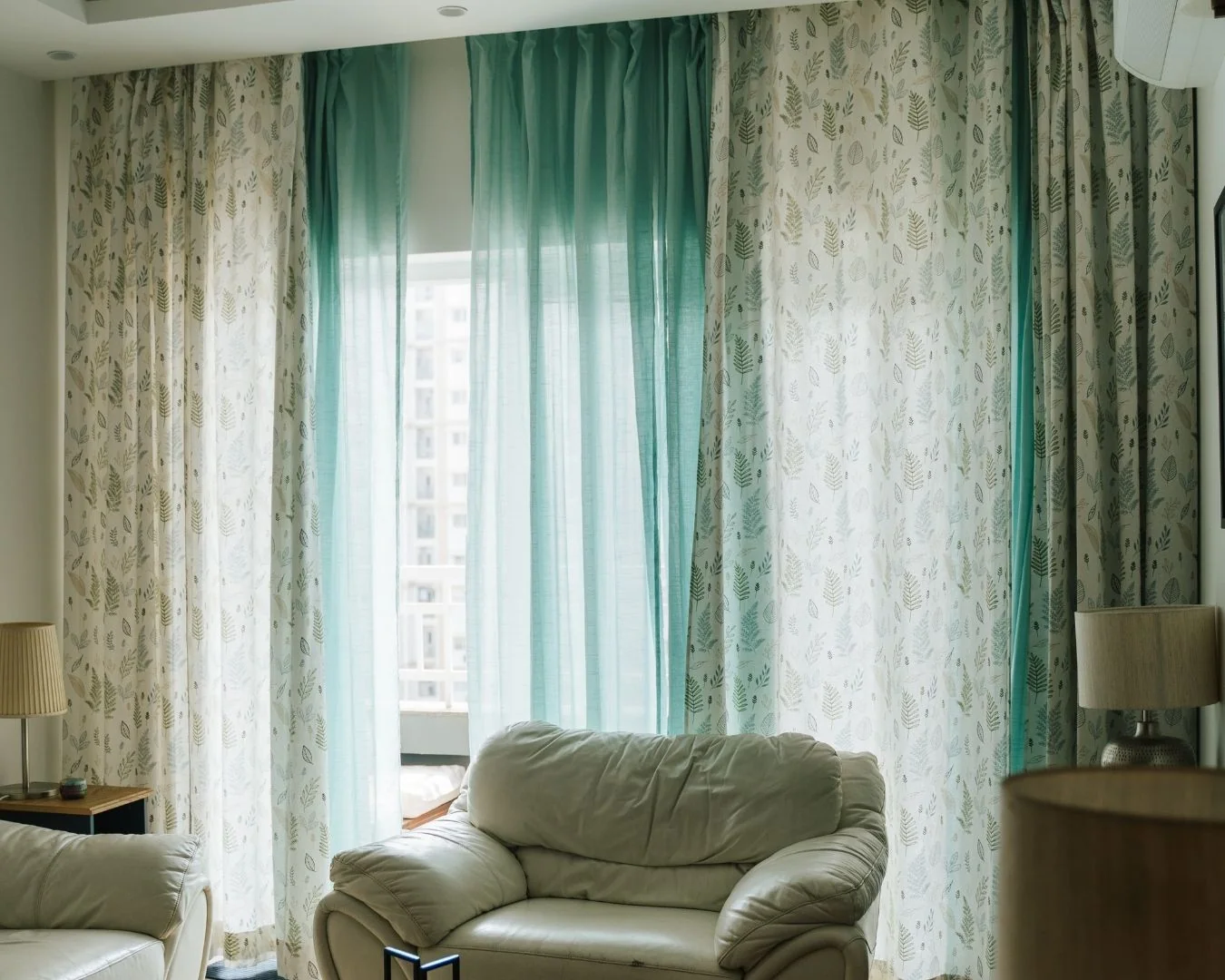
Learning how to layer curtains is one of the easiest ways to make your windows look more beautiful while improving privacy and light control. Instead of relying on a single curtain panel, layering allows you to combine soft sheer fabrics, heavier drapes, and practical window shades for a finished look that feels warm, inviting, and thoughtfully styled.
Whether you’re decorating a cozy bedroom, bright living room, small apartment, or large sliding glass door, the right curtain combination can make a noticeable difference. This complete curtain layering guide covers 10 practical techniques, including sheer and blackout curtain combinations, double curtain rods, Roman shades, roller blinds, fabric choices, and easy installation tips. You’ll also learn which curtain goes in front, how to measure correctly, and how to avoid common layering mistakes.
More window decorating inspiration:
- 11 Viral Curtain Designs for Home That Take Soft Styling Seriously – Beautiful curtain designs and styling ideas for different rooms.
- 15 Boho Window Treatment Ideas That Instantly Cozy Up Your Space – Explore linen curtains, bamboo shades, and decorative window layers.
What Does Layering Curtains Mean?
Curtain layering means using two or more complementary window treatments on the same window. Each layer serves a different purpose, whether that’s filtering sunlight, providing nighttime privacy, reducing glare, adding texture, or making the window look more complete.
The most common arrangement combines lightweight sheer curtains closest to the glass with thicker decorative or blackout curtains on the outside, facing the room. During the day, you can open the outer curtains and leave the sheers closed for soft natural light. At night, closing the outer panels provides stronger privacy and light control.
You can also layer curtains with Roman shades, roller blinds, or cellular shades. These combinations are particularly useful when you want the functionality of a shade but prefer the softer appearance of full-length curtains.
The Simple Curtain Layering Formula
Functional Inner Layer + Decorative Outer Layer + Correct Mounting Hardware + Coordinated Fabrics + Proper Measurements = Beautiful Layered Windows
Which Curtain Layering Combination Is Best?
Before buying curtains, decide what you need most from the window. Some rooms benefit from maximum daylight, while others require stronger privacy or room-darkening performance. The right combination depends on your window size, room function, and preferred decorating style.
| Curtain Combination | Best For | Main Benefit |
|---|---|---|
| Sheer + Blackout Curtains | Bedrooms and media rooms | Soft daylight with stronger nighttime darkness |
| Roman Shade + Sheer Curtains | Dining rooms and elegant living rooms | Tailored styling with adjustable coverage |
| Roller Shade + Drapes | Modern living rooms and offices | Clean appearance and practical light control |
| Cellular Shade + Curtains | Bedrooms and home offices | Insulation and decorative softness |
| Sheer + Linen-Look Drapes | Bright living rooms | Airy appearance with flexible privacy |
| Sheer + Room-Darkening Drapes | Family rooms and guest bedrooms | Filtered daylight and reduced glare |
| Wide Sheer + Blackout Panels | Sliding doors and large windows | Broad coverage and adjustable privacy |
How to Layer Curtains: 10 Practical Techniques
1. Combine Sheer Curtains with Blackout Drapes for Flexible Light Control
Layering sheer curtains with blackout drapes is one of the most practical combinations for bedrooms and living rooms. The delicate sheer fabric softens direct sunlight and creates an airy appearance, while the heavier outer curtains provide stronger privacy and help reduce incoming light when closed. This combination lets you change the atmosphere of a room without changing the window treatment.
Install a double curtain rod or compatible dual-track system. Hang white, ivory, or cream sheers on the rod closest to the window and position blackout panels on the outer rod. During daylight hours, keep the blackout panels open so the sheers filter the sunlight. In the evening, close the blackout layer for privacy. Choose blackout fabrics according to your desired darkness level, since performance varies by material, lining, and installation.
Styling tip: Pair soft white sheers with oatmeal, charcoal, sage, or warm beige blackout panels. The contrast between delicate and substantial fabrics creates depth without requiring bold prints.
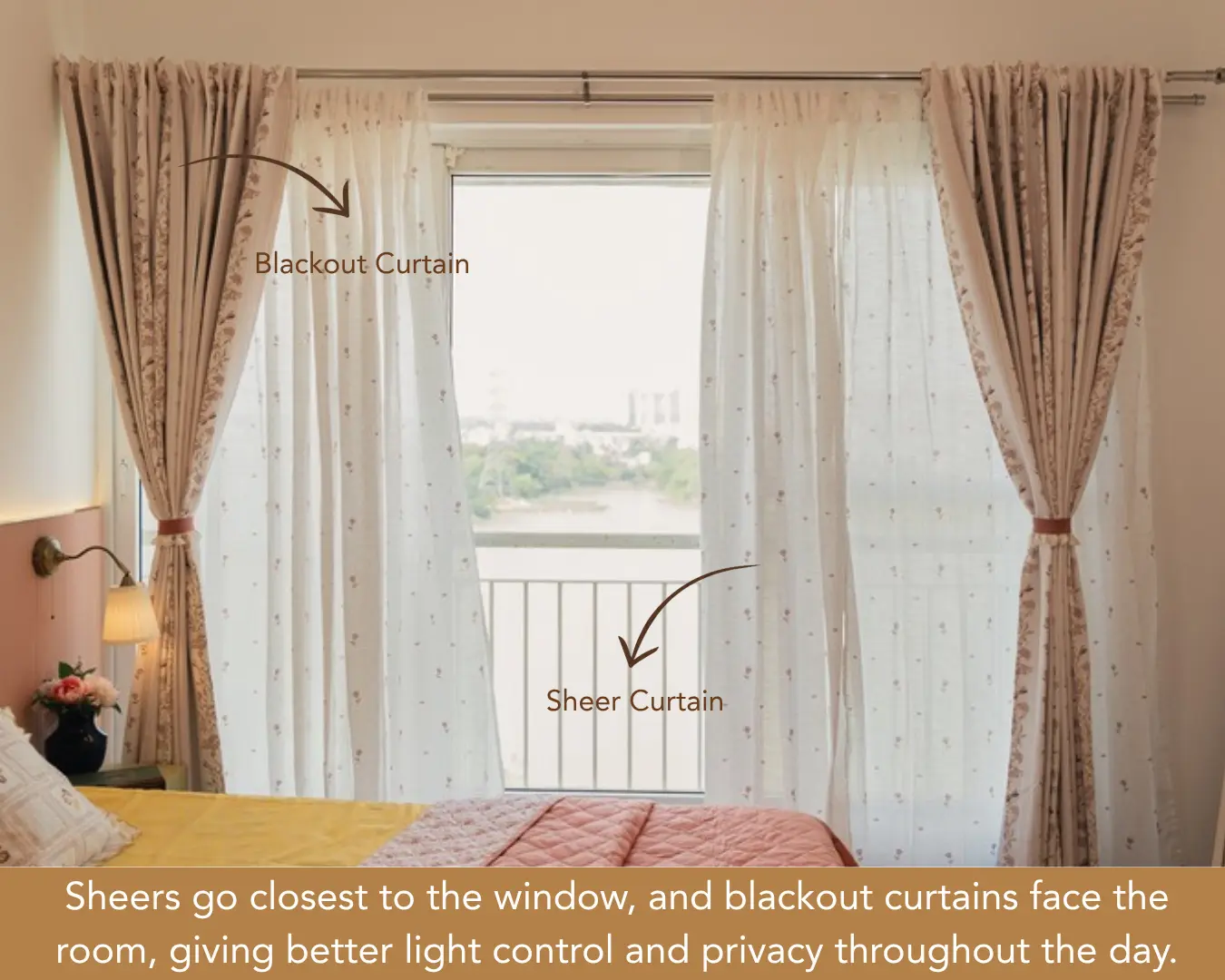
Image credit: @theyellowdwelling.com
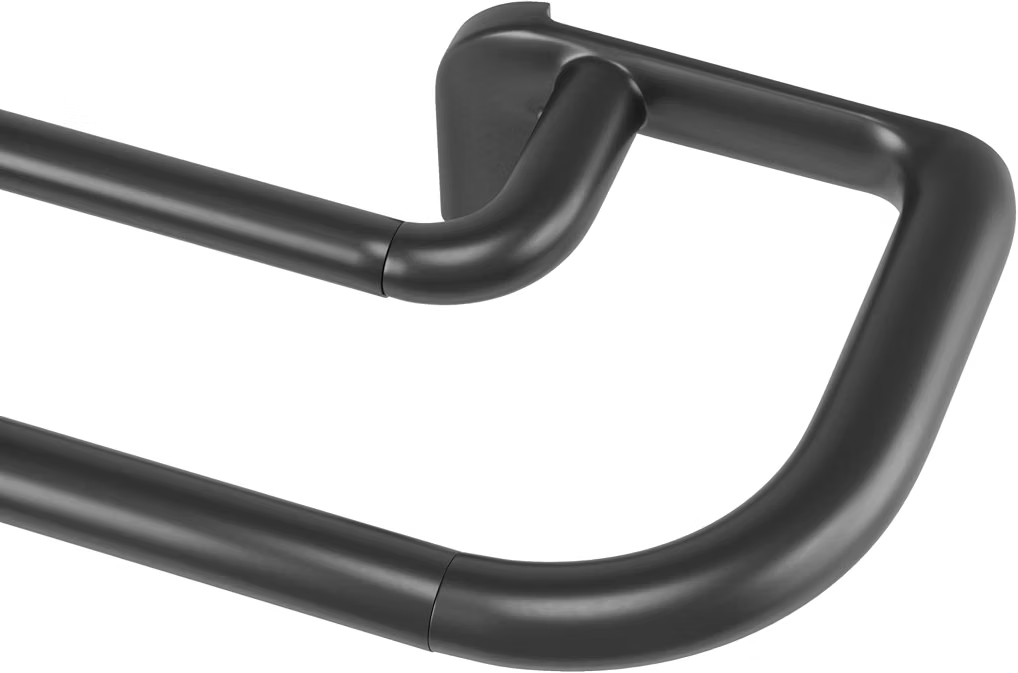
Amazon Find: Double Curtain Rod for Sheer and Blackout Curtains
A double curtain rod allows sheer and blackout panels to hang on separate tracks, making each layer easier to open and close independently. Check the rod length, bracket projection, and supported weight.
2. Layer Roman Shades with Sheer Curtains for an Elegant Look
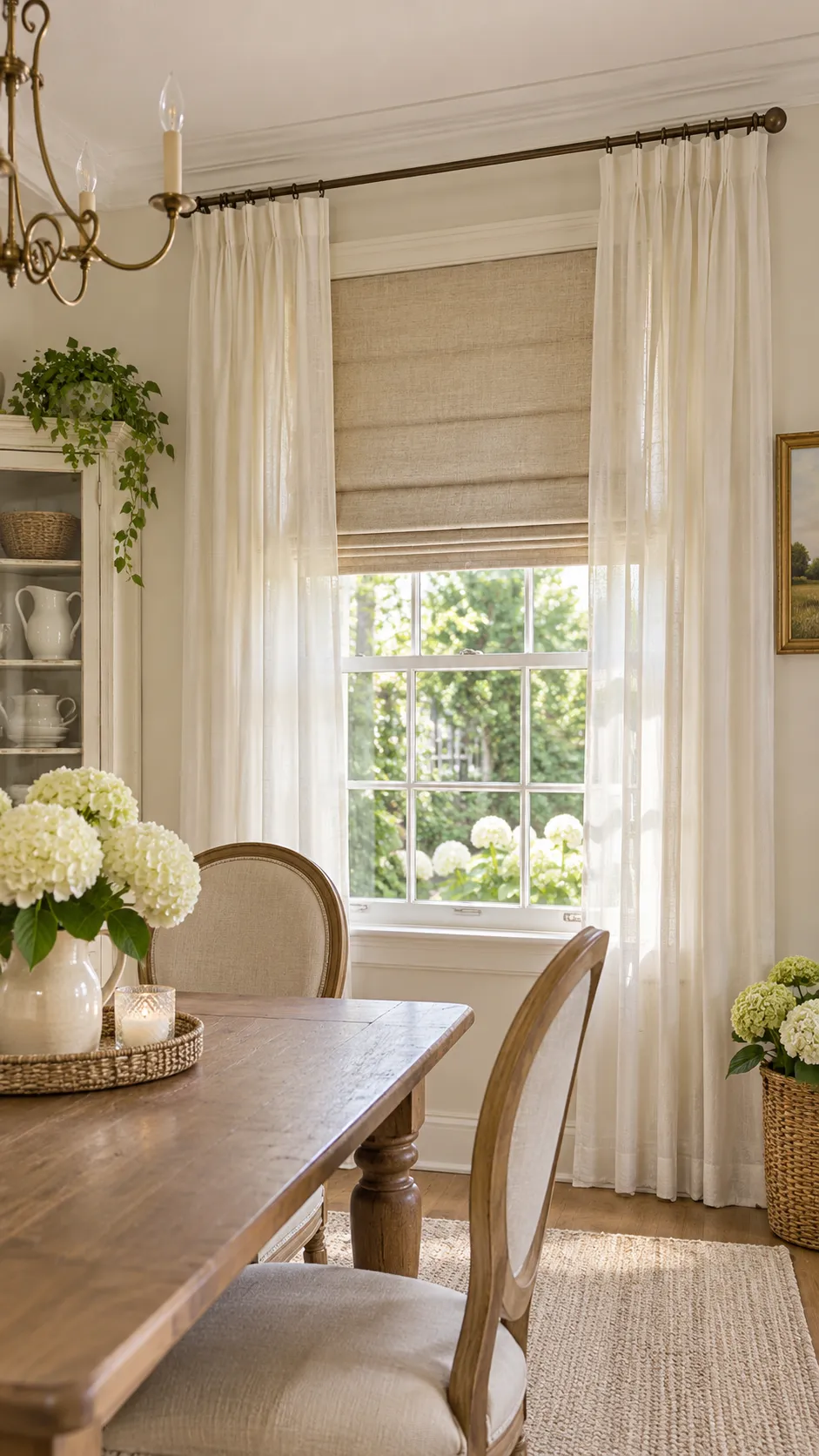
Roman shades and sheer curtains create a polished window treatment that feels soft without looking overly formal. The Roman shade provides a structured fabric layer with neat horizontal folds, while the sheer curtains introduce gentle movement and texture. This combination is especially attractive in dining rooms, cottage-inspired bedrooms, and traditional living rooms.
Choose a Roman shade in a solid neutral color, subtle stripe, or small botanical print. If the window frame has sufficient mounting depth, an inside-mounted shade can create a clean appearance. Install a separate curtain rod outside the window frame and hang lightweight sheer panels that frame the shade. Keep the sheers in warm white or cream if the Roman shade has a decorative pattern.
Practical tip: Check the shade’s exact inside-mount depth requirements and operating clearance. Choose a cordless system or another appropriately child-safe design when necessary.
3. Pair Roller Shades with Full-Length Decorative Curtains
Roller shades paired with decorative curtains are ideal for rooms where you want a clean, modern appearance. The roller shade provides straightforward light control and can disappear into a compact roll when raised, while long curtain panels soften the architectural lines around the window. This combination is particularly effective in modern apartments and home offices.
Select a light-filtering or blackout roller shade depending on your privacy needs. Mount it inside the window frame when the product and frame dimensions allow. Then hang floor-length curtains on a rod above and beyond the window trim. The outer panels can remain open as decorative framing during the day or close for additional coverage when needed.
Styling tip: Combine a simple white roller shade with textured oatmeal or natural linen-look drapes. Keeping the shade understated allows the curtain fabric to become the main decorative feature.
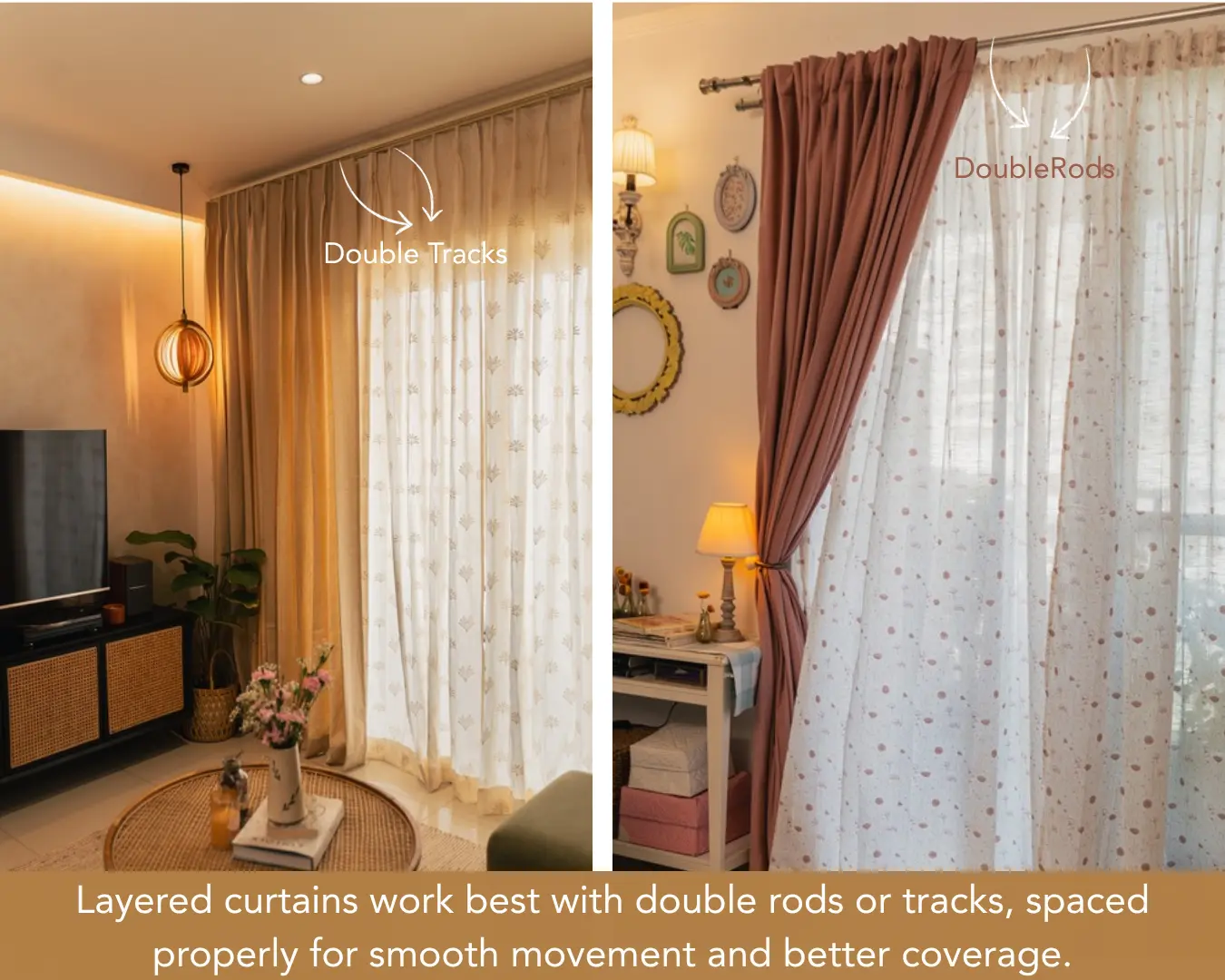
Image credit: @theyellowdwelling.com
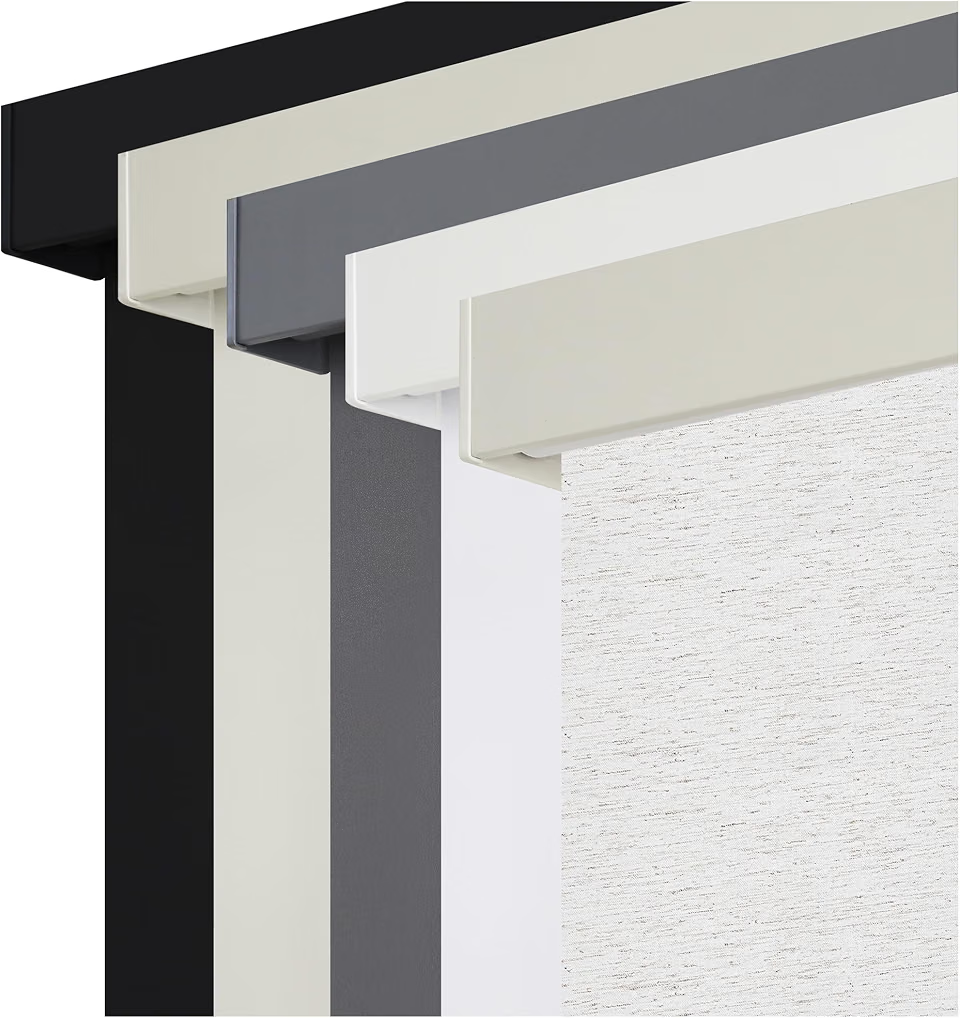
Amazon Find: Cordless Light-Filtering Roller Shades
Cordless roller shades can create a neat functional layer behind decorative curtain panels. Measure your window carefully and compare inside-mount requirements before ordering.
4. Add Soft Drapes Over Insulating Cellular Shades
Cellular shades are a practical base layer for windows where temperature control matters. Their honeycomb-shaped construction contains air pockets that can help reduce heat transfer through the window. Adding fabric curtains brings softness and texture to the room while allowing the shade to provide its intended insulation and light-control functions.
Choose cellular shades that match your privacy and light-filtering needs, then pair them with lightweight cotton or linen-look drapes. Install the shades according to their mounting instructions and position the curtains on a separate rod outside the frame. In a Scandinavian-inspired room, cream cellular shades with natural woven curtains create a calm, understated appearance. For a cozy bedroom, consider cellular shades with lined decorative drapes.
Helpful tip: The insulating performance of cellular shades depends on their design, fit, and installation. Avoid obstructing vents or covering heating equipment with additional fabric.
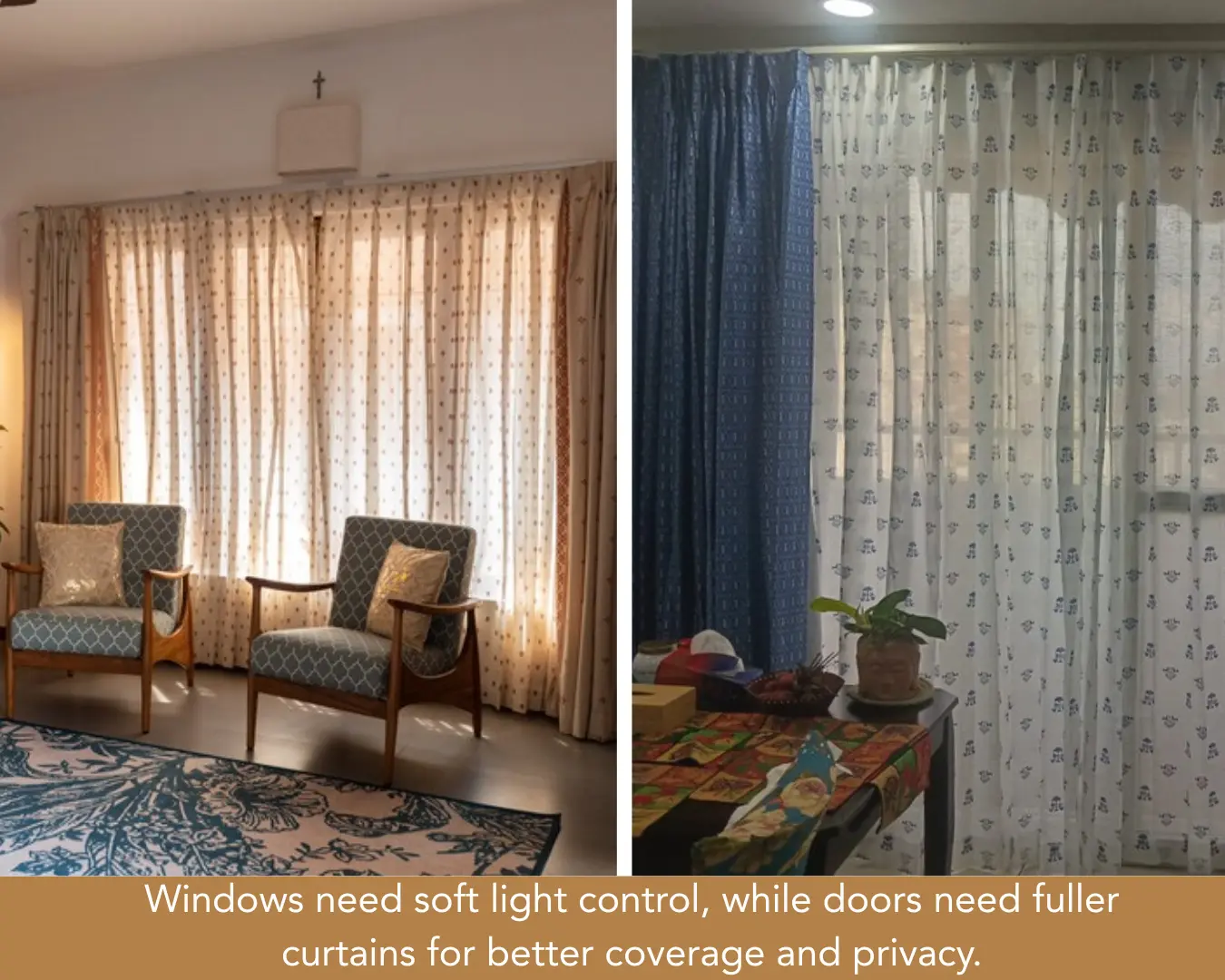
Image credit: @theyellowdwelling.com
5. Install Curtain Layers at the Correct Height and Depth
Even beautiful curtains can look awkward when the mounting hardware is positioned incorrectly. Layered window treatments need enough depth for the fabrics to hang separately without rubbing against each other. The outer curtains should also be positioned high and wide enough to frame the window attractively, rather than crowding the glass.
Begin by measuring the entire window, including the trim and available wall space. For many standard windows, mounting the curtain rod approximately four to six inches above the top trim is a useful starting point. Consider extending the rod six to twelve inches beyond each side when space allows. For a shade-and-curtain combination, make sure the rod and bracket projection provide enough clearance for the shade to operate freely. Some installations may need approximately two to three inches of separation, but actual requirements vary by hardware and fabric.
Installation tip: Mark the proposed rod positions using painter’s tape before drilling. Check bracket load ratings, wall construction, window operation, and nearby obstructions to ensure the arrangement will work.
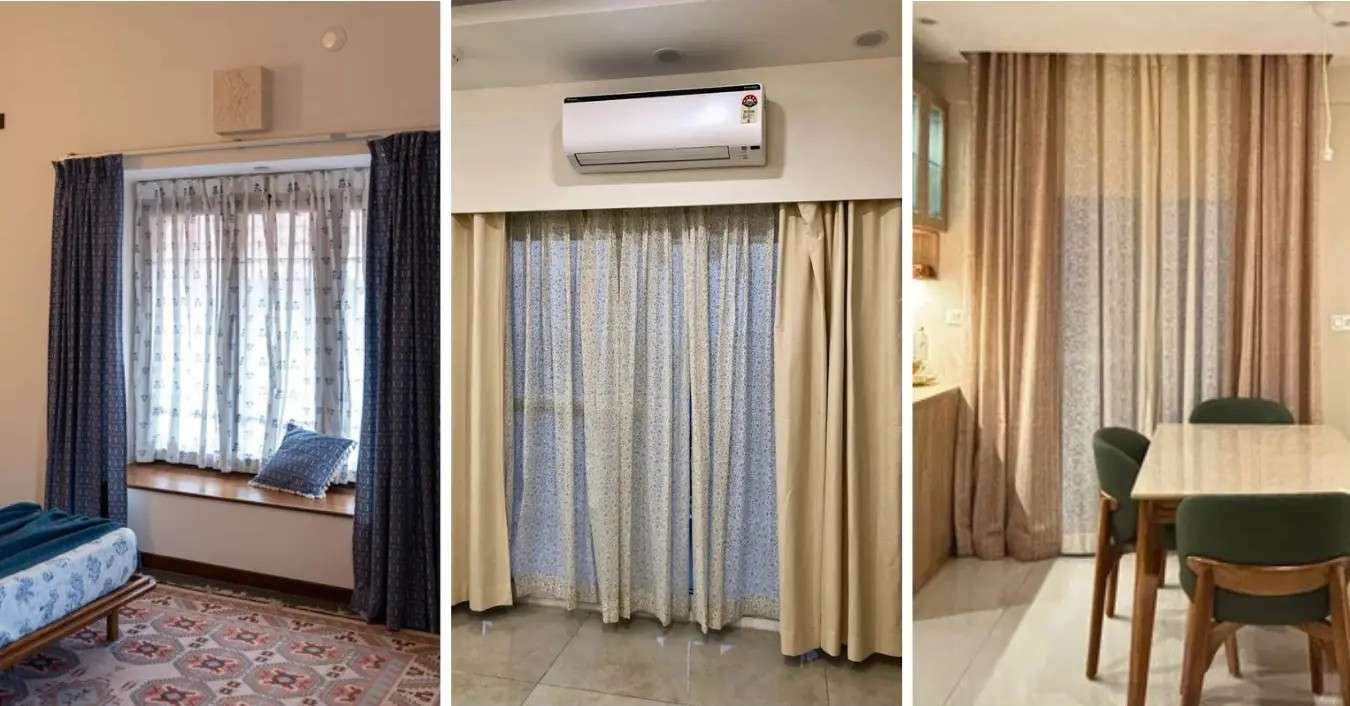
Image credit: @theyellowdwelling.com
6. Hang Sheer Curtains Behind Heavier Outer Drapes
One of the most important rules when learning how to layer curtains is understanding the order of the fabrics. In a classic double-curtain arrangement, the sheer curtains sit closest to the window, while thicker room-darkening or blackout curtains face the room. This placement allows you to control the two layers separately and keeps the heavier panels from visually overwhelming the inner sheers.
Install the inner rod or track first, then hang the sheer panels. Add the outer rod and drapes afterward, making sure the panels do not catch on one another when opened. Test both layers while the curtains are fully open and closed. If the sheer fabric brushes against the outer drapes, adjust the hardware projection or choose a more suitable rod system.
Styling tip: Keep the inner sheers light and soft. White voile, cream gauze, and delicate woven polyester sheers can pair beautifully with thicker cotton, linen-look, or velvet outer panels.
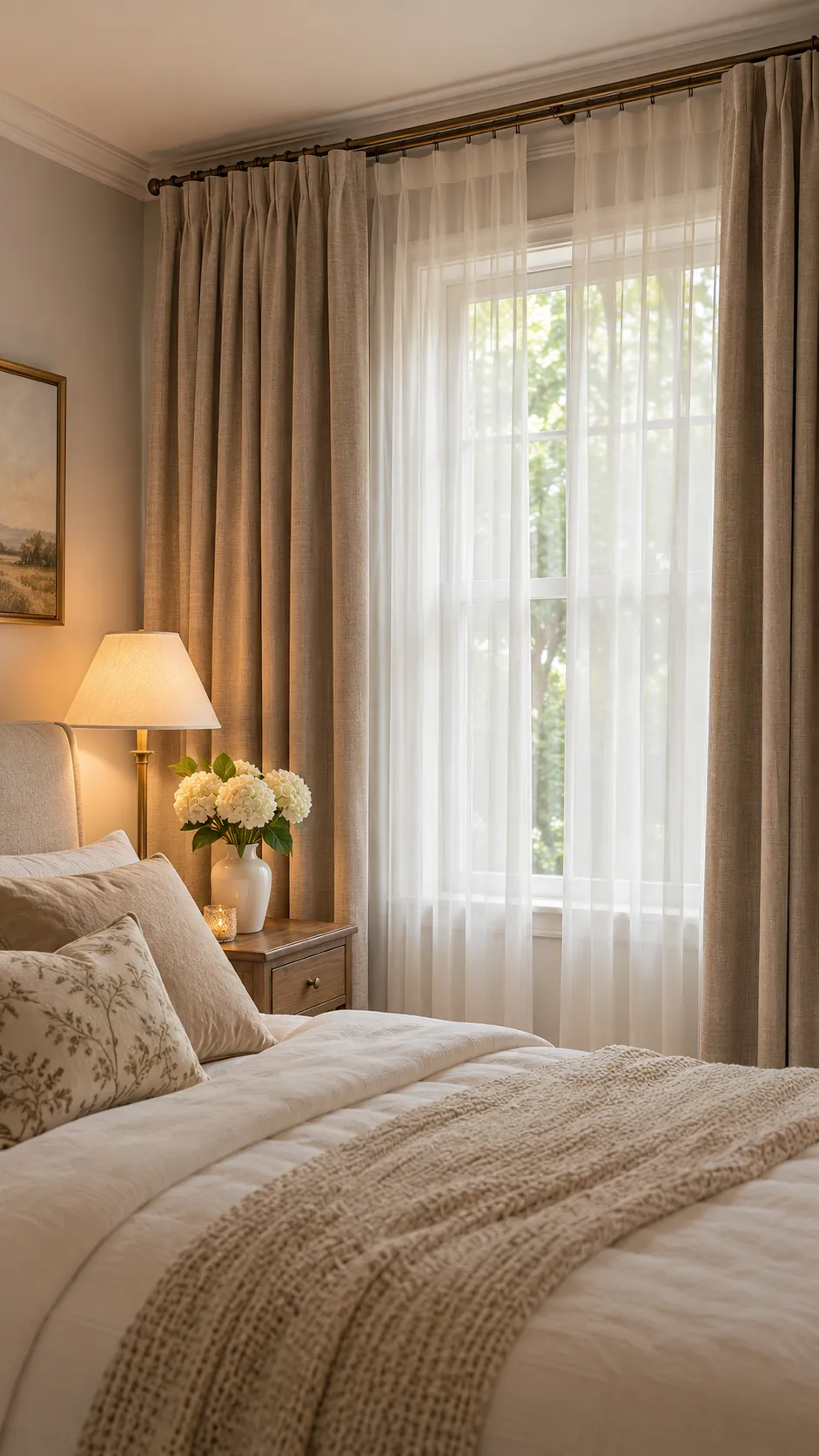
Amazon Find: White Sheer Curtain Panels
Lightweight sheer panels help create a soft inner curtain layer while allowing natural light into the room. Compare panel width, length, opacity, and heading style before purchasing.

7. Use Your Curtain Layers Differently Throughout the Day
Layered curtains are most useful when they provide different levels of coverage throughout the day. Instead of keeping every panel closed all the time, adjust the layers according to sunlight, privacy, and how you use the room. This flexibility is particularly helpful for windows facing busy streets or neighboring houses.
During bright mornings, open the heavier drapes and leave the sheers closed to soften incoming light. In the afternoon, partially close the room-darkening layer if direct sunlight causes glare on a television or work screen. At night, close the outer curtains to improve privacy. Remember that sheer fabrics alone generally do not provide dependable nighttime privacy when interior lights are on.
Practical tip: Test your window treatment from outside after dark, when safe and appropriate, to understand how much can be seen through the sheer layer.
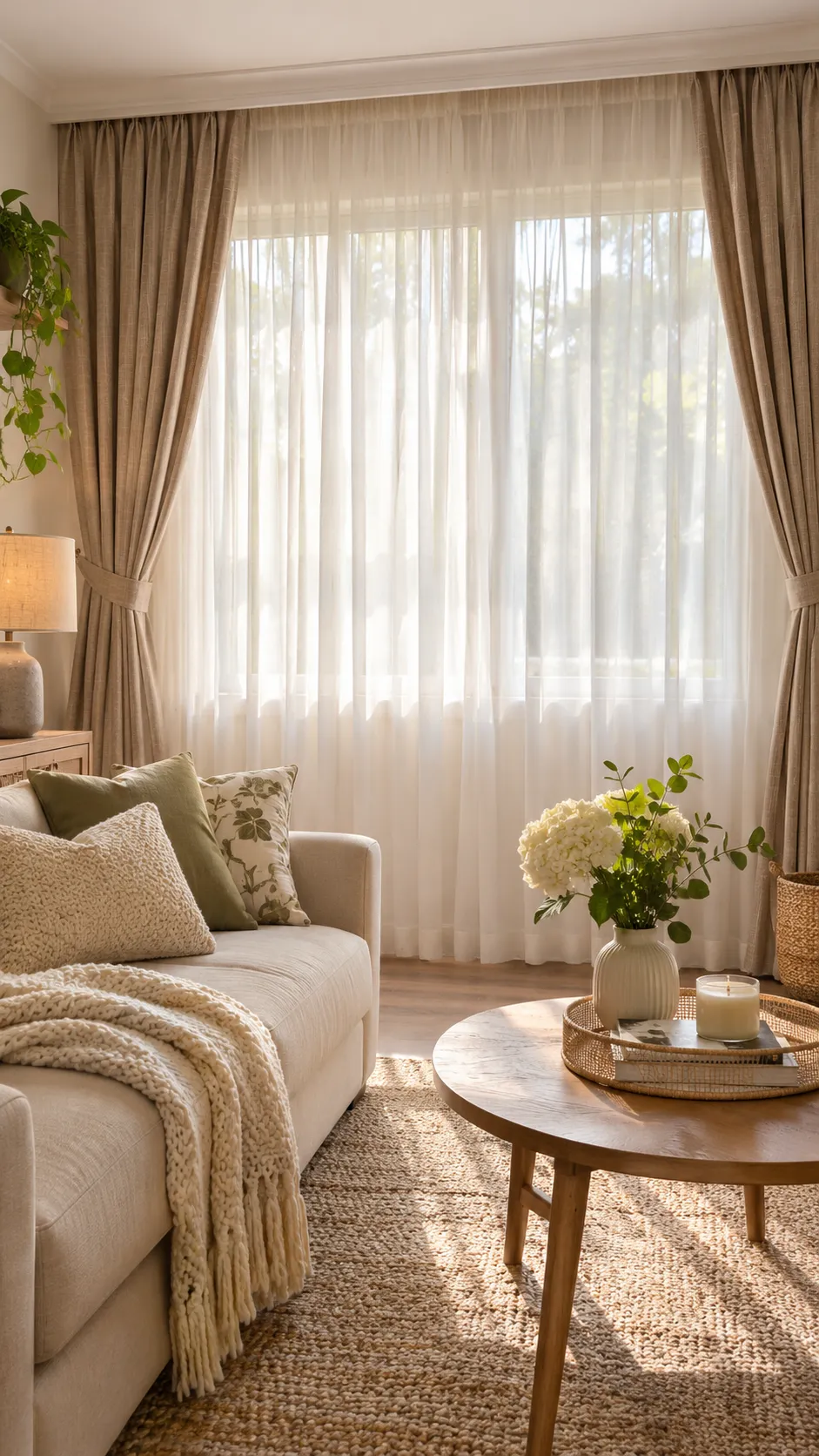
8. Choose Sheer and Blackout Curtains for a Cozy Bedroom
Bedrooms benefit from curtain layering because their lighting needs often change throughout the day. A sheer inner layer allows soft morning daylight to enter without leaving the window completely uncovered, while blackout curtains can help create a darker sleeping environment. The combination also gives the room a soft, comfortable appearance.
Choose floor-length ivory or warm-white sheers for the inner layer. Add blackout drapes in a color that coordinates with your bedding, such as soft gray, taupe, muted sage, or dusty rose. Hang both layers on compatible hardware and allow enough fabric width for the blackout panels to close fully. If outside light enters around the sides or top, consider a wider overlap or another appropriate light-blocking treatment.
Bedroom tip: Blackout fabric does not automatically make a room completely dark. Light can still enter around the edges, and results depend on the material, curtain heading, and installation.
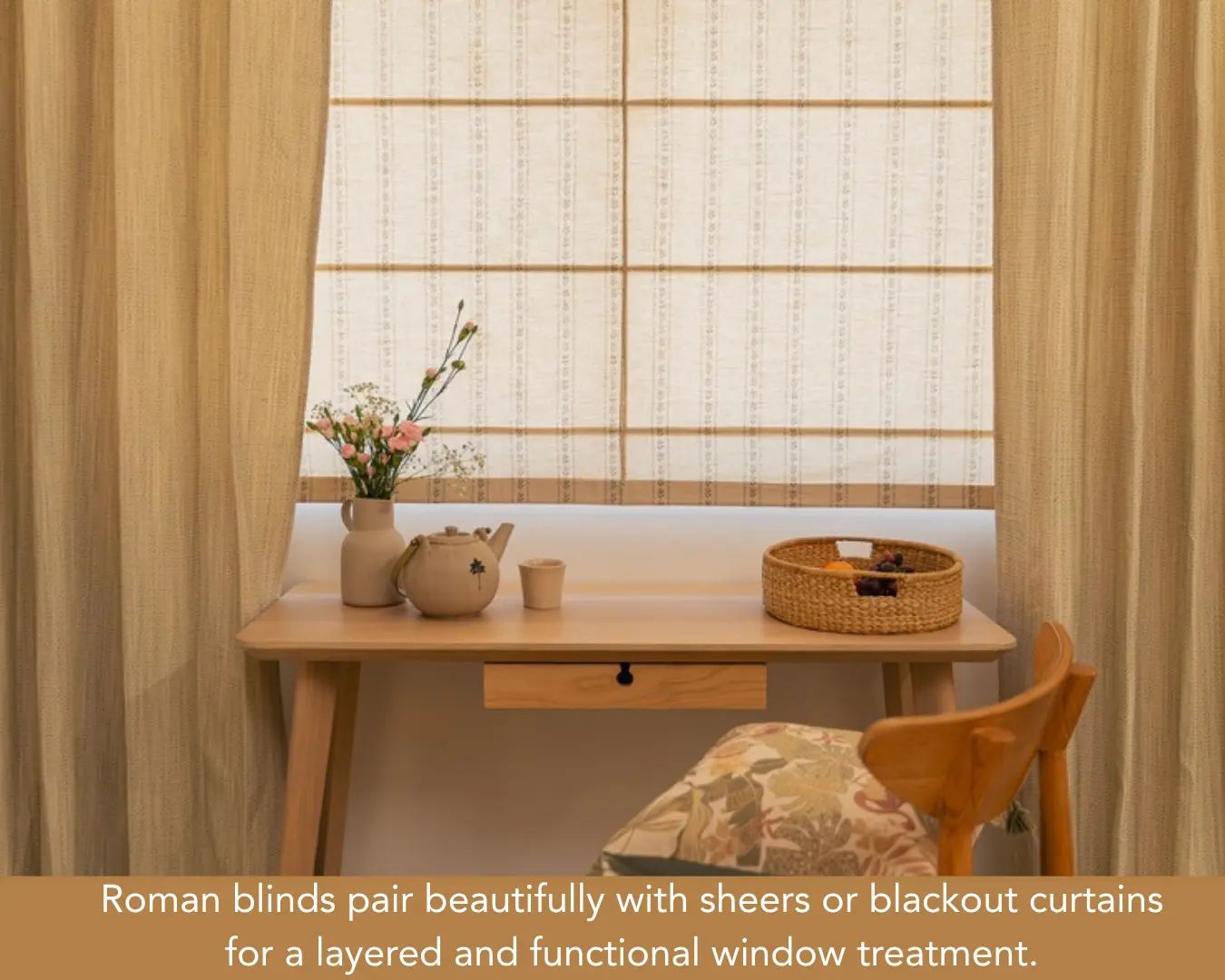
Image credit: @theyellowdwelling.com
Amazon Find: Neutral Blackout Curtain Panels
Blackout curtain panels provide a stronger light-blocking outer layer for bedrooms. Check the stated fabric performance, lining, dimensions, and hanging style.

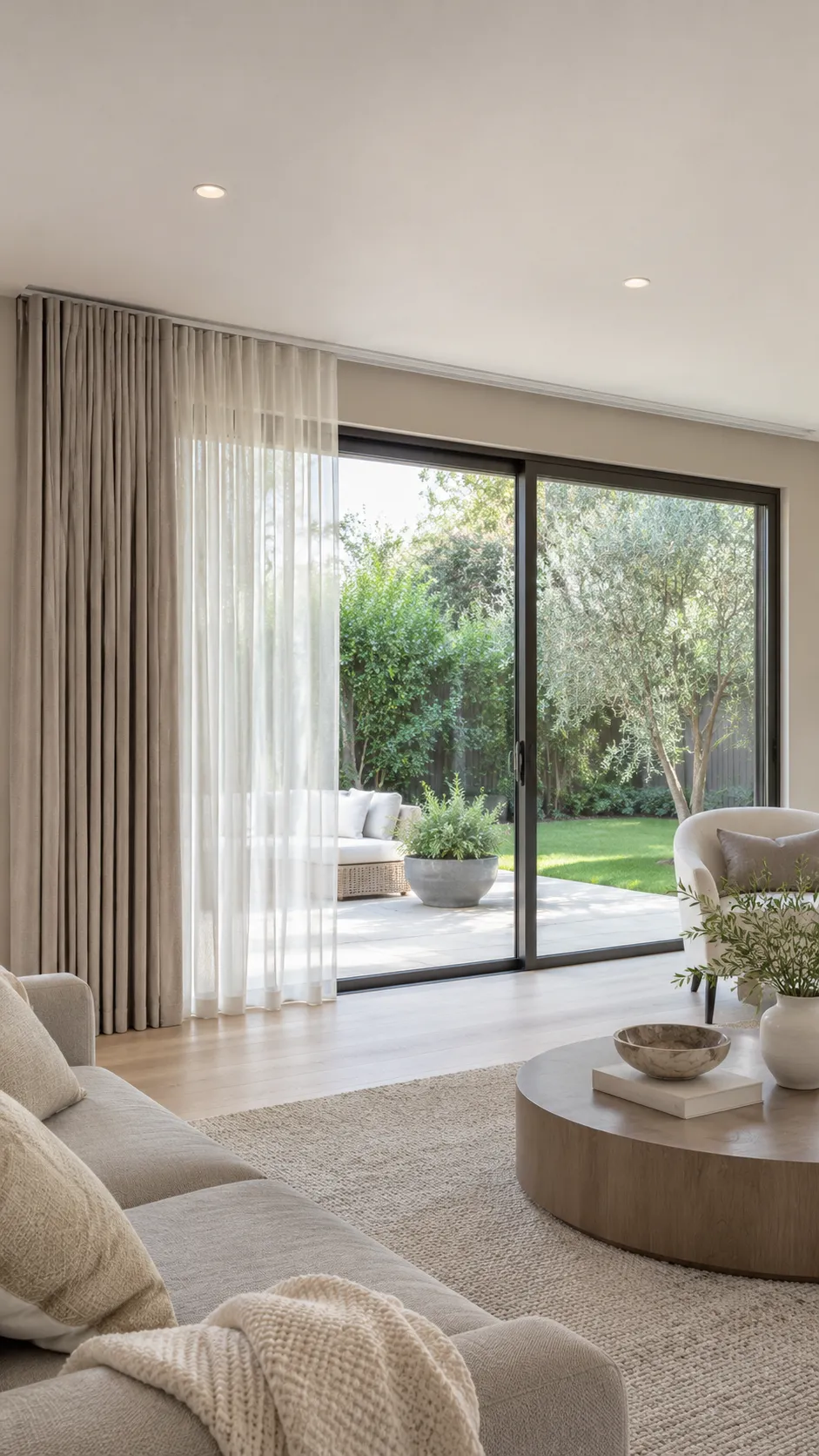
9. Layer Curtains Across Sliding Glass Doors and Large Windows
Large windows and sliding glass doors can look especially beautiful with layered curtains, but they require careful measurements and hardware planning. A wide sheer layer allows daylight to filter into the room, while heavier outer panels provide privacy when the doors are not in use. The combination can soften a large expanse of glass without making the room feel bare.
For wide openings, consider a ceiling-mounted double track or a suitably supported long double rod. Hang lightweight sheers closest to the glass, then add room-darkening or blackout drapes toward the room. Make sure the curtain panels can stack away from the frequently used side of the door. Choose fabric lengths that do not drag heavily on the floor or become caught in the door track.
Practical tip: Check that curtain hardware and fabric do not interfere with door handles, locks, screens, or required exits. Wide installations may need additional brackets or specialized track support.
10. Coordinate Fabric Textures, Colors, and Fullness for a Designer Look
The most attractive curtain layers usually have a clear relationship between their colors and textures. Instead of combining two equally heavy patterned fabrics, choose one soft, simple layer and one more substantial or decorative material. A light sheer behind textured linen, smooth cotton, or plush velvet creates contrast while keeping the window treatment balanced.
For a warm neutral living room, pair ivory sheers with oatmeal linen-look curtains. For a dramatic bedroom, combine pale sheers with deep green or charcoal drapes. Choose enough width for the outer fabric to form soft folds when closed. As a general starting point, many gathered curtain styles use a combined flat fabric width of approximately 1.5 to 2.5 times the span being covered, although pleated and specialty headings may have different requirements.
Styling tip: Repeat one curtain color in your room through a cushion, rug, or decorative accessory. This makes layered windows feel connected to the rest of your decor.
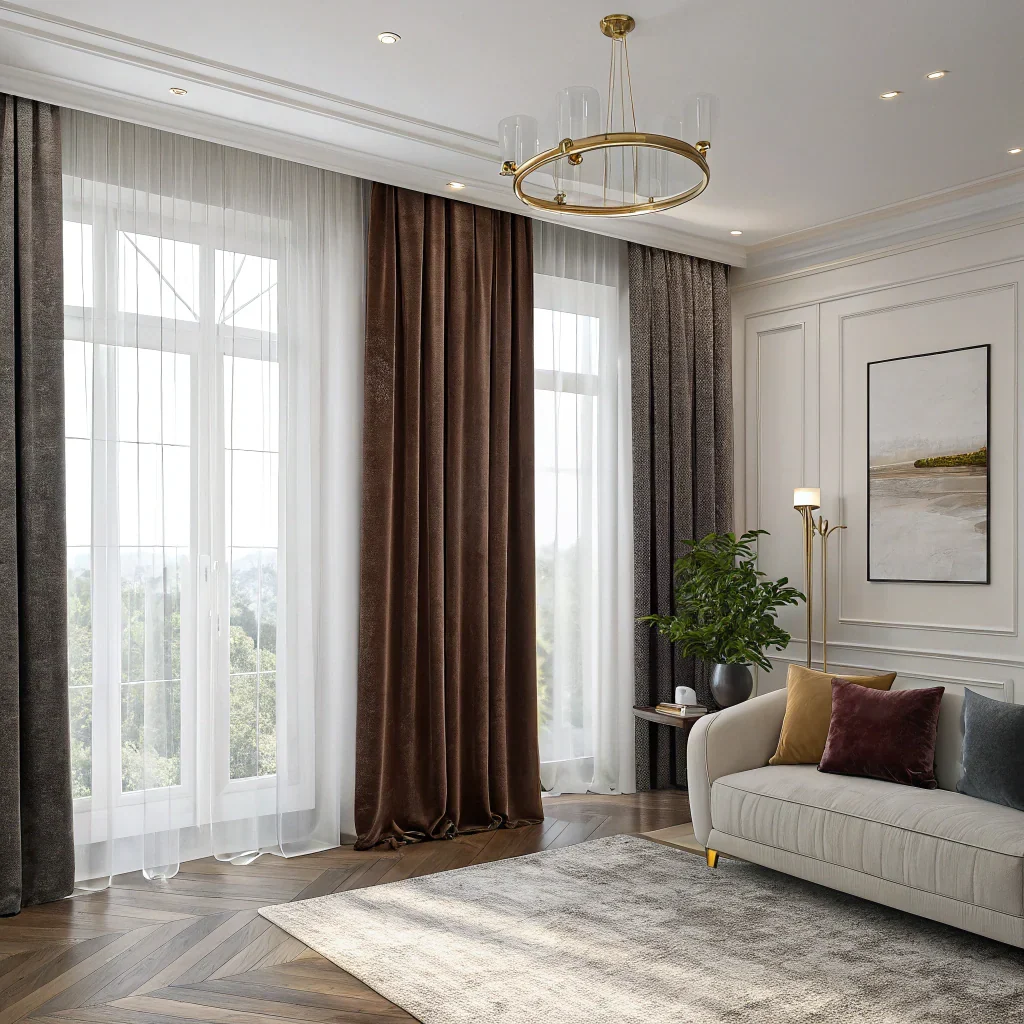
Image credit: @joydeco.com
Step-by-Step: How to Hang Sheer and Blackout Curtains Together
If you’re installing layered curtains for the first time, a double curtain rod is often a straightforward option. The following process can help you plan the installation before you begin drilling or ordering panels.
Step 1. Measure the Window and Surrounding Wall
Measure the outside width of your window trim and the available space above and beside the frame. Check for nearby cabinets, doorways, vents, and other obstacles. Decide whether you want the curtains to touch the floor or finish slightly above it.
Step 2. Choose Compatible Double-Rod Hardware
Select a double curtain rod or track system designed to support both fabric layers. Check its overall length, wall projection, bracket spacing, and load capacity. Thick blackout panels usually weigh more than lightweight sheers, so do not assume that every decorative rod will support them safely.
Step 3. Mark and Install the Brackets
Use a measuring tape and level to mark the bracket positions. Follow the hardware manufacturer’s instructions and use fasteners suitable for your wall construction. Check for hidden wiring or plumbing before drilling, and make sure the final rod position will not obstruct the window.
Step 4. Hang the Sheer Curtains on the Inner Rod
Thread or attach the sheer panels to the rod closest to the window. Distribute the fabric evenly and check that the panels can open and close smoothly. Lightweight sheers should form gentle folds rather than being stretched completely flat across the glass.
Step 5. Add the Heavier Outer Curtains
Hang the blackout or decorative drapes on the outer rod. Check that both layers move independently and do not catch on the brackets or each other. The outer panels should have enough width to cover the intended area when closed.
Step 6. Adjust the Length and Finish the Folds
Arrange the folds evenly, adjust compatible rings or hooks if needed, and check the curtain hems. Follow the care label if steaming or ironing is necessary. Open and close each layer several times to confirm that the installation works comfortably.
Curtain Layering Measurements: How High, Wide, and Long?
Correct measurements are essential when combining multiple window treatments. The best dimensions depend on your window shape, curtain heading, rod type, and desired appearance, but these guidelines provide a useful starting point.
| Measurement | Suggested Starting Point | Why It Matters |
|---|---|---|
| Rod Height | About 4–6 inches above the window trim where possible | Can make the window appear taller |
| Rod Extension | About 6–12 inches beyond each side, when space permits | Allows fabric to stack away from the glass |
| Curtain Fullness | Often 1.5–2.5 times the covered width in total fabric | Creates soft folds and adequate coverage |
| Hem Position | Lightly touching or approximately 1/2 inch above the floor | Keeps the fabric neat and flowing |
| Layer Clearance | Allow the separation required by the shade or rod system | Prevents rubbing and operating problems |
| Shade Mounting Depth | Follow the product’s exact inside-mount specifications | Ensures a proper fit and smooth operation |
Measurement example: If your window trim is 60 inches wide and you extend the curtain rod 8 inches beyond each side, the planned rod span is approximately 76 inches before accounting for product-specific hardware details. For gathered curtains with approximately double fullness, you might need around 152 inches of combined flat fabric width per layer. Always check the curtain manufacturer’s fullness and measurement recommendations before ordering.
Best Curtain Color Combinations for Layering
Curtain colors should complement your existing room rather than compete with it. In most layered arrangements, the sheer layer looks best in a soft neutral shade, while the outer curtains can introduce texture, a deeper color, or a subtle pattern.
- Warm White Sheers + Oatmeal Drapes: Ideal for cozy modern living rooms and Scandinavian-inspired interiors.
- Ivory Sheers + Sage Green Curtains: A calming combination for bedrooms with natural wood furniture.
- White Sheers + Charcoal Blackout Curtains: A modern contrast that suits contemporary bedrooms and media rooms.
- Cream Sheers + Dusty Rose Drapes: Soft and romantic for a cottage-style bedroom or guest room.
- White Sheers + Navy Blue Curtains: A classic combination for traditional living rooms and coastal interiors.
- Ivory Sheers + Terracotta Drapes: Warm and inviting for earthy, Mediterranean, or bohemian rooms.
- White Sheers + Taupe Linen-Look Curtains: A subtle neutral combination that works well in small apartments.
- Cream Sheers + Burgundy Velvet Curtains: A richer, moodier option for elegant bedrooms and formal living rooms.
Curtain Layering Shopping Checklist
Before buying new window treatments, check which pieces you already own. You may be able to reuse existing drapes and add only a sheer layer or functional shade. Choose supplies according to the specific combination you plan to install.
| Item | Best For | Priority |
|---|---|---|
| Measuring tape | Window and curtain measurements | Essential |
| Spirit or laser level | Straight bracket installation | Essential for installation |
| Double curtain rod or dual track | Two independently moving fabric layers | Required for this setup |
| Sheer curtain panels | Soft daytime light filtering | Essential for sheer layering |
| Blackout or room-darkening drapes | Nighttime privacy and light control | As needed |
| Roman, roller, or cellular shade | Functional window coverage | Optional alternative |
| Compatible mounting brackets | Supporting the curtain hardware | Essential |
| Curtain rings or hooks | Compatible heading and hanging adjustments | As needed |
| Fabric steamer or iron | Removing wrinkles and finishing folds | Optional |
| Curtain tiebacks | Holding decorative panels open | Optional |
Common Mistakes to Avoid When Layering Curtains
1. Hanging Both Curtain Layers on an Unsuitable Single Rod
Putting two bulky curtain layers on a standard rod can prevent them from moving smoothly and may exceed the hardware’s supported weight. Use a properly rated double rod, track, or compatible layering system that provides enough separation for the fabrics.
2. Choosing Sheer Curtains Without Considering Nighttime Privacy
Sheer curtains look beautiful in daylight, but they usually provide limited privacy after dark when interior lights are on. If your room faces a street or neighboring home, include a suitable opaque layer for nighttime coverage.
3. Combining Fabrics That Are Too Bulky for the Window
Two heavy, thick fabrics can create excessive bulk around a small window. Try pairing a lightweight sheer with a more substantial outer curtain instead. Make sure there is enough wall space for the fabric to stack when opened.
4. Using Curtain Panels That Are Too Narrow
Curtains that barely cover the window can look stretched and unfinished. Measure the covered span and choose enough total fabric width for your selected heading style. Both layers need sufficient coverage if you plan to close them independently.
5. Forgetting About Shade and Curtain Clearance
Roman shades, roller shades, and cellular blinds need enough space to raise and lower without catching on curtain rods or fabric. Confirm the mounting depth, bracket projection, and operating clearances before installing the outer drapes.
6. Ignoring Heat Sources, Cords, and Mounting Safety
Keep curtains clear of radiators, heaters, vents, and other heat sources according to the relevant safety instructions. Use mounting hardware suitable for the combined load, check for hidden electrical wiring before drilling, and choose child-safe cordless window coverings when appropriate. Curtains must not block required exits or prevent windows and doors from operating safely.
Frequently Asked Questions About Layering Curtains
1. Which curtain goes in front when layering curtains?
In a typical layered curtain arrangement, the sheer curtain sits closest to the window and the heavier blackout or room-darkening curtain hangs in front, facing the room. This allows the sheer layer to soften daylight while the outer curtain provides stronger privacy and light control when needed.
2. Can you layer sheer and blackout curtains on one rod?
Some specially designed single-rod layering systems can accommodate two panels, but ordinary curtain rods are not always suitable. A double curtain rod or dual-track system is generally more convenient because each fabric layer can move independently. Check the hardware’s design, capacity, and compatibility before installation.
3. Should sheer and blackout curtains be the same length?
For a clean, balanced look, the visible hems of sheer and blackout curtains are usually aligned or very close in height. However, the actual panel lengths may differ because inner and outer rods, rings, and curtain headings have different hanging positions. Measure each layer from its own hardware.
4. What is the best curtain layering combination for a small living room?
White or ivory sheers paired with lightweight linen-look drapes are a good starting point for a small living room. Choose soft neutral shades and hang the outer panels high and wide when the room layout allows. This can make the window feel larger while preserving natural light.
5. Can I layer curtains over existing blinds or shades?
Yes, many Roman shades, roller shades, cellular shades, and other blinds can be combined with decorative curtains. Confirm that the window frame and wall provide sufficient mounting space and that the new panels will not interfere with the existing shade, window hardware, or operating controls.
Final Thoughts: Beautiful Layered Curtains Start with the Right Combination
Learning how to layer curtains is about finding the right balance between attractive window styling and everyday practicality. Sheer curtains can bring softness and natural light into your room, while blackout drapes, Roman shades, roller blinds, and cellular shades provide additional control over privacy, glare, and room comfort.
Start with the window you use most often and decide what that space needs throughout the day. Choose a functional inner layer, add coordinating decorative curtains, and pay attention to mounting height, width, clearance, and fabric fullness. With these 10 curtain layering techniques, you can create beautiful, comfortable windows that feel thoughtfully finished without needing an expensive custom installation.
