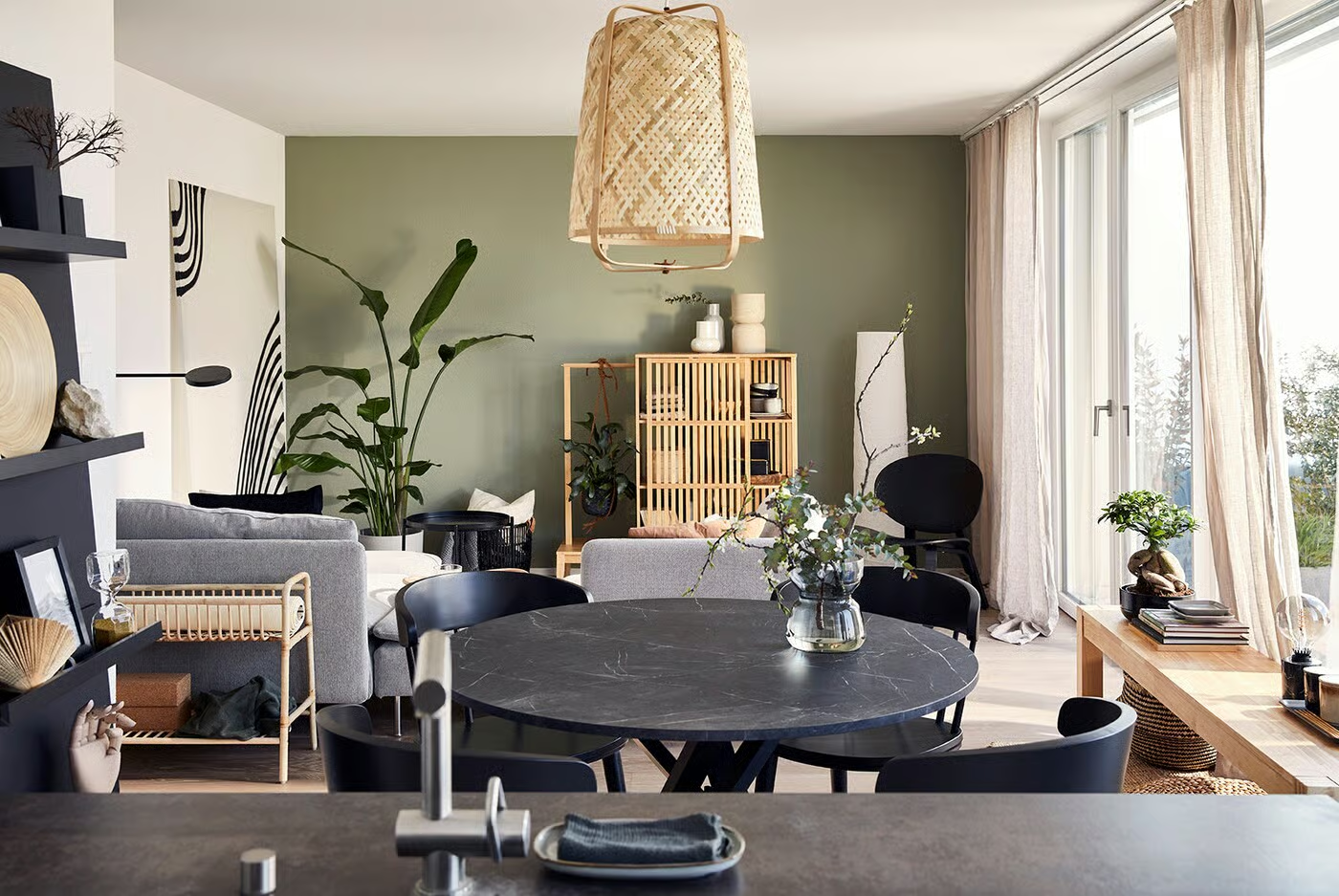
Love the calm, natural look of Japandi interiors but don’t want to spend a fortune on designer furniture? These IKEA hacks for Japandi style are a wonderful way to create a warm, minimalist home using affordable furniture, simple DIY upgrades, and thoughtfully chosen materials.
Japandi combines Japanese-inspired simplicity with the cozy, functional character of Scandinavian design. Think light wood, woven cane, neutral colors, low-profile furniture, and clutter-free storage. From IKEA BESTÅ cabinets and BILLY bookcases to IVAR storage and clever room dividers, these 12 ideas will help you create beautiful furniture that feels personal, practical, and timeless.
More ideas to explore:
Quick List: 12 IKEA Japandi Hacks
- Give an IKEA BESTÅ TV Unit a Warm Japandi Makeover
- Add Woven Cane Doors to an IKEA BILLY Bookcase
- Create a Low Japandi Credenza With IKEA IVAR Cabinets
- Build a Minimalist Mudroom Bench With IKEA Storage
- Style an IKEA Balcony With Natural Japandi Details
- Make a Wooden Slat Room Divider for an Open Space
- Turn a BILLY Bookcase Into a Neutral Cane Cabinet
- Style IKEA SVALNÄS Shelves With Simple Ceramics
- Create a Shoji-Inspired Screen Using IKEA IVAR Frames
- Style an IKEA GJÖRA Bed for a Peaceful Japandi Bedroom
- Create a Low-Profile Sofa With IKEA SÖDERHAMN
- Make a Neutral Wardrobe With IKEA IVAR Cabinets
What Makes an IKEA Hack Look Japandi?
Japandi decorating is more about thoughtful choices than adding lots of accessories. The goal is to create a space that feels peaceful, organized, and welcoming. IKEA furniture works particularly well because many pieces already have the straightforward shapes and practical storage associated with this style.
Before starting a project, choose a consistent color palette and one or two natural-looking materials. This will help your furniture makeovers feel connected, even if they use different IKEA collections.
| IKEA Furniture | Japandi Upgrade | Finished Look |
|---|---|---|
| BESTÅ | Wood-look doors and minimalist styling | Warm, uncluttered media storage |
| BILLY | Woven cane panels and neutral paint | Soft, textured storage cabinet |
| IVAR Cabinets | Natural finish, coordinated fronts | Rustic minimalist furniture |
| IVAR Side Frames | Fabric panels and suitable screen hardware | Shoji-inspired partition |
| SÖDERHAMN | Custom wood-look surround and neutral cushions | Grounded, low-profile sofa |
| GJÖRA Bed | Linen bedding and restrained decor | Simple, natural bedroom |
12 Best IKEA Hacks for Japandi Style on a Budget
1. Give an IKEA BESTÅ TV Unit a Warm Japandi Makeover
An ordinary IKEA BESTÅ TV unit can become a beautiful Japandi-inspired feature with a few carefully chosen changes. Its clean rectangular shape already suits minimalist interiors, so the main goal is to introduce warmth and soften the appearance of standard cabinet fronts.
Replace compatible cabinet doors with light oak-look or warm beige fronts. If your unit includes open compartments, style them with a small ceramic vase, a few neatly stacked books, and one simple decorative bowl. Keep electronic accessories and extra cables hidden wherever practical, while maintaining the ventilation required for your devices.
Finish the surrounding area with an oatmeal rug, a comfortable neutral sofa, and a single leafy plant. The restrained styling gives the furniture an intentionally designed appearance without requiring a complete living room makeover.
Styling tip: Choose one wood tone for the TV cabinet and repeat it through a coffee table or picture frame. Follow IKEA’s required anchoring and mounting instructions.
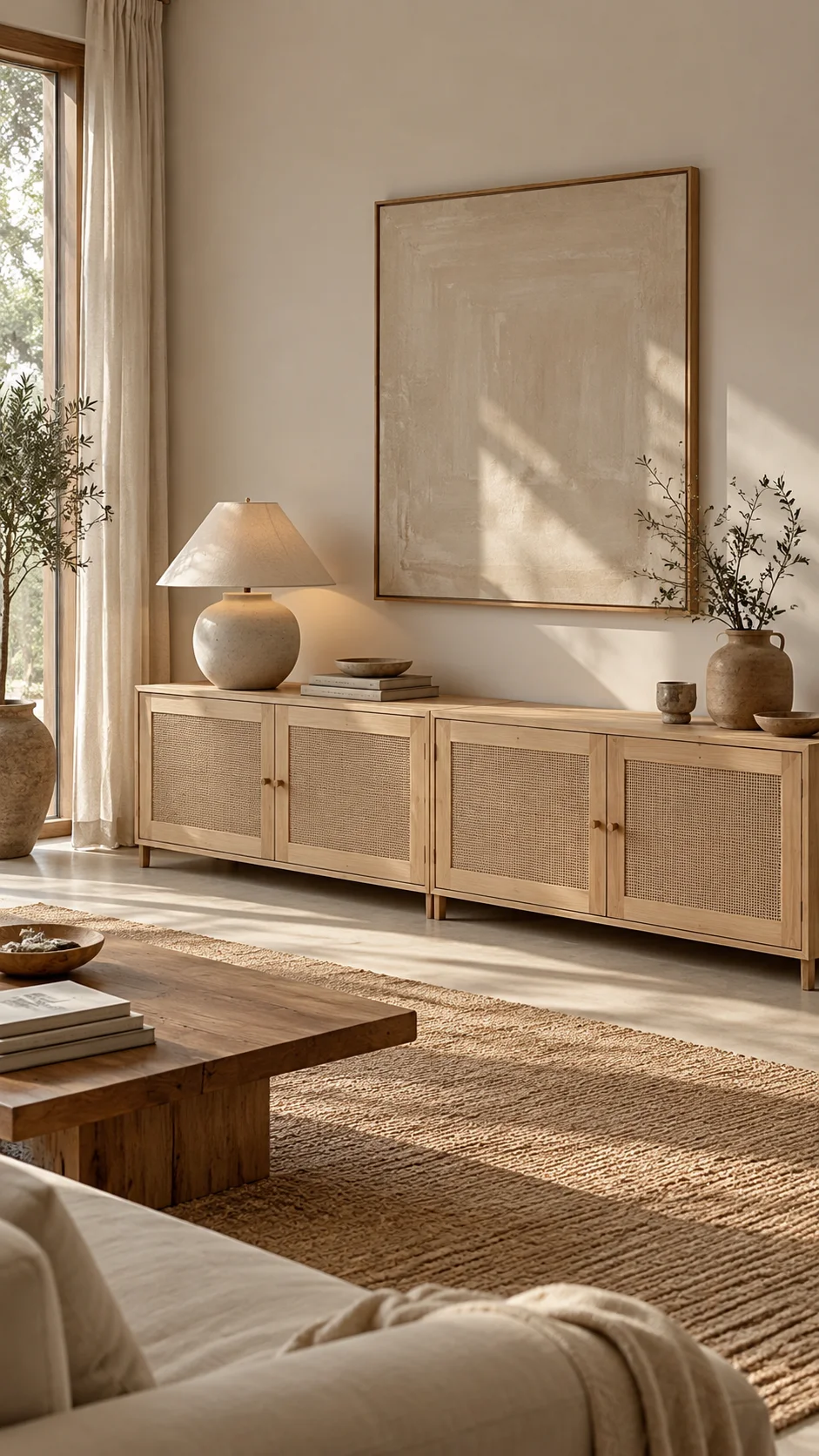
Image Credit: @howitsee.com
2. Add Woven Cane Doors to an IKEA BILLY Bookcase
A simple IKEA BILLY bookcase can take on a completely different personality when you introduce natural cane webbing. The woven texture softens the straight lines of the bookcase and gives it the handcrafted appearance that works so well with Japandi decorating.
Start with a BILLY unit and compatible doors. For a DIY upgrade, use suitable framed door panels that can securely hold cane webbing. Measure the openings carefully, prepare the cane according to its instructions, and attach it neatly inside the frames with suitable fixings. Finish the surrounding cabinet in warm white, taupe, or soft greige.
The cabinet can store books, baskets, and everyday household items while keeping the room visually calm. Leave any open shelves lightly decorated with a small selection of useful objects.
Budget tip: If building new cane doors feels complicated, try using cane on an appropriately supported decorative back panel instead. Keep the bookcase securely anchored to the wall.
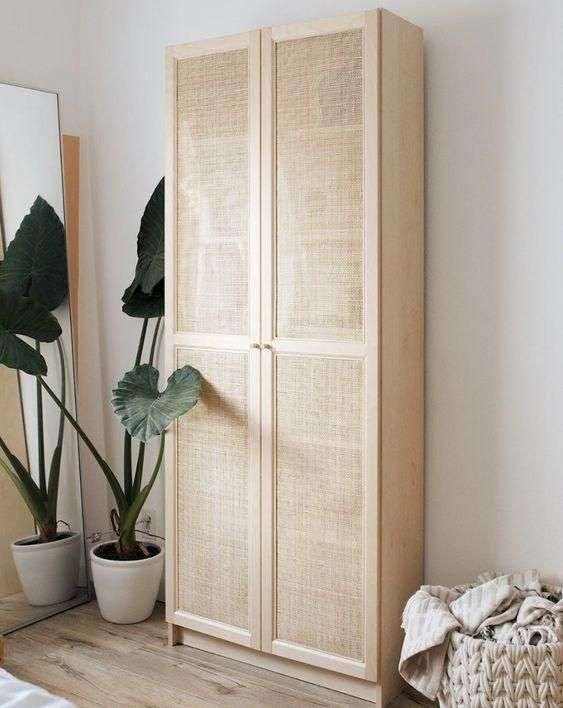
Image Credit: @ohclary.com
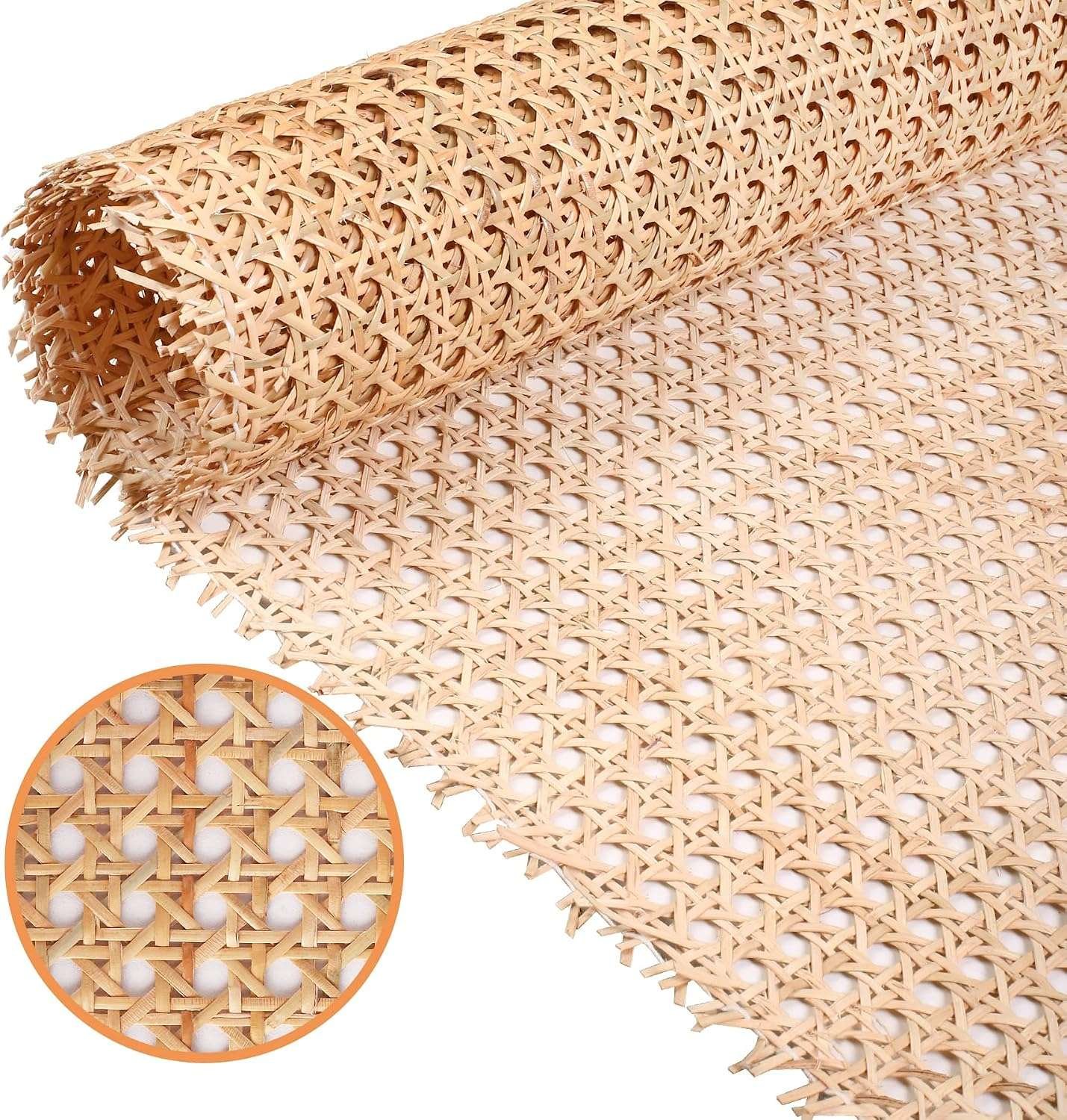
Amazon Find: Natural Cane Webbing Roll
Natural cane webbing can add warm woven texture to suitable cabinet doors and decorative panels. Compare the weave pattern and dimensions before ordering materials for your IKEA makeover.
3. Create a Low Japandi Credenza With IKEA IVAR Cabinets
Two IKEA IVAR cabinets arranged side by side can inspire a long, low credenza that brings practical storage and natural wood texture into a Japandi living room. The simple pine fronts are particularly useful for creating an understated look without expensive custom cabinetry.
Choose two compatible cabinet units and plan a level, securely supported arrangement according to IKEA’s mounting requirements. Keep the wood natural with a suitable clear finish, or paint the cabinets a muted putty color. Woven cane door inserts can add texture if you have the tools and appropriate door construction.
Style the finished credenza with one ceramic table lamp and an asymmetrical arrangement of books or handmade pottery. The closed cabinets can conceal games, linens, or media accessories that would otherwise create visual clutter.
Important detail: Don’t improvise unsupported legs, join cabinets structurally without proper engineering, or ignore required wall anchoring. A low, wall-mounted arrangement can provide the same horizontal appearance.
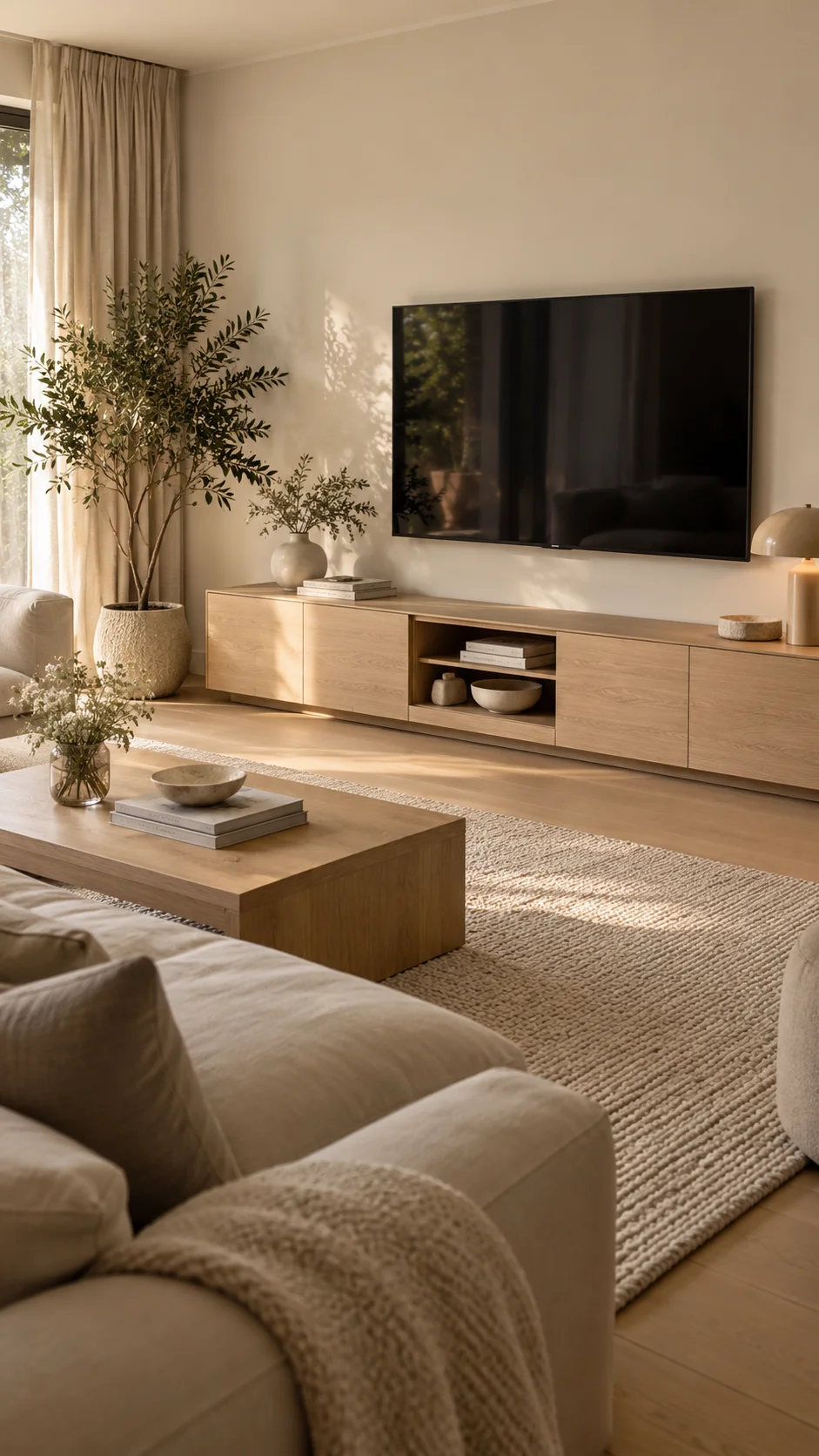
Image Credit: @howitsee.com
4. Build a Minimalist Mudroom Bench With IKEA Storage
Japandi style works beautifully in an entryway because it prioritizes useful furniture and everyday organization. A simple mudroom storage arrangement can create a welcoming place to put shoes and bags while keeping clutter out of sight.
Use suitable IKEA storage cabinets in white or warm greige, then introduce a natural wood top for visual warmth. Add small brushed brass or wooden cabinet pulls for understated detail. Above the cabinet arrangement, a neutral upholstered wall pad or simple wooden hooks can create a softer, more finished look.
If you need a seat for putting on shoes, use a separate bench specifically rated for seating or a professionally designed bench structure. Ordinary storage cabinets are not automatically intended to support a person’s weight.
Practical tip: Keep the entryway palette limited to warm white, oak, beige, and one metal finish. A simple washable mat will protect the floor and complete the look.
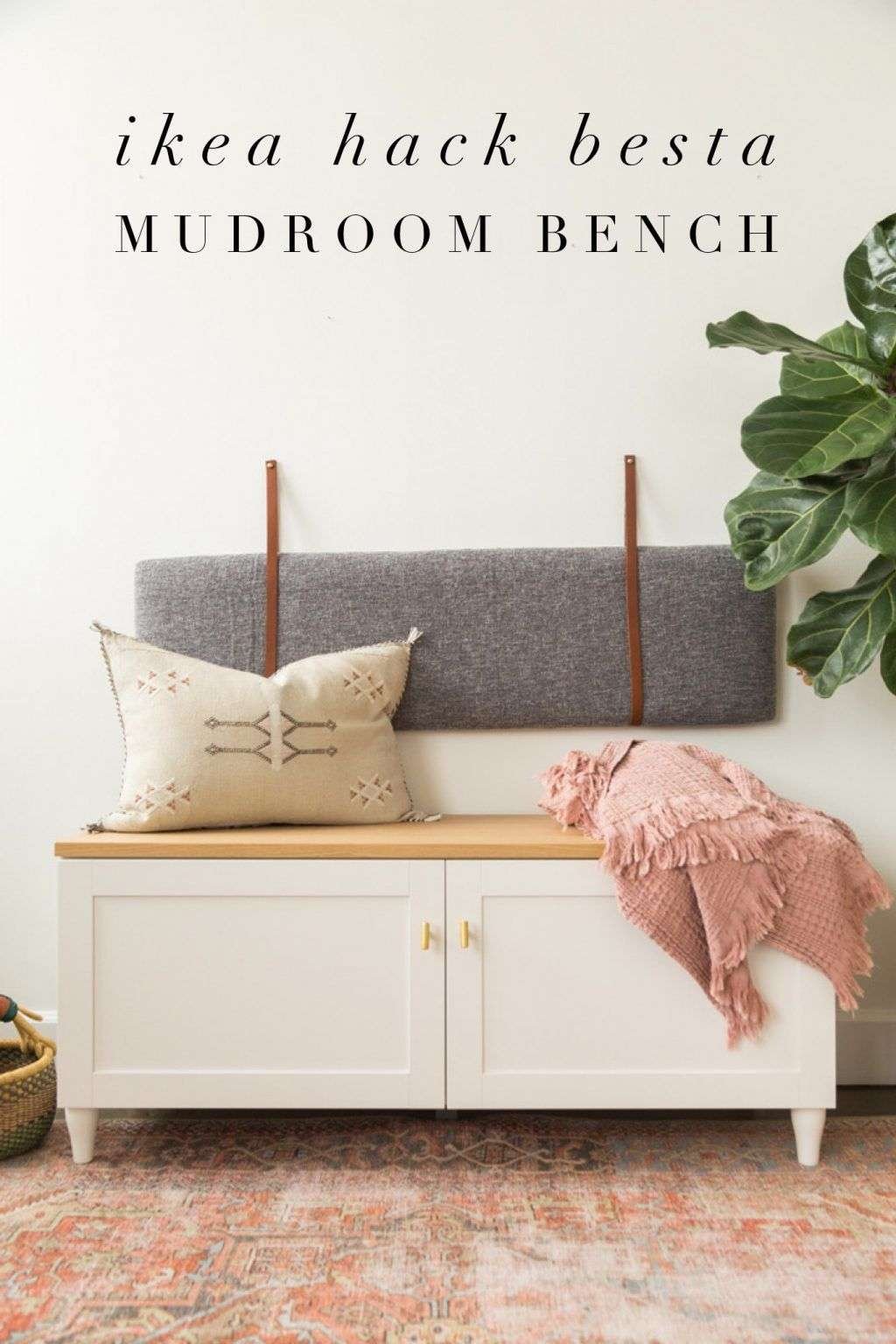
Image Credit: @ohclary.com
5. Style an IKEA Balcony With Natural Japandi Details
Japandi decorating can extend beyond the living room. A small apartment balcony becomes a peaceful outdoor retreat when you use simple furniture, natural-looking materials, and the same muted color palette found inside your home.
Begin with compact IKEA outdoor furniture suited to your available space. A narrow wood-look table and one or two comfortable chairs create a practical seating area. Add weather-resistant beige cushions, a simple outdoor rug, and a few leafy plants in stone-look or terracotta planters.
Avoid filling the balcony with numerous small accessories. A restrained arrangement helps the space feel open and makes outdoor maintenance much easier. Choose furnishings specifically designed for exposure to sunlight, rain, and changing temperatures.
Small-space idea: Use one larger planter rather than several scattered pots. Check balcony weight limits, drainage, and building rules before making changes.
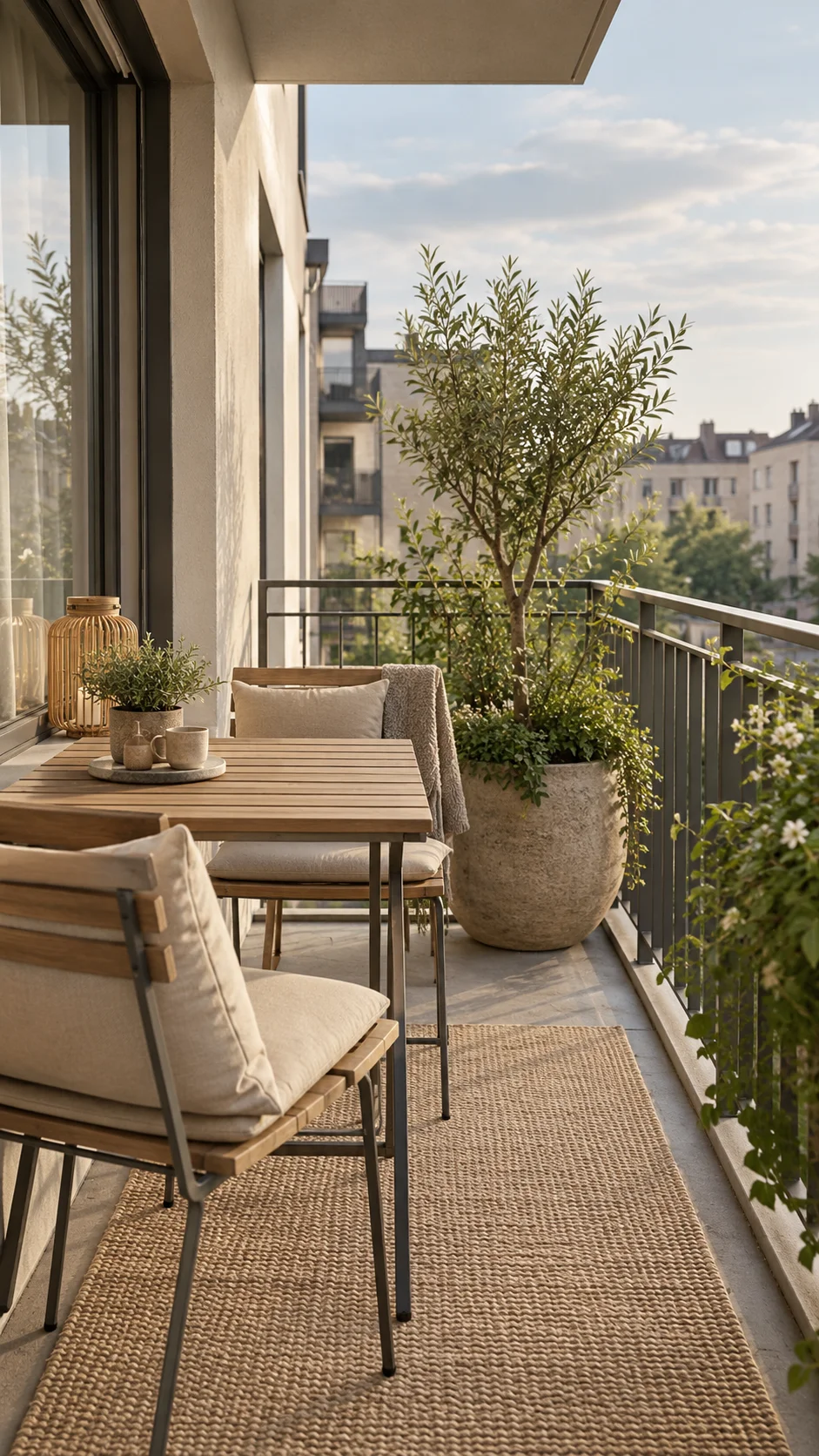
Image Credit: @howitsee.com
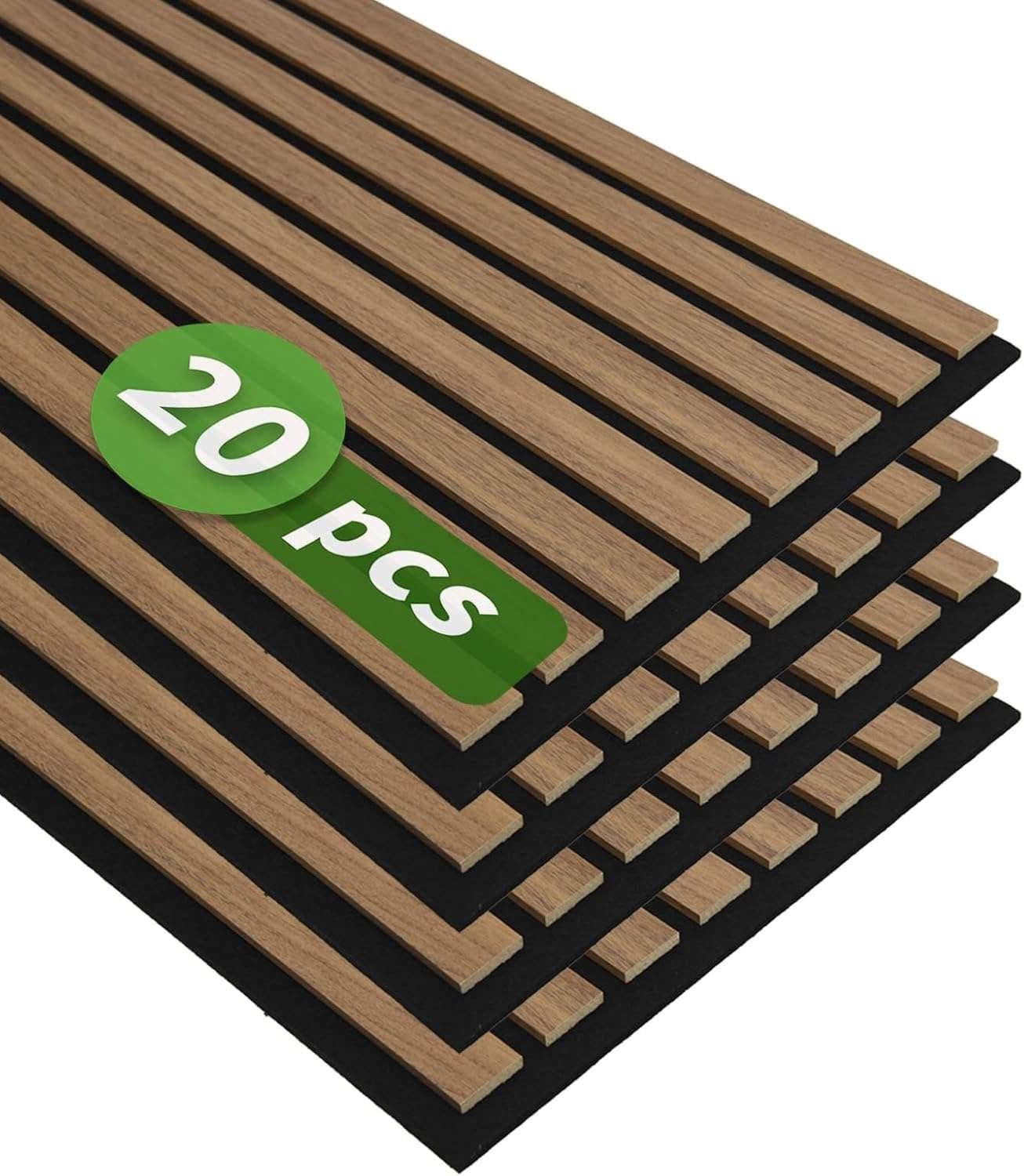
6. Make a Wooden Slat Room Divider for an Open Space
A wood slat partition is a beautiful way to separate different areas of an open-plan apartment while preserving natural light. The repeating wooden lines create a structured, minimalist appearance that suits Japandi interiors particularly well.
Create the look with a purpose-built wooden slat screen finished in natural oak or pale pine. Position it between a seating area and a workspace, or use it to define an entryway without constructing a solid wall. IKEA storage furniture can complement the partition with coordinated wood finishes and concealed storage nearby.
For an especially calm result, keep the space between slats consistent and avoid adding decorative accessories directly to the divider. The natural grain and rhythm of the wooden pieces provide enough interest by themselves.
Safety tip: Use a properly engineered divider with secure supports or appropriate wall and ceiling connections. A tall slatted partition should not depend on unsecured lightweight furniture for stability.
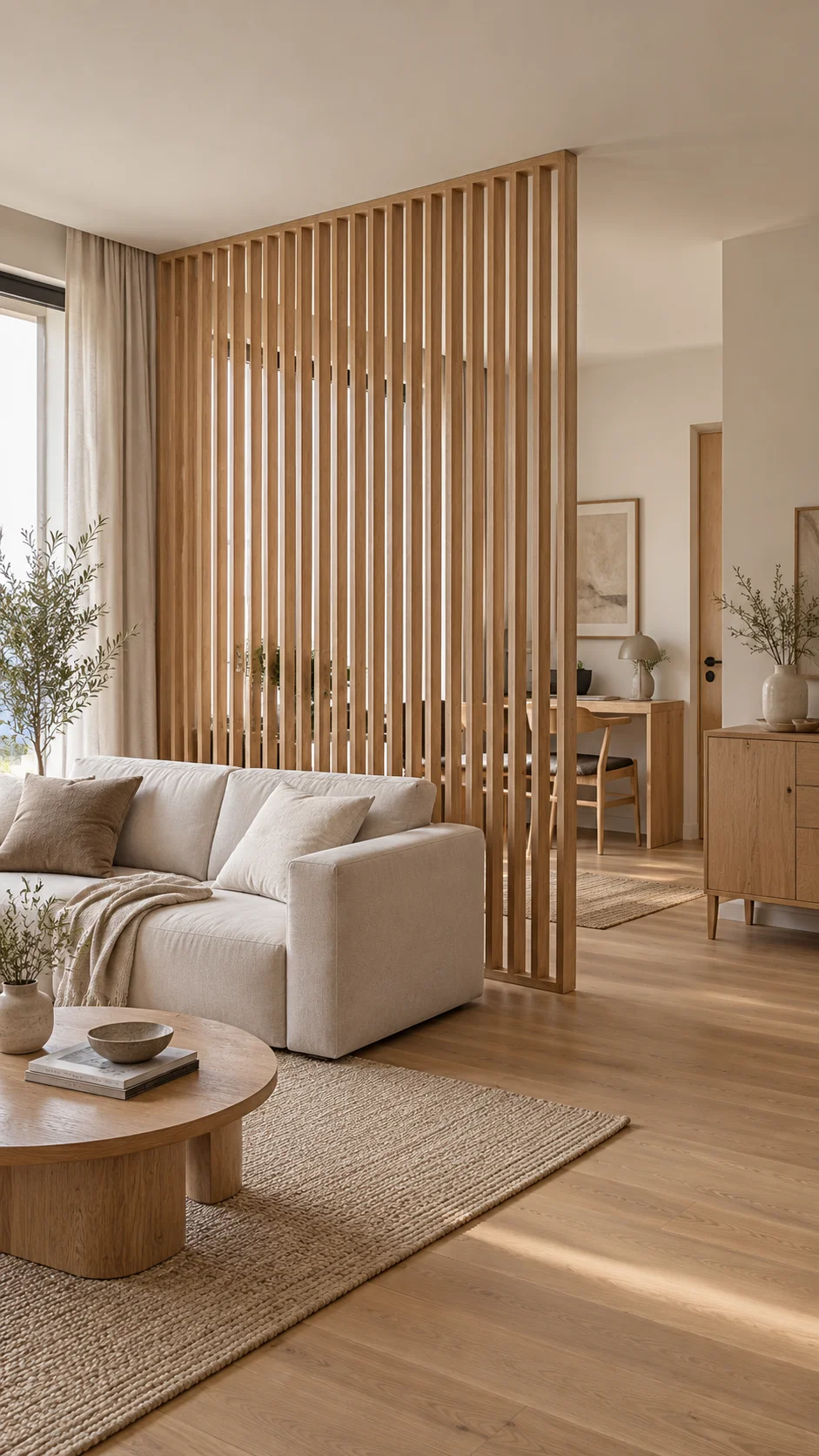
Image Credit: @howitsee.com
Amazon Find: Natural Wood Slat Wall Panels
Wood slat panels can introduce a Japandi-inspired linear texture to a suitable accent wall or professionally supported partition project. Check the material, dimensions, and mounting requirements for your intended use.
7. Turn a BILLY Bookcase Into a Neutral Cane Cabinet
Another lovely way to bring Japandi character to an IKEA BILLY bookcase is to turn it into a tall, freestanding-looking cabinet with a soft neutral finish and carefully framed cane doors. Unlike a mostly open bookcase, this version emphasizes concealed storage and a quiet furniture silhouette.
Paint suitable exterior surfaces in a warm gray or mushroom-beige shade using the primer and finish recommended for the substrate. Add compatible framed doors fitted with cane panels, and choose simple wooden knobs. The combination of solid painted sections and open woven texture feels understated but thoughtfully detailed.
Inside the cabinet, organize everyday items in plain storage boxes. Reserve any visible space for a few books, a ceramic pitcher, or a natural stoneware bowl. This creates a practical cabinet rather than a purely decorative display.
Styling tip: Let the cane and paint provide the visual interest. Avoid ornate hardware, busy patterns, or too many decorations on top. Anchor the bookcase as required.
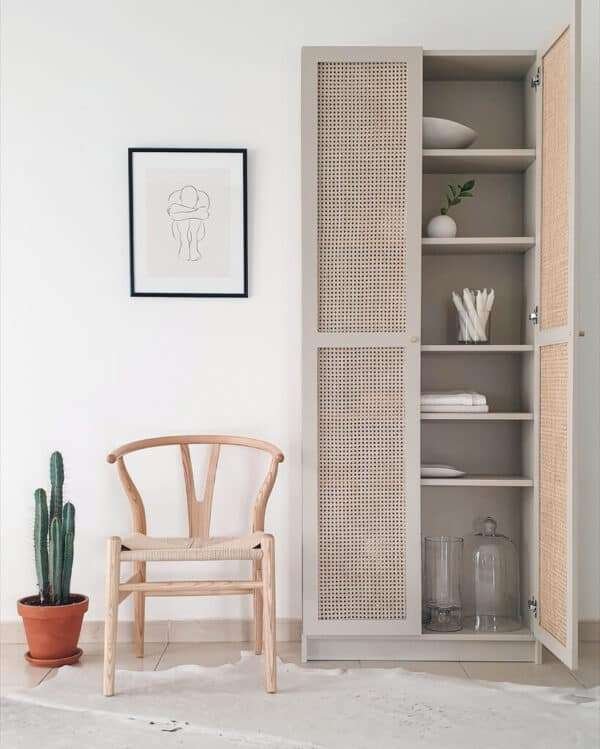
Image Credit: @jamesandcatrin.com
8. Style IKEA SVALNÄS Shelves With Simple Ceramics
IKEA SVALNÄS shelving has the kind of delicate framework and natural material appearance that feels right at home in a Japandi interior. Its open design allows wall space to remain visible, giving the arrangement a lighter appearance than bulky storage cabinets.
If you already own this shelving system, give it a fresh look by removing unnecessary objects and concentrating on a few useful, beautiful pieces. Try a small stoneware teapot, two pottery bowls, a short stack of books, and a sculptural vase. Group items asymmetrically, leaving enough space between them to appreciate each shape.
For a similar look without locating an older shelving system, choose a compatible modern IKEA wall shelf with a slim wood finish and uncomplicated supports. Install it using hardware suited to your wall construction and the expected load.
Japandi styling rule: Useful ceramics often make better display pieces than numerous ornaments. Choose objects you genuinely enjoy using rather than decorating every inch of the shelves.
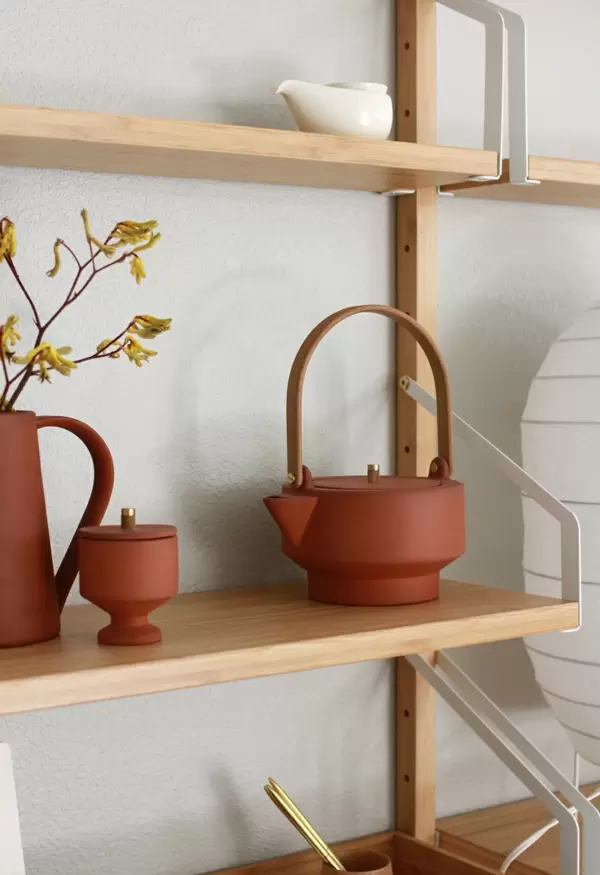
Image Credit: @jamesandcatrin.com
9. Create a Shoji-Inspired Screen Using IKEA IVAR Frames
A folding screen inspired by traditional Japanese shoji partitions can bring gentle privacy to a bedroom or studio apartment. IKEA IVAR side frames offer a simple wooden shape that can inspire a custom divider with soft fabric panels.
Choose light, neutral fabric such as cream cotton canvas or natural linen-look material. Attach it neatly to a suitable wooden framework, keeping the surface smooth and slightly translucent if you want light to pass through. Proper screen hinges can allow separate panels to fold into a compact arrangement when not in use.
Keep the wood in a light natural finish, and position the screen near a reading nook or dressing area. Avoid patterned fabric or oversized decorative trim, which can make the design look busier than intended.
DIY caution: IVAR frames are shelving components, not certified freestanding screens. An adapted divider needs adequately designed hinges, supports, and stability safeguards. A purpose-built folding screen is a safer alternative if you cannot verify the construction.
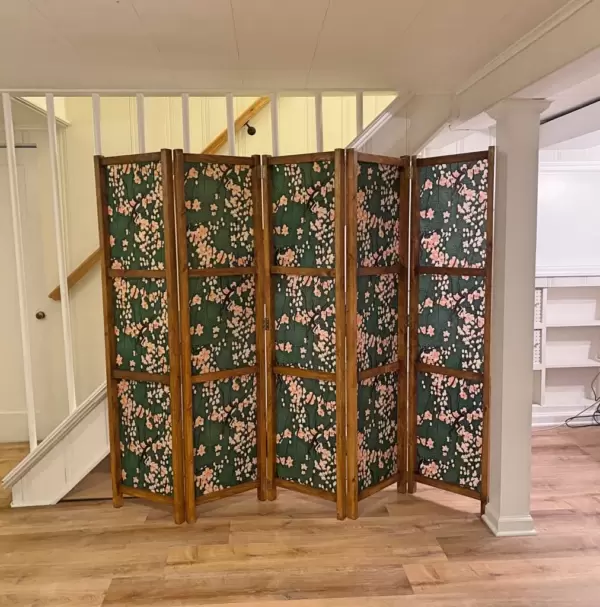
Image Credit: @jamesandcatrin.com
Amazon Find: Natural Linen-Look Fabric
Neutral fabric can create soft, light-filtering panels for a properly constructed folding screen. Consider cream, oatmeal, or warm beige shades for a calm Japandi appearance.

10. Style an IKEA GJÖRA Bed for a Peaceful Japandi Bedroom
The IKEA GJÖRA bed’s simple wooden construction offers a beautiful starting point for a Japandi bedroom. Its understated shape and natural finish help establish the quiet, uncluttered atmosphere associated with Japanese and Scandinavian-inspired interiors.
If you already have this bed, style it with soft ivory bedding, a natural linen duvet cover, and a lightweight oatmeal throw. Keep pillows simple and avoid piling on too many decorative cushions. A narrow wooden bedside table and a warm lamp will complete the sleeping area without competing with the bed frame.
A single tall indoor plant in the corner can introduce an organic shape against the straight wooden frame. If you use fabric on a suitable bed frame, keep it securely attached and away from lighting, heaters, and other potential hazards.
Affordable alternative: You don’t need the exact bed model to recreate this look. A simple light-wood bed frame and neutral bedding can create a similar effect.
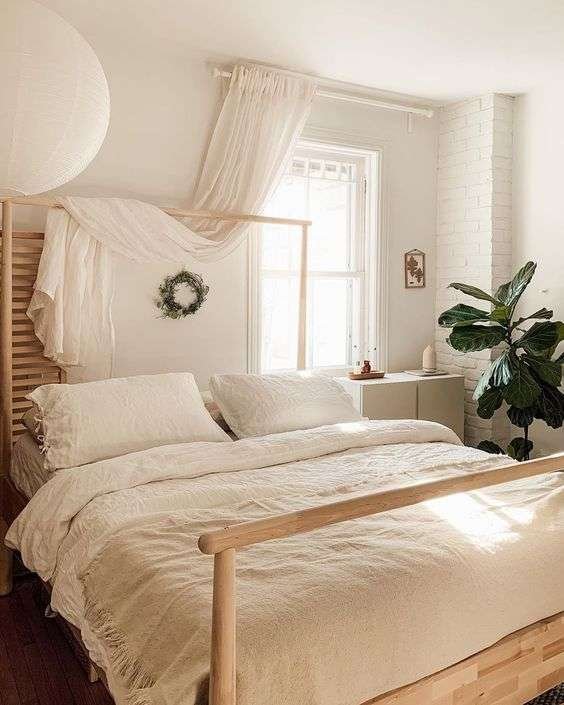
Image Credit: @jamesandcatrin.com
11. Create a Low-Profile Sofa With IKEA SÖDERHAMN
Low-profile furniture is a familiar feature in many Japandi interiors, and IKEA SÖDERHAMN seating provides a useful starting point for a relaxed, contemporary living room. Its clean lines can look particularly beautiful when paired with warm wood and simple natural fabrics.
One custom design approach is to create a fitted wooden surround that visually conceals the lower sofa frame and introduces a horizontal ledge along one side. Choose an oak-look or walnut-toned finish to complement the upholstery. The surrounding ledge can provide a convenient surface for a small tray or decorative object if it is properly supported.
For a simpler version, leave the sofa’s original supports unchanged and create the same grounded appearance with a low wooden coffee table, a large neutral rug, and cushions in beige or warm gray. This keeps the original furniture structure intact.
Important caution: Don’t remove or replace load-bearing sofa legs without a manufacturer-approved alternative or professionally designed support system. A decorative surround should not interfere with the sofa’s stability, safe use, or cleaning access.
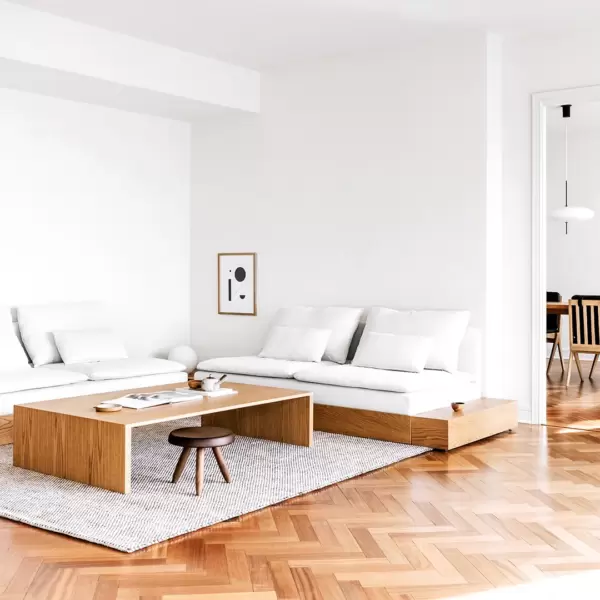
Image Credit: @jamesandcatrin.com
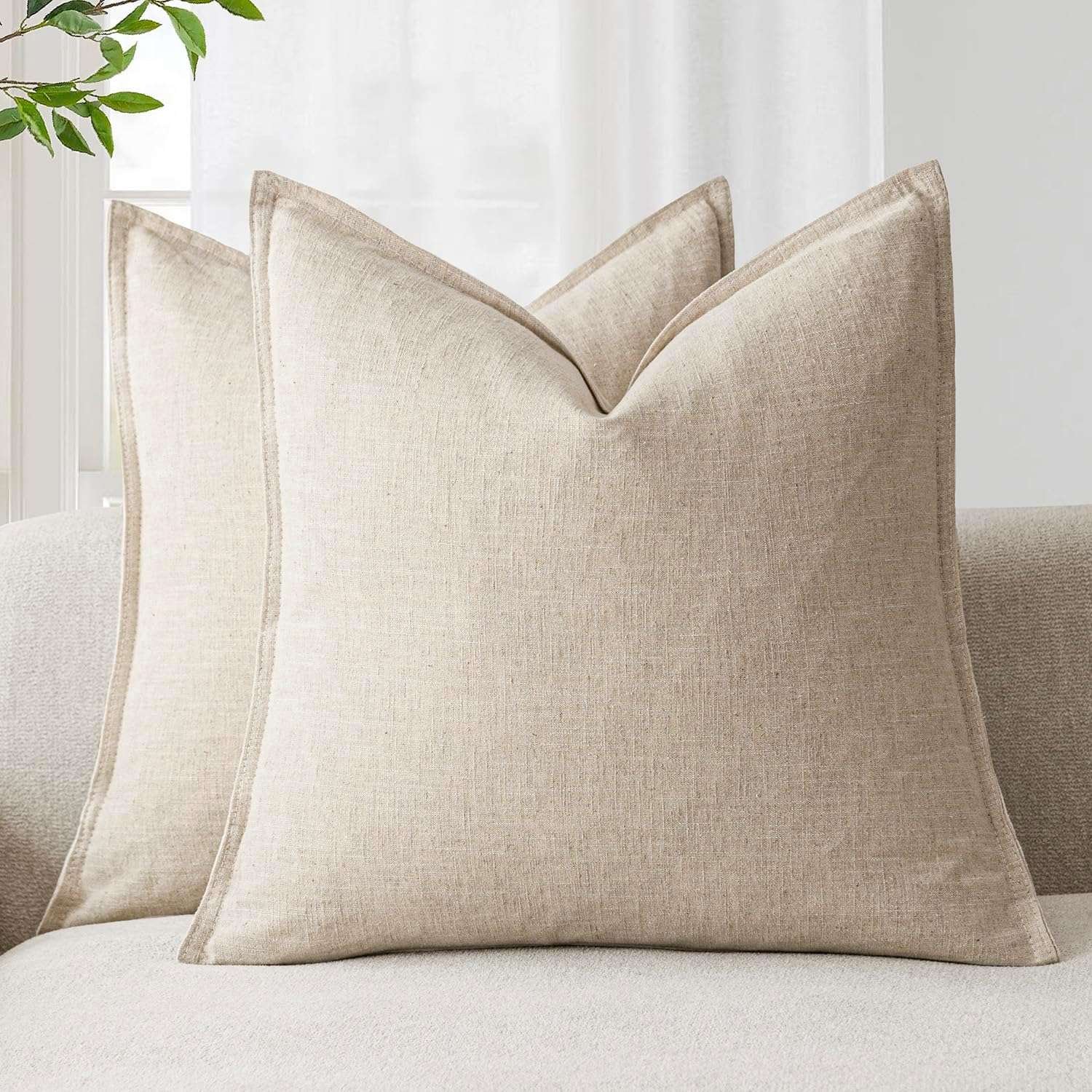
Amazon Find: Neutral Linen Throw Pillow Covers
Cream, oatmeal, and taupe pillow covers are a simple way to give a modern sofa a softer Japandi appearance. Mix a few woven textures while keeping the colors understated.
12. Make a Neutral Wardrobe With IKEA IVAR Cabinets
IKEA IVAR cabinets can provide the foundation for a beautiful storage arrangement that combines clean design with practical everyday organization. Their plain wooden fronts are particularly suitable for a Japandi makeover because they don’t require elaborate decorative changes.
Paint the cabinets in warm gray, greige, or soft beige using a finish appropriate for the wood. Arrange the units in a manufacturer-approved, securely supported configuration. Add discreet wooden pulls or simple handles that blend into the cabinet fronts. Keep the surrounding walls in a similar neutral tone for a calm, continuous appearance.
For a wardrobe-inspired look, place the cabinets near a full-length mirror and a simple clothes rail or separate wardrobe unit. Use the cabinets for folded clothing and accessories, and keep larger items concealed to preserve the tidy appearance.
Practical tip: IVAR cabinets are not automatically full-size wardrobes. Check internal measurements and load limits, and don’t add raised bases or extra cabinet height without maintaining the required structural support and anchoring.
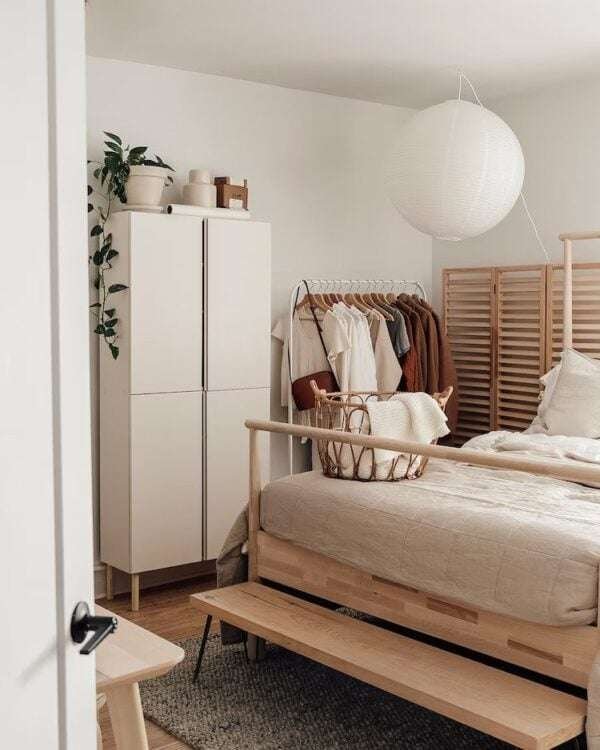
Image Credit: @howitsee.com
Japandi IKEA Hack Shopping Checklist
Before buying supplies, decide whether your project involves surface styling, decorative refinishing, or a more complicated structural modification. Simple changes are often the easiest place to begin, especially if you’re working with furniture you already own.
Essential DIY Supplies
- Existing IKEA furniture or a suitable secondhand piece
- Measuring tape and pencil
- Sandpaper or suitable surface-preparation materials
- Primer and paint appropriate for the furniture finish
- Compatible cabinet handles or wooden knobs
- Manufacturer-approved mounting and anchoring hardware
- Suitable tools and protective equipment
Optional Japandi Finishing Touches
- Natural cane webbing
- Light oak-look decorative panels
- Linen-look fabric
- Neutral pillow covers
- Stoneware vases and pottery
- Woven storage baskets
- Warm-white lighting
- A simple indoor plant
Before shopping: Look at furniture you already own. A white cabinet may only need different handles and a simpler display. A wooden bookshelf may already suit Japandi style once unnecessary decorations are removed.
Common Mistakes to Avoid With Japandi IKEA Hacks
Using Too Many Different Wood Finishes
Japandi rooms often feature natural wood, but mixing many unrelated finishes can make furniture look disconnected. Choose a main wood tone and repeat it across several pieces. A smaller amount of darker wood can create attractive contrast.
Skipping Surface Preparation
Paint may not adhere well to some IKEA laminate or foil-covered surfaces without suitable preparation. Identify the existing finish and follow the correct cleaning, priming, and painting instructions. Test a small hidden area before refinishing the entire piece.
Overdecorating Minimalist Shelves
Adding too many vases, candles, books, and ornaments can work against the calm appearance you’re trying to create. Display a small number of useful or meaningful objects and allow open space between them. Closed storage is often the best place for everyday clutter.
Making Unsafe Structural Furniture Changes
Removing sofa legs, raising cabinets on homemade bases, or turning shelving frames into partitions can change how furniture carries weight. Check manufacturer requirements, maintain required wall anchoring, and obtain qualified help for structural modifications rather than relying on the appearance of a project alone.
Forgetting the Cozy Side of Japandi
Minimalism shouldn’t leave your room feeling uncomfortable or unfinished. Soft linen, warm lighting, textured cushions, and natural materials add warmth without creating unnecessary clutter. Focus on comfort and function alongside a clean visual style.
Frequently Asked Questions About IKEA Japandi Hacks
What IKEA furniture works best for Japandi style?
IKEA BESTÅ, BILLY, IVAR, and SÖDERHAMN are useful starting points because their clean shapes can suit minimalist interiors. Light wood finishes, simple storage, natural fabrics, and neutral colors help create the Japandi look. Choose furniture based on your room’s needs rather than appearance alone.
How can I make IKEA furniture look more expensive?
Focus on coordinated finishes, neat installation, and a few quality-looking details. Compatible wood-look cabinet fronts, cane inserts, simple handles, and carefully applied paint can make basic furniture feel more personalized. Keeping surrounding surfaces uncluttered also helps highlight the furniture’s shape and materials.
What colors should I use for Japandi furniture?
Warm white, cream, beige, taupe, greige, light oak, and natural walnut are excellent options. Small accents of charcoal, muted olive, or terracotta can introduce depth. Choose a restrained palette that complements your flooring and existing furniture rather than introducing too many unrelated shades.
Can I create a Japandi room without buying new furniture?
Absolutely. Begin by removing unnecessary decorations and organizing visible storage. Change pillow covers, simplify artwork, and bring in a few natural textures. Existing wooden furniture may only need a suitable finish or updated hardware to fit a Japandi-inspired color scheme.
Are Japandi IKEA hacks suitable for small apartments?
Yes. Japandi’s emphasis on useful furniture, simple silhouettes, and organized storage works particularly well in smaller spaces. Choose cabinets that fit your layout, keep walkways clear, and use lighter colors where you want a more open appearance. Avoid oversized pieces that make the room difficult to use.
Recommended Finds for Japandi IKEA Makeovers
These simple materials and accessories can help you complete a Japandi-inspired furniture makeover without filling your home with unnecessary decorations.
- Natural Wooden Cabinet Knobs: A subtle hardware update for neutral cabinets and storage furniture.
- Minimalist Ceramic Vases: Add organic shape and texture to a lightly styled shelf or cabinet.
- Natural Woven Storage Baskets: Keep everyday items organized while introducing a warm natural texture.
Final Thoughts: Create a Beautiful Japandi Home With IKEA
The beauty of Japandi decorating is that it doesn’t require a house full of expensive furniture. By combining simple IKEA pieces with natural materials, warm colors, and useful storage, you can create a home that feels comfortable, organized, and thoughtfully designed.
Start with one of these IKEA hacks for Japandi, perhaps by updating a BILLY bookcase with cane, refreshing a BESTÅ cabinet, or simplifying an existing shelving display. Focus on practical improvements first, then add a few beautiful details. The result can feel personal and timeless without losing the relaxed simplicity that makes Japandi style so appealing.
