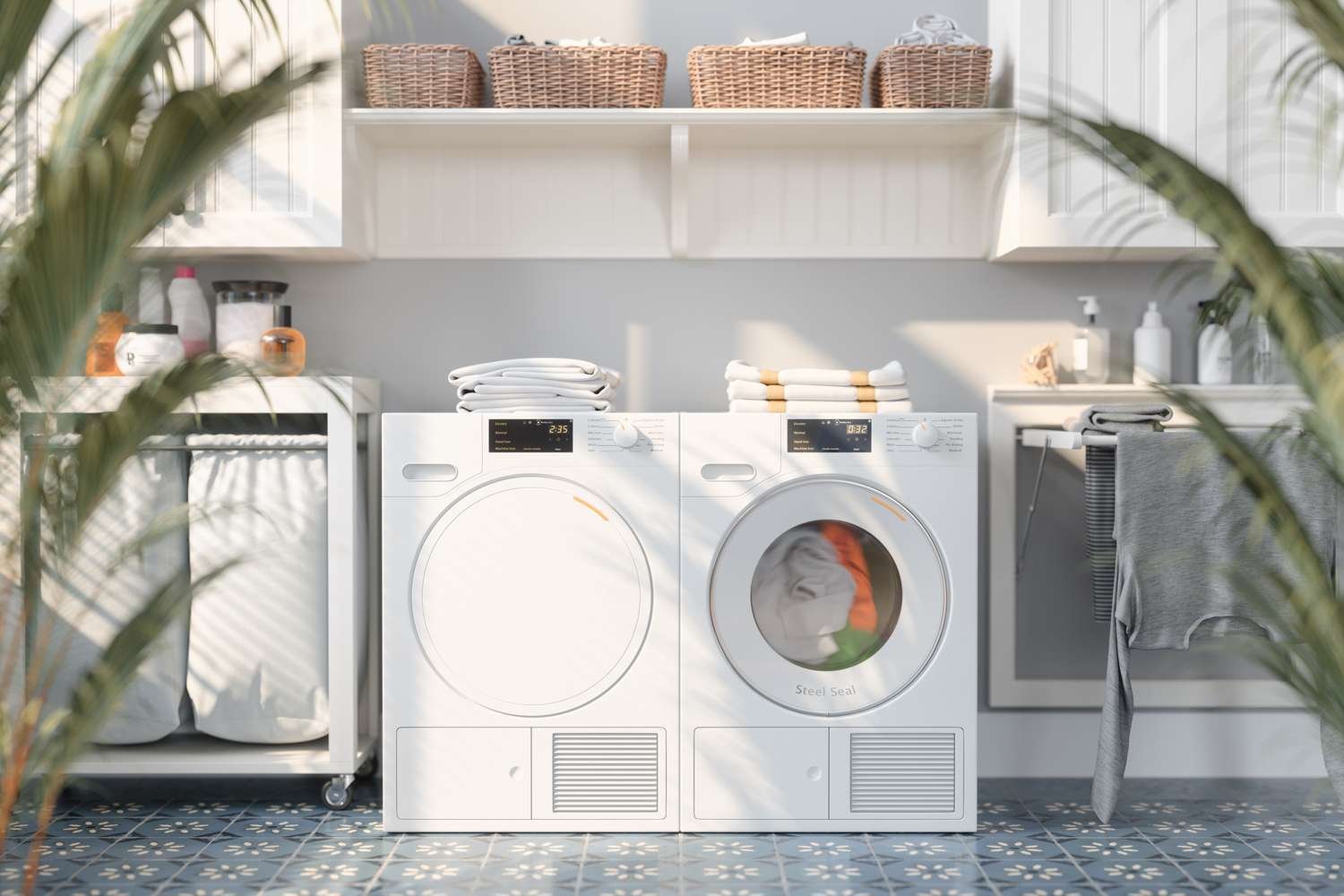
A small laundry closet can be one of the hardest-working spaces in your home. Between washing, drying, sorting, folding, and storing supplies, even a compact closet needs to handle several everyday tasks. Without a thoughtful layout, detergent bottles pile up, clean clothes have nowhere to go, and precious storage space goes unused.
Fortunately, creating a beautiful and organized laundry closet doesn’t require a large utility room or an expensive renovation. Clever shelving, stacking appliances, slim pull-out organizers, hidden hampers, folding counters, and attractive storage baskets can make a surprisingly big difference.
These 17 genius laundry closet ideas combine practical storage with beautiful small-space design. You’ll discover nine creative laundry closet upgrades inspired by space-saving decorating solutions, followed by eight more ideas focused on smart organization, flexible layouts, and stylish finishes.
Whether your washer and dryer are hidden in a hallway, tucked into a bathroom, stacked inside a narrow closet, or installed beneath the stairs, these ideas can help you make the most of the space you already have.
Affiliate disclosure: This article contains Amazon shopping links. We may earn a commission from qualifying purchases made through eligible affiliate links at no additional cost to you.
More Small Laundry Room and Storage Ideas
If you’re planning a laundry closet makeover, explore these related guides from HowitSee for additional storage solutions, organization tricks, and practical decorating inspiration.
- 16 Small Laundry Room Ideas for stacked appliances, compact folding counters, decorative cabinets, and hidden laundry nooks.
- 12 Genius IKEA Laundry Room Makeover Ideas on a Budget for shelving, cabinet storage, wood countertops, and affordable laundry upgrades.
- 16 Clever Mudroom Ideas to Maximize Your Entryway Space for baskets, hooks, storage cabinets, and combined utility spaces.
- 7 Things to Always Include in Mudroom Design for practical household storage zones and organization essentials.
How to Plan a Small Laundry Closet That Actually Works
Before choosing shelves, baskets, cabinets, or decorative colors, start by planning your laundry routine. A functional laundry closet should make it easy to load the washer, transfer clothes, access supplies, sort laundry, and fold or hang clean garments.
Measure the available width, height, and depth of the closet, including any doors and trim. Record the actual dimensions of the washer and dryer, the direction in which their doors open, and the location of water connections, drains, electrical outlets, and dryer ventilation. Leave the installation, maintenance, and service clearances specified by the appliance manufacturers.
Next, identify which activities need dedicated space. If you have a side-by-side front-loading washer and dryer, an independently supported folding counter may be useful. If the machines are stacked, a narrow side cabinet and wall shelves might make better use of the space.
Simple laundry closet design formula: Accessible washer and dryer + useful vertical storage + safe supply organization + one sorting or folding area + practical lighting + adequate ventilation and service access.
Choose your layout before focusing on decorative finishes. A beautiful closet should still be safe, ventilated, and convenient to use on laundry day.
Best Laundry Closet Layouts for Small Spaces
| Laundry Closet Layout | Best Features | Main Advantage |
|---|---|---|
| Stacked Laundry Closet | Stackable Appliances, Side Shelves, Upper Storage | Uses Less Floor Area |
| Side-by-Side Laundry Closet | Folding Counter, Upper Cabinets, Baskets | Creates a Continuous Work Surface |
| Narrow Hallway Laundry | Bifold Doors, Slim Drawers, Shallow Shelves | Preserves Hallway Circulation |
| Laundry in a Bathroom | Closed Storage, Moisture-Appropriate Materials | Combines Two Utility Functions |
| Under-Stair Laundry | Appliance-Sized Opening, Low Shelves, Good Lighting | Uses an Awkward Existing Space |
| Open Laundry Nook | Coordinated Shelves, Baskets, Simple Finishes | Keeps Supplies Easy to Reach |
| Hidden Laundry Cabinet | Approved Doors, Internal Storage, Suitable Airflow | Conceals Appliances From View |
17 Genius Laundry Closet Ideas Taking Over Small Spaces
1. Hide a Stacked Washer and Dryer Behind Bifold Doors
A stacked washer and dryer is one of the most practical ways to organize a narrow laundry closet. Placing compatible front-loading appliances vertically can free part of the closet for shelves, a small hamper, or slim storage drawers. Bifold doors help conceal the machines when the laundry area isn’t in use, making the surrounding hallway or bathroom feel more organized.
Choose a washer and dryer combination specifically approved for stacking, using the manufacturer’s required stacking kit and installation instructions. Then select bifold doors that provide adequate access and comply with the appliances’ ventilation and clearance requirements. Paint the doors to coordinate with nearby trim or cabinets for a seamless appearance. Inside the closet, use the remaining side space for small storage shelves or a narrow laundry basket. Make sure the doors don’t prevent safe operation, required airflow, or maintenance access; some equipment requires the closet doors to remain open while operating.
Best for: Narrow hallway closets, apartments, small bathrooms, and homes without a dedicated laundry room.
Space-saving tip: Keep frequently used supplies in a reachable side compartment rather than placing them above the dryer where they may be difficult to access.
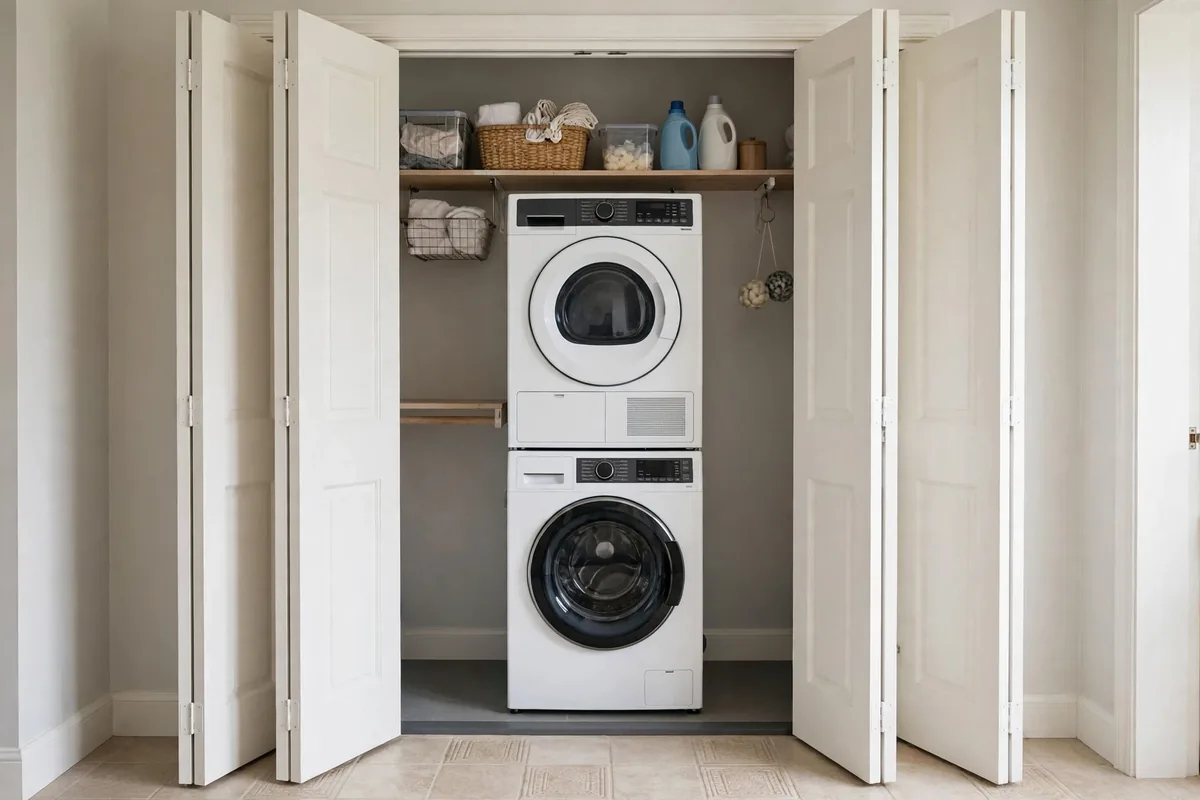
Image credit: @mapleestateconstruction.com
2. Add Floating Shelves Above the Laundry Machines
The wall above your washer and dryer can provide valuable storage in a small laundry closet. A pair of attractive floating shelves creates space for laundry baskets, folded towels, dryer sheets, and small accessories without taking up additional floor area. Light wood or simple white shelves can also make the closet feel brighter and more carefully designed.
Install shelves on a suitable wall using supports rated for the expected loads. Keep the lower shelf at a comfortable height where it doesn’t interfere with top-loading lids, appliance ventilation, or service access. Use lightweight baskets to group clean cloths, spare hangers, or other nonhazardous items. Store detergents, stain removers, and other chemicals in their original containers in secure storage, away from children and pets. A small faux plant or framed print can soften the appearance without making the shelves feel crowded.
Styling formula: Coordinated baskets + folded towels + a few practical accessories + open space between items.
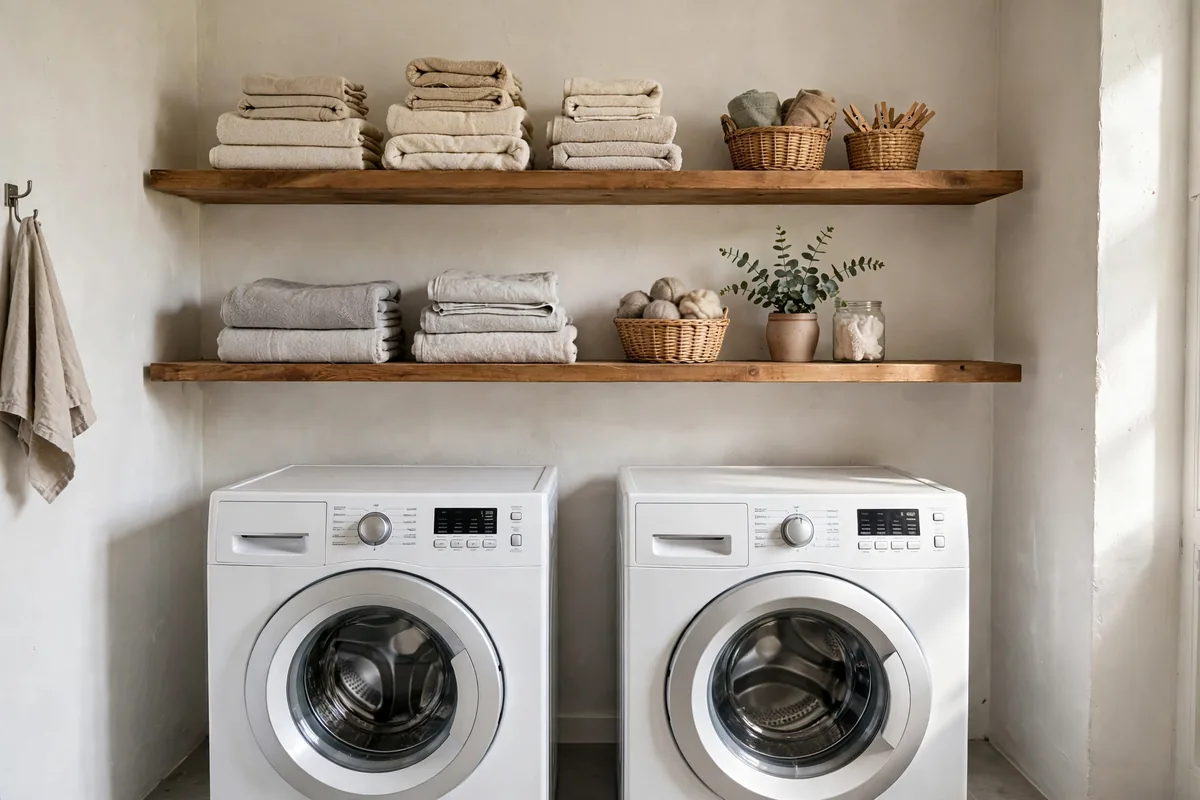
Image credit: @mapleestateconstruction.com
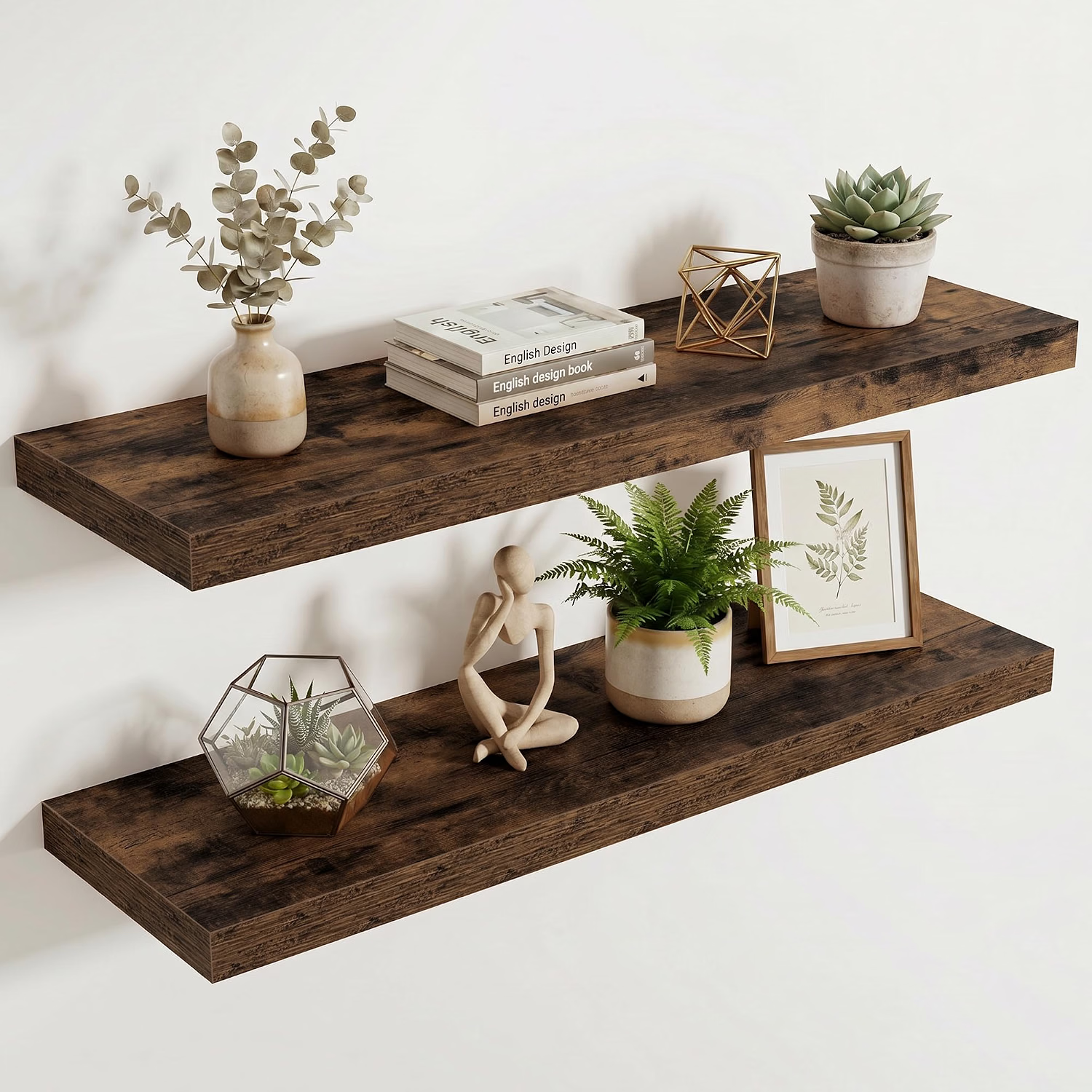
Amazon Find: Laundry Room Floating Shelves
Compare compact wooden and metal floating shelves suitable for laundry storage, including their weight ratings and mounting requirements.
3. Install a Space-Saving Pull-Out Drying Rack
A pull-out drying rack is a clever solution for laundry closets that don’t have enough room for a freestanding clothes airer. It provides a temporary place to dry delicate garments and other clothing that shouldn’t go into the dryer. When everything is dry, the rack slides back into its cabinet or mounting area so the closet remains tidy.
Look for a compact sliding drying rack designed for cabinet or wall installation and check its dimensions carefully. Position it beside the appliances or inside an appropriately sized storage compartment where it can extend fully without blocking a walkway. Choose a moisture-resistant design with a suitable load rating and enough clearance for air circulation around damp clothing. Make sure the closet has adequate ventilation so drying clothes doesn’t create persistent humidity. Use the rack only within the manufacturer’s stated capacity and avoid placing heavy wet blankets or rugs on a lightweight unit.
Best for: Compact apartments, closets with a narrow side cabinet, and homes where delicate clothing is frequently air-dried.
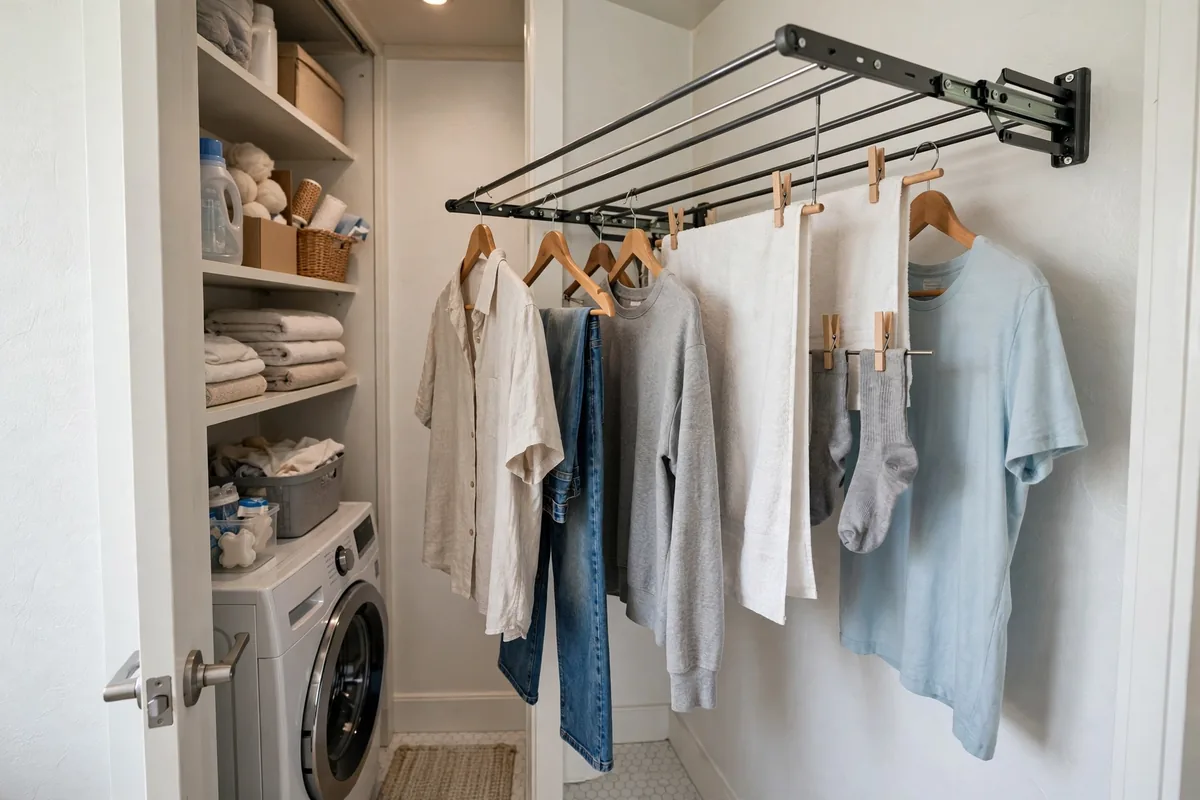
Image credit: @mapleestateconstruction.com
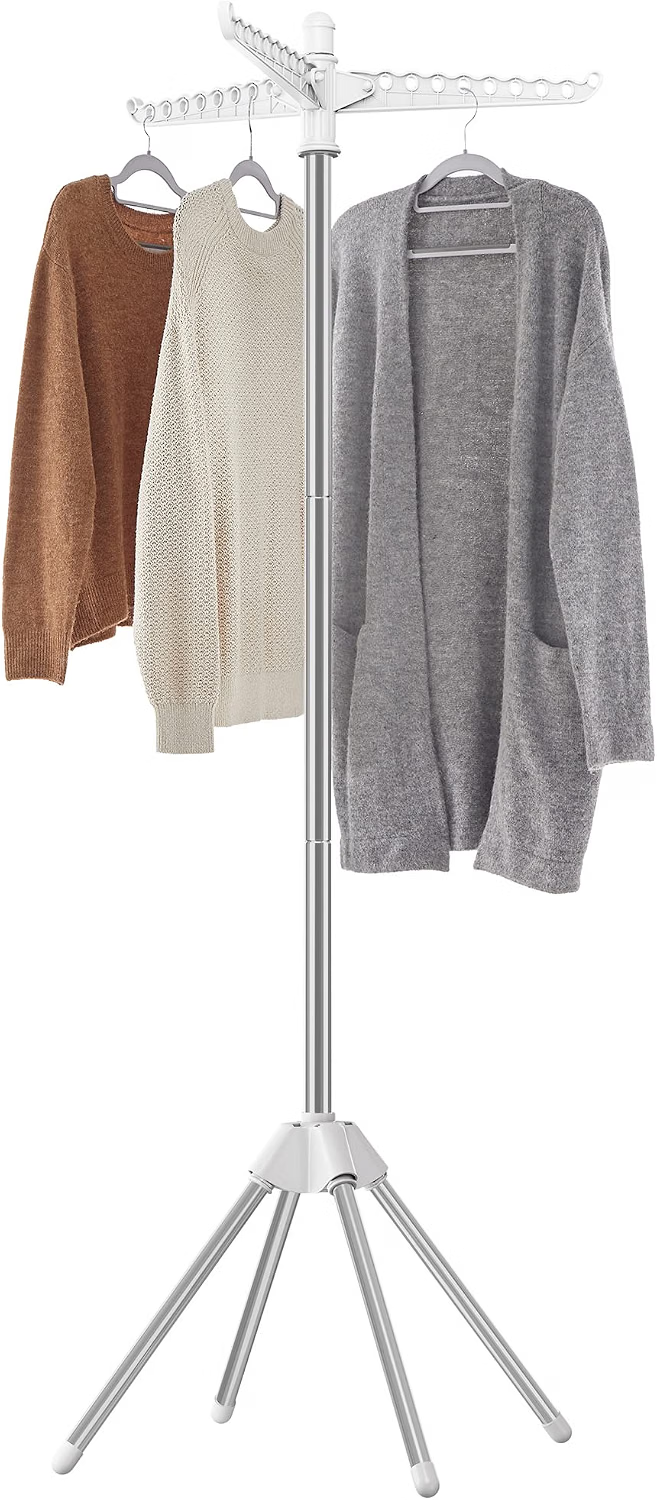
Amazon Find: Pull-Out Laundry Drying Racks
Sliding drying racks can provide temporary hanging space while remaining concealed when not needed.
4. Organize Laundry Supplies With Matching Labeled Bins
A coordinated collection of storage bins can make an ordinary laundry closet feel more organized and attractive. Instead of scattering laundry accessories across shelves, assign a dedicated place for dryer balls, clean cloths, spare hangers, and other useful items. Consistent baskets create a calmer appearance, even when the storage area is small.
Choose sturdy washable bins in cream, gray, natural woven textures, or another finish that complements the closet. Use simple labels to identify the contents and arrange frequently used items at accessible heights. For chemical laundry products, keep the original manufacturer packaging and labels intact. Liquid detergent, laundry pods, stain removers, and other hazardous products should not be decanted into decorative glass jars or food-like containers; store them securely out of children’s and pets’ reach. Decorative clear containers are better reserved for safe accessories such as clothespins, dryer balls, or clean laundry clips.
Organization tip: Use one bin for each practical category, then leave room to remove items comfortably without pulling down the entire shelf.

Image credit: @mapleestateconstruction.com
Amazon Find: Laundry Closet Storage Bins
Matching storage bins can organize nonhazardous laundry accessories and help open shelves look coordinated.

5. Turn an Empty Side Wall Into a Laundry Pegboard
A pegboard is a flexible way to organize small laundry tools without installing a large cabinet. Hooks, small baskets, and lightweight holders can store lint brushes, spare hangers, cleaning cloths, and useful accessories. The repeating grid also gives the closet a neat, contemporary appearance.
Install a pegboard on a suitable side wall using the recommended mounting hardware and spacers. Plan the layout around the tools you use most often, placing smaller accessories at comfortable reaching heights. A metal pegboard offers a clean industrial style, while a wood-look board adds warmth. Use locking hooks where suitable so they don’t come loose when items are removed. Avoid storing dangerous cleaning chemicals or sharp tools in easily accessible open pockets, especially in homes with children. Keep the pegboard clear of appliance vents and required maintenance access points.
Budget tip: Start with a few hooks and one small basket. Add accessories only when you identify a specific storage problem.
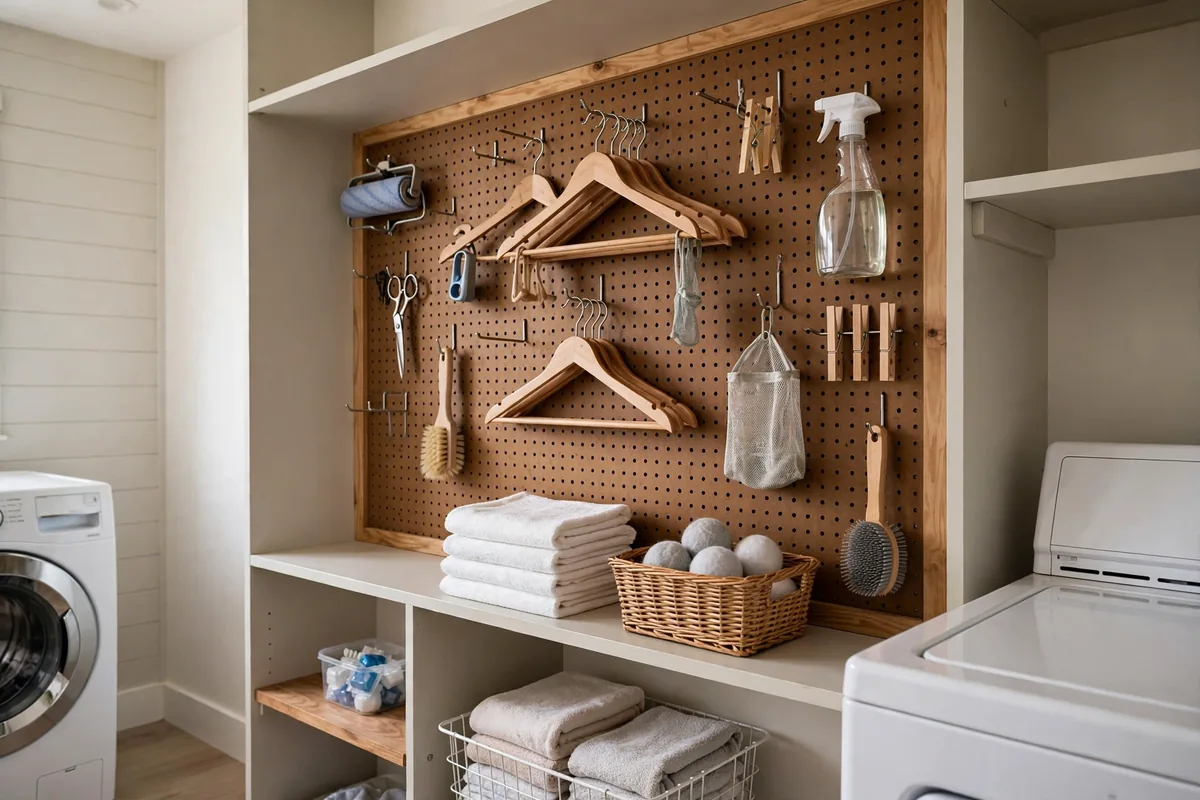
Image credit: @mapleestateconstruction.com
6. Hide Dirty Clothes in a Slide-Out Hamper Cabinet
A pull-out hamper is a smart way to prevent dirty laundry from collecting on the floor. Instead of leaving a large basket in the hallway or bathroom, a slide-out hamper system keeps clothing contained inside a cabinet. This creates a cleaner appearance while still making it easy to sort and transport laundry.
Choose a pull-out hamper designed for an appropriately sized cabinet and install it using hardware rated for the loaded basket. Position it beside the washer rather than in a location that interferes with the appliance doors. A removable, washable liner makes the system easier to clean and helps manage lint and everyday dirt. For additional organization, use two baskets to separate clothing according to your household routine. Make sure damp items aren’t left in a closed hamper for extended periods, and clean the basket regularly to reduce odors and moisture buildup.
Best for: Family laundry closets, small bathrooms, and spaces where exposed hampers create clutter.
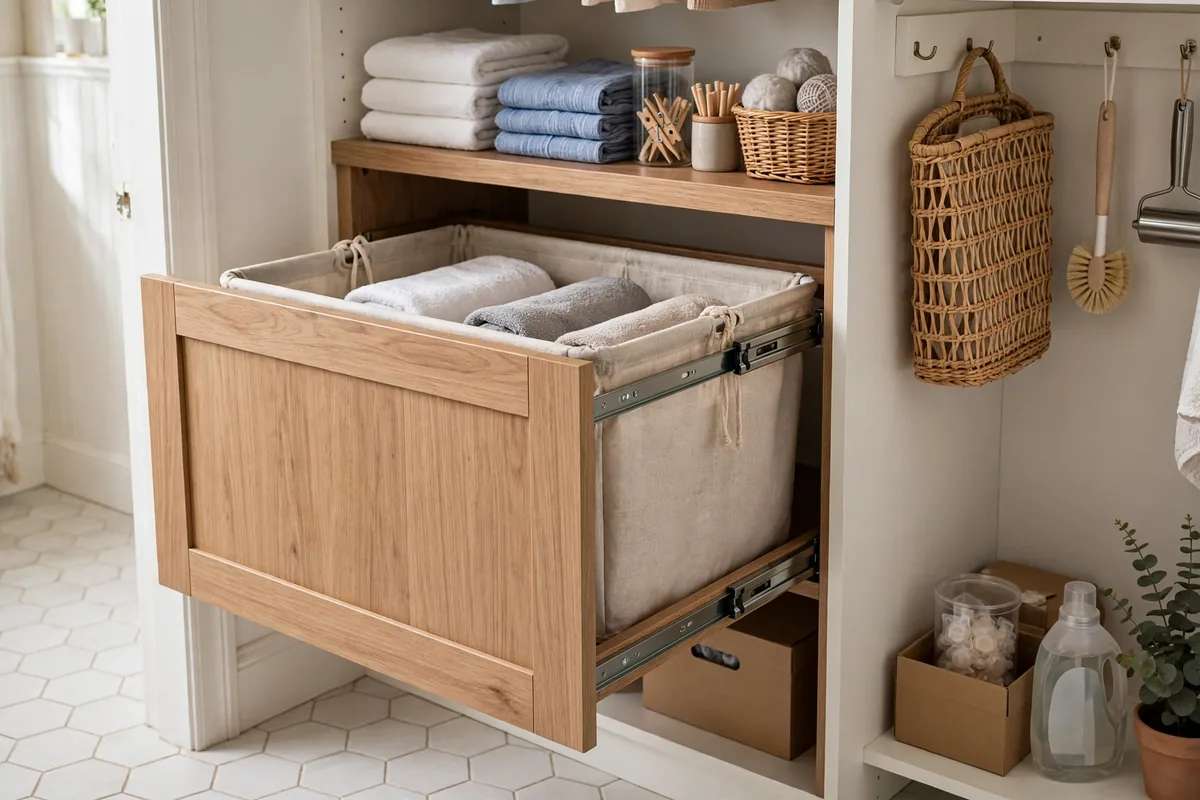
Image credit: @mapleestateconstruction.com
Amazon Find: Pull-Out Cabinet Laundry Hampers
Cabinet hamper systems can keep dirty clothing concealed and accessible when properly sized for the cabinet.
7. Refresh the Closet With Patterned Wallpaper
A small laundry closet can be a wonderful place to experiment with patterned wallpaper. Because the space is compact, even a little decorative pattern can create a striking effect. Delicate botanical prints, gingham, subtle stripes, and vintage-inspired floral designs can turn a plain laundry nook into a cheerful feature.
Choose wallpaper approved for the wall surface and the laundry closet’s moisture and temperature conditions. A back wall behind suitable open shelving can create a pretty focal point without covering the entire space. Pair soft floral wallpaper with cream shelves and woven baskets for a cottage look, or choose a subtle geometric pattern with white cabinetry for a contemporary appearance. If you’re renting, review your lease and test removable wallpaper first because some products can damage painted surfaces during removal. Never use wallpaper to cover ventilation openings, electrical components, or areas where appliance manufacturers require heat clearance.
Styling tip: Repeat one color from the wallpaper in a basket, wall hook, or cabinet accessory to make the small space feel coordinated.
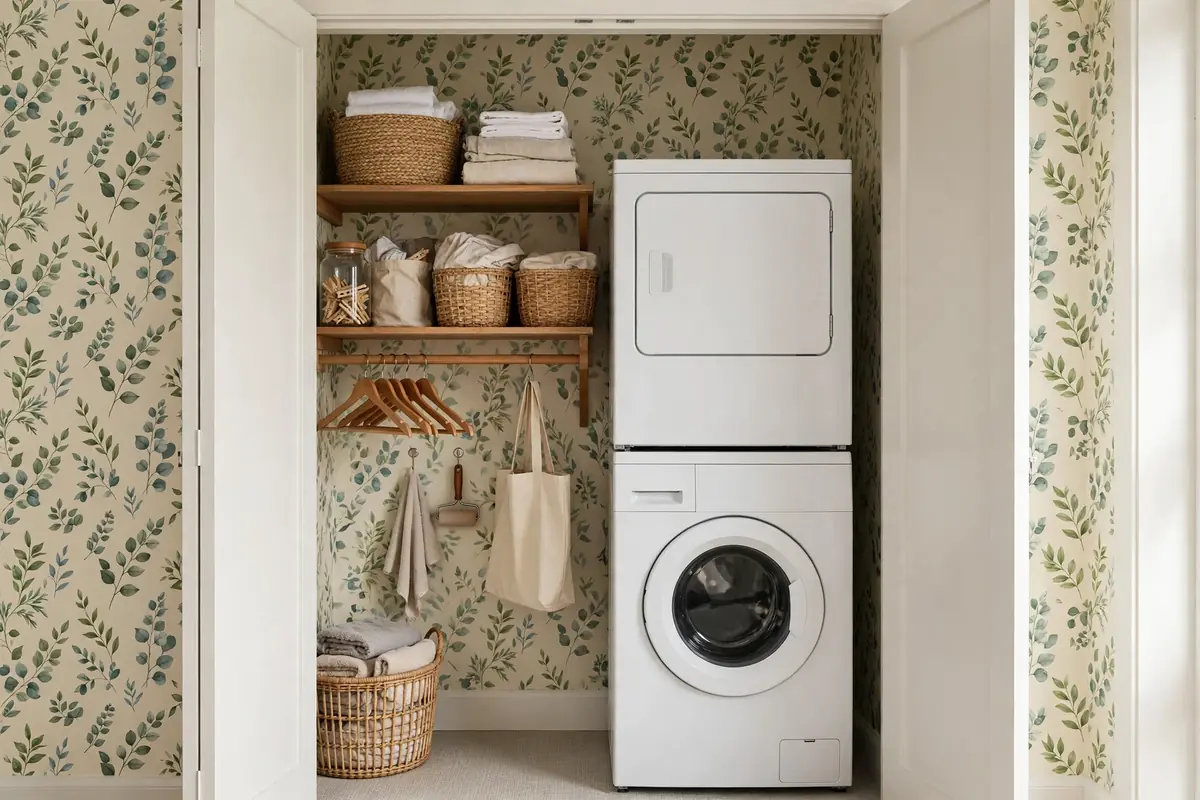
Image credit: @mapleestateconstruction.com
Amazon Find: Laundry Room Peel-and-Stick Wallpaper
Explore subtle botanical and geometric wallpaper designs suitable for approved laundry closet wall surfaces.

8. Add a Folding Counter Above Front-Loading Machines
A dedicated folding surface is one of the most useful additions to a compact laundry closet. If you have a side-by-side front-loading washer and dryer, a supported countertop can create a place to sort clean clothes, fold towels, and organize laundry without carrying everything into another room.
Choose a durable counter material such as sealed wood, laminate, or another surface suitable for the laundry environment. The countertop should be independently supported or installed using a system explicitly approved for the appliances and the loads involved. Don’t place a heavy slab directly on top of machines unless the manufacturers permit it. Maintain the specified ventilation, vibration, and maintenance clearances, and leave access to hoses, valves, outlets, and dryer connections. A shallow shelf above the counter can hold clean towels or lightweight baskets if it doesn’t interfere with appliance operation.
Best for: Side-by-side front-loading washers and dryers where the closet has enough room for an approved worktop.
Design tip: Warm wood counters look beautiful with white cabinets and black hardware, while a light laminate finish suits minimalist laundry closets.
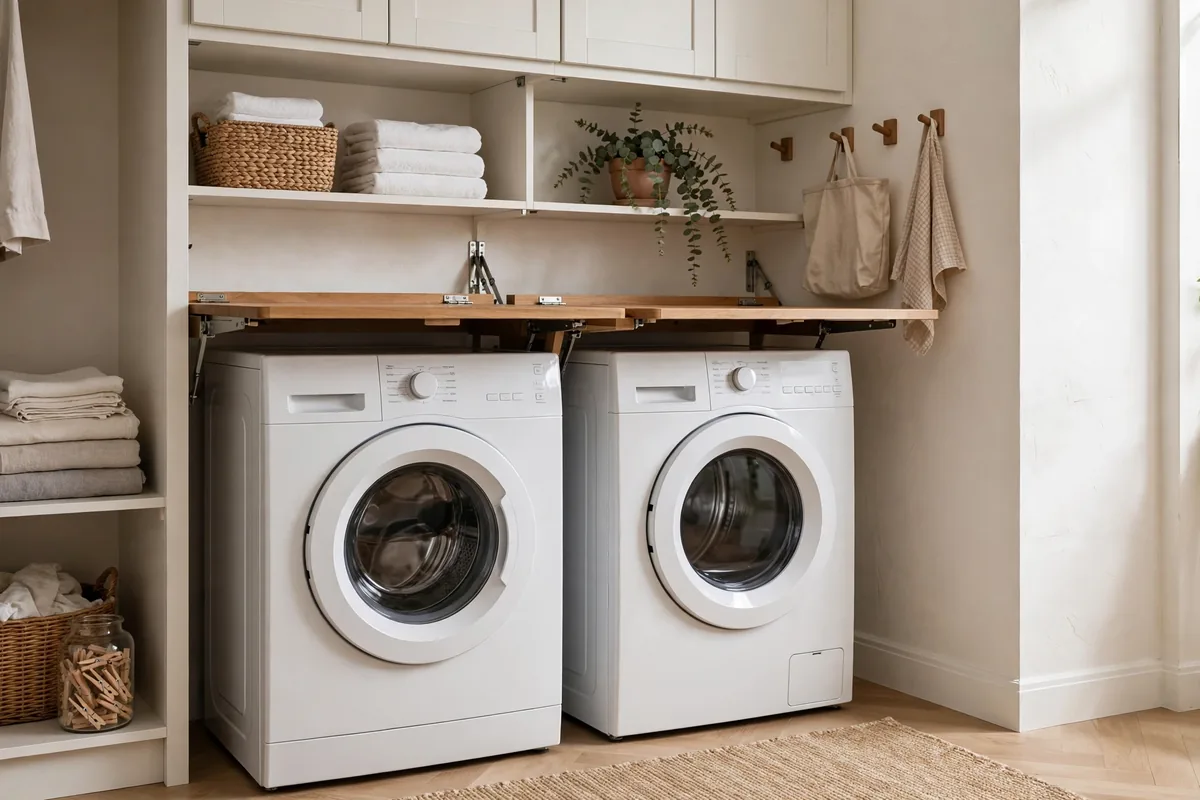
Image credit: @mapleestateconstruction.com
9. Install a Hanging Rod for Freshly Washed Clothes
A hanging rod can make your laundry routine much easier by providing a dedicated spot for freshly washed shirts, dresses, and garments that need to air-dry. Rather than carrying clothes to another bedroom or hanging them over furniture, you can place them on hangers directly after washing or drying.
Install a suitable clothes rod between supported closet walls or inside a compatible cabinet system. Choose a location that allows garments to hang freely without touching hot equipment or obstructing the machine doors. A short rod beneath a shelf works well in some closets, while a side-mounted rod may be more convenient in a stacked laundry layout. Check the load rating, especially if you intend to hang several damp garments. Make sure there is adequate airflow for drying and avoid creating persistent moisture inside an enclosed closet. Keep spare hangers organized on the rod when it’s not in use.
Practical tip: Keep a small selection of hangers in the laundry closet so shirts can be hung immediately after a wash cycle.
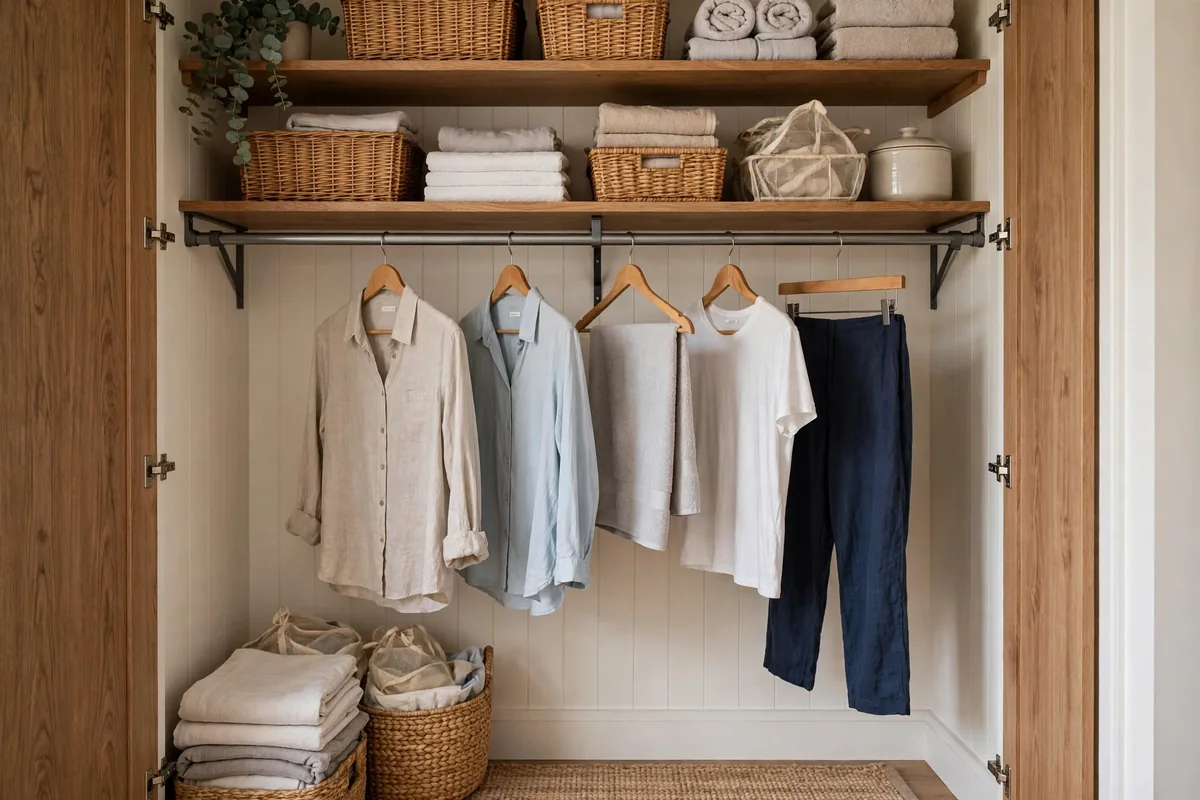
Image credit: @mapleestateconstruction.com
Amazon Find: Laundry Room Hanging Rods
Choose appropriately rated hanging rods and brackets designed for the wall or cabinet structure.

Eight More Smart Laundry Closet Organization Ideas
10. Use Slim Pull-Out Drawers for Laundry Essentials
Narrow spaces beside laundry machines often become wasted gaps that collect dust or random supplies. A slim pull-out storage unit can transform a suitable unused space into accessible organization. Instead of reaching behind tall bottles or moving everything from a shelf, you can slide the unit out and see its contents more easily.
Measure the available width, depth, and height carefully, allowing for the appliances’ required clearances and service access. Choose a narrow pull-out system with sturdy tracks or a stable freestanding design suitable for the space. Use divided compartments for laundry brushes, clean cloths, lint rollers, and other accessories. Store chemicals only in their original containers and in secure locations appropriate for the household. A white cabinet front creates a clean appearance, while natural wood can add warmth. Make sure the organizer can open fully without blocking a door or walkway.
Small-space tip: Don’t fill an appliance clearance gap simply because it looks unused. Verify the installation requirements before adding any storage unit.
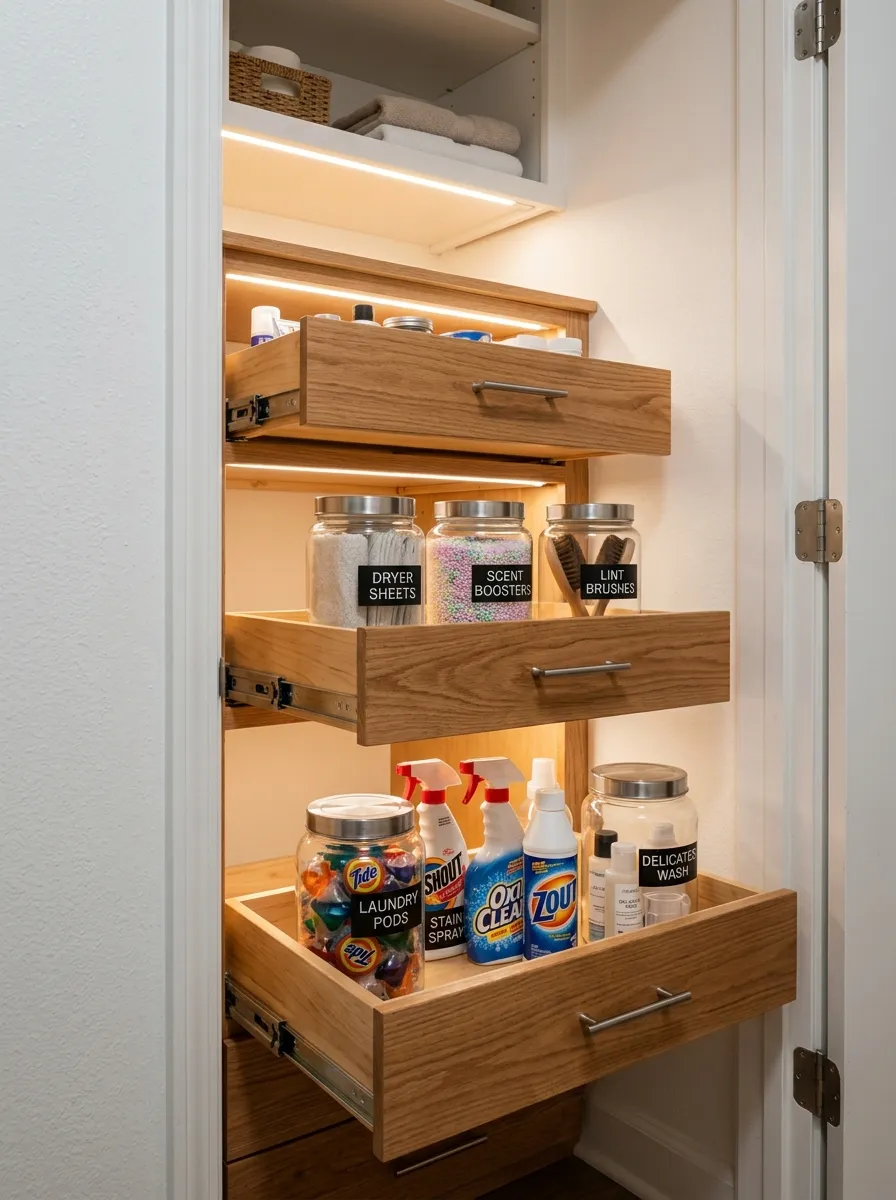
Image credit: @homedecorvibe.com
Amazon Find: Slim Pull-Out Laundry Storage Organizers
Narrow pull-out organizers can make appropriate unused storage areas more accessible.
11. Take Storage All the Way Up to the Ceiling
When your laundry closet has very little floor area, vertical storage becomes especially valuable. Tall shelving can organize towels, extra hangers, baskets, and seasonal laundry accessories without expanding the footprint. The result feels more efficient and can look surprisingly custom when the shelves and containers are coordinated.
Plan the shelving in three zones. Keep frequently used items at comfortable reaching heights, place lightweight backup accessories higher up, and use lower compartments for suitable baskets or hamper storage. Choose shelving rated for the anticipated weight and secure it to appropriate structural supports. Leave enough room for ventilation and maintenance access around the appliances. Use matching baskets to create visual order, but avoid storing heavy containers above shoulder height. A stable step stool may be appropriate for occasional access to upper storage, provided there is enough floor space to use it safely.
Organization tip: Store products you use every week where they’re easiest to reach. Reserve the highest shelves for light, infrequently needed belongings.
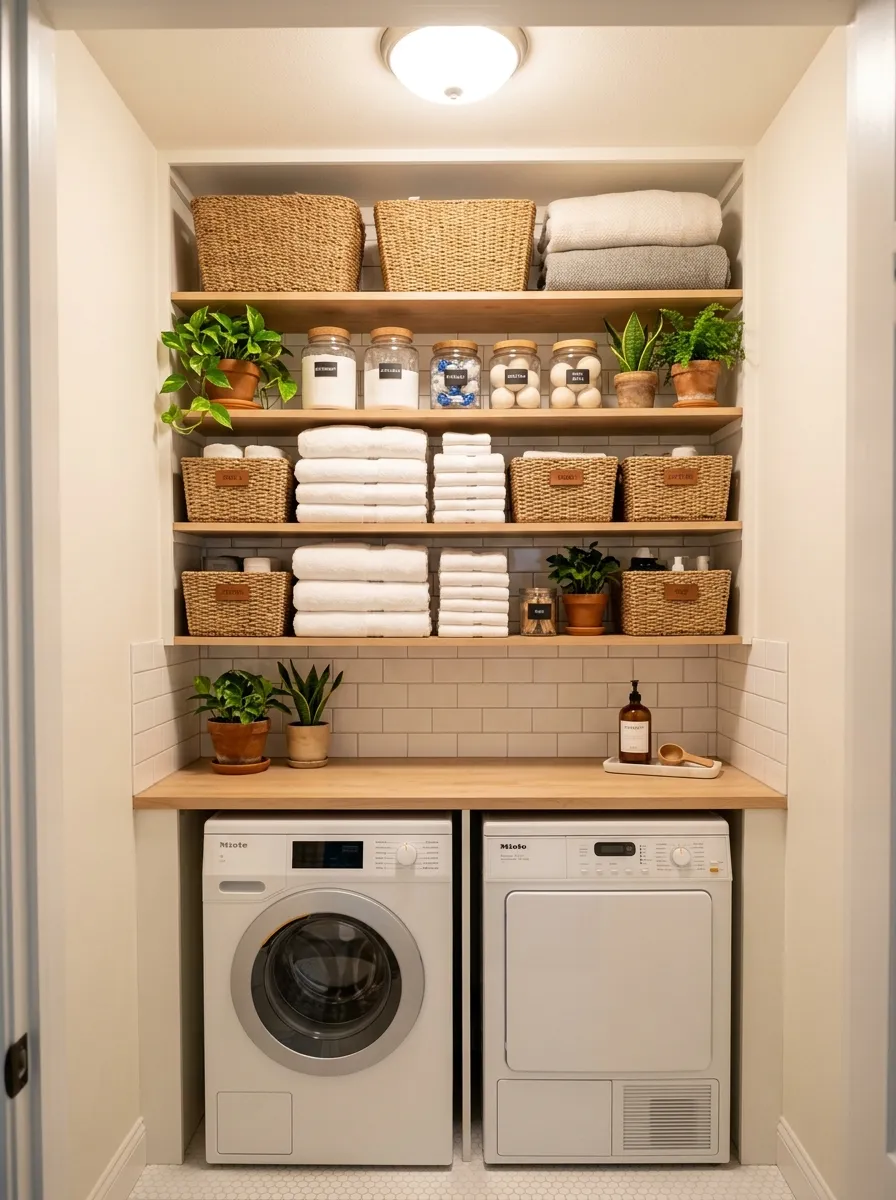
Image credit: @homedecorvibe.com
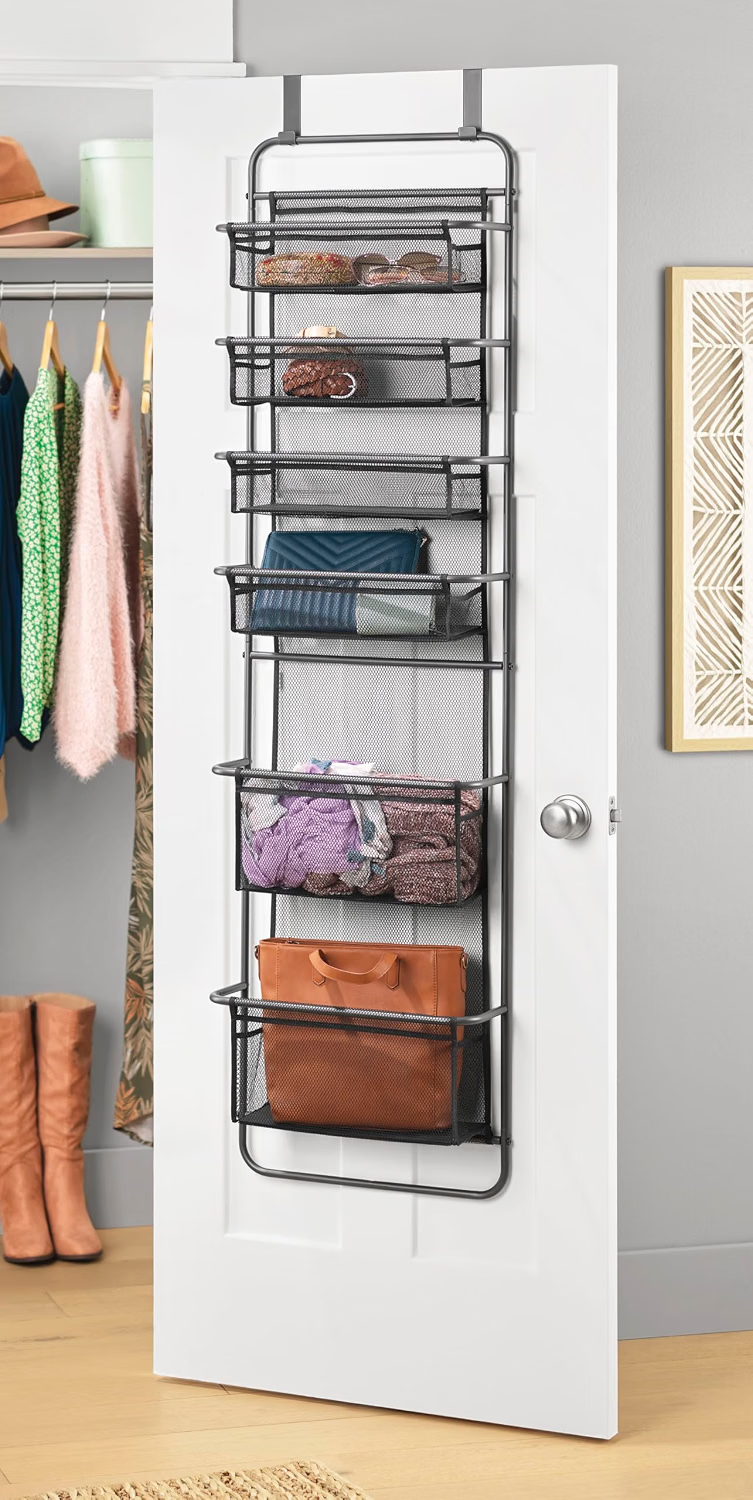
12. Maximize the Inside of Your Laundry Closet Door
The inside of a laundry closet door can provide useful additional storage when there isn’t enough wall space for another shelf. A slim door organizer can keep small accessories accessible while leaving the main shelves available for larger baskets and supplies. This is particularly useful in compact apartments where every inch counts.
Choose an organizer specifically compatible with the door’s thickness, design, hinges, and weight limits. Use shallow pockets for clean cloths, lint brushes, spare hangers, or other lightweight items. Avoid loading a bifold or hollow-core door with heavy detergent bottles, as added weight can damage the door or interfere with its operation. Check that the organizer doesn’t hit the appliances or prevent the door from opening and closing fully. For a neat appearance, choose a finish that coordinates with the existing door hardware or storage baskets.
Budget tip: A lightweight over-the-door organizer may provide enough storage to avoid buying an additional cabinet.
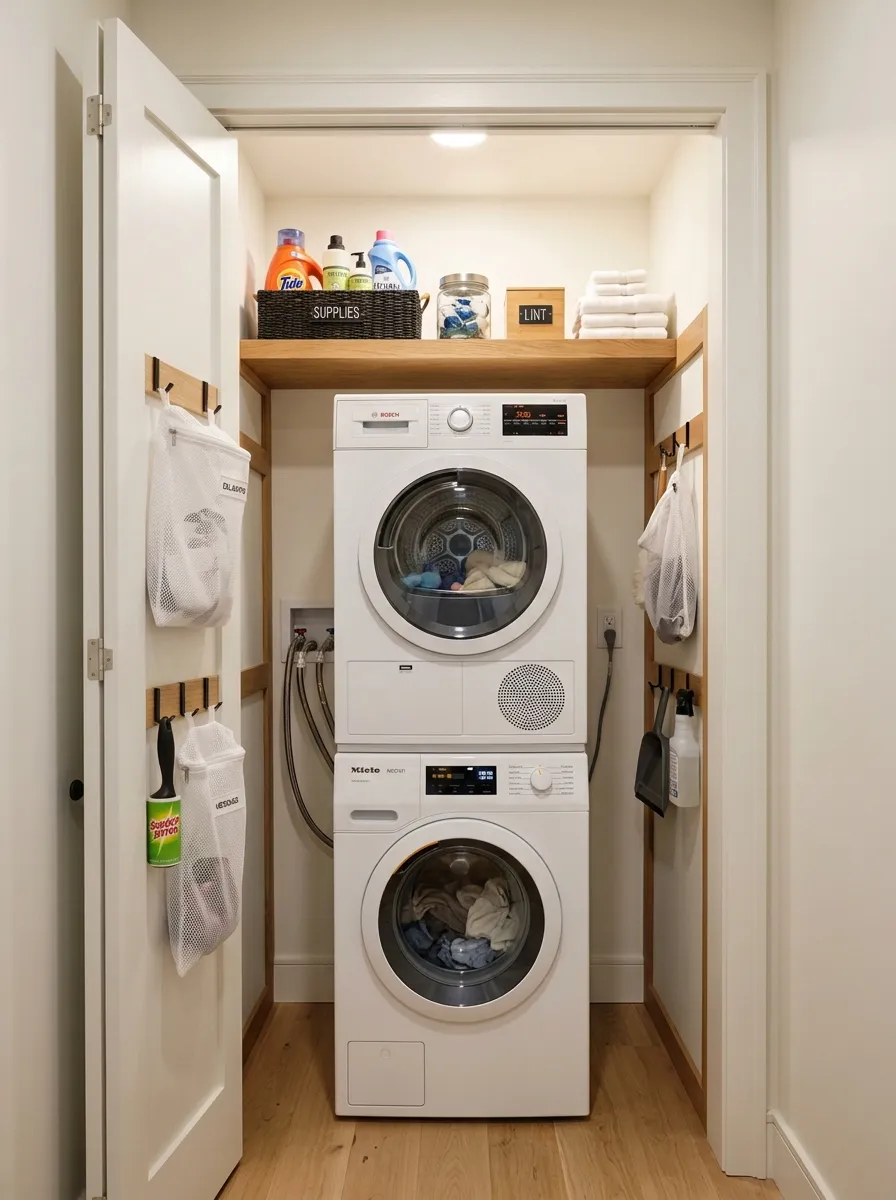
Image credit: @homedecorvibe.com
Amazon Find: Over-the-Door Laundry Organizers
Door organizers can provide extra pockets for lightweight laundry accessories without occupying floor space.
13. Conceal the Laundry Area With a Sliding Barn Door
A sliding barn-style door can help a laundry closet blend into the surrounding hallway or utility area. Unlike a conventional hinged door, it moves horizontally along a track rather than swinging outward. This can be especially attractive in narrow spaces where a swinging door would interfere with nearby furniture or circulation.
Choose a door finish that complements the nearby walls and furniture. Natural wood can introduce farmhouse charm, while a painted panel with simple hardware suits modern interiors. Plan the track length and available side-wall space carefully so the door can open fully. Use a properly supported track, suitable door guides, and hardware rated for the door weight. A sliding door doesn’t automatically provide adequate ventilation or meet the requirements of an enclosed laundry installation. Confirm the appliances’ ventilation and clearance specifications before choosing the door, and keep necessary access available while the machines operate and during servicing.
Styling tip: A door painted to match the surrounding wall can create a calmer appearance, while a natural wood door becomes a decorative feature.

Image credit: @homedecorvibe.com
14. Transform an Under-Stair Nook Into a Laundry Closet
The space beneath a staircase is often used for general storage, but in some homes it can be transformed into a compact laundry area. The sloped ceiling introduces a design challenge, yet a carefully planned layout can create useful storage and appliance space where there was previously an awkward empty nook.
Begin by checking whether the location can safely accommodate the appliances, water supply, drainage, electrical connections, ventilation, and required service access. An under-stair laundry conversion may be restricted by building and fire codes, staircase construction, or the need to protect structural elements, so have the feasibility assessed by qualified professionals before proceeding. If the conversion is permitted, position appliances where the full required height and access are available, leaving the lower portions of the slope for appropriate shelves or baskets. Add suitable lighting to illuminate the working area and use moisture-resistant finishes where needed.
Best for: Homes with a suitable under-stair space where a professional confirms that a laundry installation is permitted and practical.
Budget alternative: If appliance installation isn’t feasible, use the under-stair area for laundry baskets, towels, and nonhazardous accessories instead.
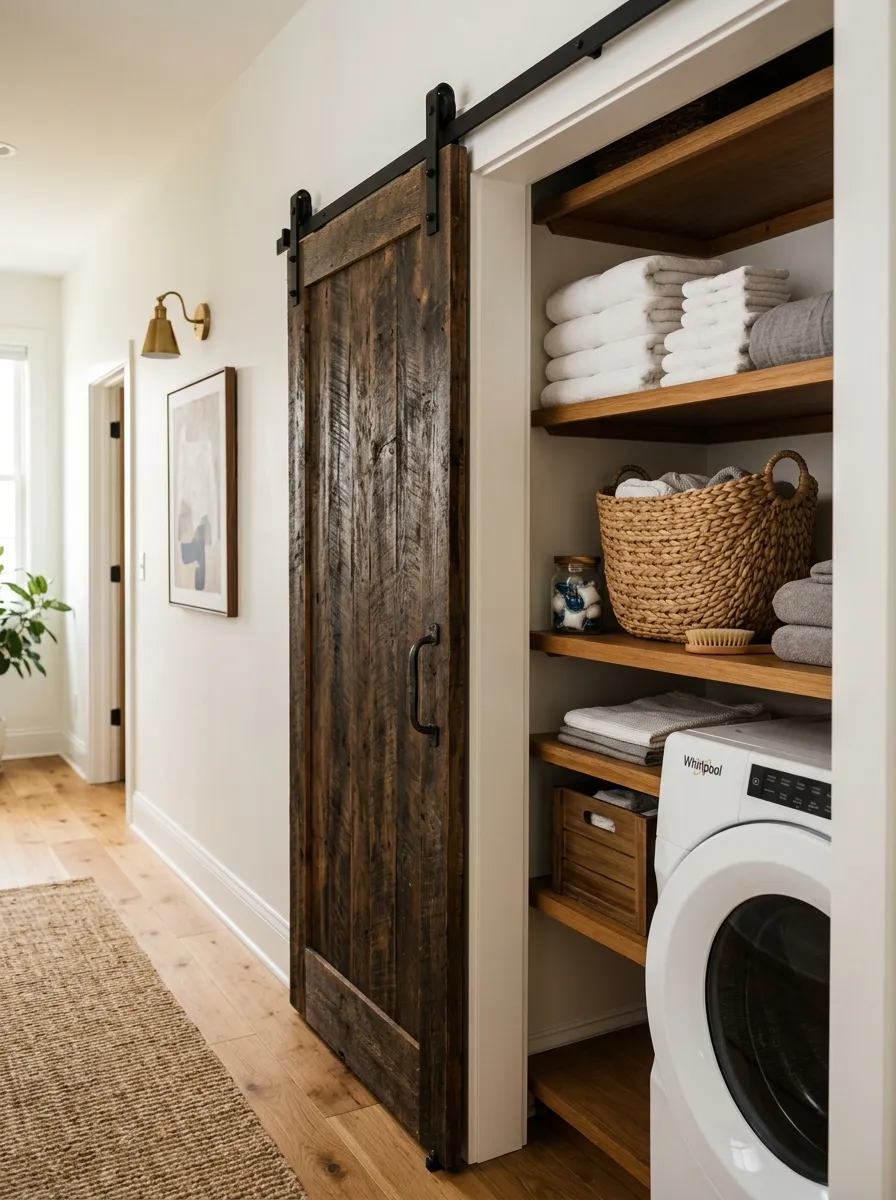
Image credit: @homedecorvibe.com
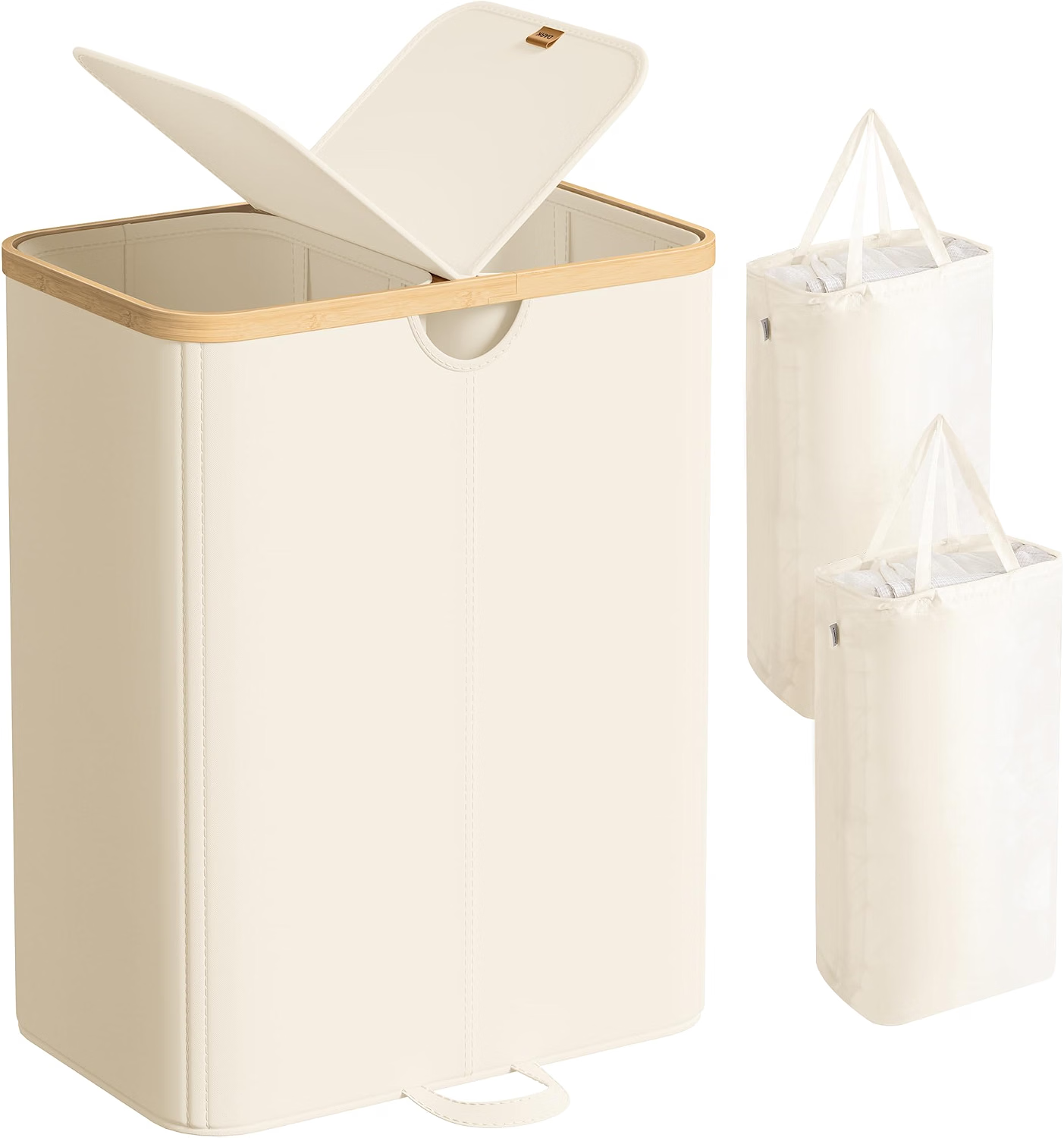
15. Add a Rolling Laundry Sorter for Everyday Organization
A rolling laundry sorter is a practical way to keep clothing organized before washing. Instead of collecting everything in one overflowing hamper, separate loads into different compartments. This can reduce sorting time and prevent dirty clothes from spreading across the hallway or laundry closet floor.
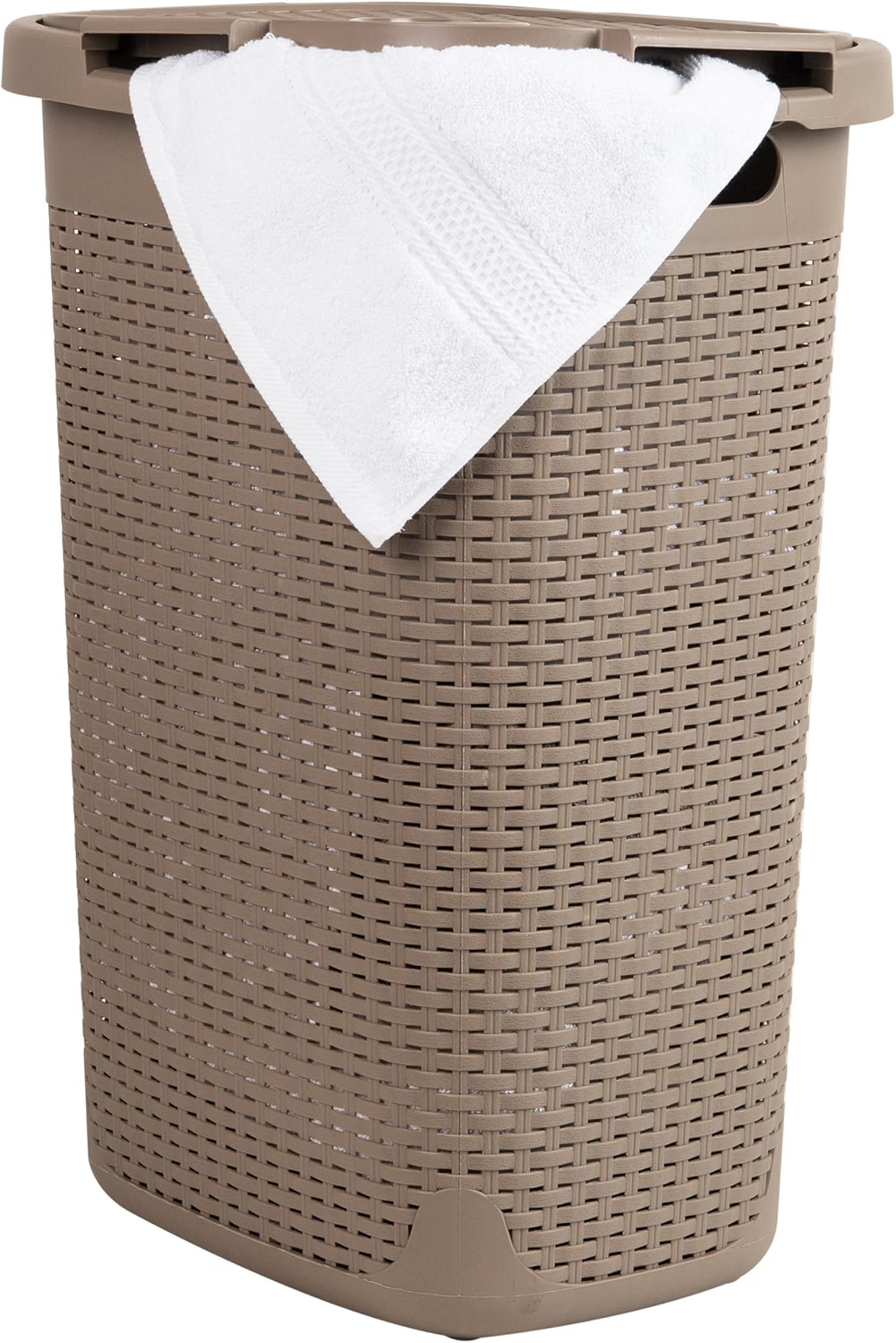
Choose a slim two- or three-compartment hamper that fits the available width and can be moved easily. Fabric bags in beige, gray, or oatmeal create a softer appearance than bulky plastic containers. Assign a category to each compartment according to your laundry routine, such as lights, darks, and delicates. Position the sorter in an accessible area where it doesn’t block appliance doors or circulation. If it has removable bags, choose washable liners for easier maintenance. Keep wet clothing out of enclosed hampers until it can be washed or dried to reduce odors and mildew.
Family-friendly tip: Small labels can help everyone use the correct compartment. Keep the categories simple enough that the system is easy to maintain.
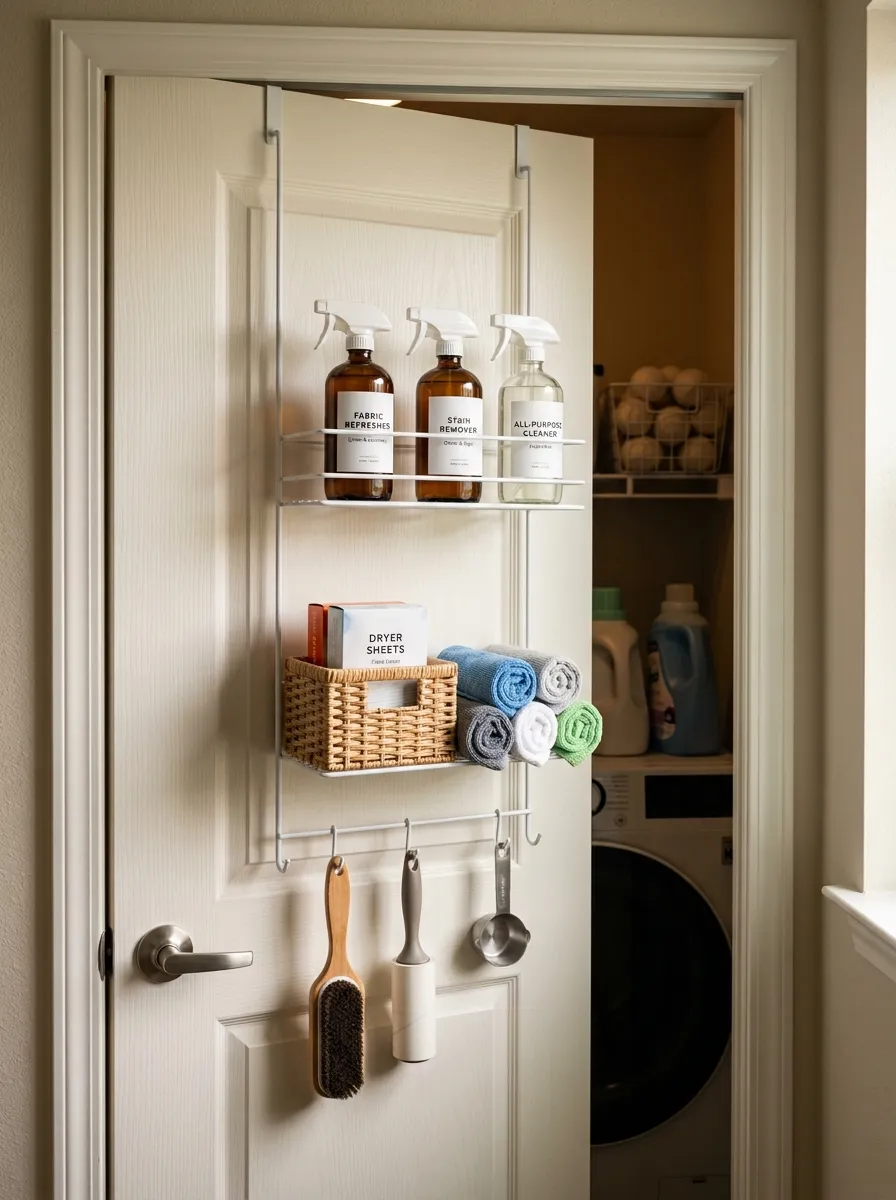
Image credit: @homedecorvibe.com
Amazon Find: Rolling Laundry Sorter Hampers
A narrow rolling sorter can help separate laundry loads without requiring several freestanding baskets.
16. Brighten the Closet With Warm LED Lighting
A small laundry closet often has no windows, making good lighting especially important. A simple lighting upgrade can make the space feel brighter, more comfortable, and easier to use. Warm white lights can create a cozy appearance, while clear task lighting helps you identify stains, sort clothing, and find supplies on shelves.
Start by checking the existing light fixture and deciding where additional illumination would be useful. An appropriate LED fixture near the main working area may be enough, while suitable under-shelf lighting can help illuminate storage compartments. Choose products approved for the environmental conditions and follow installation instructions, including required electrical clearances. Avoid placing light strips on appliance housings, near dryer exhaust components, or against heat-sensitive materials unless specifically approved. For accurate color sorting and stain inspection, prioritize adequate brightness and good color rendering rather than relying only on a decorative warm glow.
Styling tip: Warm-white lighting can complement natural wood shelves and cream cabinets, while a separate bright task light makes the closet more practical.
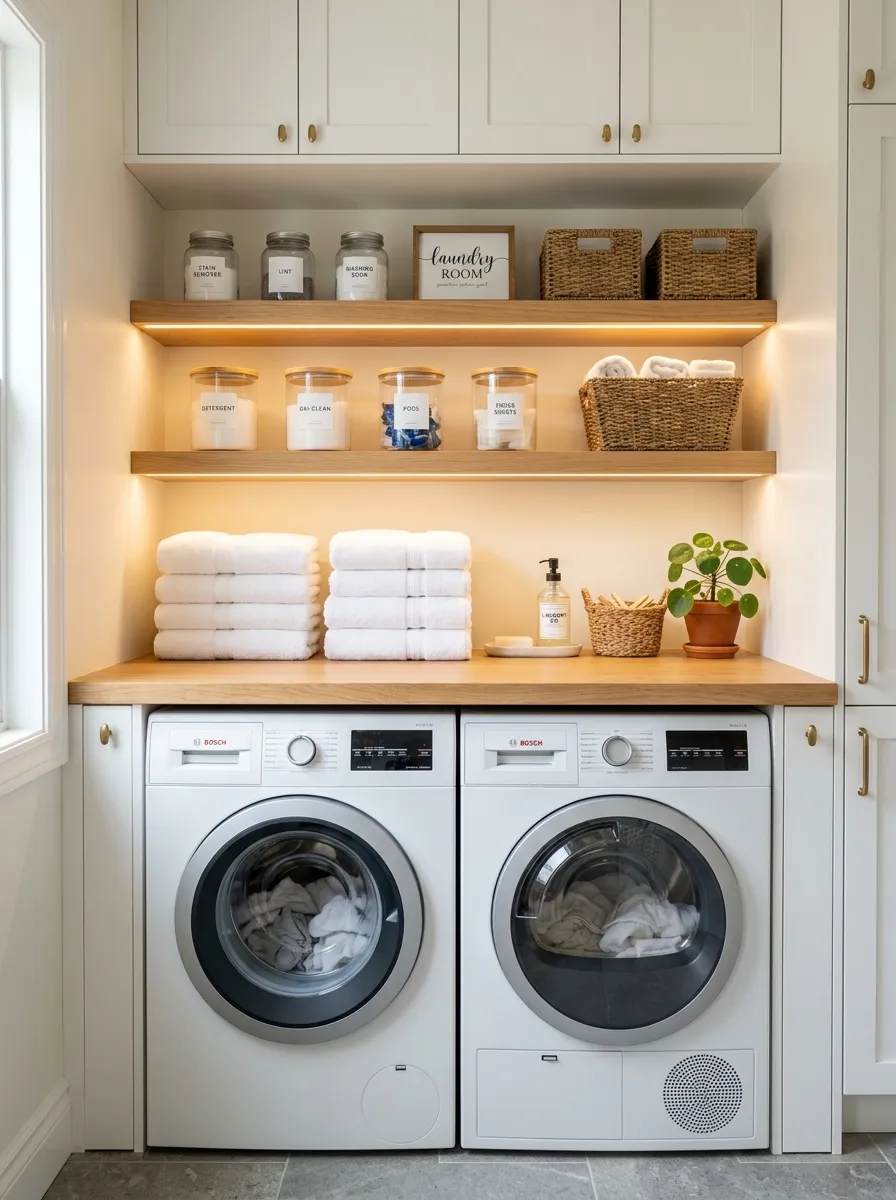
Image credit: @homedecorvibe.com
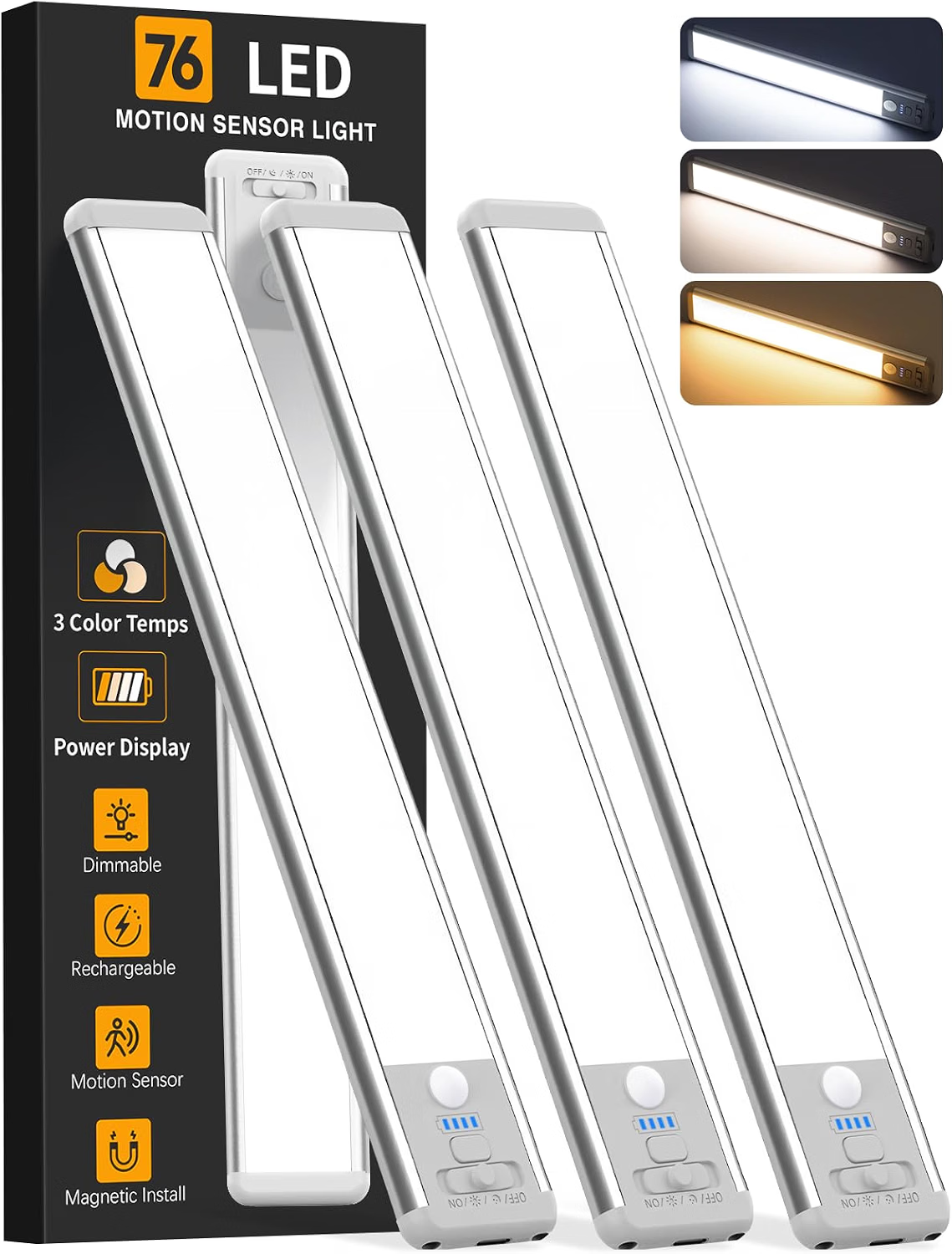
Amazon Find: LED Closet Lighting
Explore suitable under-shelf and closet lights with appropriate mounting, electrical, and environmental specifications.
17. Style a Cozy Boho Laundry Closet With Natural Materials
A laundry closet doesn’t need to look purely utilitarian. Natural wood, woven baskets, warm neutral colors, and simple decorative accessories can make even a small space feel inviting. A restrained boho-inspired design brings character through texture rather than complicated finishes or expensive furniture.
Begin with cream or warm beige walls and choose appropriately supported wood-look shelves. Add two or three woven-look baskets for towels, dryer balls, and clean laundry accessories. If you have a safe, dry display area, include a small framed print or faux greenery to soften the design. Keep the lower shelves functional and use sealed, easy-to-clean materials near areas that may become damp. Natural fibers should be kept away from heat-producing parts, exhaust components, and locations exposed to persistent moisture. Choose one simple palette, such as cream, tan, and warm oak, so the small closet feels coordinated rather than cluttered.
Design tip: The simplest combination often looks best: warm wooden shelves, two coordinated baskets, white appliances, and one small decorative accent.
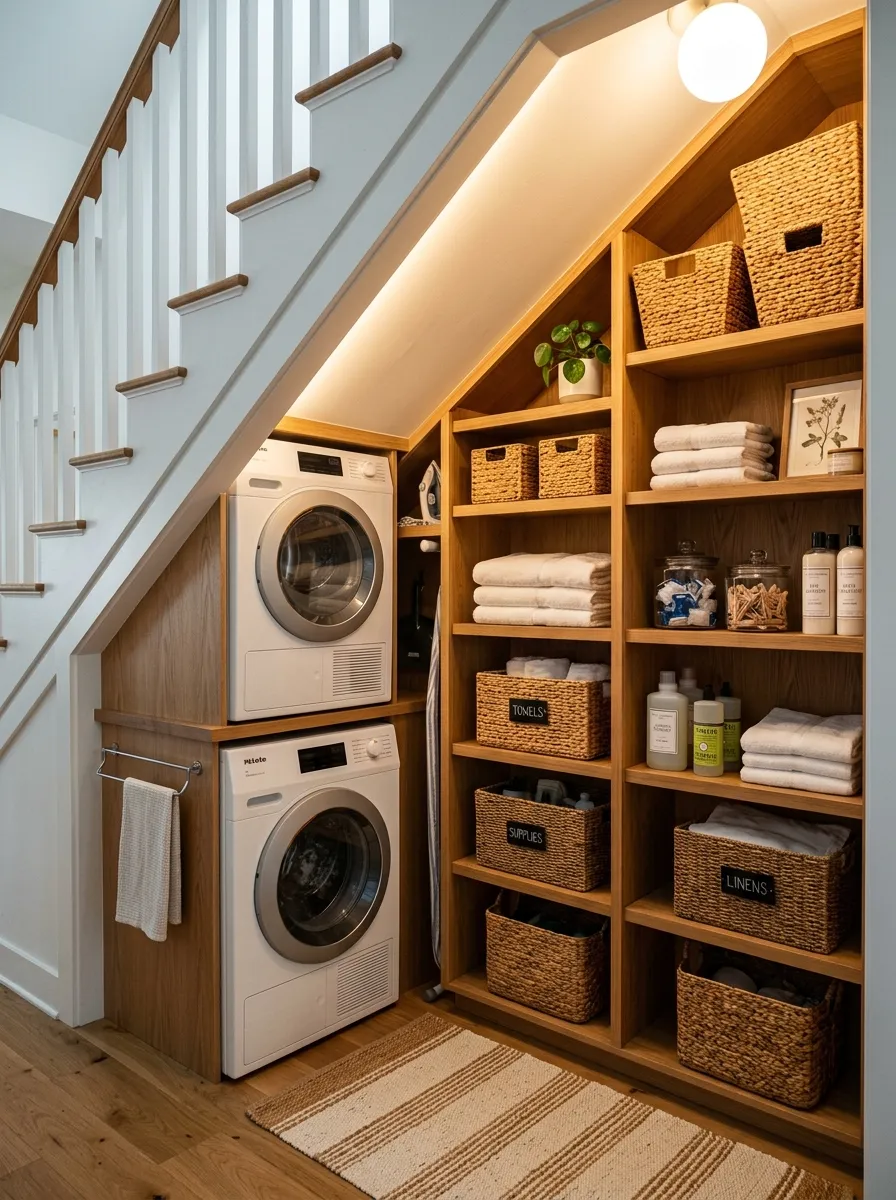
Image credit: @homedecorvibe.com
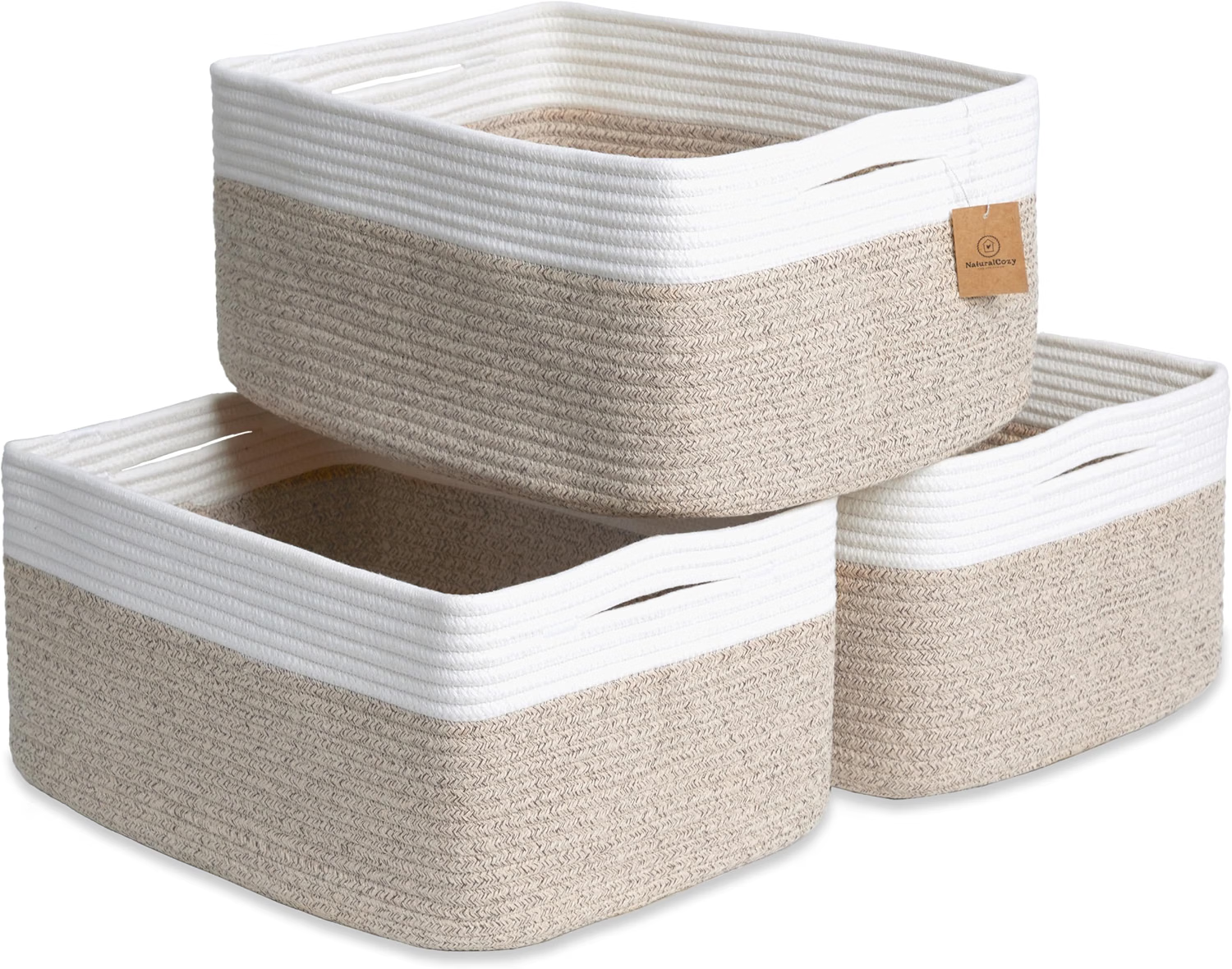
Amazon Find: Woven Laundry Storage Baskets
Matching woven-look baskets can bring warmth and texture to organized laundry shelves.
Best Laundry Closet Colors for a Stylish Small Space
A coordinated color palette can make a compact laundry closet feel calmer and more intentionally designed. Light shades are popular, but darker colors can also work when paired with suitable lighting and practical storage.
- Warm White and Natural Oak: A clean Scandinavian-inspired combination with wood shelving and simple baskets.
- Sage Green and Cream: A soft, welcoming palette for cottage and farmhouse laundry closets.
- Dusty Blue and Warm White: A calming choice for traditional or coastal-inspired utility spaces.
- Light Greige and Walnut: A sophisticated neutral combination for modern homes.
- Ivory, Sand, and Rattan: A relaxed boho-inspired look with natural textures.
- Charcoal and Warm Wood: A dramatic modern palette that pairs beautifully with simple hardware.
- Muted Olive and Brass: A rich earthy combination for elegant laundry cabinetry.
- Soft Beige and White: A timeless option that works well in narrow hallway laundry closets.
How to Make a Tiny Laundry Closet Feel Bigger
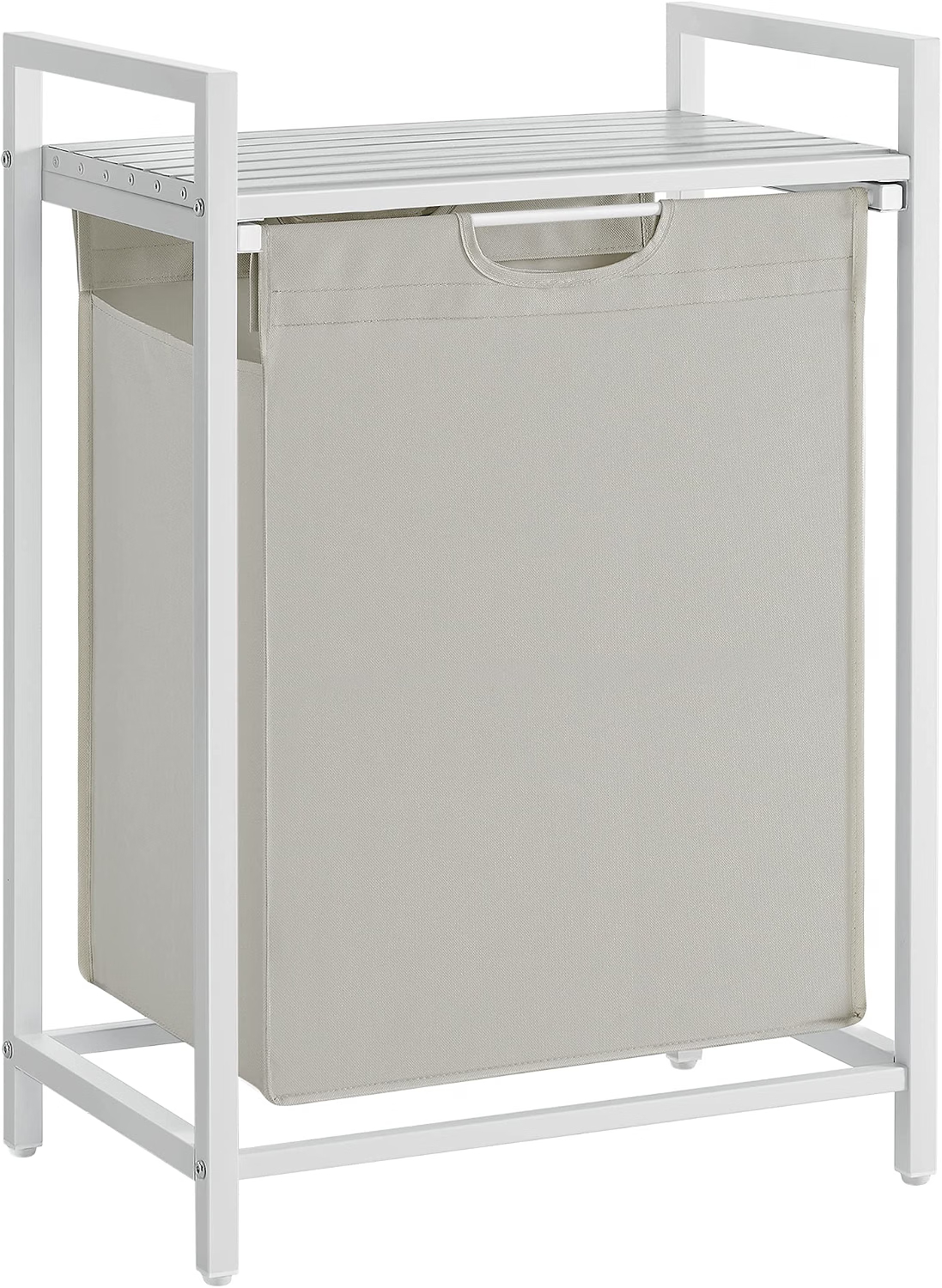
You can’t increase the physical size of a closet without changing the building, but a better layout and more efficient storage can make the available space easier to use.
- Use vertical storage: Install suitable shelves on available wall sections rather than adding several floor cabinets.
- Consider approved stacked appliances: A compatible washer and dryer pair may free up part of the closet floor.
- Organize supplies by frequency: Keep frequently used items at comfortable reaching heights.
- Choose slim hampers: Use narrow rolling baskets that fit your available circulation space.
- Add a folding counter where feasible: A supported worktop can reduce trips to another room.
- Use pull-out accessories: Sliding organizers and drying racks can remain concealed when not needed.
- Coordinate baskets and shelving: Consistent finishes make the storage feel less visually busy.
- Improve lighting: Bright, well-positioned task lighting can make the closet easier to use.
- Keep appliance surfaces clear: Avoid piling baskets and products on appliances where vibration could cause them to fall.
- Preserve access and ventilation: Never block the necessary clearances or service points to fit additional storage.
Laundry Closet Storage and Organization Guide
| Laundry Item | Recommended Storage | Important Tip |
|---|---|---|
| Detergent and Laundry Pods | Secure Storage in Original Packaging | Keep Away From Children and Pets |
| Clean Towels | Open Shelves or Baskets | Keep Dry and Away From Heat Sources |
| Clothespins and Dryer Balls | Labeled Baskets or Containers | Group Similar Accessories |
| Dirty Laundry | Removable Hamper or Rolling Sorter | Avoid Leaving Damp Clothing Enclosed |
| Spare Hangers | Short Hanging Rail or Hook | Keep Clear of Appliance Doors |
| Cleaning Cloths | Drawer or Small Basket | Separate Clean and Used Cloths |
| Delicate Clothing | Rated Drying Rack or Hanging Rod | Provide Adequate Airflow |
| Backup Accessories | Lightweight Upper Storage Bins | Avoid Heavy Items Above Shoulder Height |
Budget-Friendly Laundry Closet Makeover Plan
A laundry closet makeover doesn’t have to involve new appliances or custom cabinets. Start by identifying the storage problems that affect your everyday routine, then make a few affordable improvements.
- Empty and clean the closet: Remove unnecessary items so you can see the available space.
- Check appliance clearances: Confirm the machine installation and ventilation requirements before placing new storage.
- Group laundry essentials: Separate supplies, cloths, accessories, and clean laundry into useful categories.
- Choose matching bins: Organize safe accessories and keep chemical products in secure original packaging.
- Add storage only where appropriate: Use approved shelving, drawers, or racks that don’t interfere with appliances.
- Introduce one practical feature: A hamper, folding surface, or drying rack may provide the greatest improvement.
- Improve the lighting: Make sure the closet has enough illumination for everyday tasks.
- Refresh decorative details: Choose a coordinated shelf finish, basket style, or suitable wallpaper.
- Keep the design simple: Limit unnecessary decorative objects in the small workspace.
- Review the layout after use: Move accessories if the original arrangement makes laundry tasks awkward.
Important Laundry Closet Safety Tips
A laundry closet combines electricity, water, heat-producing appliances, and storage in a confined space. Before adding cabinets, shelves, doors, or folding counters, confirm that the changes won’t interfere with safe appliance operation.
- Follow appliance installation instructions: Maintain required side, rear, top, ventilation, and service clearances.
- Use approved stacking kits: Never stack a dryer on a washer without manufacturer-approved equipment and an appropriate installation.
- Protect dryer ventilation: Keep the exhaust path correctly installed, accessible, and free of lint buildup.
- Keep electrical systems safe: Avoid extension cords and overloaded outlets; follow the appliance manufacturer’s electrical requirements.
- Check hoses and water connections: Leave adequate access for maintenance and leak inspections.
- Keep laundry products secure: Store pods, detergents, bleach, and stain removers in their original labeled packaging, out of children’s and pets’ reach.
- Choose suitable storage loads: Don’t overload shelves, hanging rods, door organizers, or freestanding cabinets.
- Maintain proper airflow: Enclosed appliances may require dedicated ventilation or specific door designs depending on the equipment.
- Use moisture-appropriate materials: Shelves, wallpaper, cabinets, and lighting must be suitable for the installation environment.
- Consult qualified professionals: Electrical, plumbing, structural, ventilation, and under-stair conversions may require permits and professional work.
Common Laundry Closet Decorating Mistakes to Avoid
Installing Shelves Too Close to Appliances
Shelving that blocks machine access or required airflow can create practical and safety problems. Plan around the appliances’ specified clearances before choosing storage dimensions.
Ignoring Washer and Dryer Door Clearance
A narrow hamper or cabinet may fit beside the machines but prevent their doors from opening fully. Measure the complete door swing and access space before installing new furniture.
Using Decorative Containers for Hazardous Laundry Products
Transferring detergents or laundry pods into attractive jars can remove essential warnings and create poisoning risks. Keep chemical products in their original labeled containers. Use decorative bins for safe laundry accessories instead.
Overloading the Closet With Decorative Accessories
A compact laundry closet works best when every shelf has a purpose. Too many decorative objects reduce useful storage and can make everyday cleaning more difficult. Choose only one or two accents after the practical organization is complete.
Choosing the Wrong Door Style
Bifold, hinged, sliding, and concealed doors all have different clearance and ventilation implications. Choose a design that allows safe appliance use, adequate access, and compliance with applicable installation requirements.
Installing an Unsupported Folding Counter
A heavy countertop shouldn’t be placed directly on washer and dryer housings without manufacturer approval. Use an independently supported design or another approved system that accommodates vibration, maintenance, and ventilation.
Forgetting About Moisture and Humidity
Enclosed damp clothing, poorly ventilated machines, and unsuitable wall finishes can cause odors and moisture damage. Choose appropriate materials, keep equipment correctly vented, and provide enough airflow for drying garments where that activity is permitted.
Frequently Asked Questions
1. How Do You Organize a Very Small Laundry Closet?
Start by measuring the machines and identifying the required clearances. Use suitable vertical shelves, slim storage units, or door organizers for lightweight accessories. Keep frequently used items within easy reach and add a narrow hamper or sorting basket only where it doesn’t block appliance access.
2. What Can I Put Above My Washer and Dryer?
Properly installed wall shelves or cabinets can provide useful storage above laundry appliances when they don’t interfere with ventilation, top-loading lids, or maintenance access. Store lightweight baskets and clean laundry accessories there, and keep chemical products securely stored in their original packaging.
3. Can You Put a Countertop Over a Washer and Dryer?
A countertop can sometimes be installed above side-by-side front-loading machines when there is sufficient space and the design provides appropriate independent support or is specifically approved for the appliances. Follow the manufacturers’ clearance and ventilation requirements, and maintain access for servicing.
4. How Do You Make a Laundry Closet Look More Expensive?
Choose coordinated shelves, matching baskets, attractive lighting, and a simple color palette. A warm wood folding counter or suitable decorative wallpaper can also make the space feel more custom. Focus on tidy organization and safe, well-finished installation rather than buying numerous decorative accessories.
5. Can a Washer and Dryer Be Hidden Behind Closet Doors?
Yes, some laundry installations can be enclosed behind bifold, hinged, or sliding doors. However, the chosen appliances and enclosure must meet all manufacturer requirements for airflow, ventilation, clearances, electrical connections, and service access. Not every machine can safely operate inside a closed closet.
Final Thoughts
These 17 genius laundry closet ideas show that even a tiny space can become beautiful, functional, and organized with the right planning. From stacked appliances and floating shelves to hidden hampers, pull-out drying racks, slim storage drawers, and cozy lighting, there are plenty of ways to make laundry day feel easier without expanding your home.
The most successful makeovers focus on the daily workflow first. Keep laundry supplies organized, provide useful sorting and folding areas, and use vertical storage without interfering with appliance safety. Once the practical layout works, bring in personality through soft colors, natural materials, decorative wallpaper, or coordinated baskets.
Whether you’re decorating a narrow hallway closet, a hidden apartment laundry nook, or a compact family utility space, a few carefully chosen upgrades can make the space feel more polished and much easier to use.
Design Inspiration and References
This original decorating guide draws inspiration from the following laundry closet resources. Ideas 1–9 adapt nine concepts from Maple Estate Construction, while ideas 10–17 explore eight additional storage and design solutions from Home Decor Vibe. Recommendations about appliance safety and chemical storage have been adjusted to prioritize safe installation and handling.
