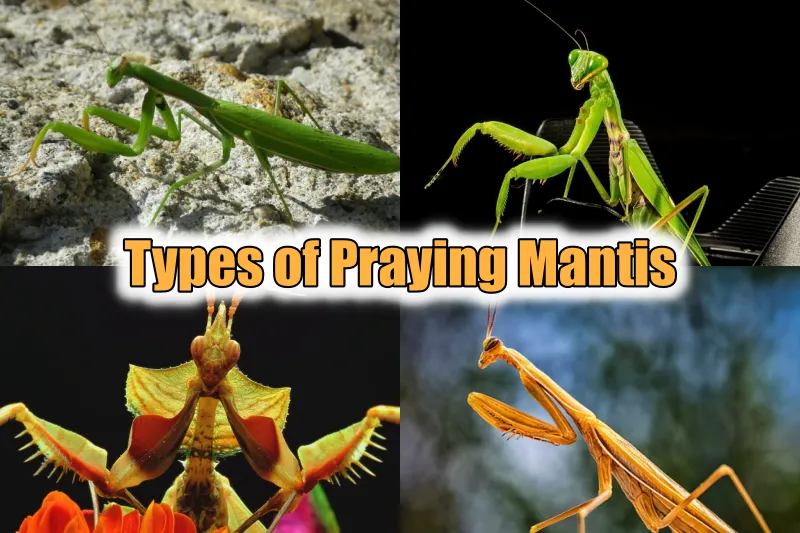
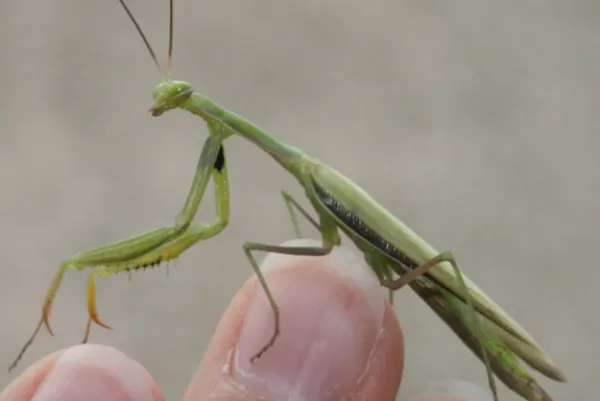
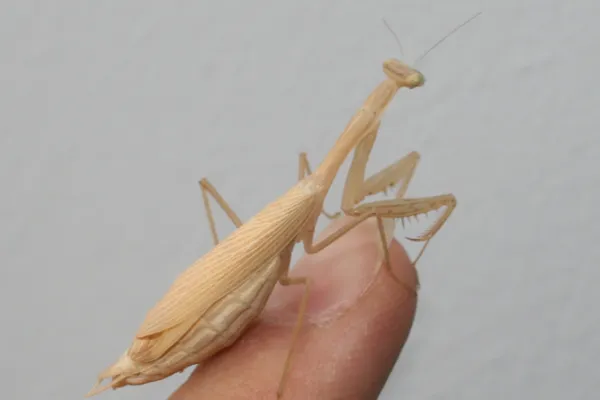
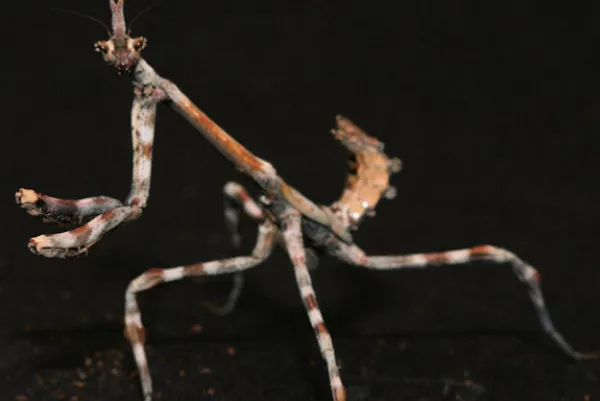
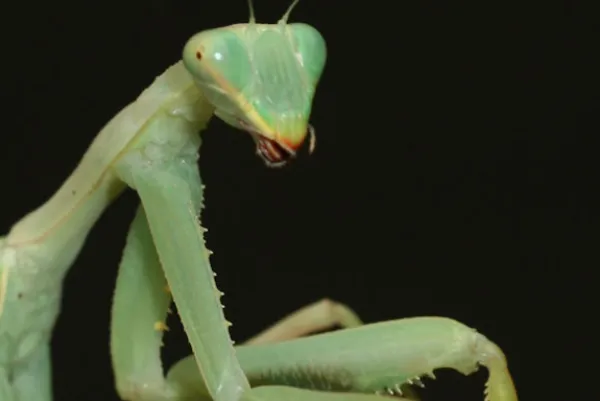
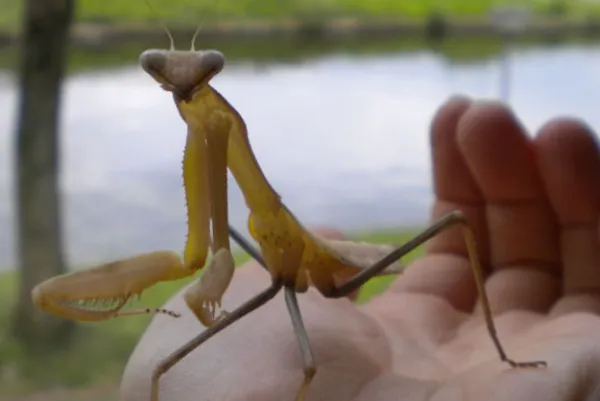
Are you also someone who thought there was only one kind of praying mantis?
Because I certainly did. It was only recently that I discovered there are around 2,300 species of praying mantis found on Earth. With Keeping Insects as a reference, we’ve compiled a list of 19 species of praying mantis found all around the world. Each of these species varies in size, build, color, and living conditions.
So, keeping everything in mind, let’s dive straight into learning more about the 19 types of praying mantis.
The male Carolina mantis is known to be one of the sly insects with its slim, long wings, measuring a modest 4.5 cm that camouflages with the branches.
The female Carolina mantis is usually big, with a bulky silhouette and short wings.
If you are planning to have them as your pet, make sure to keep the temperature from 9 to 22 degrees Celsius, and don’t forget to mist the enclosure twice a week.
The female Carolinas start by laying egg sacs (ootheca) with each sac protecting 20 to 40 eggs.
Up to 11 cm (4.3 in) for females and the males are around 9 cm
Identification
Leaf-like appendages, resembling a slender violin silhouette
Geographic Location
Found in Southern India, Java, Myanmar, Sri Lanka, and Thailand
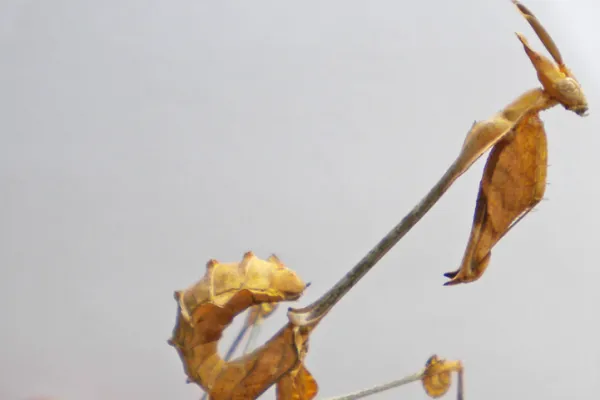
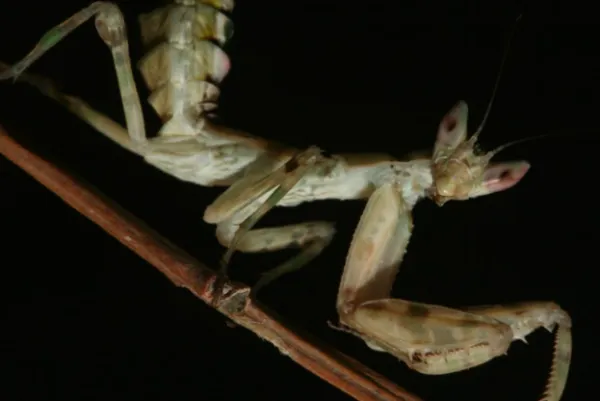
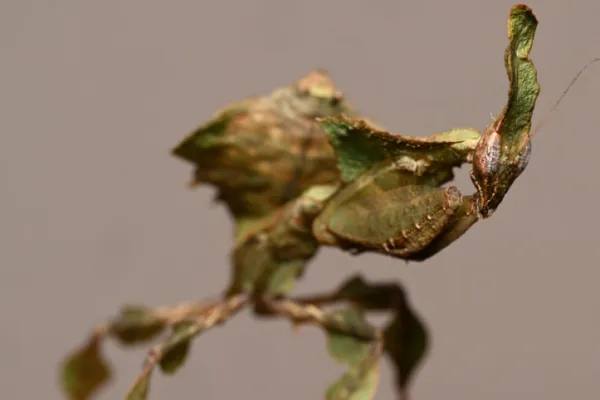
The Wandering Violin Mantis is a long and slender insect with limbs that resemble a violin’s silhouette.
When it comes to hunting down prey, it’s a sit-and-wait predator, patiently swaying its body like a tiny branch waiting for the best moment to strike up.
It thrives in group housing setups, where it peacefully coexists with its fellow mantises. But like the Chinese Mantis, they take up cannibalism, especially when the food supply runs low.
It is sensitive to temperature, humidity, and the quality of its food, making it quite a tedious task to take care of this mantis.
Females are about 7 cm while the males can grow up to 4 cm
Identification
Light to medium brown body with dark and light spots
Geographic Location
Found in East Africa
When feeling threatened, the female Budwing Mantis strikes a pose, spreading its wings to reveal a stunning display of bright yellow-orange coloration underneath.
The Budwig Mantis showcases a certain degree of sexual dimorphism in terms of its size, as the females take the spotlight at 7 cm, the males stand at a modest 4 cm.
If you are planning to keep them as your companion then a spacious terrarium at least three times their length in height and twice in width is a must.
Sleek and petite, with colors ranging from light green to dark brown
Geographic Location
African countries, including Egypt, Ivory Coast, Ghana, Uganda, Senegal, Togo, and Israel
The Egyptian Pygmy Mantis is a tiny insect measuring just around one inch in adulthood.
It comes in a variety of chic colors—light green, beige, light brown, and dark brown.
Despite their petite stature, they can be active stalkers during hunting and maintain a calm demeanor, rarely bothered by larger prey.
Egyptian Pygmy Mantises are not picky eaters; from fruit flies to small crickets, moths, and green bottle flies—these mantises appreciate a wide diversity of food.
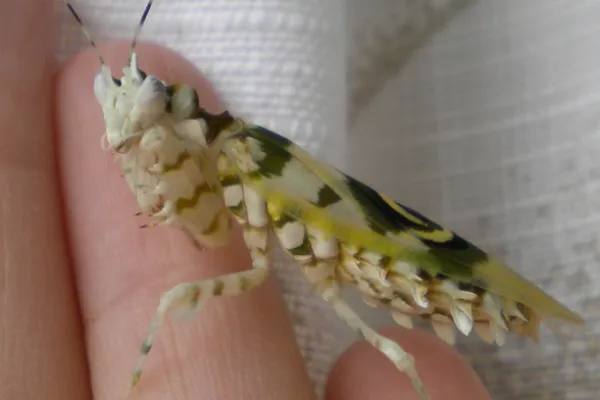
This mantis has a creamy white body with green-brown blotches and striped green and brown legs
Geographic Location
Native to Asia
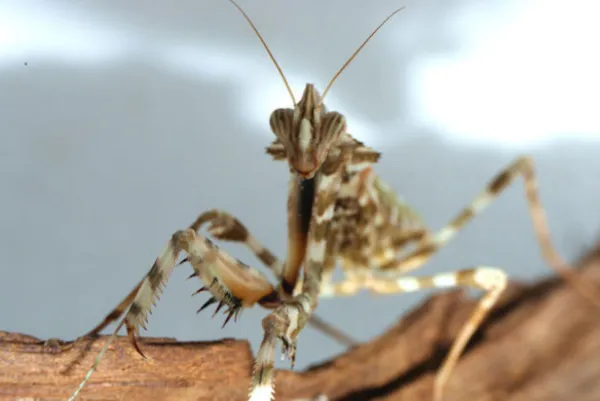
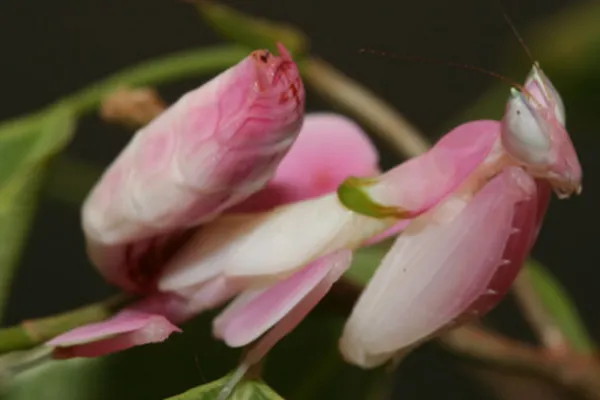
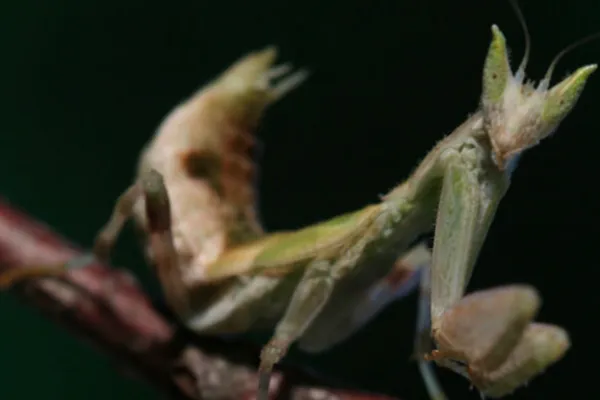
The Indian Flower Mantis has a creamy white body adorned with green-brown blotches and striped legs. When feeling threatened, it unveils a vibrant yellow-white eye patch.
With an ability to mimic flowers, particularly with its eye-catching wings and foreleg spread, it is known to play a great game of hide-and-seek.
The ideal terrarium for the mantis is a spacious 15 x 10 x 10 cm, complete with fake plants and perches.
Females are about 8–9 cm and males grow around 7–8 cm
Identification
It is a green-to-beige-colored mantis
Geographic Location
Native to Asia
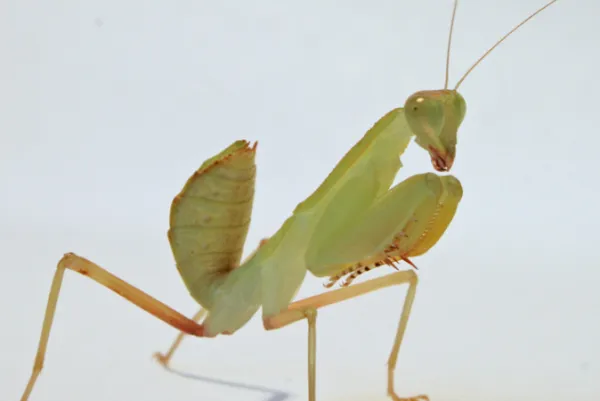
The Giant Asian Mantis showcases a multitude of colors ranging from green to beige, with some individuals even sporting a hint of pink.
It is also an active predator, fearlessly attacking prey half its size or smaller.
The Giant Asian Mantis needs specific enclosure conditions to survive, from 24°C to a well-ventilated, spacious home, with a terrarium size recommendation of 30 x 20 x 30 cm.
Whether young nymphs or adults, the Giant Asian Mantis prefers a solitary lifestyle as a way to prevent cannibalism.
Females reach about 9 cm, while males grow up to 7-8 cm.
Identification
The mantis has a distinctive shield on the prothorax
Geographic Location
Native to Malaysia
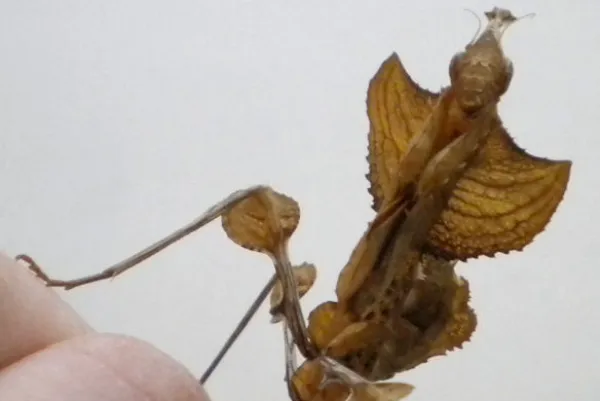
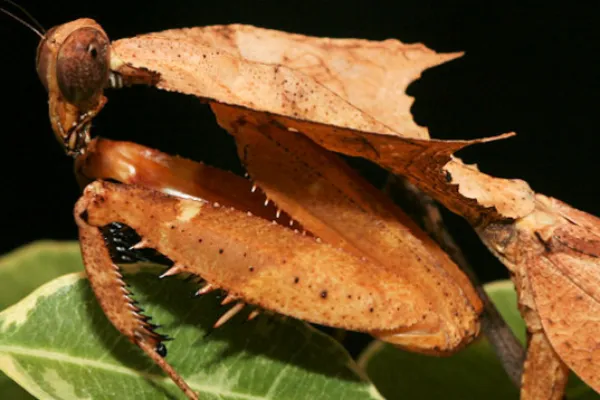
The Dead Leaf Mantis perfectly imitates a withered leaf by featuring brown hues, dark spots, and light patterns, creating a convincing forest floor illusion.
When threatened, it unfolds its wings, showcasing a large black spot and striking black-and-white patterns to scare the predators.
While not aggressive, housing the individuals together often leads to cannibalistic encounters.
It thrives in tropical conditions, that is, it prefers temperatures between 26°C to 35°C and is rarely seen in places with temperatures of 22°C or below.
Females are about 8 cm long and the males are 6-7 cm
Identification
Females are larger with wings reaching the end of the abdomen.
Geographic Location
Found in Sub-Saharan Africa
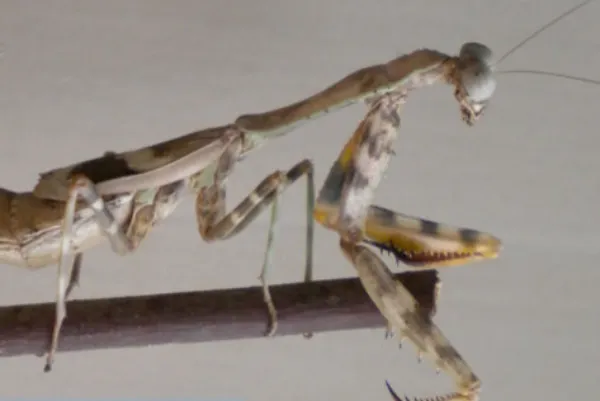
Known for its large size, the African Mantis is cherished as a pet for its fierce hunting skills and manageable care requirements.
Coming in shades of green, beige, or brown, the African Mantis showcases a versatile color palette highly influenced by its environment.
If you want to add a purple touch to your mantis, you can opt for the brown mantis species, as it flaunts striking purple eyes.
The female African mantis fearlessly pursues prey, while the males are slightly more cautious with oversized prey.
Conclusion
This concludes another informative article on the 19 species of praying mantis. While some flaunt a vibrant green hue, others master the art of mimicry by camouflaging with dead leaves or colorful flowers. These creatures are not only cunning but also swift, having evolved to escape and defend themselves despite their small stature.
Hi everyone, my name is Shawna, and I’ve always been fascinated by the fascinating diversity of flora and fauna that our nature has in it. I am currently studying biotechnology and am particularly interested in animal biotechnology, delving into the intricate processes that define their true nature and uniqueness.